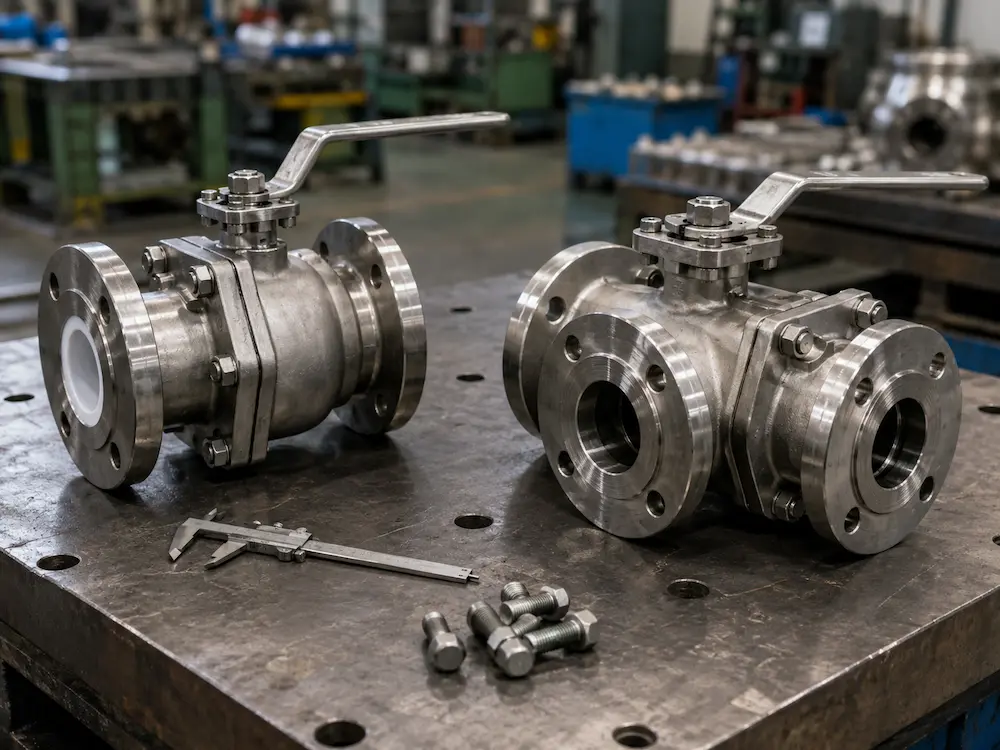
2-way vs 3-way ball valve selection is a common question in industrial piping projects. Both valves use a rotating ball to control flow, but they are designed for different pipeline functions. A 2-way ball valve is mainly used to open or close a single pipeline, while a 3-way ball valve is used to route flow between multiple ports.
For B2B buyers, the difference is not only the number of ports. The real difference is the flow control logic. A 2-way ball valve is the better choice for simple isolation. A 3-way ball valve is the better choice when the system needs diversion, mixing, bypass, tank switching, or automated routing. Choosing the wrong design can cause incorrect flow direction, unnecessary piping complexity, leakage risk, or control problems.
This guide explains the difference between 2-way and 3-way ball valves from a practical industrial buyer’s perspective. It covers structure, flow path, L-port and T-port design, shutoff function, applications, automation, selection mistakes, and quotation requirements. For a broader overview of ball valve types, materials, seats, port designs, and applications, read our main guide on industrial ball valves.
What Is a 2-Way Ball Valve?
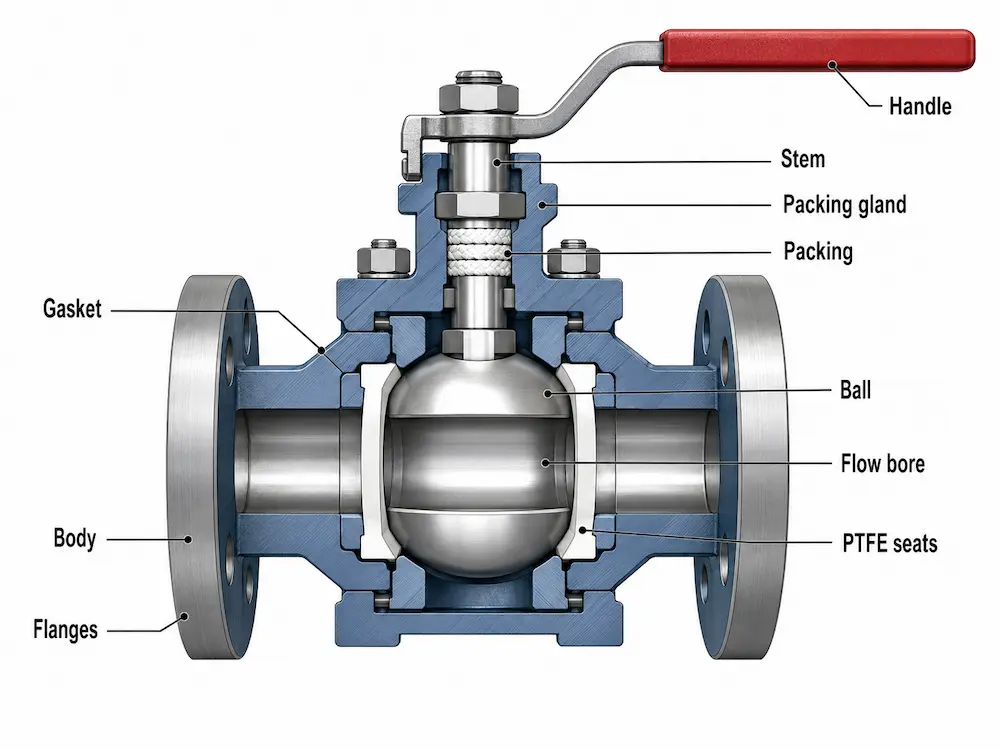
A 2-way ball valve is the most common ball valve design. It has two pipeline connections: one inlet and one outlet. Inside the valve body, a bored ball rotates 90 degrees to open or close the flow path.
When the bore of the ball is aligned with the pipeline, the valve is open. When the ball rotates 90 degrees, the solid side of the ball blocks the flow and the valve is closed. This simple structure makes 2-way ball valves widely used for shutoff, isolation, and basic pipeline control.
Common Uses of 2-Way Ball Valves
- Pipeline shutoff
- Tank inlet and outlet isolation
- Pump isolation
- Gas line shutoff
- Water treatment pipelines
- Chemical transfer lines
- Oil, fuel, and utility systems
In most industrial systems, a 2-way ball valve is selected when the buyer needs a reliable open-close valve for one pipeline route.
What Is a 3-Way Ball Valve?
A 3-way ball valve has three pipe connections instead of two. The internal ball has an L-shaped or T-shaped port that allows the valve to connect different ports depending on the ball position.
3-way ball valves are used when the pipeline system needs more than simple shutoff. They can divert flow from one line to another, mix two flows into one outlet, create a bypass, or switch between two process routes. For a detailed explanation of 3-way valve working principles, see our guide on how a 3-way ball valve works.
Common Uses of 3-Way Ball Valves
- Flow diversion
- Mixing two inlet streams
- Switching between tanks
- Bypass around equipment
- Process skid routing
- Chemical dosing and transfer systems
- Automated flow direction control
For automated routing applications, buyers may evaluate an electric three-way ball valve when the valve needs to switch flow paths through a control signal.
2-Way vs 3-Way Ball Valve: Core Difference Table
| Comparison Factor | 2-Way Ball Valve | 3-Way Ball Valve |
|---|---|---|
| Number of Ports | Two ports: one inlet and one outlet | Three ports for routing, mixing, diversion, or bypass |
| Main Function | Open-close shutoff | Flow routing between multiple pipeline paths |
| Internal Ball Design | Straight bore through the ball | L-port or T-port bore inside the ball |
| Flow Control Logic | Simple on-off control | Diversion, mixing, bypass, or switching |
| Typical Application | Pipeline isolation | Tank switching, process routing, mixing, bypass |
| Installation Complexity | Simple | Requires correct port orientation and flow logic |
| Automation | Manual, electric, or pneumatic | Manual, electric, or pneumatic with position logic |
| Buyer Risk | Wrong material, seat, pressure, or actuator size | Wrong port type, wrong orientation, or incorrect actuator rotation |
How a 2-Way Ball Valve Works
A 2-way ball valve works with a straight-through ball bore. In the open position, the bore aligns with the pipe and allows flow to pass. In the closed position, the ball rotates 90 degrees and blocks the pipe.
This design is direct and reliable. It is suitable for systems where the flow path is simple and the buyer only needs to open or close one pipeline. For this reason, 2-way ball valves are widely used in water, gas, oil, chemical, steam utility, and industrial isolation systems.
How a 3-Way Ball Valve Works
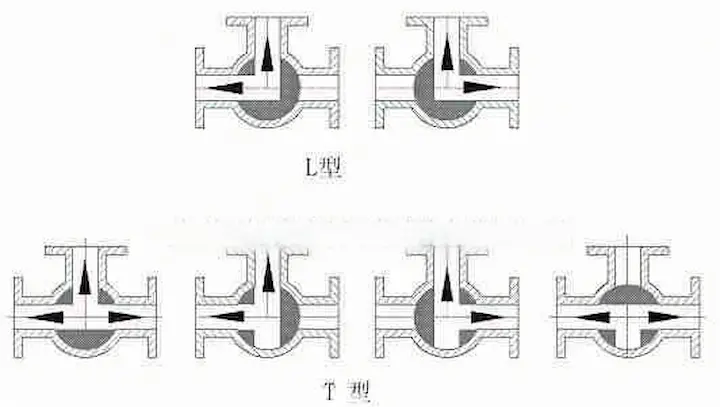
A 3-way ball valve works by rotating an internal L-port or T-port ball to connect different valve ports. The flow direction depends on the port shape and ball position.
Unlike a 2-way valve, a 3-way valve can change the flow route without using multiple separate valves. This can reduce piping complexity, simplify automation, and make compact process skids easier to design. However, the buyer must confirm the correct port pattern before ordering.
L-Port vs T-Port in 3-Way Ball Valves
L-Port 3-Way Ball Valve
An L-port 3-way ball valve has an internal flow path shaped like the letter L. It usually connects one common port to one of two other ports. This makes it useful for flow diversion and switching.
Choose an L-port ball valve when the system needs to send flow to one destination or another, such as switching between Tank A and Tank B or routing flow between a process line and a bypass line.
T-Port 3-Way Ball Valve
A T-port 3-way ball valve has an internal flow path shaped like the letter T. It can connect multiple ports depending on the ball position. This makes it useful for mixing, distributing, or connecting more than two lines.
Choose a T-port ball valve when the system needs mixing, distributing, or more flexible flow combinations. Buyers should confirm whether all three ports should ever be connected at the same time.
| Port Design | Best Use | Flow Behavior | Buyer Check |
|---|---|---|---|
| L-Port | Diversion and switching | Usually connects two ports at a time | Confirm common port and switching direction |
| T-Port | Mixing, distributing, and multi-port routing | Can connect two or three ports depending on position | Confirm all required and blocked flow positions |
Flow Function Comparison: Shutoff, Diversion, Mixing, and Bypass
Shutoff
For simple shutoff, a 2-way ball valve is usually the better and simpler choice. It provides a direct open-close function with fewer port orientation concerns.
Diversion
For diversion, a 3-way ball valve is usually better. It can direct flow from one inlet to one of two outlets, or select between two inlet sources.
Mixing
For mixing two flows into one outlet, a T-port 3-way ball valve is usually required. A standard 2-way ball valve cannot perform mixing by itself.
Bypass
For bypass systems, a 3-way ball valve may reduce piping and valve count. It can route flow through or around equipment such as filters, heat exchangers, pumps, or treatment units.
When Should You Choose a 2-Way Ball Valve?
Choose a 2-way ball valve when the application requires simple open-close control in one pipeline. It is usually the most practical and cost-effective choice for isolation service.
- Use it when the pipeline has one inlet and one outlet.
- Use it when the valve only needs to open or close flow.
- Use it when simple shutoff is more important than flow routing.
- Use it when installation space and cost need to be controlled.
- Use it for common water, gas, oil, chemical, and utility systems where the material is compatible.
When Should You Choose a 3-Way Ball Valve?
Choose a 3-way ball valve when the system needs to control flow between multiple paths. It is more useful than a 2-way valve when the buyer needs switching, diversion, mixing, or bypass.
- Use it when one inlet must switch between two outlets.
- Use it when two inlet streams need to mix into one outlet.
- Use it when one valve should replace multiple shutoff valves in a routing system.
- Use it when automated process routing is required.
- Use it for tank selection, bypass lines, process skids, and chemical transfer systems.
Manual, Electric, and Pneumatic Operation
Manual Operation
Manual 2-way and 3-way ball valves are operated by a lever, gearbox, or handwheel. They are suitable for accessible pipelines and low-frequency operation.
Electric Operation
Electric ball valves use an electric actuator for automated open-close or position control. A 2-way electric ball valve is mainly used for remote shutoff. A 3-way electric ball valve is used for automated flow routing, bypass, mixing, or tank switching.
Buyers comparing automated ball valves can also read our guide on electric ball valves.
Pneumatic Operation
Pneumatic ball valves use compressed air for fast operation, high cycle frequency, or fail-safe spring return. They are common in process plants where compressed air is available and fast response is required.
Application Comparison
| Application | Recommended Valve Type | Reason |
|---|---|---|
| Simple pipeline isolation | 2-Way ball valve | Direct open-close control is enough |
| Tank inlet or outlet shutoff | 2-Way ball valve | Simple isolation with one flow path |
| Switching between two tanks | 3-Way ball valve | One valve can route flow to different destinations |
| Bypass around equipment | 3-Way ball valve | Useful for routing flow through or around equipment |
| Chemical mixing | T-port 3-way ball valve | Can combine two inlet streams into one outlet |
| Process skid automation | Electric 3-way ball valve | Supports compact automated routing |
| Gas line shutoff | 2-Way ball valve | Reliable isolation is usually the main function |
Selection Checklist for B2B Buyers
Before choosing between a 2-way and 3-way ball valve, buyers should confirm the real flow function. A 3-way valve is not automatically better. It is only better when the system needs multiple flow paths.
| Selection Item | What to Confirm | Why It Matters |
|---|---|---|
| Flow Function | Shutoff, diversion, mixing, bypass, or switching | Determines whether 2-way or 3-way is suitable |
| Port Design | Straight bore, L-port, or T-port | Controls the actual flow path |
| Port Orientation | Common port, inlet, outlet, blocked position | Prevents incorrect installation and flow direction |
| Medium | Water, gas, oil, chemical, solvent, steam, or slurry | Determines material and seat compatibility |
| Pressure | Operating pressure and design pressure | Determines pressure class and body design |
| Temperature | Normal and maximum temperature | Affects seat and seal material selection |
| Connection | Flanged, threaded, welded, clamp, or other type | Must match pipeline design |
| Operation Method | Manual, electric, pneumatic, or gearbox | Determines torque, control signal, and installation needs |
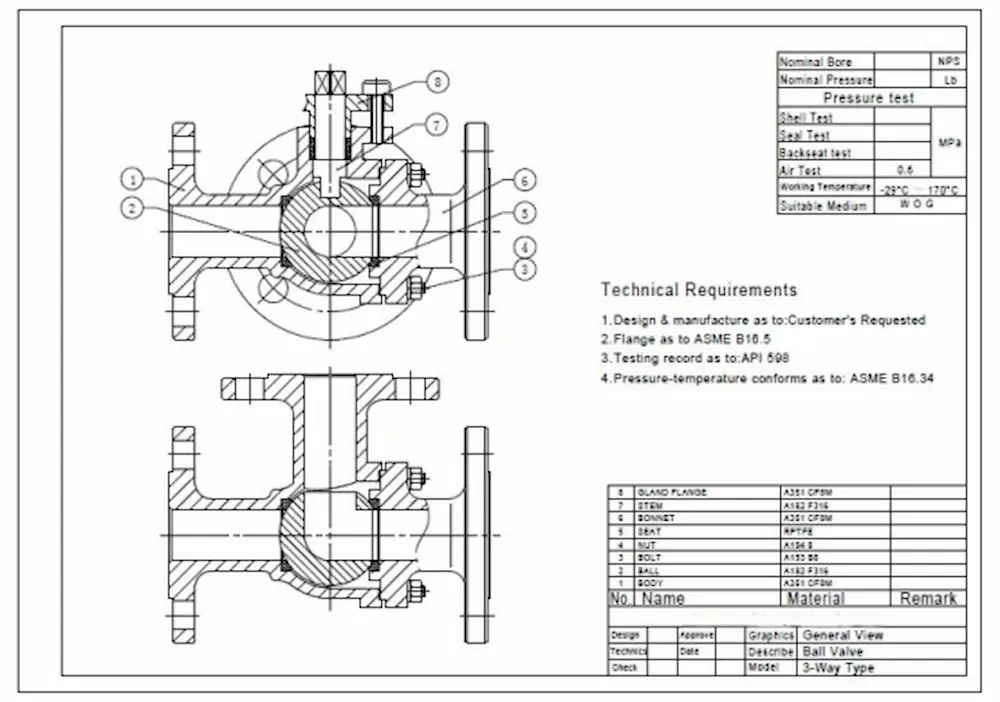
| Documentation | Drawing, flow diagram, test report, material certificate | Supports project approval and correct installation |
Common Selection Mistakes
Mistake 1: Using a 3-Way Valve When a 2-Way Valve Is Enough
A 3-way ball valve is more complex and may cost more. If the system only needs simple shutoff, a 2-way ball valve is usually easier and more economical.
Mistake 2: Choosing a 2-Way Valve for a Routing System
If the system needs diversion, mixing, bypass, or switching, using only 2-way valves may require more valves and more piping. A 3-way ball valve may simplify the system.
Mistake 3: Not Confirming L-Port or T-Port
For 3-way ball valves, L-port and T-port designs create different flow paths. Buyers should always confirm the required port design before ordering.
Mistake 4: Ignoring Port Orientation
A 3-way valve can be installed incorrectly if the common port, inlet, outlet, and handle or actuator positions are not clearly defined.
Mistake 5: Ignoring Seat and Seal Materials
Both 2-way and 3-way ball valves depend on seat and seal compatibility. PTFE, reinforced PTFE, PEEK, EPDM, FKM, and other materials should be selected according to media, pressure, temperature, and operation frequency.
Final Recommendations for Industrial Buyers
A 2-way ball valve is the best choice for simple pipeline isolation. It is direct, reliable, cost-effective, and widely used in industrial shutoff applications. A 3-way ball valve is the better choice when the system needs flow routing, diversion, mixing, bypass, or switching between pipeline branches.
The decision should begin with the flow function. If the valve only needs to open or close one line, choose a 2-way ball valve. If the valve needs to connect multiple lines or change flow direction, choose a 3-way ball valve and confirm whether L-port or T-port is required.
If you need help selecting 2-way or 3-way ball valves for chemical processing, water treatment, gas service, oil systems, tank transfer, bypass lines, or automated flow routing, Vcore Valve can review your flow logic and working conditions. Buyers can also compare options in our ball valve category or evaluate an electric three-way ball valve for automated routing projects.
For industrial sourcing, the key question is not only “Should I choose a 2-way or 3-way ball valve?” The better question is: “What flow path does this pipeline system require, and which ball valve structure can create that flow path reliably?”
FAQs
1. What is the difference between a 2-way and 3-way ball valve?
A 2-way ball valve has one inlet and one outlet for simple open-close shutoff. A 3-way ball valve has three ports and is used for diversion, mixing, bypass, or switching between different pipeline routes.
2. When should I use a 2-way ball valve?
Use a 2-way ball valve when the system only needs to open or close one pipeline. It is suitable for isolation, shutoff, tank inlet and outlet lines, gas lines, water systems, oil systems, and many general industrial applications.
3. When should I use a 3-way ball valve?
Use a 3-way ball valve when the system needs to route flow between multiple lines, switch between tanks, mix two flows, create a bypass, or automate flow direction in a process system.
4. What is the difference between L-port and T-port 3-way ball valves?
An L-port 3-way ball valve is usually used for diversion or switching between two flow paths. A T-port 3-way ball valve can be used for mixing, distribution, or connecting multiple ports depending on the ball position.
5. Can a 3-way ball valve replace two 2-way ball valves?
In some routing or switching systems, a 3-way ball valve can replace two 2-way ball valves and reduce piping complexity. However, this depends on the required flow path, shutoff requirement, port orientation, and control logic.