When comparing a PTFE lined diaphragm valve vs plug valve for corrosive chemical service, the main selection factors are stem isolation, internal flow resistance, lining integrity, sealing materials, operating frequency, temperature and maintenance requirements. A lined diaphragm valve separates the stem and operating mechanism from the process medium through a flexible diaphragm. A lined plug valve provides compact quarter-turn isolation but requires careful review of plug sealing, stem sealing and operating torque. Neither structure is universally suitable for all acids, alkalis or chemical process conditions.
Selecting valves for corrosive chemical pipelines requires more than specifying a PTFE lining. Two valves with similar corrosion-resistant body linings can perform differently because their closure elements, sealing systems and flow passages are not the same.
This distinction is especially important when comparing a
PTFE lined diaphragm valve vs plug valve
for acid transfer, alkali dosing, chemical processing and corrosive wastewater applications.
A diaphragm valve uses a flexible diaphragm to close against the valve body while separating the operating mechanism from the process fluid. A plug valve uses a rotating plug to open or close the flow passage, with sealing arrangements that depend on the selected plug valve design.
Both constructions can be considered for corrosive chemical isolation, but the correct choice depends on the process conditions and the required operating performance.
This guide compares the two designs from an engineering and procurement perspective, focusing on the practical differences that affect pipeline operation, valve selection and long-term maintenance.
1. PTFE Lined Diaphragm Valve vs Plug Valve: Key Differences
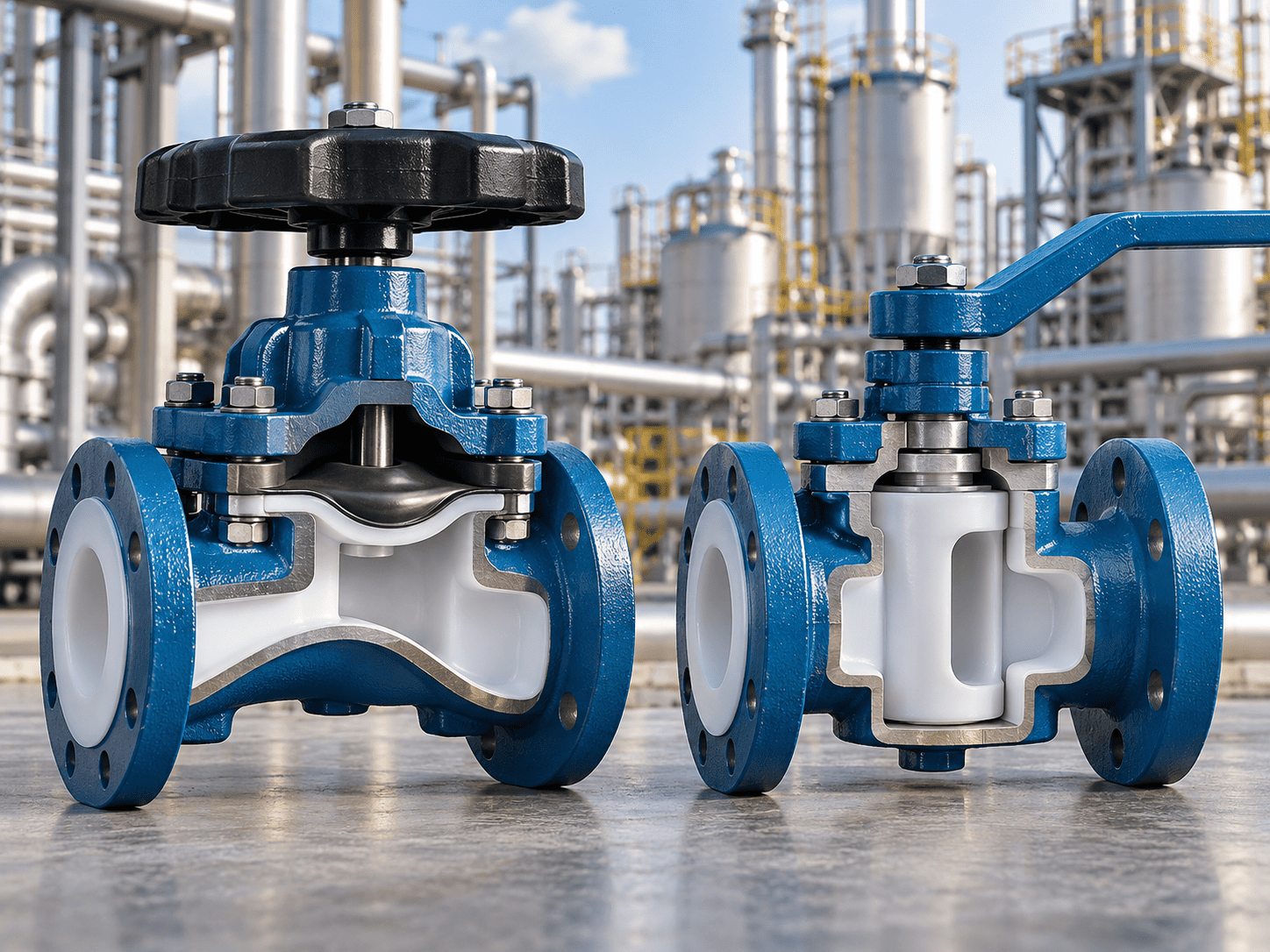
The fundamental difference between these two valves is the way the process fluid is isolated from the operating mechanism and how the flow passage is opened or closed.
A PTFE lined diaphragm valve combines a corrosion-resistant body lining with a flexible diaphragm. The diaphragm moves against the valve body to stop flow and also forms a barrier between the process fluid and the bonnet assembly.
A PTFE lined plug valve uses a rotating plug with an internal flow port. The plug and wetted body surfaces are protected by a specified fluoropolymer lining or sleeve system, while external leakage is controlled through the valve’s stem sealing construction.
| Selection Factor | PTFE Lined Diaphragm Valve | PTFE Lined Plug Valve |
|---|---|---|
| Closure mechanism | Flexible diaphragm moves against the body sealing surface. | Rotating plug opens or blocks the flow passage. |
| Operating movement | Linear diaphragm compression and release. | Typically 90-degree quarter-turn rotation. |
| Stem isolation | Diaphragm separates the stem and operating mechanism from the process fluid. | Depends on the plug, stem sealing and packing construction. |
| Flow passage | Weir-type or straight-through design, depending on the model. | Ported plug; full-port or reduced-port configurations depend on the model. |
| Main sealing elements | Flexible diaphragm and lined body sealing surface. | Plug-to-body sealing system and stem sealing arrangement. |
| Operating frequency | Diaphragm flexing and cycle life must be reviewed. | Plug torque, sealing wear and actuator duty must be reviewed. |
| Typical maintenance focus | Diaphragm inspection and replacement. | Plug sealing surfaces, sleeve or liner wear, stem seals and torque. |
| Common selection priority | Process isolation from the stem area. | Compact quarter-turn chemical shut-off. |
The comparison above describes structural differences rather than universal performance ratings. Actual pressure drop, leakage performance, pressure-temperature limits and operating life depend on the selected valve model, size, materials and operating conditions.
2. Stem Isolation: Why the Sealing Structure Matters
In corrosive chemical service, the body lining is only one part of the protection system. The way the valve separates the process fluid from the stem and external operating components can be equally important.
PTFE Lined Diaphragm Valve: Fluid Separation Through the Diaphragm
In a diaphragm valve, the diaphragm forms a physical barrier between the process fluid and the bonnet cavity. The stem and compressor operate above the diaphragm and normally remain outside the wetted flow path.
This arrangement is useful when the process medium should not contact the stem or conventional valve packing during normal operation.
For example, a chemical dosing line carrying a compatible corrosive liquid may require both a lined body and separation of the operating mechanism from the fluid.
In this application, the diaphragm valve provides two distinct protective functions:
- The body lining protects the wetted valve body surfaces from direct chemical exposure.
- The diaphragm separates the process fluid from the stem and operating mechanism.
However, diaphragm isolation should not be confused with a guarantee of zero external leakage.
A damaged diaphragm, incorrect assembly or unsuitable operating conditions can compromise the fluid barrier. Diaphragm condition, material compatibility and maintenance intervals remain essential.
For detailed construction and available configurations, see the
PTFE Lined Diaphragm Valve for Corrosive Chemical Service.
PTFE Lined Plug Valve: Stem Sealing Requires Separate Verification
A lined plug valve uses a rotating plug to control the flow passage. Depending on its construction, the stem may be isolated from the process medium by the plug sealing system, stem seals, packing or other engineered sealing elements.
The presence of PTFE lining inside the valve body does not automatically mean that the stem sealing system is completely isolated from the chemical medium.
For hazardous or highly corrosive chemicals, buyers should confirm:
- Whether the specified design uses a lined plug, a PTFE sleeve or another sealing arrangement.
- Which stem sealing components may contact the process medium.
- The compatibility of packing, seals and other wetted components.
- Whether the project requires documented fugitive-emission performance.
- Whether additional stem sealing or leakage containment is required.
A properly engineered lined plug valve can provide effective chemical shut-off, but its stem sealing arrangement must be evaluated according to the actual service requirement.
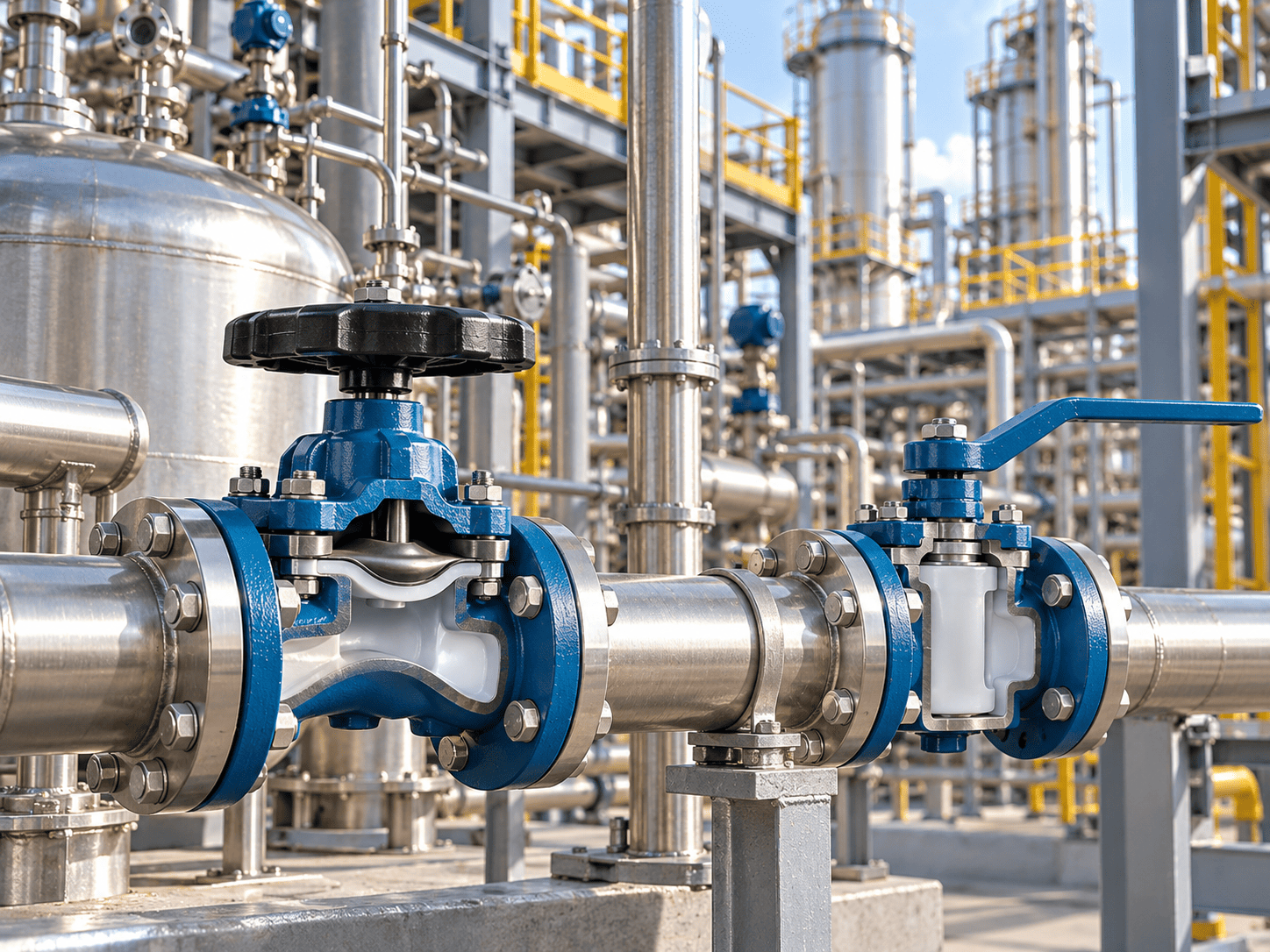
3. Acid and Alkali Service: Which Valve Structure Should Be Considered?
Both PTFE lined diaphragm valves and PTFE lined plug valves can be considered for selected acid and alkali applications when the complete wetted-material system is compatible with the process medium.
However, the chemical name alone is not sufficient to determine valve suitability.
Acid concentration, alkali concentration, operating temperature, contamination, crystallization and cleaning procedures can all affect the selection.
Acid Transfer and Chemical Dosing Lines
For compatible acidic liquids in dosing or transfer systems, a PTFE lined diaphragm valve may be considered when separation of the stem area from the process fluid is a primary requirement.
A PTFE lined plug valve may be considered when the same application requires compact quarter-turn operation, provided that the plug sealing arrangement and all wetted components are chemically compatible.
For example, when evaluating a sulfuric acid transfer line, the engineering review should identify the actual acid concentration, minimum and maximum process temperatures, pressure conditions and possible contaminants before selecting either valve.
A valve specification that states only “sulfuric acid service” is incomplete.
Alkali Transfer and Neutralization Systems
Alkali service can introduce additional material and mechanical considerations, particularly when the medium is concentrated, hot or capable of crystallizing during shutdown.
A diaphragm valve may be considered where process isolation from the stem area is required. A plug valve may be considered where quarter-turn operation is important and the sealing design has been evaluated for the chemical and operating duty.
For either design, crystallization must be reviewed because deposits may interfere with the sealing surfaces or increase the force required to operate the valve.
Mixed Chemicals and Solvent-Containing Media
Mixed chemical service requires a more detailed compatibility review.
Even when the PTFE lining is compatible with the main process fluid, a diaphragm backing material, stem seal or other secondary component may be unsuitable for an accompanying solvent or cleaning chemical.
For this reason, buyers should evaluate the complete wetted-material list rather than selecting a valve solely by the stated lining material.
Neither valve should be considered universally suitable for all strong acids, hot concentrated alkalis, reactive chemicals or mixed solvents. Chemical compatibility must be confirmed at the specified concentration, pressure and temperature, including cleaning and abnormal operating conditions.
For a broader explanation of corrosion mechanisms and material selection, read our existing guide:
How to Choose Corrosion-Resistant Valves for Acid and Alkali Pipelines.
4. Flow Resistance: Weir-Type Diaphragm Valve vs Ported Plug Valve
Flow resistance affects pressure drop, pump operating conditions and energy consumption in chemical transfer systems.
A diaphragm valve and a plug valve have different internal flow geometries. However, it would be incorrect to assume that every plug valve has lower pressure loss than every diaphragm valve.
The correct comparison depends on the actual internal passage geometry, valve size and flow coefficient.
Weir-Type Diaphragm Valve
A weir-type diaphragm valve has a raised sealing area inside the flow passage. The diaphragm closes against this raised section to stop the process fluid.
The raised weir changes the flow path and introduces a local restriction. Depending on the design and flow rate, this may produce a higher pressure drop than a straight-through configuration.
When selecting a weir-type valve for chemical dosing or transfer, buyers should check whether the available differential pressure and pump capacity are sufficient.
Straight-Through Diaphragm Valve
A straight-through diaphragm valve has a different internal geometry and may provide a less restricted flow passage than a weir-type design.
However, it may require greater diaphragm movement and a different diaphragm construction.
The suitability of a straight-through PTFE lined configuration must be confirmed against the selected manufacturer’s approved design.
PTFE Lined Plug Valve
A plug valve uses an internal port that aligns with the pipeline when the valve is fully open.
A full-port plug valve can provide a relatively direct flow passage, but a reduced-port design introduces additional restriction.
Plug geometry, port dimensions, lining thickness and the transition between the valve and connecting pipe all influence the resulting pressure drop.
For a high-flow chemical transfer line, a full-port plug valve may be considered where a low-resistance flow path and compact shut-off arrangement are important.
Request the actual Cv or Kv value for the proposed valve model and calculate the expected pressure drop using the project flow rate, fluid properties and operating conditions. Do not assume that nominal valve size alone establishes hydraulic performance.
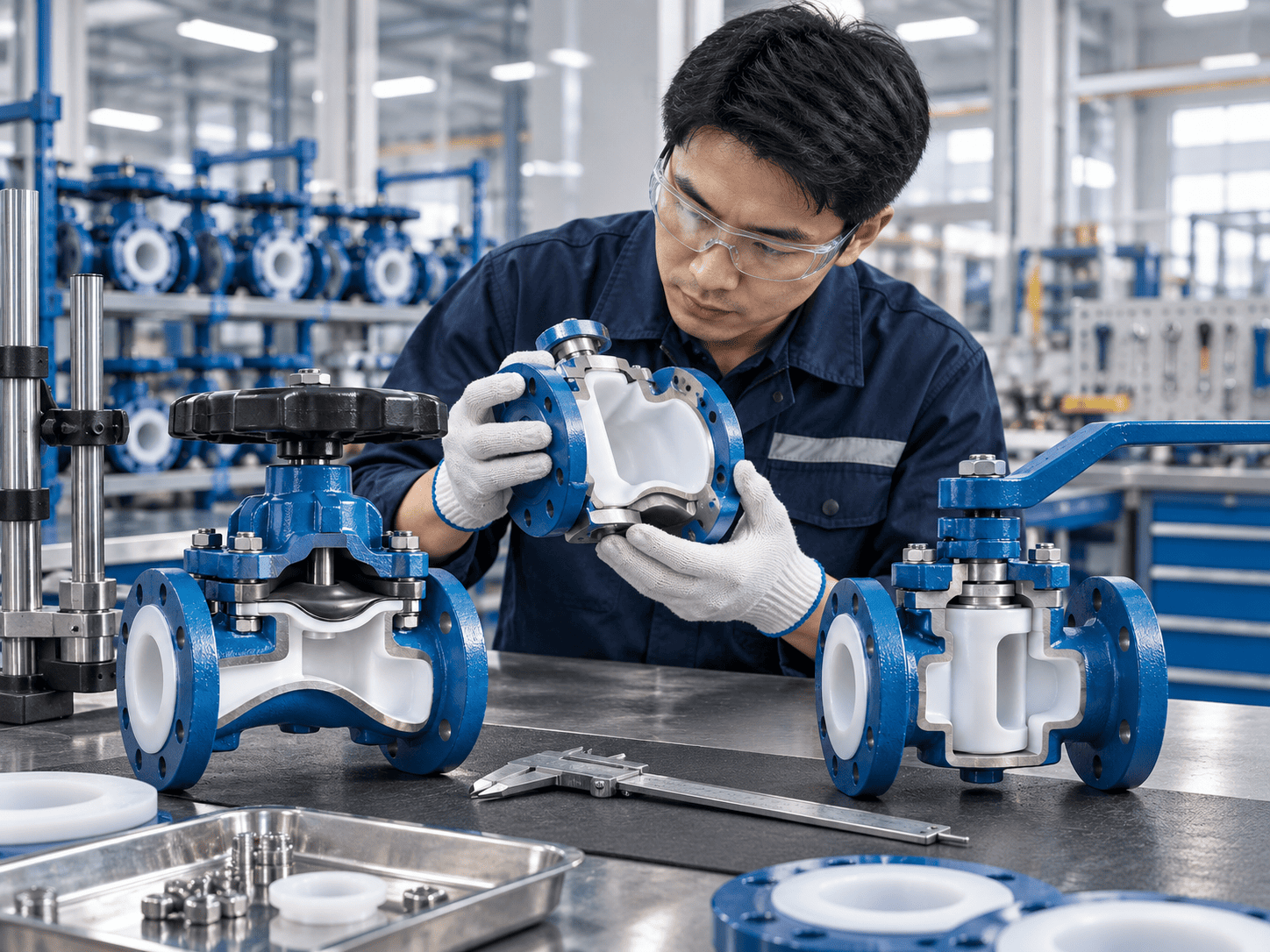
5. Lining Structure and Sealing Materials: What Actually Contacts the Chemical?
A PTFE lined valve is not necessarily equivalent to a valve fitted with only a PTFE seat or PTFE packing.
For corrosive service, the procurement specification should identify the complete wetted flow path and all sealing materials that may contact the process fluid.
Diaphragm Valve: Body Lining and Flexible Diaphragm
A PTFE lined diaphragm valve uses a fluoropolymer-lined body together with a chemically compatible diaphragm.
Depending on the selected design, the diaphragm may use a PTFE-faced construction with an elastomeric backing or another approved composite arrangement.
The backing material is important because the diaphragm must remain flexible while providing the required sealing force and mechanical support.
For example, an EPDM-backed PTFE-faced diaphragm should not be selected solely on the basis of the PTFE chemical resistance. The backing material’s compatibility with the service conditions, including potential permeation and temperature exposure, must also be evaluated.
The body lining and diaphragm are separate components with different operating functions and replacement requirements.
Plug Valve: Body Lining, Plug Surface and Sealing System
A PTFE lined plug valve uses a corrosion-protected internal body passage and plug assembly.
Depending on the design, sealing may be achieved through a fluoropolymer sleeve, lined plug contact surfaces or another engineered sealing arrangement.
The contact pressure between the plug and sealing surface affects shut-off performance, friction and operating torque.
Excessive interference, thermal expansion, chemical deposits or damage to the lining may increase the force needed to operate the valve.
Buyers should confirm that the specified lining protects all required wetted surfaces, including the body passage, plug, port transitions and end-connection sealing areas.
For additional product-specific information, review the
PTFE Lined Plug Valve for Corrosive Chemical Service.
| Component | Diaphragm Valve | Plug Valve | Selection Check |
|---|---|---|---|
| Body lining | Protects the internal body flow passage. | Protects the internal body flow passage. | Material, thickness, continuity and chemical compatibility. |
| Closure element | Flexible diaphragm. | Rotating lined plug. | Wetted materials and operating duty. |
| Primary shut-off seal | Diaphragm against body sealing surface. | Plug-to-body sealing interface. | Required leakage performance and wear resistance. |
| Stem sealing | Normally isolated from the medium by the diaphragm. | Design-specific stem seals and packing arrangement. | External leakage requirements and material compatibility. |
| Secondary materials | Diaphragm backing and supporting components. | Sleeve, packing and secondary seals. | Potential exposure to chemicals, temperature and permeation. |
6. Operating Frequency and Automation: Diaphragm Fatigue vs Plug Torque
Operating frequency is a significant factor in valve life, especially in automated chemical systems.
A valve that operates only during periodic maintenance may experience a different wear pattern from one that opens and closes hundreds of times during routine production.
Diaphragm Valve: Repeated Flexing
Each operating cycle causes the diaphragm to move and deform.
Repeated operation can contribute to diaphragm fatigue, especially when combined with high temperature, unsuitable pressure conditions, excessive closing force or chemical incompatibility.
For an automated diaphragm valve, buyers should confirm:
- Expected opening and closing cycles per day.
- Diaphragm material and approved operating duty.
- Required closing force and actuator sizing.
- Whether actuator stroke limits or closing-force adjustments are required.
- Inspection frequency and diaphragm replacement procedures.
A diaphragm valve should not automatically be treated as maintenance-free simply because the operating mechanism is isolated from the process fluid.
Plug Valve: Rotational Friction and Breakaway Torque
A plug valve normally requires approximately 90 degrees of rotation between its fully open and fully closed positions.
This movement is convenient for manual operation and common quarter-turn pneumatic or electric actuators.
However, a lined plug valve may experience increased operating torque due to friction between sealing surfaces, temperature changes, chemical deposits or prolonged periods without operation.
In automated service, the actuator must be sized using the selected valve’s actual operating torque requirements.
The actuator selection should account for the specified differential pressure, temperature range, operating frequency and expected breakaway torque.
Quarter-turn operation should not be interpreted as a guarantee of lower actuator torque or longer service life.
For frequent chemical isolation, compare the diaphragm’s expected cycle life with the plug valve’s sealing wear and torque characteristics. Select the actuator based on documented valve requirements rather than operating speed alone.
7. Temperature and Pressure Limits: Check the Complete Valve Assembly
PTFE lining has a broad range of chemical applications, but its material properties alone do not establish the allowable operating temperature of a complete valve.
The complete valve assembly includes other components that may impose more restrictive operating limits.
Diaphragm Valve Temperature and Pressure Limits
For a lined diaphragm valve, the allowable operating conditions depend on the body construction, lining system, diaphragm material, diaphragm support and pressure-temperature rating of the selected model.
A PTFE-faced diaphragm with elastomeric backing may have a lower approved operating temperature than the nominal temperature capability of the PTFE material itself.
The diaphragm must also withstand the specified operating pressure and differential pressure without unacceptable deformation or loss of sealing performance.
Plug Valve Temperature and Pressure Limits
For a lined plug valve, the allowable temperature and pressure depend on the body construction, lining or sleeve material, plug sealing arrangement, stem sealing components and manufacturer-approved rating.
Thermal expansion and changes in sealing contact pressure may affect operating torque and seat performance.
If a plug valve is selected for elevated-temperature chemical service, the manufacturer should confirm both the pressure-temperature rating and the expected operating torque under the specified conditions.
Do not specify a universal temperature range such as -20°C to +150°C for every PTFE lined diaphragm or plug valve. The approved limit must be based on the complete valve construction and the manufacturer’s documented pressure-temperature rating.
For both valve types, vacuum conditions, rapid temperature changes and chemical permeation may introduce additional lining integrity concerns.
High-temperature chemical service, thermal cycling and vacuum applications should therefore receive a separate engineering review before purchase.
8. Maintenance Costs: Which Valve Is More Economical Over Time?
The purchase price of a chemical valve is only one part of its total operating cost.
Maintenance labor, replacement sealing components, chemical handling, shutdown duration and accessibility can have a greater effect on lifecycle cost than a small difference in the initial quotation.
Diaphragm Valve Maintenance
For a diaphragm valve, the diaphragm is a primary maintenance component.
Inspection and replacement should follow the manufacturer’s instructions and the plant’s operating history.
A suitable diaphragm valve design may allow replacement of the diaphragm without replacing the entire valve body, provided that the lining and pressure-containing components remain serviceable.
Maintenance planning should include diaphragm availability, replacement intervals, sealing-surface inspection and correct reassembly procedures.
Plug Valve Maintenance
For a lined plug valve, maintenance attention may focus on the plug sealing interface, sleeve or lining condition, stem seals and changes in operating torque.
Depending on the design, repairing a damaged lining or plug sealing assembly may require specialist service or replacement of the affected components.
The availability of spare parts and the manufacturer’s repair procedure should be confirmed before purchasing valves for critical chemical processes.
| Lifecycle Cost Factor | Diaphragm Valve | Plug Valve |
|---|---|---|
| Regular maintenance focus | Diaphragm condition and sealing performance. | Plug sealing, stem seals and operating torque. |
| Typical replacement components | Diaphragm and project-specific associated seals. | Model-specific sleeve, plug assembly, packing or sealing components. |
| Main operating wear concern | Repeated diaphragm flexing and compression. | Contact-surface wear and changes in friction or torque. |
| Maintenance planning | Diaphragm service life and replacement accessibility. | Availability of approved sealing components and repair procedures. |
| Lifecycle cost assessment | Based on diaphragm replacement, downtime and service conditions. | Based on sealing-component life, torque, repair costs and downtime. |
Neither valve structure is automatically less expensive to maintain in every application.
The economic comparison should be based on expected service life, maintenance accessibility, replacement-part costs and actual plant operating conditions.
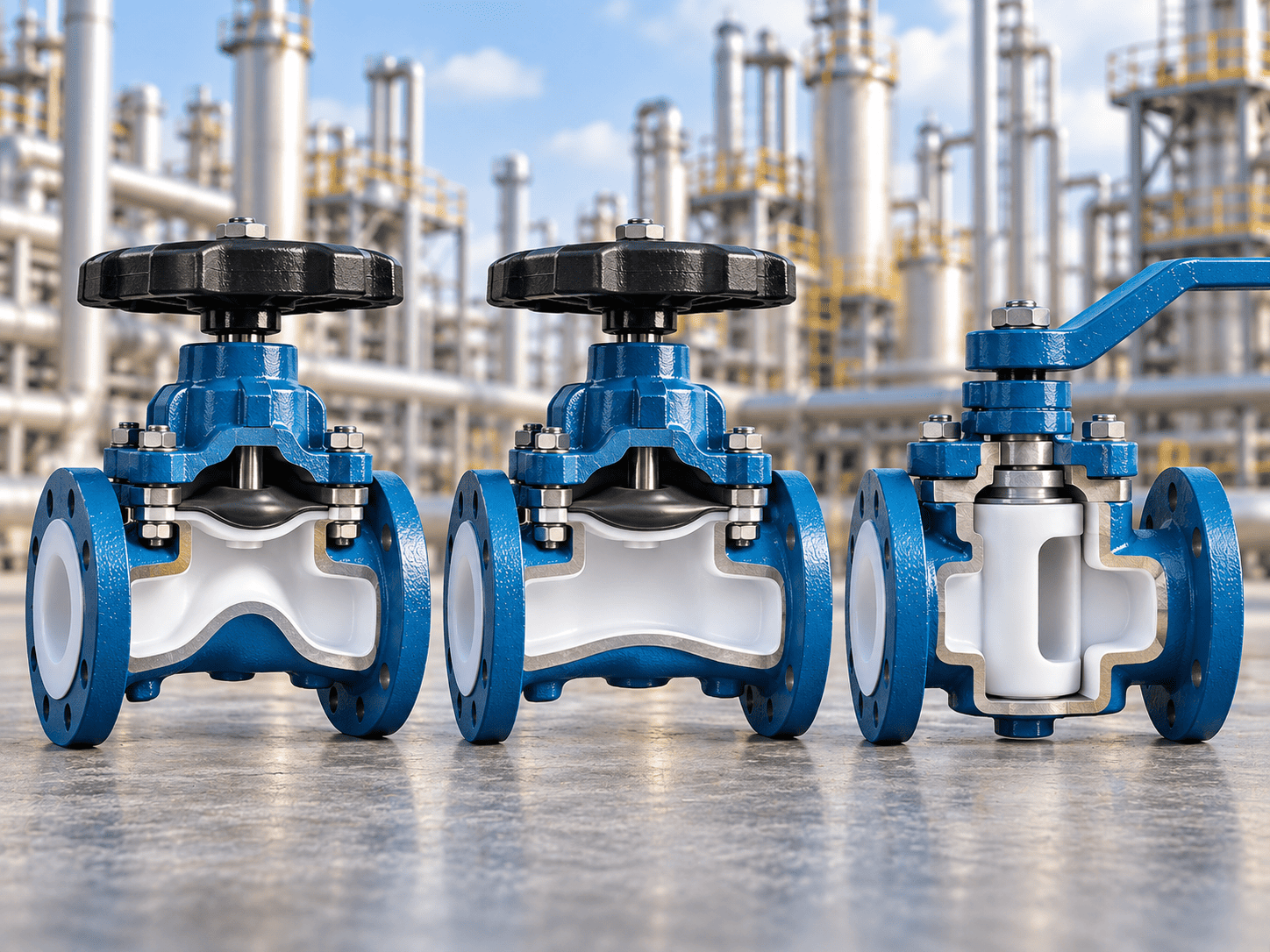
9. Application-Based Selection: When to Use Each Valve
For industrial buyers, the most practical way to compare the two valve structures is to relate the selection to the actual pipeline duty.
| Application Condition | Valve Structure to Consider | Engineering Reason |
|---|---|---|
| Corrosive chemical line requiring separation of the stem area from the fluid. | PTFE lined diaphragm valve. | The diaphragm provides a barrier between the process fluid and operating mechanism. |
| Compact isolation valve with quarter-turn manual or automated operation. | PTFE lined plug valve. | The rotating plug provides a quarter-turn shut-off arrangement. |
| High-flow chemical transfer with a strict pressure-drop requirement. | Compare the actual flow coefficients of both designs. | Pressure loss depends on the selected flow passage, port size and valve geometry. |
| Frequent automated chemical isolation. | Compare both designs using documented operating-duty data. | Diaphragm fatigue, plug sealing wear and operating torque can influence service life. |
| Chemical medium that may crystallize during shutdown. | Review both designs against the deposit characteristics. | Deposits may affect diaphragm seating, plug rotation or sealing performance. |
| High-temperature or high-pressure chemical service. | Confirm the approved limits of the complete valve assemblies. | The lining, diaphragm, sleeve and other sealing materials may limit suitability. |
| Heavy abrasive slurry containing hard particles. | Evaluate a purpose-designed slurry valve instead. | Abrasive particles may damage fluoropolymer lining and sealing surfaces. |
| Continuous precision flow regulation. | Evaluate a suitable chemical-service control valve. | Standard on-off configurations should not be assumed suitable for precision control. |
For corrosive fluids that also contain abrasive particles, lining selection becomes a separate consideration. See our
PTFE Lined Valve vs Rubber Lined Valve
guide for additional information on chemical resistance and abrasion-related selection.
10. Procurement Checklist Before Requesting a Quotation
A reliable quotation for a chemical-service valve should be based on the actual operating conditions rather than only the nominal size, pressure class and lining material.
Before requesting prices for a PTFE lined diaphragm valve or PTFE lined plug valve, prepare the following information:
- Chemical medium:
Chemical name, composition, concentration and possible impurities. - Operating conditions:
Normal and design pressure, operating and design temperature, and any vacuum conditions. - Pipeline dimensions:
Nominal size, flange standard, face-to-face requirement and required quantity. - Valve function:
Isolation, occasional operation, frequent cycling or another specified duty. - Flow requirements:
Normal and maximum flow rate, allowable pressure drop and required Cv or Kv if applicable. - Wetted materials:
Body lining, diaphragm or plug construction, stem sealing components and chemical compatibility requirements. - Operation method:
Manual handwheel, lever, gear operator, pneumatic actuator or electric actuator. - Medium characteristics:
Suspended solids, crystallization, sedimentation, viscosity and cleaning procedures. - Testing and documentation:
Shell pressure test, seat leakage test, lining inspection, dimensional drawing and required certificates. - Maintenance requirements:
Expected operating frequency, replacement-part availability and required maintenance accessibility.
For demanding chemical applications, buyers should also request the manufacturer’s pressure-temperature rating, applicable lining integrity inspection records and confirmation of the approved wetted-material configuration.
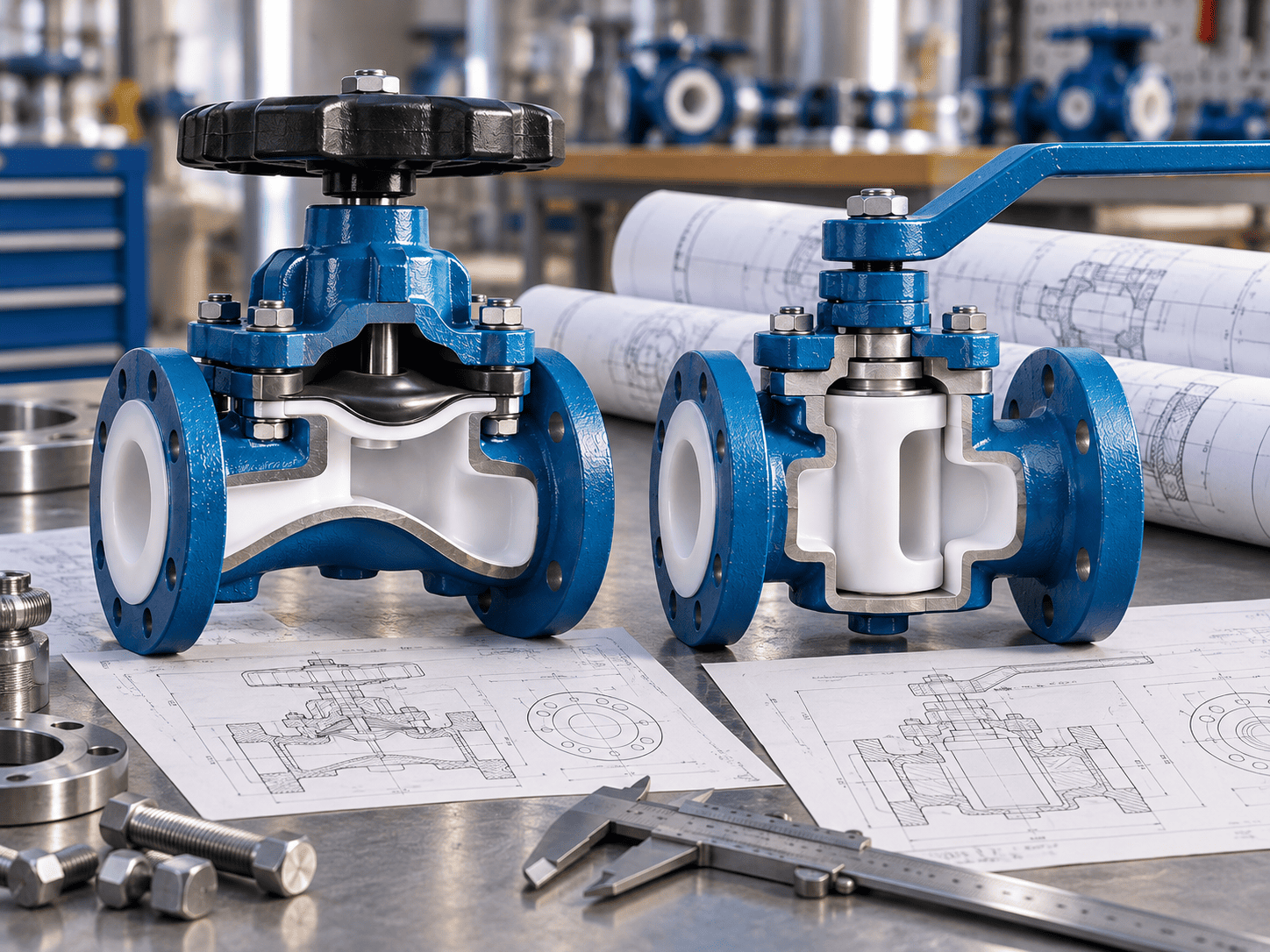
11. Explore Vcore Valve’s PTFE Lined Chemical Valve Options
Vcore Valve provides industrial valve solutions for chemical processing applications, including PTFE lined diaphragm valves and PTFE lined plug valves.
For project-based sourcing, the selection should be reviewed against the chemical medium, pressure, temperature, required sealing performance, operating method and maintenance conditions.
PTFE Lined Diaphragm Valve for Corrosive Chemical Service
A corrosion-resistant diaphragm valve option for selected acid, alkali, chemical dosing and chemical transfer applications where body lining and separation of the operating mechanism from the process medium are required.
Key selection points:
Weir-type or straight-through construction, diaphragm material, lining integrity, operating pressure, temperature and cycling frequency.
PTFE Lined Plug Valve for Corrosive Chemical Service
A quarter-turn isolation valve option for selected corrosive chemical pipelines where compact construction and a protected internal flow passage are required.
Key selection points:
Plug configuration, lining system, port geometry, stem sealing, operating torque, actuator requirements and chemical compatibility.
12. Final Selection Considerations
The decision between a
PTFE lined diaphragm valve vs plug valve
should begin with the functional requirements of the chemical pipeline.
When the process requires separation of the stem and operating mechanism from the corrosive medium, a lined diaphragm valve provides a structural approach worth evaluating.
When the process requires compact quarter-turn shut-off, a lined plug valve provides an alternative, subject to confirmation of the plug sealing system, operating torque and stem sealing arrangement.
For either construction, lining compatibility alone is not sufficient. Buyers must consider the complete wetted-material system, operating temperature, pressure drop, cycle life, maintenance requirements and approved product rating.
The final valve specification should reflect the actual chemical service and required operating performance rather than relying on a general claim that one valve design is suitable for every corrosive application.
For a broader overview of other valve structures used in chemical processing, read our
Industrial Valves for Chemical Processing: Selection Guide.
Frequently Asked Questions
1. What is the main difference between a PTFE lined diaphragm valve and a PTFE lined plug valve?
A PTFE lined diaphragm valve uses a flexible diaphragm to close the flow passage and isolate the stem area from the process fluid. A PTFE lined plug valve uses a rotating plug for quarter-turn shut-off and relies on its specified plug and stem sealing arrangements to control leakage.
2. Which valve should be considered when stem isolation is required for corrosive chemicals?
A lined diaphragm valve is a relevant option because its diaphragm forms a physical barrier between the process fluid and operating mechanism during normal operation. The diaphragm material, integrity and replacement requirements must still be confirmed.
3. Does a PTFE lined plug valve always have lower flow resistance than a diaphragm valve?
No. Flow resistance depends on the actual valve design, port dimensions and internal geometry. A full-port plug valve may provide a relatively direct flow path, while a weir-type diaphragm valve introduces a raised section into the flow passage. Actual Cv or Kv values should be compared for the selected models.
4. Can both valve types be used for acid and alkali service?
Both structures can be considered for selected acid and alkali applications when the lining, diaphragm or plug, sealing materials and other wetted components are compatible with the specified medium, concentration, temperature and pressure.
5. Is a PTFE lined diaphragm valve suitable for frequent automated operation?
It may be suitable when the selected diaphragm construction, actuator and operating duty are approved for the required cycling frequency. Diaphragm fatigue, closing force and replacement intervals should be reviewed before selection.
6. What limits the operating temperature of PTFE lined chemical valves?
The approved temperature depends on the complete valve assembly, including the body lining, diaphragm or plug sealing components, backing materials, stem seals and pressure-temperature rating. The nominal temperature capability of PTFE alone does not establish the operating limit of the valve.
7. Which valve has lower maintenance costs?
Maintenance costs depend on operating frequency, chemical compatibility, replacement-part availability and service conditions. Diaphragm valve maintenance often focuses on diaphragm condition and replacement, while plug valve maintenance may involve sealing components, lining condition, stem seals and operating torque.
Need a PTFE Lined Valve for Your Chemical Project?
Vcore Valve supplies industrial valve solutions for chemical processing and corrosive pipeline applications.
If you are comparing diaphragm valves and plug valves for acid transfer, alkali processing, chemical dosing or another corrosive service, share your process specifications with our team.
We can review the required valve configuration, lining and sealing materials, connection dimensions, operation method and project documentation based on your application requirements.
For quotation, please provide:
Valve size and quantity, chemical medium and concentration, operating pressure, operating temperature, required connection, operation method and any available technical drawings.