A steam ball valve quotation may appear complete because it lists “Class 300,” a body material and a temperature range. Yet those three entries can still leave the most important procurement question unanswered: what pressure is the assembled valve approved to handle at the required steam temperature?
This guide follows a purchase review from the steam duty sheet to the supplier’s final technical confirmation. For background terminology, see our valve pressure–temperature rating guide. Here, the focus is the evidence needed to approve a specific steam ball valve for an order.
1. Establish the Steam Conditions Before Reviewing the Valve
Start with the project process datasheet or approved line list. Record normal operation, design conditions and credible start-up, shutdown or upset cases. A normal pressure alone is insufficient when the valve must also isolate a higher-pressure header or experience hotter steam during another operating mode.
| Required input | What to record | Why it matters |
|---|---|---|
| Steam state | Saturated, superheated or wet steam; expected condensate | Pressure alone cannot define superheated steam temperature. |
| Normal duty | Operating pressure and temperature together | Provides the routine operating point. |
| Design duty | Specified design pressure and temperature; governing combinations | Establishes the required purchase envelope. |
| Pressure reference | bar(g), bar(a), psig or psia | Prevents errors when using steam tables and rating charts. |
| Isolation duty | Upstream and downstream pressure; maximum differential | Determines seat loading and operating torque. |
| Operating cases | Start-up, shutdown, cycling, vacuum and credible upsets | Can introduce additional temperature or sealing requirements. |
| Valve function | On/off isolation, frequency of operation and leakage requirement | Defines performance beyond pressure containment. |
Saturated Steam: Use Absolute Pressure in Steam Tables
For saturated steam, saturation temperature is linked to absolute pressure. Convert gauge pressure using the applicable atmospheric reference before consulting a steam table. At a reference atmosphere of approximately 1.013 bar, 10 bar(g) is approximately 11.013 bar(a), not 10 bar(a).
Do not substitute the saturation temperature for a higher project design temperature. The project may specify additional temperature allowance or another operating case. If the duty sheet gives a pressure and temperature that do not match saturation, clarify the steam state rather than silently changing either value.
Superheated Steam: Obtain Pressure and Temperature Separately
Superheated steam can be hotter than the saturation temperature at the same pressure. Obtain the actual and design temperatures from the process specification. A valve accepted for saturated steam at a stated pressure is not automatically accepted for superheated steam at that pressure.
2. Read Class as a Rating Designation, Not a Steam Pressure
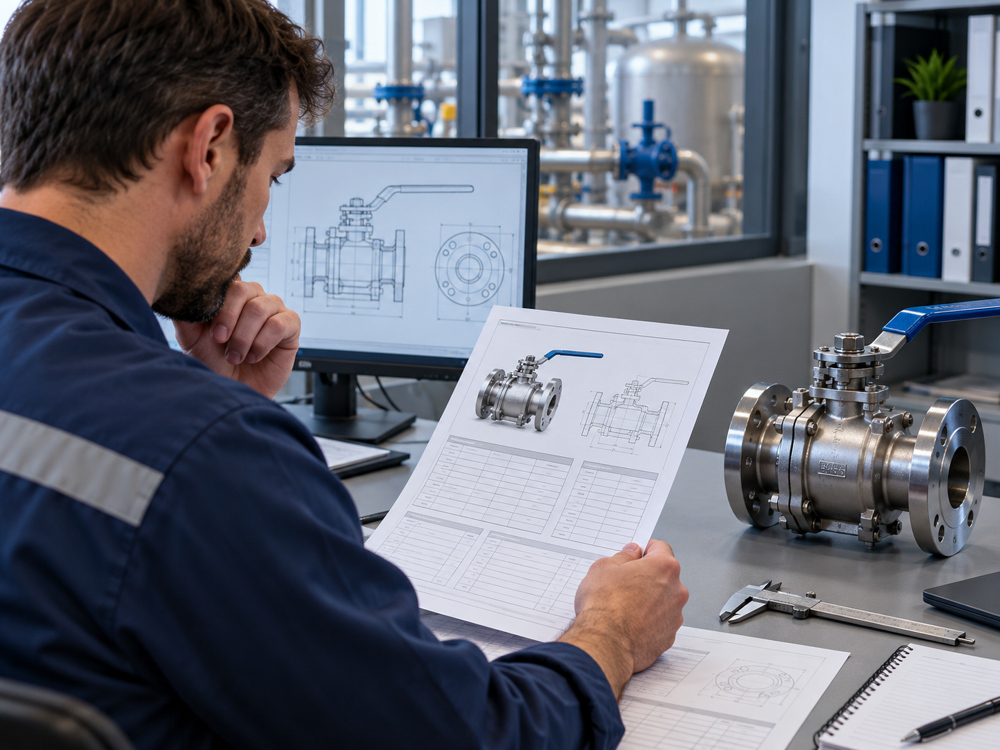
Class 150, 300 or 600 is a designation within a rating system. It is not the valve’s continuous steam pressure in psi. The applicable allowable pressure depends on the standard, material group, temperature and construction category.
Ask the supplier to identify the exact body material specification and grade, applicable design standard and edition, rating category where relevant, and the table or approved chart used. A material description such as “carbon steel” is too broad to support a rating check.
ASME B16.34 addresses pressure–temperature ratings and other requirements for covered valve construction. Flanged valves also need a connection review under the applicable flange standard, such as ASME B16.5 or B16.47 where appropriate. A valve body rating does not increase the allowable rating of its end connections or the mating piping assembly.
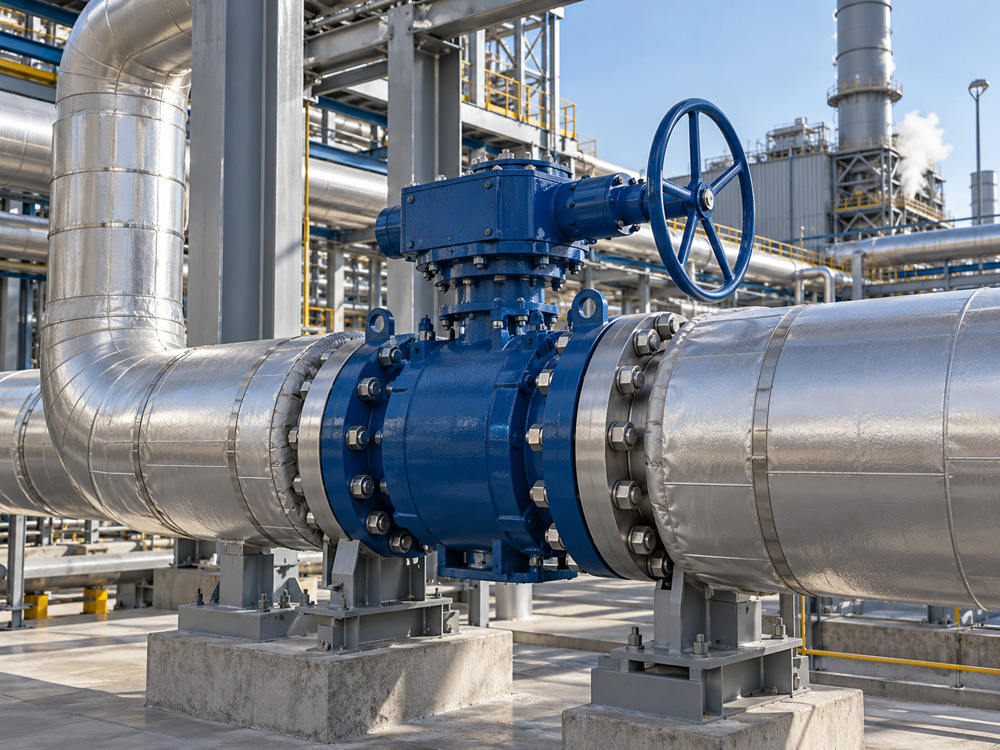
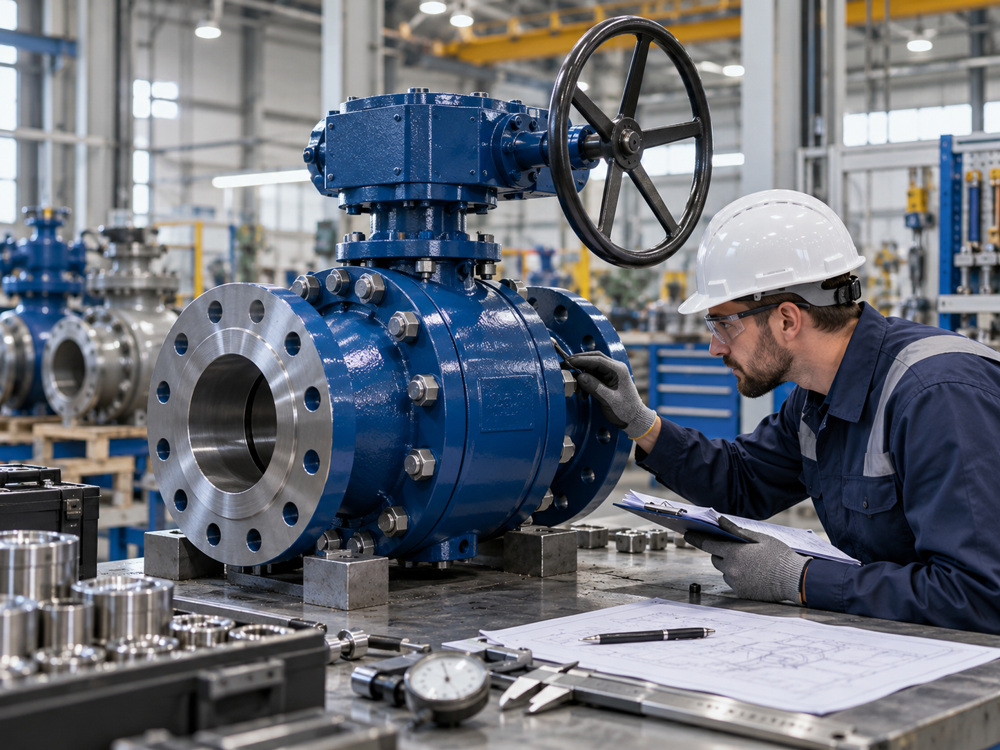
When reviewing a trunnion ball valve for a large steam line, request the rating for the quoted size, material and end connection. A product family page is a starting point for discussion; final suitability requires the selected configuration’s documentation.
3. Check the Complete Valve, Not Only Its Pressure Boundary
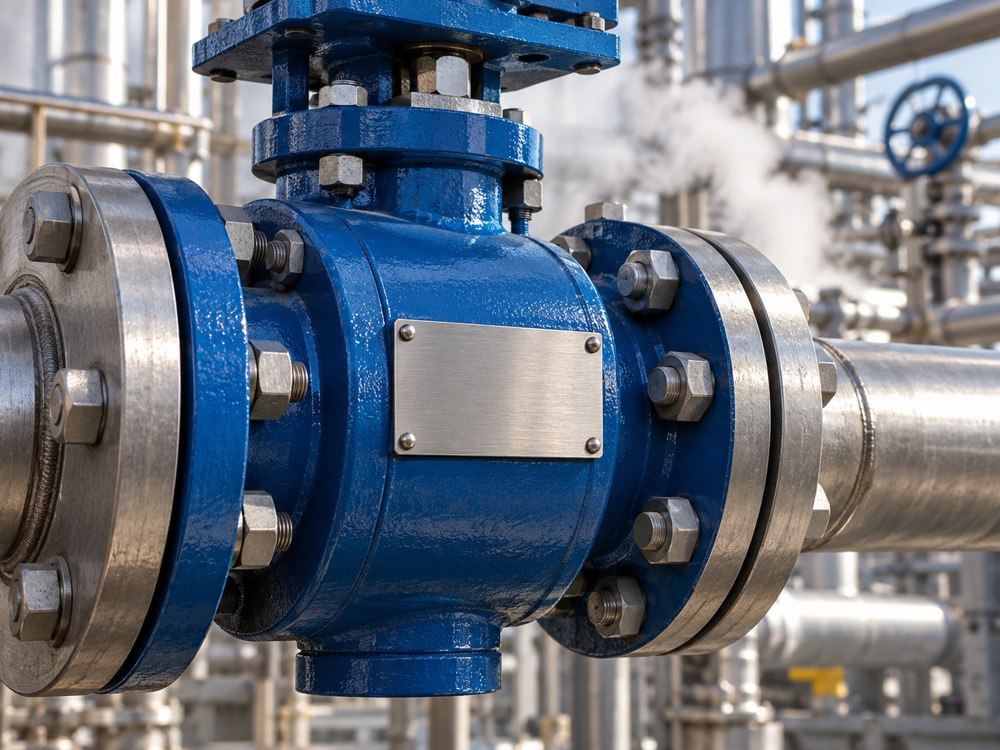
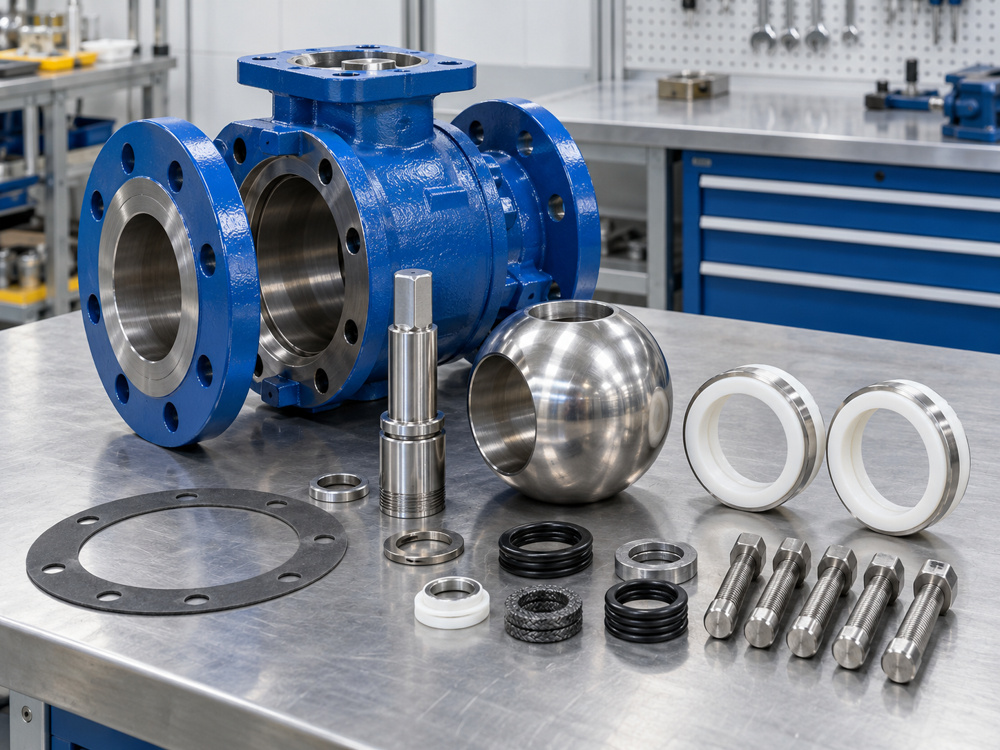
The pressure boundary check establishes one essential limit. The complete valve can have a more restrictive operating envelope because of its seats, body seals, packing, stem sealing arrangement or service-specific restrictions. These limits may change with temperature, pressure, size, differential pressure and duty.
| Review layer | Evidence to request | Approval question |
|---|---|---|
| Body and cover | Material-specific rating basis and construction details | Is the required pressure allowed at this temperature? |
| End connections | Flange or welding-end specification and rating | Does the connection remain suitable at the same duty? |
| Seats and body seals | Configuration-specific pressure–temperature envelope | Are combined pressure and temperature within the approved limit? |
| Packing and stem seals | Materials, steam compatibility and temperature limits | Is the assembled sealing arrangement approved for steam? |
| Bolting and joints | Specified grades, gasket details and design confirmation | Does the joint design support the required envelope? |
| Operation | Maximum differential pressure, torque and actuator sizing | Can the valve open and close under the specified conditions? |
Do not combine the highest pressure from one configuration with the highest temperature from another. A supplier’s chart must match the model, size range, materials, seat option, seals and connections being purchased. If a published chart covers several versions, ask the supplier to highlight the relevant curve and all associated notes.
4. Why a Seat’s Maximum Temperature Is Not Enough
A temperature limit quoted for a seat material may be a material guideline or a limit under particular loading conditions. It does not prove that the seat can seal at that temperature under the requested pressure differential, or that the packing and body seals have the same capability.
Likewise, a brochure stating “maximum pressure” and “maximum temperature” may describe two different endpoints. Unless the manufacturer explicitly approves the combination, those endpoints cannot be treated as simultaneous operating conditions.
A model-specific saturated-steam pressure limit, when provided, must also be observed. This article does not rank seat technologies: the purchase decision depends on the documented operating envelope of the assembled valve.
5. Compare Each Duty Point With the Supplier’s Approved Envelope
- Identify the exact quoted model and configuration.
- Check the pressure boundary rating at the specified temperature.
- Check the connection rating at the same temperature.
- Check the complete-valve service envelope and any steam-specific restrictions.
- Check maximum differential pressure and operation at that duty.
- Repeat for every governing case and record supplier confirmation.
If the duty falls between published points, use only the interpolation method permitted by the applicable standard or manufacturer. Do not extrapolate beyond a chart or infer steam approval from a general water, oil or gas rating. Clarify whether each pressure is gauge or absolute and whether a limit refers to line pressure or differential pressure.
Illustrative Purchase Review: 16 bar(g) at 220°C
Assume a project requires a steam isolation valve at a design condition of 16 bar(g) and 220°C. This is an illustrative review case, not a Vcore product rating. The quotation states Class 300, a cold pressure rating and a maximum temperature of 250°C.
| Supplier statement | Buyer decision |
|---|---|
| “Class 300, maximum temperature 250°C” | Hold: no combined-duty confirmation. |
| Pressure boundary permits the duty, but the assembled valve’s chart permits only 12 bar(g) at 220°C | Reject that configuration for the specified duty. |
| Complete configuration is approved above 16 bar(g) at 220°C, with steam approval and adequate differential-pressure capability | Continue technical review; verify all remaining project requirements. |
The 12 bar(g) value is hypothetical. It demonstrates why passing a body-rating check does not establish complete-valve suitability. The amount of engineering allowance required must come from the project specification and applicable design rules; do not apply an arbitrary percentage to every purchase.
6. Review Differential Pressure, Torque and Steam Cycling
A valve may contain the line pressure yet be unsuitable for the required opening duty. When one side is depressurized, differential pressure can approach the upstream gauge pressure. Ask for breakaway, running and closing torque at the governing temperature and differential pressure.
For automated valves, verify actuator output at the minimum available air pressure or specified electrical supply, the agreed sizing allowance, fail action and the actuator’s ambient-temperature limit. Insulation, radiant heat and mounting geometry can affect actuator exposure. Our pneumatically actuated ball valve page provides a starting point for automated isolation enquiries; the steam-duty torque review must be completed for the selected assembly.
Steam start-up can introduce condensate and rapid heating. Discuss warm-up procedures, drainage, cycling frequency and possible trapped-liquid cavity pressure with the supplier. Where cavity relief is needed, agree the engineered arrangement, relief direction and consequences for bidirectional isolation. Do not assume every ball valve has identical cavity behavior.
A general isolation ball valve should not be assumed suitable for continuous throttling. If the duty requires modulation or pressure reduction, obtain a control-service selection review. Steam-system drainage and water-hammer prevention also require piping design review beyond the valve’s static rating.
7. Request a Technical Approval Package Before the Purchase Order
- Completed valve datasheet referencing the project tag and duty cases.
- Exact model, size, construction, body grade, ball, stem, seats, packing, body seals and bolting.
- Applicable standards and editions, connection details and rating basis.
- Complete-valve pressure–temperature chart or signed duty-specific approval.
- Steam-specific limits and maximum differential pressure.
- Torque data and actuator sizing where applicable.
- Leakage acceptance criteria, test methods and required inspection scope.
- General arrangement drawing, installation instructions and insulation restrictions.
- Agreed documentation, traceability and deviations.
Link the review to the valve inspection and test plan so the approved materials and configuration are verified before shipment. Define the final record package using our valve certificates and quality documents guide.
Why a Hydrostatic Test Report Does Not Prove Hot-Steam Performance
A cold shell test checks pressure containment under the specified test procedure. It does not establish continuous allowable pressure at the design temperature or demonstrate hot seat leakage performance. A routine seat test likewise does not replace a temperature-specific operating rating.
If elevated-temperature leakage testing or cycle qualification is required, specify the temperature, pressure differential, medium, number of cycles, measurement method and acceptance criteria before ordering. Include agreed witness points in the factory acceptance test scope.
RFQ Wording Buyers Can Use
Please quote a ball valve for steam isolation service and confirm the complete supplied assembly is suitable for the attached operating and design pressure–temperature combinations.
Please provide the configuration-specific pressure–temperature rating, applicable standard and material group, steam-service restrictions, maximum differential pressure, seat and sealing materials, torque data, and any deviations. Separate cold test pressure from allowable operating pressure. For actuated valves, submit actuator sizing for the stated differential pressure and temperature.
Frequently Asked Questions
Is a Class 300 ball valve automatically suitable for steam?
No. Class alone does not establish the complete valve’s steam capability. Confirm the material-specific pressure rating at temperature, end connections, assembled sealing limits and manufacturer steam approval.
Can I use maximum pressure and maximum temperature together?
Only when the manufacturer’s rating permits that combination for the exact supplied configuration. Maximum values may apply at different points on the operating envelope.
Does a high seat temperature rating approve the whole valve?
No. The pressure boundary, connections, body seals, packing, differential-pressure capability and service restrictions must also satisfy the duty.
Can saturated-steam approval be used for superheated steam?
Not automatically. Check the actual superheated-steam temperature against the complete-valve envelope and obtain explicit approval for that duty.
What if the supplier provides no complete-valve chart?
Request signed technical confirmation identifying the exact configuration, all required pressure–temperature cases and restrictions. Keep the item on technical hold until adequate evidence is supplied.
Send Vcore Your Steam Duty for a Configuration Review
For a steam ball valve enquiry, provide size, connection standard, operating and design pressure–temperature combinations, steam state, differential pressure, operating method and required documentation. Vcore can review the proposed configuration with your project requirements before finalizing a quotation. Contact Vcore Valve with the duty sheet and any project valve specification.
Technical References
Use the project-specified editions and the current supplier documents for the purchased configuration. The following references support the review method; they are not substitute ratings for Vcore valves.
- ASME B16.34: Valves—Flanged, Threaded, and Welding End — scope of pressure–temperature ratings and valve construction requirements.
- Spirax Sarco M10MS/M10MV installation instructions — manufacturer example that separately identifies design conditions, saturated-steam operating limits, differential-pressure limits and cold hydrostatic test pressure. Its numerical ratings apply only to the stated models.