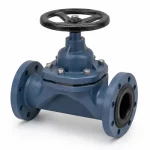
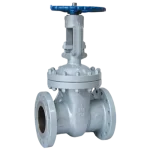
Quick Summary
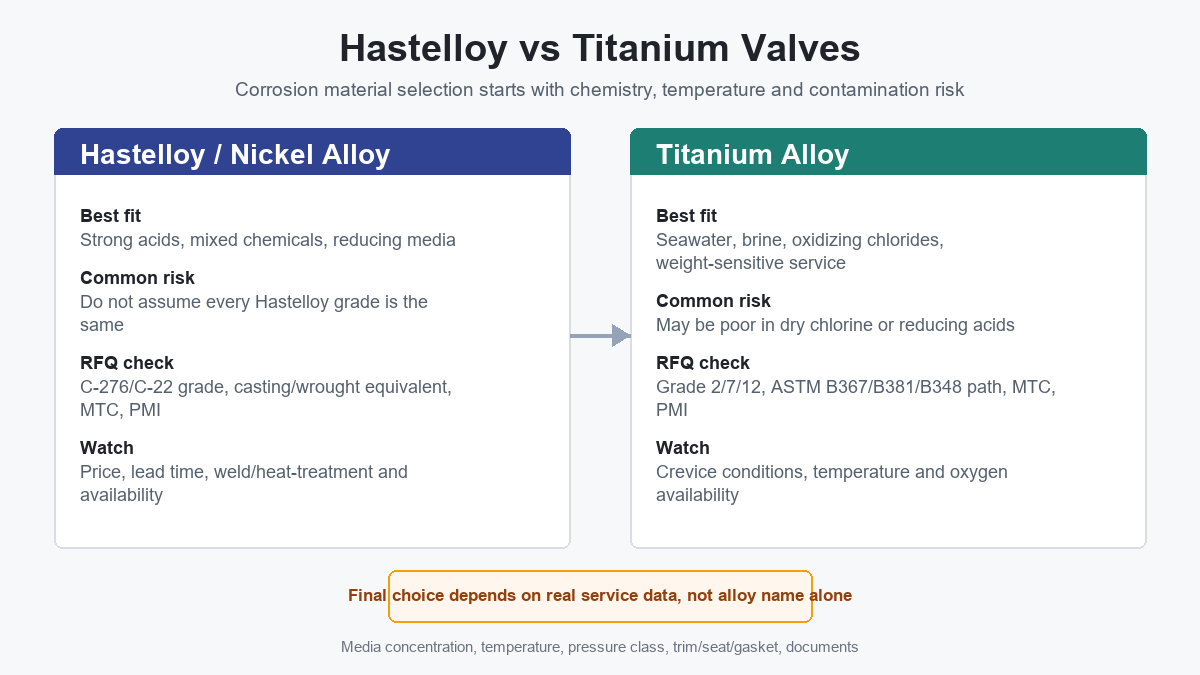
Hastelloy vs Titanium Valves is not a simple question of which alloy is stronger or more expensive. Hastelloy and other nickel alloys are often selected for aggressive mixed acids, reducing chemicals and chloride stress corrosion cracking risk. Titanium is often selected for seawater, brine, wet chlorine and many oxidizing chloride services because its protective oxide film can be very stable when oxygen or water is present.
For a real valve RFQ, the safer decision is to compare the exact fluid, concentration, temperature, pressure class, valve type, trim, seat, gasket, bolting and inspection documents. If the service includes acids, chlorides, high temperature or contamination risk, send us the working conditions before choosing the alloy name only.
When This Comparison Matters
Both materials are used when stainless steel, carbon steel, ductile iron or lined valves may not give enough life. The decision normally appears in chemical dosing, seawater intake, brine, desalination, acid handling, chloride-containing process lines, fertilizer, pharmaceutical utility systems and high-value export projects where leakage or early corrosion would be costly.
Before selecting a premium alloy, compare it with the broader options in our corrosion-resistant valves guide and anti-corrosion valve materials guide. Those resources help decide whether a full alloy valve, lined valve, coated valve or upgraded trim is the better purchasing route.
Hastelloy vs Titanium Valves Comparison Table
| Selection Point | Hastelloy / Nickel Alloy Valves | Titanium Valves |
|---|---|---|
| Common alloy family | C-276, C-22 and other nickel-chromium-molybdenum alloys; cast valves may reference ASTM A494/A494M nickel alloy casting grades for corrosion-resistant service. | Commercially pure titanium and titanium alloys such as Grade 2, Grade 7 or Grade 12; cast titanium valves may reference ASTM B367 for corrosion-resistant and industrial castings. |
| Best-fit service | Mixed acids, reducing media, oxidizing acids, chloride-bearing chemicals and services where stainless steel SCC is a concern. | Seawater, brine, wet chlorine, many oxidizing chloride services and applications where low weight matters. |
| Chloride service | Strong resistance to chloride pitting, crevice corrosion and stress corrosion cracking when the right grade is selected. | Excellent in aerated seawater and many natural waters, but crevice conditions and hot stagnant brine must be reviewed carefully. |
| Acid service | Often better for severe acids and mixed chemical streams, especially where reducing conditions are present. | Can perform well in selected oxidizing acids, but may be unsuitable in non-aerated reducing acids or dry chlorine conditions. |
| Temperature and pressure class | Pressure-temperature rating must be checked against the selected alloy, ASME class and valve standard. | Also requires pressure-temperature review; titanium strength and allowable stress differ from carbon steel, stainless steel and nickel alloys. |
| Trim, seat and gasket risk | The body alloy alone is not enough; stem, ball/disc, seat, gasket, packing and bolting must match the corrosion duty. | Same risk. Titanium body with unsuitable trim or gasket can still fail early. |
| Cost and lead time | Usually high material cost and longer procurement time, but often justified for severe chemicals. | Can also be costly, but may reduce weight and maintenance in seawater systems. |
| Main RFQ risk | Only writing “Hastelloy” without specifying grade, casting/wrought form, MTC, PMI and wetted parts. | Only writing “titanium” without grade, oxygen/crevice review, wetted parts and required documents. |
What Hastelloy Means In Valve RFQs
Hastelloy is a trade name used for several nickel alloy families, so a purchase order should not stop at the word “Hastelloy.” C-276, C-22 and other grades are not automatically interchangeable. The exact grade affects corrosion resistance, weldability, availability, casting route and final price.
For cast valve bodies and covers, many projects reference nickel alloy casting standards such as ASTM A494/A494M. For severe chemical service, buyers should request MTC, heat number traceability, PMI if required, pressure test records and a wetted-parts material list. Haynes describes C-276 as a nickel-chromium-molybdenum alloy with strong resistance to chloride stress corrosion cracking, pitting and crevice attack, which is why it appears so often in aggressive chemical applications.
What Titanium Means In Valve RFQs
Titanium selection also needs grade control. Grade 2 is common for commercially pure titanium service, while Grade 7 or Grade 12 may be considered when the corrosion condition, crevice risk or temperature requires better performance. For titanium castings, ASTM B367 covers titanium and titanium alloy castings intended for corrosion-resistant and industrial applications.
Titanium performs especially well in seawater because it forms a protective oxide film that can repair itself when oxygen or water is available. That is why titanium is common in seawater, brine and desalination equipment. Still, do not approve titanium only because the service contains chloride. Stagnant hot brine, tight crevices, dry chlorine or reducing acid conditions can change the answer quickly. For seawater projects, compare the alloy decision with our seawater valve selection guide.
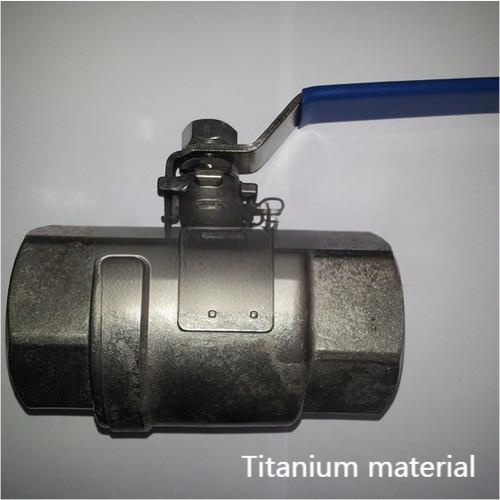
This image is used as a titanium severe-service reference, not as a universal recommendation. For RFQ work, buyers should still confirm the exact titanium grade, process chemistry, crevice conditions, gasket contact area, and inspection documents before approving the material.
Corrosion Conditions That Decide The Choice
The most important question is the real chemistry inside the valve. A small amount of oxidizer, chloride, fluoride, dissolved oxygen, acid mixture or cleaning chemical can change corrosion behavior. Temperature is equally important: a material that looks safe at ambient temperature may become risky at 90 degrees C or under shutdown conditions.
For Hastelloy, confirm whether the chemical is oxidizing, reducing or mixed. For titanium, confirm whether the fluid is aerated, stagnant, hot, crevice-forming or exposed to dry chlorine. For both materials, check if the valve will see solids, crystallization, throttling, vacuum, CIP cleaning, passivation chemicals or intermittent operation. These conditions often decide whether the buyer needs a full alloy valve, alloy trim, lined valve or another design.
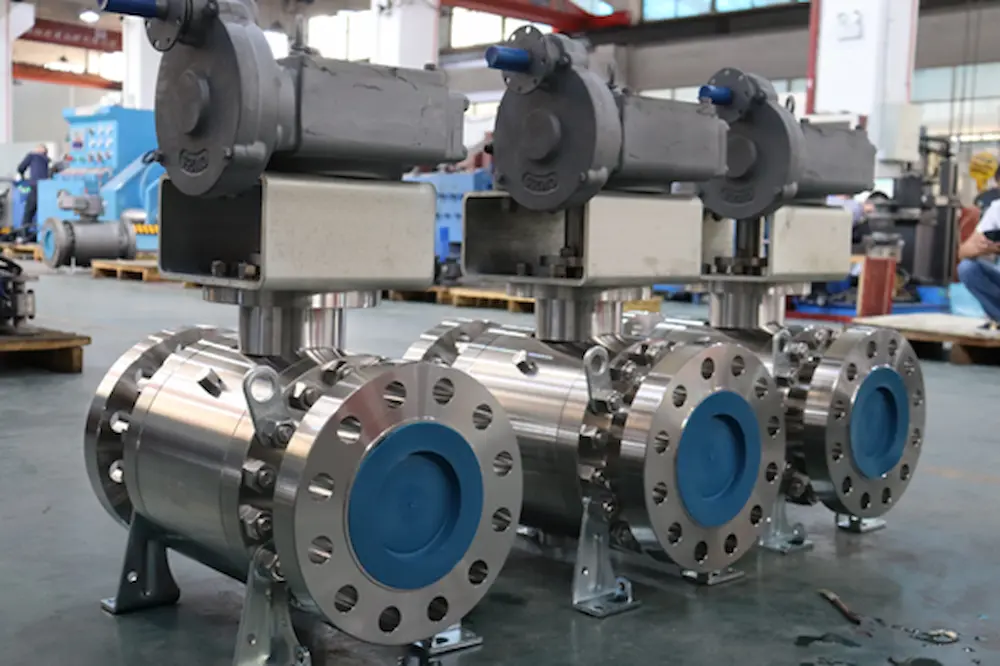
For high-risk corrosion service, Vcore Valve normally reviews the valve body, trim, seat, gasket, bolting, pressure-temperature rating, certificates, and actual process data together. This reduces the risk of quoting a costly alloy valve that still fails because the sealing package or operating condition was not matched.
Body Material Is Only One Part Of The Valve
A valve can fail even when the body material is correct. The ball, gate, disc, stem, seat, gasket, packing, fasteners and actuator mounting parts must also suit the service. Soft seats may limit temperature. PTFE, PEEK, graphite and elastomer options behave differently in acid, solvent, steam and chlorine service. Bolting may need its own corrosion review, especially for outdoor marine or chemical plant installation.
Use our valve material selection guide and valve trim materials guide to check the complete wetted-parts package. If pressure and temperature are near the limit, also review the valve pressure-temperature rating guide before confirming the ASME class.
RFQ Checklist For Hastelloy And Titanium Valves
- Fluid name, concentration, pH, chloride content and impurity information
- Normal, maximum and cleaning temperature
- Normal pressure, design pressure and required pressure class
- Valve type, size, end connection, bore, flow direction and operating mode
- Required body, trim, seat, gasket, packing and bolting materials
- Preferred grade, casting or forged/wrought route, and applicable ASTM/ASME standard
- Required MTC, PMI, pressure test, NDE, inspection photos and packing documents
- Any coating, passivation, degreasing, oxygen cleaning or export documentation requirement
For export buyers, the document package should be prepared before shipment, not after installation problems appear. Our valve certificates and quality documents guide explains what to request when the order involves special alloys or third-party inspection.
Practical Selection Summary
Choose Hastelloy or another nickel alloy when the service involves aggressive acids, mixed chemicals, high chloride stress corrosion cracking risk or a history of stainless steel failure. Choose titanium when seawater, brine, wet chlorine or weight-sensitive chloride service is the main driver and the application conditions support titanium’s protective oxide film.
For a reliable quotation, send the service data sheet, valve type, size, pressure class, temperature, fluid composition and document requirements. Vcore Valve can help compare Hastelloy, titanium, duplex stainless steel, lined valves and other corrosion-resistant solutions so the final offer matches the working condition rather than only a material name.
FAQ
Are Hastelloy valves better than titanium valves?
No. Hastelloy is often stronger for severe acids, mixed chemicals and chloride stress corrosion cracking risk. Titanium is often stronger for seawater, brine and selected oxidizing chloride services. The correct choice depends on fluid chemistry, temperature and the complete valve material package.
When should titanium valves be selected?
Titanium valves are often selected for seawater, brine, desalination and wet chlorine applications where the service allows a stable protective oxide film. Grade selection and crevice risk should still be reviewed before ordering.
Which Hastelloy grade is common for severe corrosion?
C-276 is commonly specified for many severe chemical and chloride-containing applications, but it should not be used as a generic substitute for every Hastelloy grade. Confirm the required alloy, casting or wrought form, and documents in the RFQ.
Why can a premium alloy valve still fail?
Failures often come from incomplete specifications: unsuitable trim, seat, gasket, packing or bolting, wrong grade, missing PMI, unexpected cleaning chemicals, or temperature conditions outside the approved range.
What information should I send for a Hastelloy or titanium valve quotation?
Send fluid name, concentration, pH, chloride content, temperature, pressure, valve type, size, end connection, required grade, trim, seat, gasket, bolting and certificate requirements.