How to Choose a Gate Valve Manufacturer for Plumbing Projects: Drawings, Quality & Project Support
Choosing a gate valve manufacturer for a plumbing, municipal water or industrial utility project should involve much more than checking a certificate and comparing unit prices.
Certifications, manufacturing standards and factory qualifications are important because they establish a basic level of capability. But once a real project begins, buyers quickly discover that another group of factors can be just as important: whether the supplier understands the specification, whether engineers identify missing information before quotation, how quickly drawings are submitted, how revisions are controlled, whether production follows the approved drawing, and whether inspection documents arrive when the project needs them.
Two suppliers may both claim compliance with the same valve standard, yet provide very different project experiences. One may simply quote a catalogue model. Another may review pressure, temperature, medium, face-to-face dimensions, flange drilling, stem arrangement, materials and inspection requirements before confirming the valve configuration.
For project procurement, that difference matters.
Quick Summary
- Certificates and standards are the starting point when evaluating a gate valve manufacturer, not the complete evaluation.
- A reliable supplier should review actual service conditions before confirming valve configuration and price.
- GA drawings and technical drawings are one of the most useful ways to verify dimensions, materials, structure and project-specific requirements before production.
- Drawing response time, revision control and engineering communication can directly affect project approval and production schedules.
- Material traceability, pressure testing, dimensional inspection and documentation should correspond to the actual ordered valve.
- For project orders, evaluate the manufacturer’s complete execution process: RFQ review → technical clarification → drawing approval → production → inspection → documentation → delivery.
Why Certifications Alone Are Not Enough
When buyers first search for a gate valve supplier, certificates are often one of the easiest comparison points. Quality-management certification, applicable product standards, test capability and project-specific approvals can all be important.
However, a certificate does not by itself confirm that the valve being quoted is technically correct for a particular pipeline.
For example, a plumbing or water project may specify a gate valve by nominal size but still require confirmation of:
| Parameter | What Must Be Confirmed | Why It Matters |
|---|---|---|
| Size | DN / NPS and actual bore requirement | Determines compatibility with the pipeline |
| Pressure | PN / ASME Class, operating and design pressure | Affects body design and pressure rating |
| Medium | Potable water, raw water, wastewater, process water, steam or other fluid | Affects material, seat and coating selection |
| Temperature | Operating and design temperature | Affects material and sealing compatibility |
| Connection | Flange, thread, groove, socket weld or butt weld | Must match the piping specification |
| Face-to-Face | Applicable standard or project-specific dimension | Critical when replacing an existing valve |
| Stem Design | Rising stem or non-rising stem | Affects installation space and operation |
| Seat | Resilient seat or metal seat | Affects shut-off and service suitability |
| Operation | Handwheel, gearbox or actuator | Affects operating torque and site accessibility |
| Testing | Pressure, leakage, coating or special inspection requirements | Defines project acceptance criteria |
For buyers who are still determining the correct valve configuration, Vcore’s guide on
gate valves in plumbing
explains how size, pressure, materials, stem type, connection and water-service conditions influence valve selection.
1. Engineering Review Before the Quotation
One of the first signs of a capable gate valve manufacturer appears before a purchase order is placed.
A technically responsible supplier should not treat every RFQ as a simple request for a price. If important information is missing, the supplier should identify the gaps and request clarification.
Consider an inquiry that simply states:
Gate Valve, DN100, Class 150, Qty 20.
That information may not be enough to manufacture the correct valve. A supplier may still need to know the medium, temperature, body material, trim, flange facing, design standard, face-to-face requirement, seat construction, stem arrangement and testing scope.
A supplier that immediately quotes without checking those issues may produce a fast quotation, but not necessarily a technically comparable quotation.
For industrial valve projects, the quotation should be based on a clearly defined technical configuration.
Vcore discusses this specification-first approach in the
Industrial Valve Design Considerations
guide.
2. Drawing Capability Is One of the Most Important Supplier Checks
For many project buyers, the gate valve drawing becomes the bridge between the quotation and manufacturing.
Certificates tell you what systems or standards a supplier may support. The approved drawing tells you what the supplier actually plans to manufacture for your order.
This becomes especially important when the valve is replacing existing equipment, connecting to fixed piping, using non-standard dimensions or requiring customized materials.
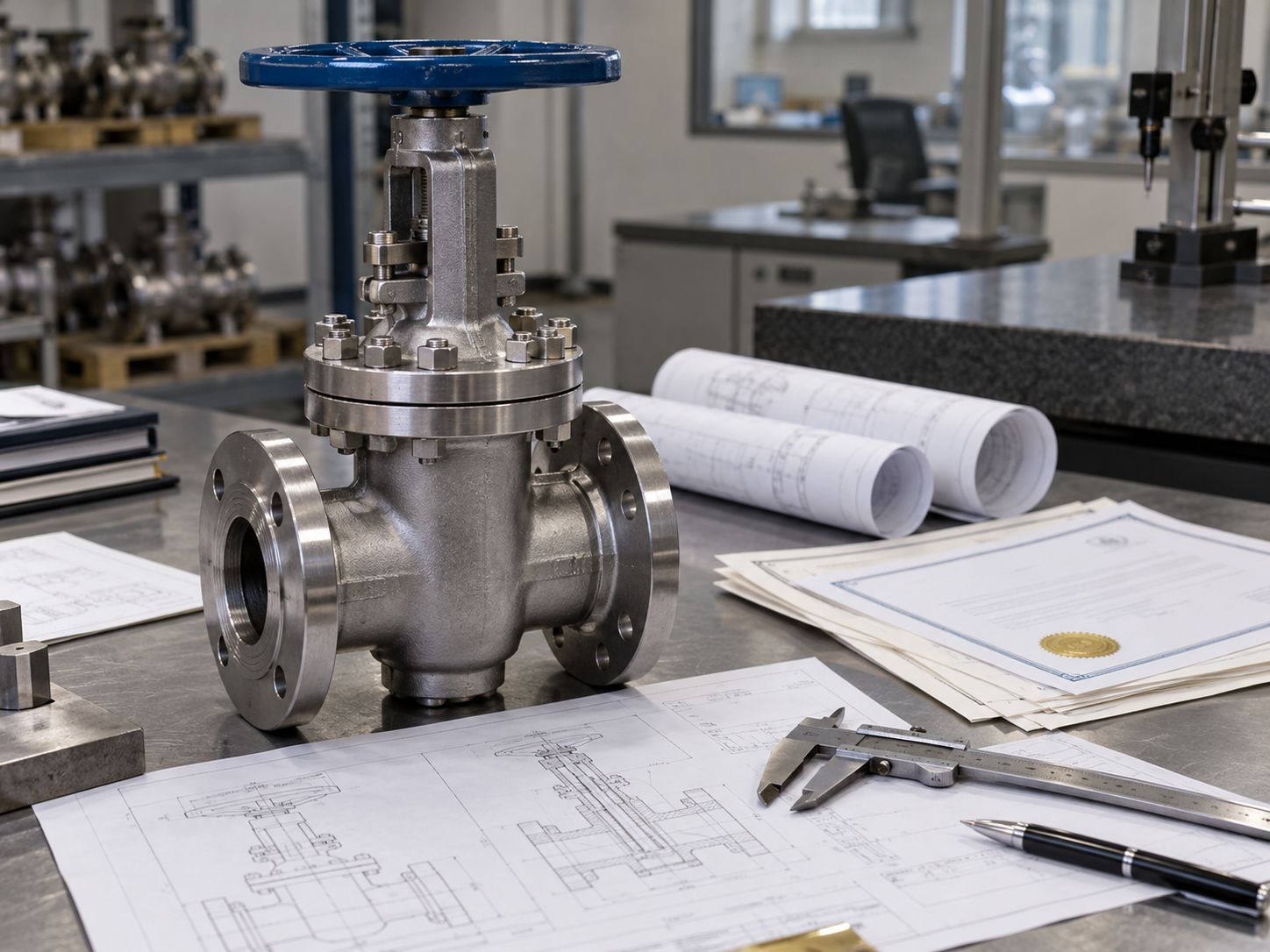
What Should Be Checked on a Gate Valve GA Drawing?
| Drawing Item | Typical Check | Procurement Risk If Missed |
|---|---|---|
| Face-to-Face | Overall installation length | Valve may not fit existing piping |
| Flange | OD, PCD, bolt quantity, hole diameter, facing | Connection mismatch |
| Bore | Flow passage diameter | Unexpected restriction or piping mismatch |
| Overall Height | Closed and fully open dimensions where applicable | Insufficient installation clearance |
| Stem | Rising / non-rising configuration and stem dimensions | Operation or maintenance problems |
| Operator | Handwheel, gearbox or actuator interface | Incorrect operating arrangement |
| Materials | Body, bonnet, gate, stem and seat | Delivered valve may differ from specification |
| Pressure Rating | PN / ASME Class and applicable standard | Incorrect design basis |
| Weight | Approximate or final valve weight | Transport or support calculations may be wrong |
3. Drawing Response Time Can Affect the Entire Project Schedule
A supplier may have good machining equipment and certificates, but poor technical follow-up can still delay a project.
For EPC, contractor, municipal and industrial orders, the drawing often needs to pass through several parties:
Buyer → Procurement → Engineering → Consultant → End User → Manufacturer.
A small clarification can therefore take several communication cycles.
The gate valve manufacturer should have a clear process for handling these comments instead of repeatedly restarting the review.
A Good Drawing Follow-Up Process
A practical drawing workflow normally looks like this:
RFQ received → specification reviewed → preliminary configuration confirmed → GA drawing prepared → customer comments received → revision issued → final drawing approved → production released.
For customized projects, production should not begin from an outdated or unapproved drawing when drawing approval is part of the purchase requirement.
Revision Control Matters
When customers request dimensional or material changes, the supplier should clearly identify the drawing revision.
For example:
| Revision | Typical Change | Status |
|---|---|---|
| Rev.0 | Initial drawing submitted | For customer review |
| Rev.1 | Face-to-face dimension updated | Resubmitted for approval |
| Rev.2 | Stem material and flange dimensions confirmed | Approved for production |
Without revision control, purchasing, engineering and production teams may work from different drawings.
For customized valves, that can create a much larger problem than waiting an additional day for a correct technical confirmation.
4. Evaluate the Quality of Technical Communication
Response speed is useful, but response quality is more important.
A professional gate valve supplier should be able to distinguish between commercial questions and engineering questions.
For example, when a customer requests a valve according to an existing sample or old drawing, useful technical questions may include:
- Is the face-to-face dimension mandatory?
- Must the end connection remain identical to the existing valve?
- Is the drawing dimensional only, or must the internal structure also be reproduced?
- What medium, temperature and pressure will the new valve handle?
- Are the specified materials mandatory or can an equivalent material be proposed?
- Is interchangeability with the existing valve required?
- Does the actuator, gearbox or handwheel need to remain in the same position?
These questions reduce ambiguity before manufacturing begins.
5. Check Whether the Manufacturer Can Handle Custom Requirements
Standard catalogue valves are relatively straightforward. Supplier capability becomes much easier to judge when the project is not standard.
Custom requirements may include different face-to-face dimensions, unusual flange drilling, special stem lengths, project-specific body materials, special coating, actuator interfaces or replacement valves that must fit existing pipework.
For these orders, buyers should determine whether the supplier can actually convert a customer drawing or datasheet into a controlled manufacturing configuration.
A supplier should also clearly explain when a requirement cannot be manufactured economically or safely rather than accepting every specification without review.
6. Material Control Matters More Than a Material Name on the Quotation
Writing “WCB body” or “SS316 stem” in a quotation is only the first step.
For project valves, buyers may also need material certificates, heat-number traceability, PMI or other project-specific verification depending on the service and purchase specification.
The manufacturer should be able to connect the material documentation to the actual ordered valve when traceability is required.
| Component | Typical Material Check |
|---|---|
| Body / Bonnet | Material grade and pressure-temperature suitability |
| Gate / Wedge | Base material and sealing surface |
| Stem | Material, corrosion resistance and strength |
| Seat | Metal or resilient sealing material |
| Packing | Temperature and media compatibility |
| Bolting | Material and service compatibility |
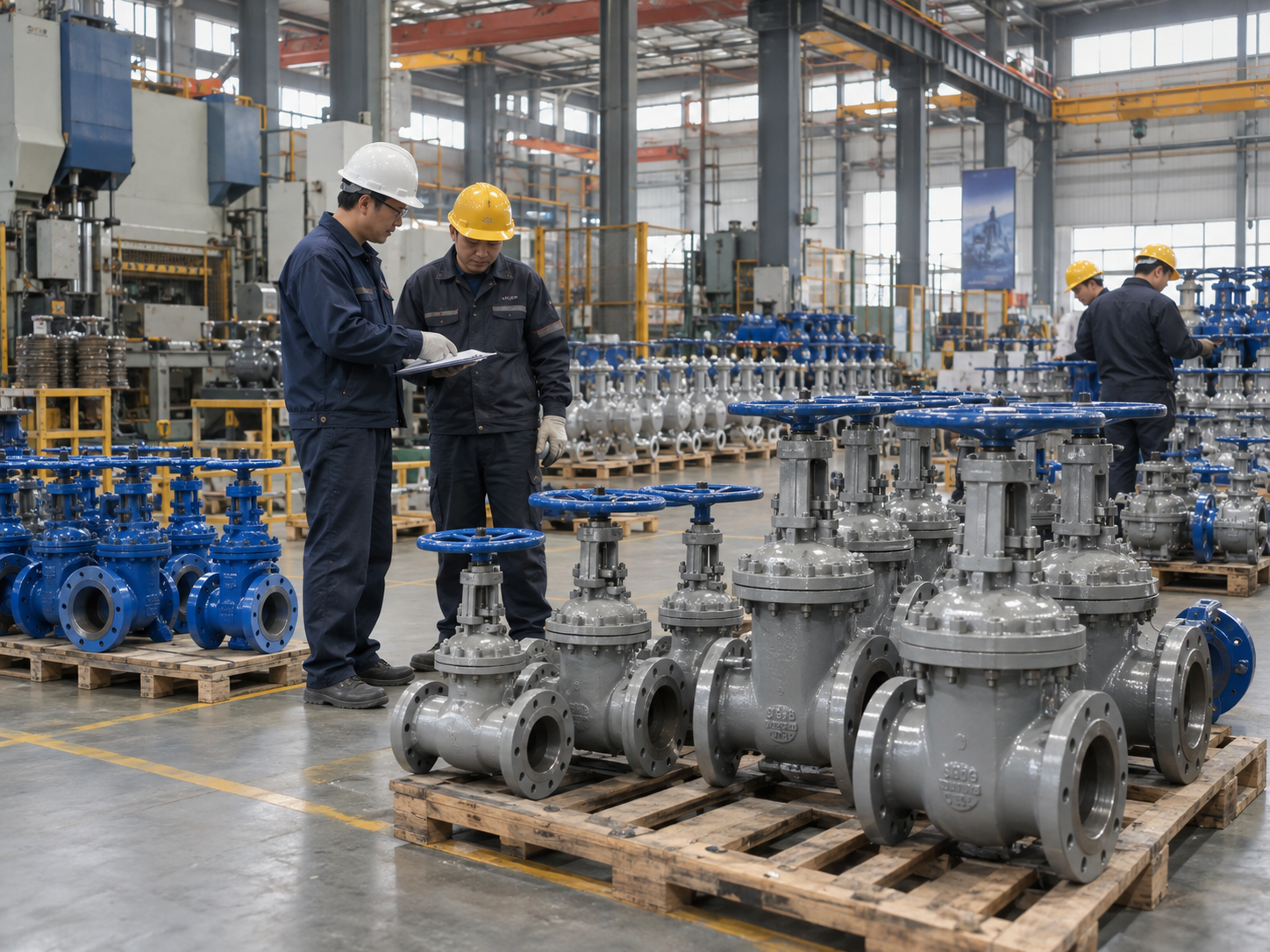
7. Look at Manufacturing and Inspection Capability
A gate valve is not verified only by its external appearance.
Manufacturing capability should include control of machining dimensions, sealing surfaces, stem alignment, assembly and final testing.
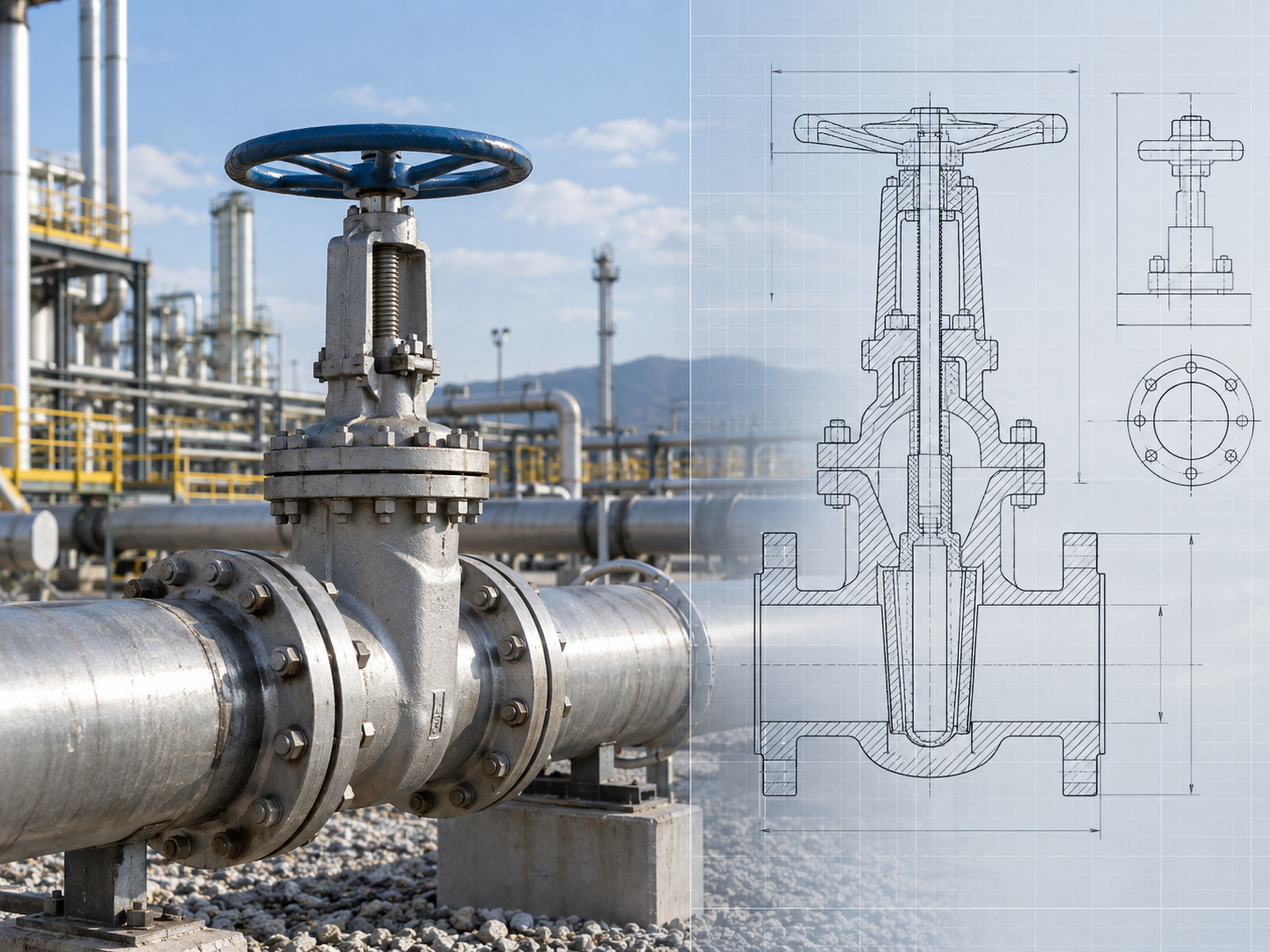
Depending on the order and project specification, inspection may include shell pressure testing, seat leakage testing, dimensional inspection, material verification, coating inspection and functional operation.
The exact scope should be confirmed before order placement rather than assumed from a general catalogue statement.
8. Pressure Testing Should Match the Ordered Valve
Pressure testing is another important manufacturer evaluation point.
The required test standard depends on the valve type and project specification. For industrial gate valves, the inquiry should identify the applicable inspection and acceptance requirements rather than simply asking whether the supplier “does pressure testing.”
More useful questions include:
Which shell test is performed? Which seat test is required? What pressure and holding time apply? Is the test witnessed? Is a test report required? Does the report identify the actual valve or production batch?
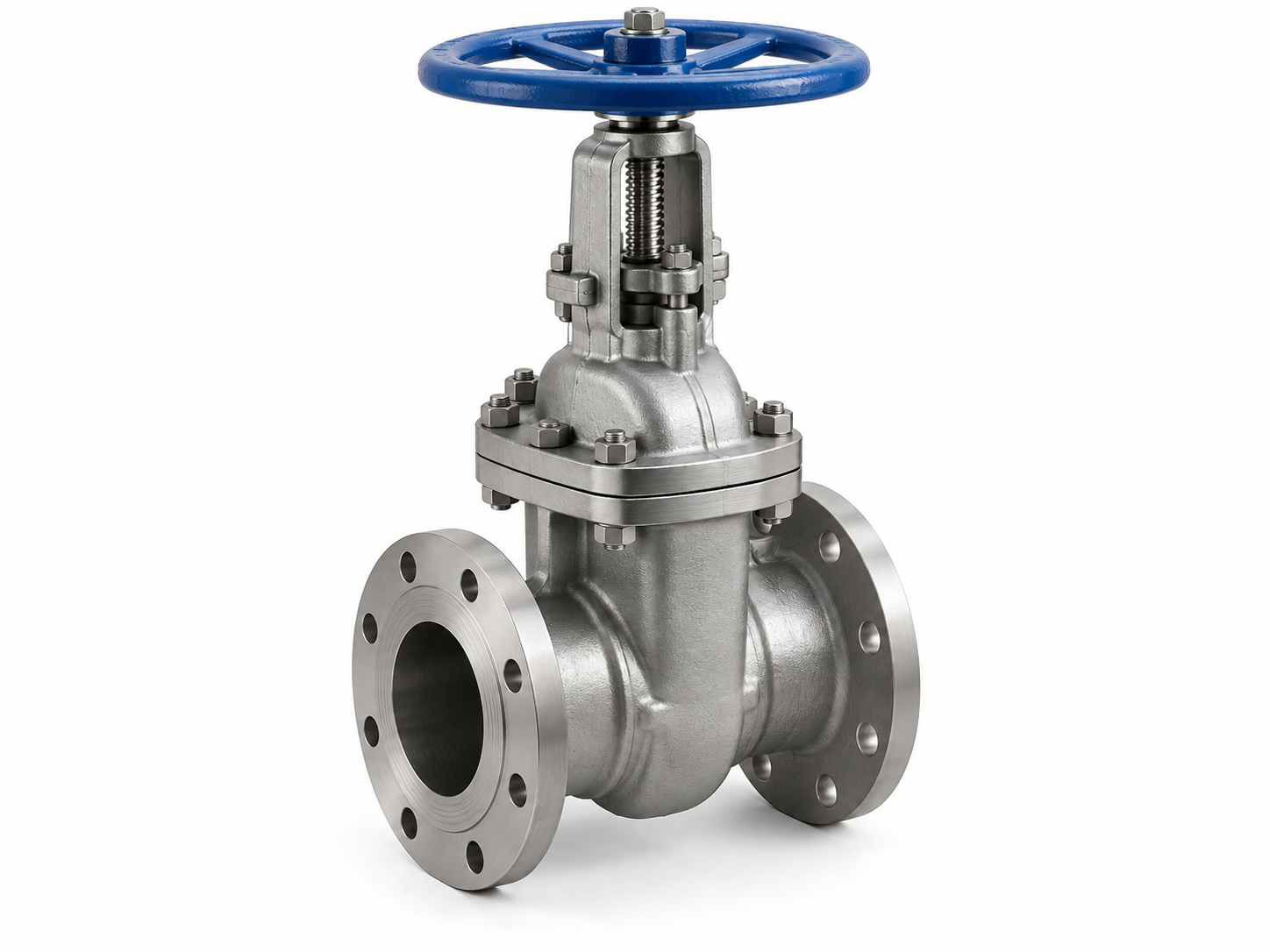
9. Production Follow-Up Is Part of Supplier Capability
After the drawing is approved and the purchase order is released, buyers need visibility into production.
This is particularly important when the valves are needed for a shutdown, construction milestone, vessel departure or site installation window.
A good manufacturer or project supplier should be able to communicate meaningful production stages such as:
Material preparation → casting or forging → machining → component inspection → assembly → pressure testing → painting/coating → final inspection → packing.
Project updates should reflect actual manufacturing progress rather than repeatedly giving only a generic answer such as “production is in progress.”
10. Documentation Capability Can Be as Important as Manufacturing
Some valves arrive physically correct but still cannot be accepted because the required documents are incomplete.
For commercial plumbing projects this may be simple. For EPC, oil and gas, power, industrial water and infrastructure projects, documentation requirements can be considerably more detailed.
Depending on the purchase order, a gate valve manufacturer may need to provide:
| Document | Purpose |
|---|---|
| GA Drawing | Confirms overall configuration and installation dimensions |
| Datasheet | Defines technical specification |
| MTC / MTR | Supports material traceability |
| Pressure Test Report | Records required pressure testing |
| Dimensional Inspection Report | Confirms specified dimensions |
| Coating Report | Records coating requirements where applicable |
| Certificate of Conformity | Confirms supply against the agreed order scope |
| Packing List | Supports logistics and shipment checking |
| Operation / Maintenance Manual | Supports installation and maintenance where required |
Document requirements should therefore be included in the RFQ whenever they are important to project acceptance.
11. Delivery Reliability Is More Than the Quoted Lead Time
A lead time printed on a quotation is only useful when the supplier has evaluated the actual manufacturing scope.
Custom castings, special forgings, non-standard machining, actuators, special coatings, third-party inspection or customer drawing approval can all affect the production schedule.
For this reason, a realistic delivery schedule is often more valuable than an aggressive delivery promise that cannot be maintained.
Buyers should also distinguish between:
Production lead time, inspection completion, packing completion and shipment date.
These are not always the same milestone.
12. Communication Should Continue After the Purchase Order
A reliable gate valve supplier should not become difficult to contact after receiving the order.
The project may still require drawing comments, material clarification, inspection coordination, packing information, shipping dimensions or document corrections.
For international procurement, having a sales contact who can coordinate directly with factory engineers can significantly simplify these discussions.
The best supplier communication does not mean answering every question instantly. It means providing technically accurate information, identifying what still needs engineering confirmation and closing outstanding issues systematically.
How to Compare Two Gate Valve Manufacturers
| Evaluation Area | What to Check | Why It Matters |
|---|---|---|
| Qualifications | Applicable certificates and manufacturing scope | Basic supplier qualification |
| Technical Review | Does the supplier identify missing RFQ data? | Reduces specification errors |
| Drawing Capability | GA, sectional drawings and revisions | Confirms actual valve configuration |
| Response Quality | Can commercial and technical questions be answered clearly? | Improves project coordination |
| Customization | Non-standard dimensions and materials | Important for replacement and project valves |
| Material Control | Certificates and traceability | Confirms ordered materials |
| QC / Testing | Pressure, dimensional and functional inspection | Verifies manufactured product |
| Documentation | GA, MTC, test reports and project documents | Supports project acceptance |
| Production Follow-Up | Meaningful manufacturing progress updates | Supports schedule control |
| Delivery | Realistic manufacturing and shipping schedule | Reduces project delay risk |
| After-Sales Support | Technical assistance and replacement support | Important after installation |
Common Mistakes When Choosing a Gate Valve Supplier
1. Selecting Only by Certificate
Certificates are important, but they should be combined with review of the actual valve, drawing, manufacturing process and project documentation.
2. Comparing Prices Before Aligning Specifications
Two quotations cannot be compared fairly if one supplier quotes WCB with stainless trim while another quotes a different body, seat or connection configuration.
3. Approving the Order Without Reviewing the Drawing
For replacement or customized valves, dimensional differences may only become obvious during installation if the drawing was never checked.
4. Ignoring Drawing Turnaround and Technical Response
A low-priced supplier may become expensive if engineering clarification takes weeks and delays the approval cycle.
5. Confirming Only the Valve Body Material
Gate, stem, seat, packing, bolting and coating can also affect service suitability.
6. Asking for Documentation Only Before Shipment
If specific documents are required for project acceptance, define them in the RFQ or purchase order.
7. Choosing an Unrealistic Lead Time
Very short lead times should be checked against material availability, drawing approval, manufacturing, testing and inspection requirements.
Gate Valve Manufacturer RFQ Checklist
| RFQ Item | Information to Provide or Confirm |
|---|---|
| Valve Type | Gate valve type and required structure |
| Size | DN / NPS and quantity by size |
| Pressure | PN / ASME Class, operating and design pressure |
| Temperature | Operating and design temperature |
| Medium | Water, wastewater, steam, oil, gas, chemical or other service |
| Body Material | Ductile iron, carbon steel, stainless steel, bronze or project grade |
| Trim | Gate, stem, seat and sealing material |
| Connection | Flanged, threaded, grooved, BW, SW or project-specific |
| Flange Standard | ASME, EN, DIN, JIS or project requirement |
| Face-to-Face | Standard dimension or required project dimension |
| Stem | Rising or non-rising |
| Operation | Handwheel, gearbox, electric or pneumatic actuator |
| Design Standard | Applicable product or project standard |
| Testing | Pressure, leakage, dimensional, coating and special tests |
| Drawing | GA / sectional drawing required before production |
| Documents | MTC, test report, inspection report and required certificates |
| Inspection | Factory inspection, TPI or customer witness requirement |
| Delivery | Required production completion and shipping date |
| Destination | EXW, FOB, CIF or other Incoterm and destination |
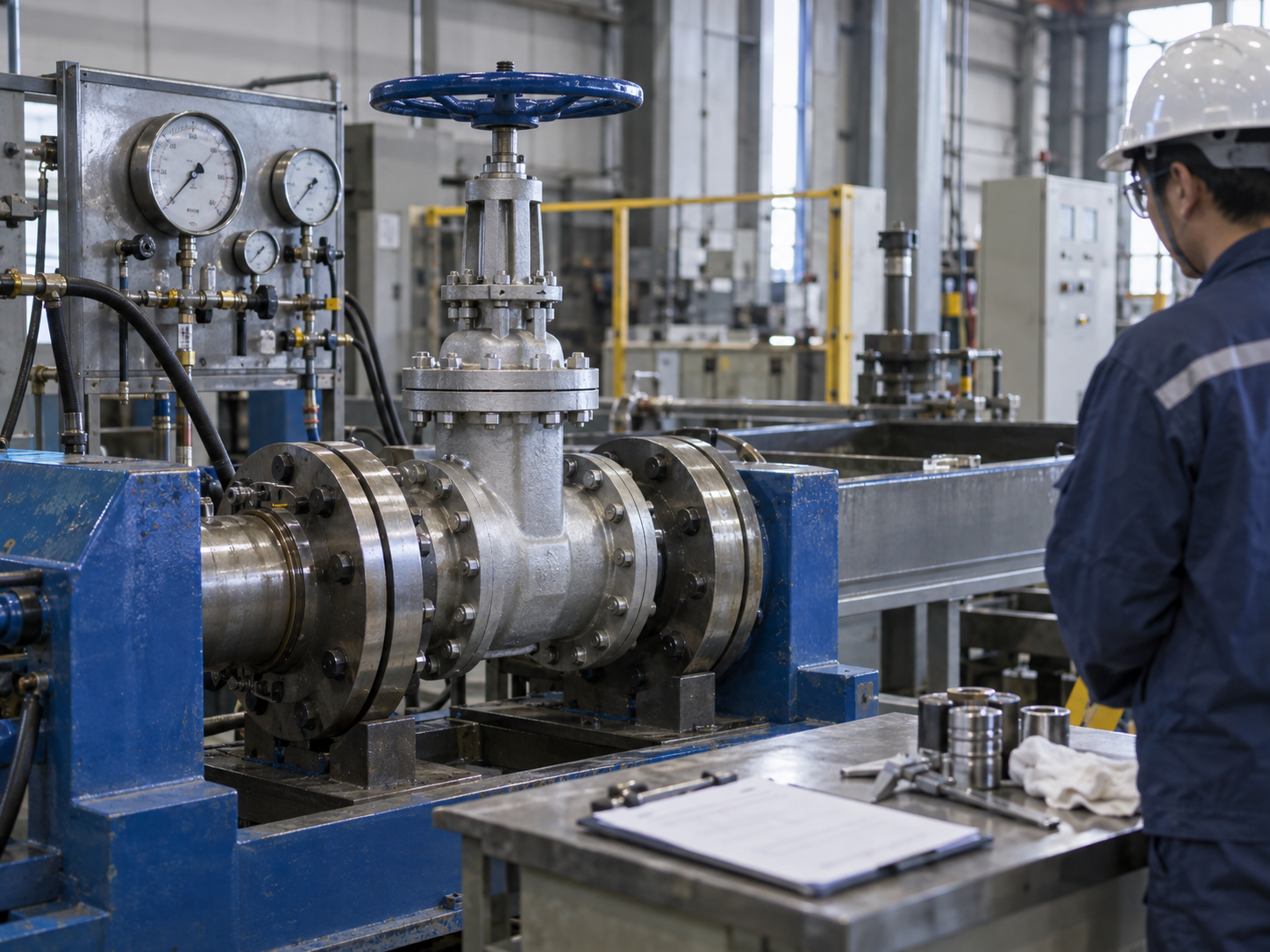
Related Vcore Gate Valve Resources
If you are still determining which gate valve configuration fits your project, these Vcore resources can help:
Vcore Gate Valve Product Range
— Review gate valve configurations for water, industrial utility, oil, gas, steam and other isolation applications.
What Is a Gate Valve in Plumbing?
— Learn how gate valves work and how pressure, materials, stem type and connection affect plumbing and water-service selection.
Industrial Valve Design Considerations
— Review the technical information that should be confirmed before a project valve is manufactured.
Vcore Industrial Valve Solutions
— Submit project conditions, drawings or datasheets for valve selection and technical review.
Frequently Asked Questions
What is the most important factor when choosing a gate valve manufacturer?
There is no single factor. Qualifications and applicable standards establish a baseline, but project buyers should also evaluate technical review, drawing capability, material control, testing, documentation, production follow-up and delivery reliability.
Why should I request a gate valve drawing before production?
A GA drawing allows the buyer and supplier to confirm dimensions, connection details, valve structure, materials and operator configuration before manufacturing. This is particularly important for customized valves and replacements that must fit existing piping.
How quickly should a gate valve manufacturer provide drawings?
The required timing depends on valve complexity and project requirements. More important than an arbitrary number of days is whether the supplier has a defined drawing-review process, communicates expected timing and responds systematically to engineering comments.
What information should appear on a gate valve drawing?
Typical project drawings may identify face-to-face dimensions, flange details, bore, overall dimensions, stem arrangement, operator, pressure rating, materials, weight and applicable valve information. Exact drawing scope depends on the purchase specification.
Are valve manufacturer certifications enough to guarantee product quality?
No single certificate proves every supplied valve will meet a specific project requirement. Buyers should verify that the actual valve configuration, materials, dimensions, testing and documentation correspond to the approved specification and order.
Should I choose the gate valve manufacturer with the lowest price?
Price should be compared only after the technical scope has been aligned. A lower quotation may not represent the same materials, dimensions, testing, documentation, customization or delivery scope.
What documents should I request from a gate valve supplier?
Depending on the project, common documents include GA drawings, datasheets, material certificates, pressure test reports, dimensional inspection records, coating records, certificates of conformity, packing lists and operation or maintenance documents.
Can a gate valve manufacturer make valves according to an existing drawing?
Many manufacturers can support customized dimensions or configurations, but feasibility should be reviewed by engineering. The supplier should confirm which drawing dimensions are mandatory, what operating conditions apply and whether the existing design can be reproduced or requires modification.
Need a Gate Valve Manufacturer for Your Project?
When selecting a gate valve supplier, send more than the nominal size whenever possible.
Provide the DN/NPS, pressure rating, medium, operating and design temperature, connection standard, materials, stem type, operator, quantity and inspection requirements. If you already have an existing valve drawing, datasheet or piping specification, attach it for technical review.
Vcore Valve can support gate valve selection, customized configuration, drawing review, technical clarification, production follow-up, inspection documentation, packing and export project coordination.
Contact Vcore Valve for gate valve technical review and project quotation support.