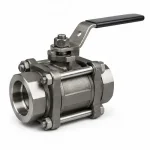
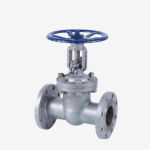
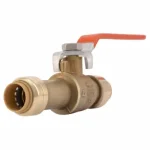
Valve flow coefficient (Cv) charts help buyers estimate how much flow a valve can pass at a given pressure drop. Cv is not just a number printed in a catalog. It affects valve size, pressure loss, pump demand, control stability, noise, cavitation risk and whether a valve can meet the process requirement without being oversized.
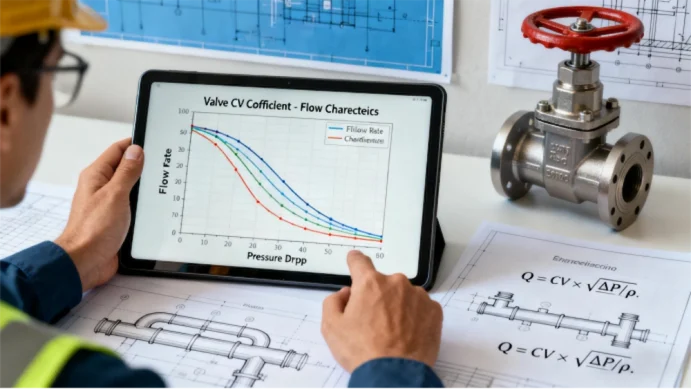
What Does Valve Flow Coefficient Cv Mean?
Cv is a flow coefficient used to describe valve capacity. In simple terms, a higher Cv means the valve can pass more flow under the same pressure drop. A lower Cv means more restriction. The value is commonly used for control valves, ball valves, butterfly valves, globe valves and other industrial valves.
For general sizing work, Cv should be read together with media type, density, viscosity, temperature, inlet pressure, outlet pressure, pipe size and required flow range. A valve that looks correct by nominal size can still be wrong if the Cv is too low or too high.
For broader sizing decisions, compare Cv with valve pressure-temperature rating and service conditions.
How to Read a Cv Chart
1. Confirm the Medium
Liquid, gas and steam use different sizing considerations. A water Cv chart cannot be used blindly for compressible gas service.
2. Check the Required Flow Rate
Use the normal, minimum and maximum flow rate. A valve selected only for maximum flow may perform poorly at normal operation.
3. Confirm Pressure Drop
Cv is tied to pressure drop. If the allowable pressure drop is small, the valve may need a higher Cv or a larger size.
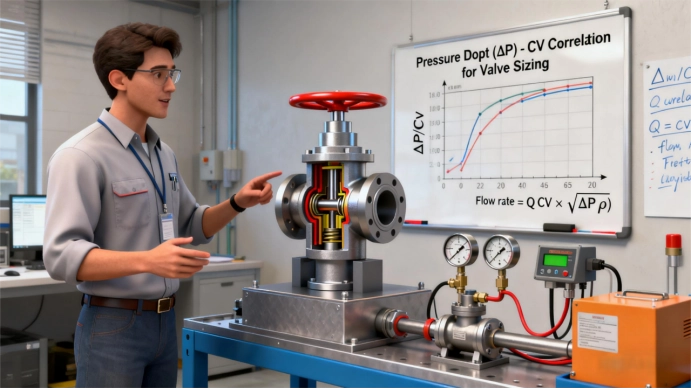
4. Match Cv at the Operating Opening
For control service, do not size the valve so it operates almost fully closed or fully open during normal flow. A useful control range improves stability.
5. Compare Valve Type
A ball valve, butterfly valve and globe valve can have different Cv values at the same nominal size. Use actual manufacturer data instead of assuming all valves of one size behave the same.
6. Check Flow Characteristic
Linear, equal percentage and quick opening characteristics behave differently. A Cv chart may show capacity at different travel positions.
7. Watch for Cavitation and Noise
High pressure drop can create cavitation in liquid service and noise in gas service. Cv alone does not guarantee safe operation.
8. Confirm Pipe Size Effect
Reducers, elbows and short pipe runs can change the actual pressure drop. The installed Cv may differ from the catalog condition.
9. Verify with Supplier Data
Ask the valve supplier for Cv data, pressure drop assumptions and recommended valve opening range. For butterfly valves, also compare with butterfly valve selection guidance.
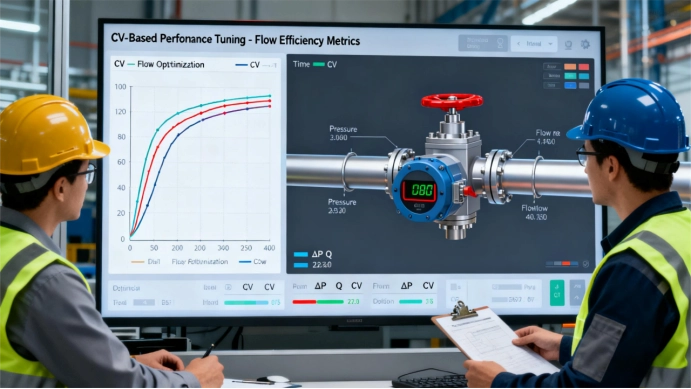
Quick Cv Review Table
| Question | Why It Matters |
|---|---|
| What is the normal flow? | Prevents oversizing and unstable operation |
| What pressure drop is allowed? | Controls pump load and process performance |
| Is the media liquid, gas or steam? | Changes sizing method and risk checks |
| What valve type is used? | Cv differs by design and opening characteristic |
| Is the valve for shutoff or control? | Determines whether travel range is important |
Common Cv Chart Mistakes
Buyers often choose a valve because the nominal size matches the pipe. This can be risky. A full-bore ball valve may pass much more flow than a globe valve of the same size, while a butterfly valve may depend strongly on disc angle. Another mistake is ignoring minimum flow. A valve that is oversized may hunt, vibrate, or operate too close to closed position.
For formula background and basic flow coefficient concepts, one reference is Engineering ToolBox flow coefficient data. Final sizing should still be confirmed with project specifications and manufacturer Cv tables.
Information to Send in an RFQ
- Medium and state: liquid, gas or steam
- Normal, minimum and maximum flow
- Inlet and outlet pressure
- Temperature and density
- Pipe size and schedule
- Valve type and required function
- Allowable pressure drop
- Any noise, cavitation or flashing limits
When the valve is part of a full system review, include material and rating information from the valve material selection guide.
Valve Flow Coefficient Review Before Purchase
Before ordering a valve, confirm the valve flow coefficient at normal, minimum and maximum operating flow. The valve flow coefficient should appear in the supplier data sheet or Cv chart, and the valve flow coefficient should be checked against pressure drop, media properties and expected opening range. If the valve flow coefficient is too low, the system may lose capacity; if it is too high, control performance may become unstable.
FAQ
What does Cv mean in valve sizing?
Cv describes valve flow capacity under a defined pressure drop. Higher Cv generally means more flow capacity.
Can I choose a valve only by pipe size?
No. Pipe size is not enough. Cv, pressure drop, flow range, media and valve type must be checked.
Is higher Cv always better?
No. A valve with too high Cv may be oversized and difficult to control at normal flow.
Do all valve types have the same Cv?
No. Ball valves, butterfly valves, globe valves and check valves can have very different Cv values at the same nominal size.
What data do suppliers need for Cv sizing?
Suppliers need flow rate, pressure, temperature, media properties, pipe size, valve type and allowable pressure drop.