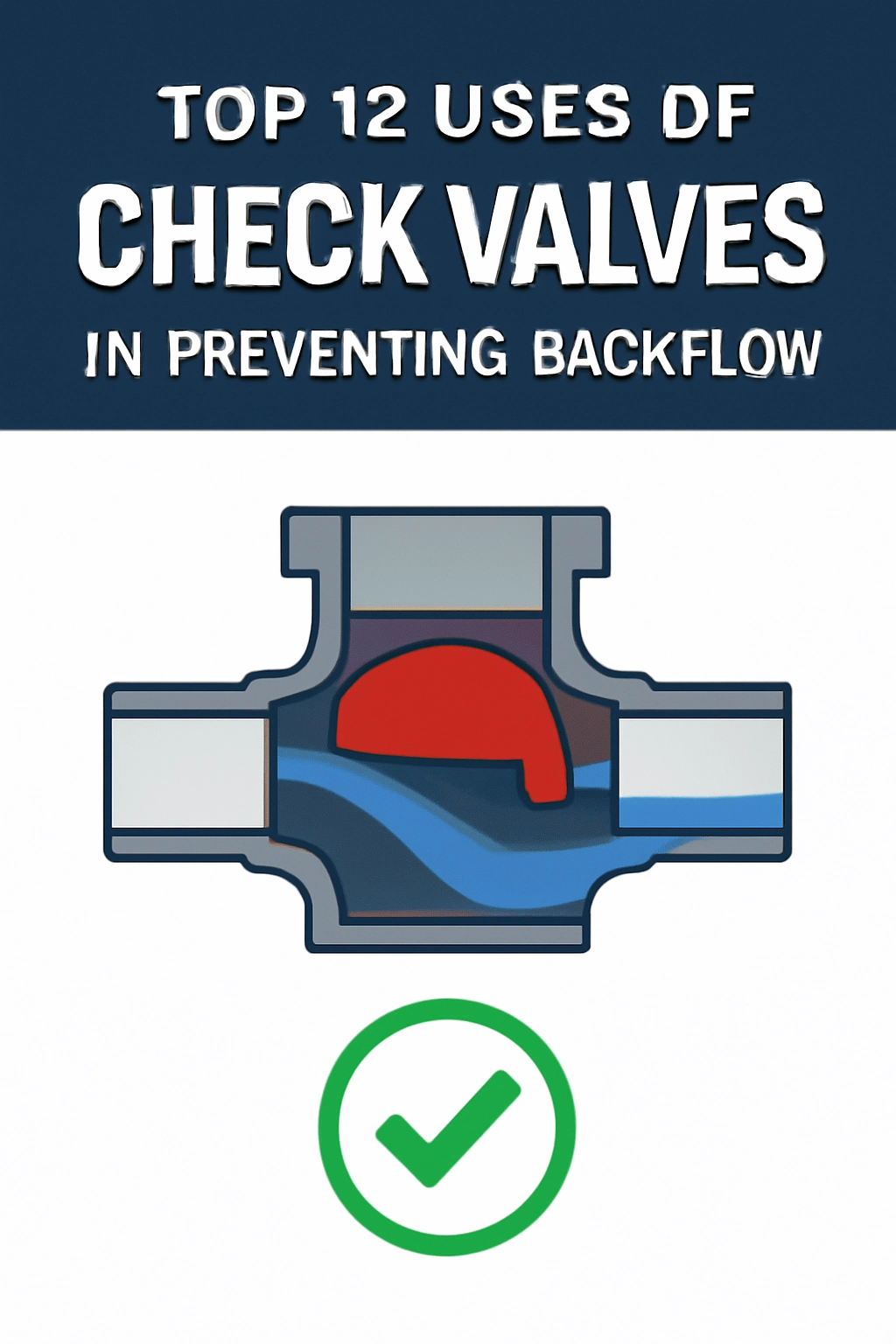
Check valves prevent backflow by allowing flow in one direction and closing when reverse flow starts. In industrial systems, this simple function protects pumps, compressors, tanks, water systems, chemical lines and process equipment from contamination, reverse rotation, water hammer and unsafe pressure changes.
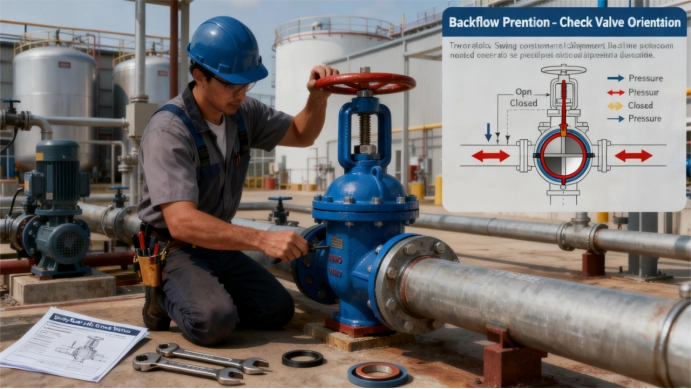
Why Backflow Prevention Matters
Backflow can return contaminated liquid to a clean line, reverse a pump, create pressure surge, mix incompatible chemicals, or drain a system unexpectedly. A check valve is often installed automatically in the line, but the selection still requires engineering attention. Valve type, cracking pressure, installation orientation, flow velocity and media condition all affect reliability.
For product selection, start with industrial check valve options and then match the design to the service.
12 Common Uses of Check Valves
1. Pump Discharge Lines
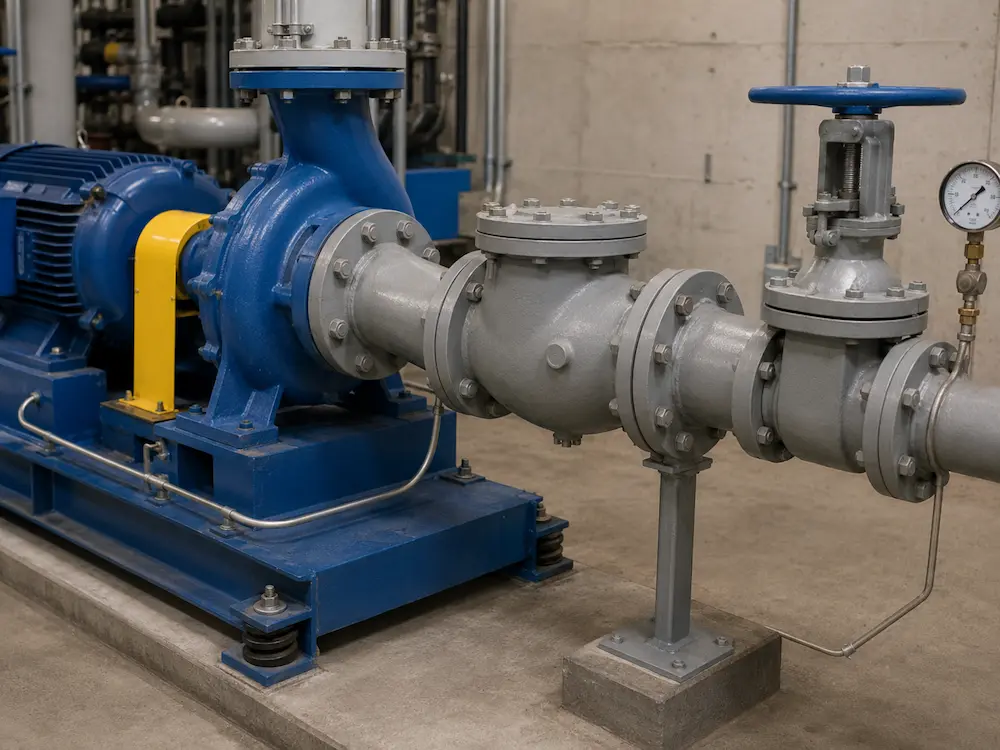
Check valves prevent reverse flow through a stopped pump and reduce the risk of reverse rotation.
2. Water Supply Systems
They help stop water from flowing backward into clean supply lines.
3. Chemical Processing Lines
Check valves reduce the risk of chemical mixing and product contamination.
4. Boiler Feedwater Systems
They prevent boiler water from flowing backward into feedwater piping.
5. Fire Protection Systems
Check valves help maintain flow direction and system readiness.
6. Wastewater and Drainage
They reduce reverse flow during pump shutdowns or surging conditions.
7. Irrigation Systems
Check valves keep water from draining backward and help maintain prime in selected systems.
8. HVAC and Cooling Water
They prevent unwanted flow between parallel pumps or loops.
9. Compressed Air Systems
Check valves protect compressors and receivers from reverse pressure.
10. Fuel and Oil Lines
They maintain flow direction and reduce drain-back in transfer systems.
11. Marine and Offshore Systems
Check valves help protect bilge, cooling and ballast systems from reverse flow.
12. Tank Filling and Transfer
They prevent tank contents from returning to the supply line after filling stops.
Choosing the Right Check Valve Type
| Valve Type | Typical Use | Key Point |
|---|---|---|
| Swing check valve | General pipeline service | Good for low pressure drop, needs enough flow to close reliably |
| Dual plate check valve | Compact industrial piping | Fast closing and space saving |
| Lift check valve | High pressure or clean service | Usually needs correct horizontal or vertical installation |
| Spring check valve | Fast response applications | Cracking pressure and spring material matter |
| Foot valve | Pump suction lines | Maintains prime and prevents reverse drain-back |
For pump suction applications, compare the symptoms in foot valve malfunctioning diagnosis.
Installation Checks for Reliable Backflow Prevention
- Confirm flow direction arrow before installation.
- Install the valve in the orientation recommended by the manufacturer.
- Maintain enough flow velocity to close the disc or plates.
- Avoid installing too close to elbows, reducers or pump outlets unless allowed.
- Check cracking pressure for low-pressure systems.
- Use compatible seat and body materials for the media.
- Inspect for debris that could block closure.
Backflow prevention may also be regulated in water systems. For waterworks context, see the American Water Works Association, while project requirements should follow local codes and owner specifications.
Common Mistakes
A common mistake is using one check valve type for every service. A swing check valve may be suitable for a large clean-water line, but it may not be best for pulsing flow or limited space. Another mistake is ignoring minimum flow. If velocity is too low, the disc may chatter and wear quickly.
For chemical or corrosive service, combine check valve selection with industrial valves for chemical processing.
Uses of Check Valves Buyer Review
When reviewing the uses of check valves, buyers should separate clean water service, pump protection, chemical backflow prevention, steam service and wastewater duty. The uses of check valves are broad, but each application has different closing speed, cracking pressure, material and installation requirements. A clear list of the uses of check valves helps the supplier recommend the correct swing, dual plate, lift, spring or foot valve design.
FAQ
What is the main use of a check valve?
The main use is to prevent reverse flow while allowing normal forward flow.
Where should a check valve be installed?
It is often installed on pump discharge lines, water systems, chemical lines, boiler feedwater lines and tank transfer systems.
Can a check valve stop water hammer?
A properly selected fast-closing check valve can reduce some surge problems, but water hammer must be reviewed as a full system issue.
Why does a check valve fail to close?
Debris, low flow velocity, worn seats, wrong orientation or oversized valve selection can prevent reliable closure.
Is a foot valve a check valve?
Yes. A foot valve is a check valve installed at the suction end of a pump line, usually with a strainer.