Quick Summary
In industrial pipeline systems, both ball valves and gate valves are common control components. However, many customers have doubts when making a selection: What exactly are the differences between the two? How should one choose in actual working conditions? Today, Kemus Valves will explain it to you one by one.
The working principles are different
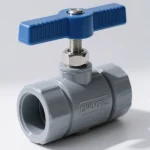
The ball valve controls the on-off of the fluid by rotating the ball (usually at 90°), opens quickly and is suitable for frequent operation.
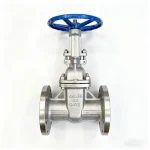
The gate valve controls the fluid by lifting and lowering the gate plate. It has a relatively long opening and closing time, but it has good sealing performance and is suitable for long-term open or closed states.
Kemus suggests: If rapid opening and closing and automated control are required, ball valves are preferred. If the fully open and fully closed state is required and the operation frequency is low, a gate valve can be selected.
Comparison of Flow Resistance and Sealing Performance
The ball valve is designed with a full bore, resulting in extremely low flow resistance and almost no pressure loss.
Although gate valves can also achieve full bore, their sealing structure is more complex and they are prone to wear when disturbed by impurities.
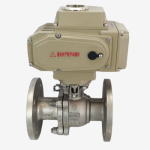
Advantages of Cams ball valves: They adopt high-precision ball cores and are equipped with optional soft/metal sealing structures to ensure low-torque operation and zero leakage performance.
Differences in Installation and Maintenance
Ball valves have a more compact structure, take up less space, and are easy to install and disassemble.
Gate valves are relatively large in size, require a high installation space, and are relatively difficult to maintain.
Design highlights of Cams ball valves: Modular structure, facilitating quick replacement in pipeline systems, and supporting multiple drive methods (electric/pneumatic/manual).
Recommended Applicable Working Conditions and Scenarios
“Working Condition type: Recommended Valve: Reason Explanation
Frequent opening and closing: Ball valve. Quick opening and closing, stable structure
High-temperature and high-pressure working conditions: Gate valve, gate plate sealing structure can withstand extreme pressure
Corrosive media: Ball valves: Cam ball valves are available in stainless steel or alloy materials
In space-constrained scenarios, ball valve, compact design, flexible installation
Conclusion: How to Choose the Right Valve for You?
Valve selection is not a one-size-fits-all approach. It should comprehensively consider factors such as the pressure and temperature of the pipeline system, the type of medium, the frequency of opening and closing, and the installation space.
Vcore suggests to you
If you are unsure about the selection direction, please don’t hesitate to contact us. We will provide you with professional advice and one-stop customized solutions.