
Quick Summary
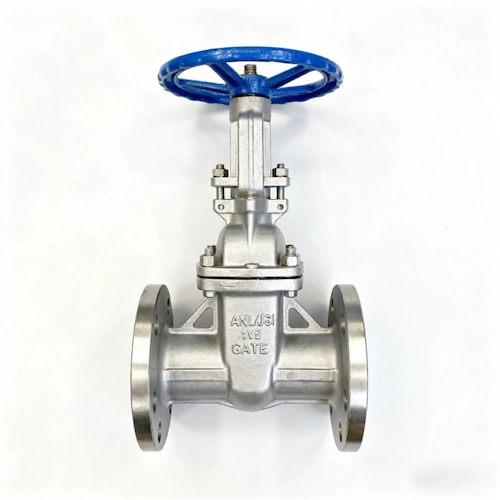
The ANSI/JIS Gate Valve is designed for reliable on/off control in industrial pipeline systems where tight shut-off, low flow resistance, and long service life are required. It is commonly used in oil and gas, chemical processing, water supply, power generation, mining, and other demanding pipeline applications.
If your project requires full-bore flow, stable sealing, and compatibility with ANSI or JIS pipeline standards, this gate valve is a practical choice for high-pressure and high-temperature working conditions.
ANSI/JIS Gate Valve Short Description
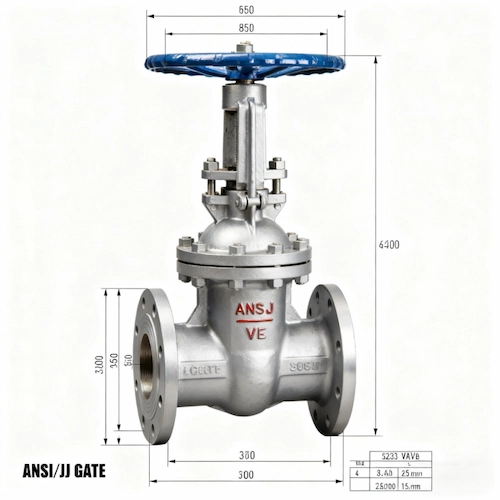
The ANSI/JIS Gate Valve is a heavy-duty industrial shut-off valve designed for pipeline systems that require reliable full-open and full-close flow control. Built to meet ANSI or JIS dimensional and pressure standards, this valve is suitable for oil and gas pipelines, chemical plants, water treatment systems, power generation facilities, mining operations, and general industrial fluid control.
As part of Vcore Valve’s complete Gate Valve product range, this ANSI/JIS model is engineered for buyers who need stable sealing, low flow resistance, and long-term pipeline isolation performance. It is especially useful where the valve must remain dependable under pressure, temperature change, and continuous industrial operation.
Unlike throttling valves, a gate valve is mainly used when the pipeline needs either complete flow passage or complete shut-off. Its straight-through flow design helps reduce pressure loss, while the robust cast steel, stainless steel, or aluminum bronze construction supports long-term performance in demanding operating environments.
For buyers, the key value is simple: when leakage risk, pressure stability, media compatibility, and service life matter, choosing the correct ANSI/JIS Gate Valve helps reduce downtime, maintenance cost, and system safety risk.
Product Overview
The ANSI/JIS Gate Valve from Vcore Valves is engineered for industrial pipeline applications where reliable sealing and stable operation are essential. The valve can be supplied with flanged, welded, or threaded connections and supports manual, electric, or pneumatic actuation depending on project requirements.
This product is suitable for low to high pressure conditions and can be used across a wide temperature range. With precision-machined sealing surfaces, durable body materials, and flexible connection options, it provides a dependable shut-off solution for industrial fluid systems.
For engineering projects, the most important question is not only “Can this valve open and close?” The real question is whether the valve matches the medium, pressure class, temperature range, installation standard, and maintenance plan. A wrong valve choice may cause leakage, corrosion, pressure loss, or premature failure. That is why material selection and standard confirmation should always come before ordering.
Quick Specification Table
| Product Name | ANSI/JIS Gate Valve |
| Applicable Standards | ANSI or JIS pipeline standards |
| Nominal Size | 2″–24″ |
| Nominal Pressure | 150–2500LB |
| Operating Temperature | -29°C–400°C |
| Sealing Material | PTFE, Rubber, or other sealing options |
| Connection Type | Flanged, Welded, Threaded |
| Operation Type | Manual, Electric, Pneumatic |
| Body Material | Cast Steel, Stainless Steel, Aluminum Bronze, etc. |
| Main Industries | Oil & Gas, Chemical Processing, Water Supply, Power Generation, Mining |
Note: Final material, sealing structure, pressure class, and connection dimensions should be confirmed according to working medium, temperature, pressure, and pipeline standard before production.
Main Dimensions & Weight
| Size | L mm | H mm | W mm | Weight kg |
|---|---|---|---|---|
| 2″ | 150 | 250 | 100 | 8 |
| 4″ | 200 | 300 | 120 | 15 |
| 6″ | 250 | 350 | 150 | 25 |
| 8″ | 300 | 400 | 180 | 40 |
| 10″ | 350 | 450 | 200 | 55 |
| 12″ | 400 | 500 | 220 | 75 |
| 14″ | 450 | 550 | 240 | 95 |
| 16″ | 500 | 600 | 260 | 120 |
| 18″ | 550 | 650 | 280 | 150 |
| 20″ | 600 | 700 | 300 | 180 |
| 24″ | 700 | 800 | 320 | 220 |
Note: The above dimensions are for reference only. Final dimensions may vary according to pressure class, connection standard, body material, bonnet structure, and actuator type.
Key Features of ANSI/JIS Gate Valve
Precision Sealing for Reliable Shut-Off
The ANSI/JIS Gate Valve uses precision-machined sealing surfaces to improve alignment between the gate and seat. This helps reduce leakage risk and supports stable shut-off performance in pipeline systems where safety and reliability are critical.
For buyers handling steam, water, oil, gas, or chemical media, sealing reliability is not a small detail. A poor sealing valve may lead to system pressure loss, product contamination, energy waste, or unplanned shutdown. That is why sealing material and seat design should always be selected according to the actual medium and temperature.
Robust Body Construction
The valve body can be manufactured from cast steel, stainless steel, aluminum bronze, or other suitable materials. This allows the product to handle different working environments, including high-pressure pipelines, corrosive media, marine conditions, and high-temperature industrial systems.
If the pipeline medium is mildly corrosive, cast steel may be suitable. If the medium is chemically aggressive, stainless steel is usually a safer choice. If the working environment involves seawater or marine corrosion, aluminum bronze may be considered. Material selection is where many procurement mistakes begin.
Low Fluid Resistance
A gate valve offers a straight-through flow path when fully open. This design helps reduce fluid resistance and pressure drop compared with some valve types used for flow regulation.
This makes it useful for systems where stable flow capacity is important. However, buyers should remember that gate valves are not designed for frequent throttling. If your system requires continuous flow adjustment, you may review this guide on the difference between gate valve and globe valve before confirming the final valve type.
Flexible Connection Options
The valve can be supplied with flanged, welded, or threaded ends. Flanged connection is convenient for installation and maintenance, welded connection is often used for high-pressure or critical pipelines, and threaded connection is generally used for smaller pipeline systems.
Manual, Electric, or Pneumatic Operation
The ANSI/JIS Gate Valve can be operated manually, electrically, or pneumatically. Manual operation is suitable for simple and less frequent use. Electric operation is better for remote control or automated systems. Pneumatic operation is suitable where fast actuation and process automation are required.
For applications where visual stem position, safer operation feedback, and pipeline isolation control are important, buyers may also compare this model with a Rising Stem Gate Valve to decide which structure better fits the site layout and maintenance routine.
Functions and Benefits
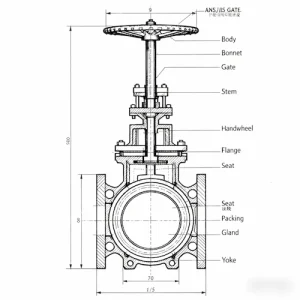
The primary function of the ANSI/JIS Gate Valve is to control the flow of fluid in the pipeline by fully opening or fully closing the valve. It is especially suitable for pipeline isolation, maintenance sections, emergency shut-off points, tank outlets, pump stations, and main pipeline branches.
When fully open, the gate lifts away from the flow path, allowing fluid to pass through with minimal resistance. When fully closed, the gate moves down to shut off the pipeline and help maintain system integrity.
Because of its full-bore flow design, the ANSI/JIS Gate Valve helps minimize pressure loss when fully open. This can support better system efficiency in pipelines where flow stability is important.
The valve is designed for industrial environments involving pressure, temperature, vibration, and different media types. With correct material and sealing selection, it can provide stable performance in high-pressure and high-temperature pipeline systems.
How to Choose the Right ANSI/JIS Gate Valve
Choosing a gate valve should not start from size alone. The correct selection should begin with pipeline standard, working medium, pressure class, temperature range, connection type, body material, sealing material, and operation method.
| If Your Project Requires | Choose This Option |
|---|---|
| Standard industrial water or steam pipeline | Cast steel gate valve with suitable pressure rating |
| Corrosive chemical pipeline | Stainless steel gate valve with compatible sealing material |
| Marine or seawater-related application | Aluminum bronze or corrosion-resistant material |
| Easy maintenance and replacement | Flanged connection |
| High-pressure permanent pipeline | Welded connection |
| Simple local operation | Manual handwheel operation |
| Remote control or plant automation | Electric actuator |
| Fast automated operation | Pneumatic actuator |
| Frequent flow regulation | Do not choose gate valve; consider globe or control valve instead |
ANSI vs JIS Gate Valve: What Buyers Should Confirm
ANSI and JIS valves may look similar, but they are not always interchangeable. Before confirming the order, buyers should check flange dimensions, bolt hole layout, pressure class, face-to-face dimension, and applicable project standards. For high-pressure industrial gate valve projects, this API 600 standard guide for industrial gate valves can also help buyers understand key standard-related selection points.
| Comparison Item | ANSI Gate Valve | JIS Gate Valve |
|---|---|---|
| Common Market Use | North America, Middle East, global industrial projects | Japan, Southeast Asia, Asian engineering projects |
| Pressure Class Expression | Class 150, 300, 600, 900, 1500, 2500 | JIS 10K, 16K, 20K, etc. |
| Flange Standard | ASME/ANSI flange dimensions | JIS flange dimensions |
| Bolt Hole Layout | Based on ANSI/ASME standard | Based on JIS standard |
| Interchangeability | Not always interchangeable with JIS | Not always interchangeable with ANSI |
| Buyer Risk | Wrong flange match may delay installation | Wrong pressure class may affect system safety |
Recommendation: Before ordering, send pipeline drawings, flange standard, pressure class, medium, temperature, and quantity to the supplier. This reduces the risk of receiving a valve that cannot be installed on site.
Common Applications
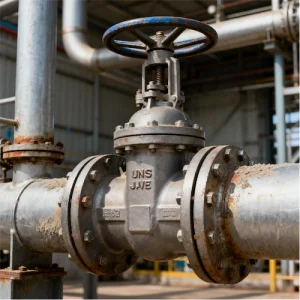
The ANSI/JIS Gate Valve is commonly used in industrial pipeline systems where stable shut-off, low flow resistance, and long-term sealing reliability are required. For complete pipeline isolation and maintenance planning, buyers can also review Vcore’s gate valve solutions for pipeline isolation system maintenance.
Oil & Gas Pipelines
ANSI/JIS Gate Valves are widely used in oil and gas pipeline systems for shut-off control, pipeline isolation, tank farms, pump stations, and distribution systems. For this industry, pressure resistance, sealing reliability, fire safety considerations, and material compatibility are especially important.
Chemical Processing
Chemical plants often require valves that can handle corrosive, toxic, or high-temperature media. Stainless steel body materials and suitable sealing structures are commonly recommended for chemical service. Buyers should never choose sealing material only by price; chemical compatibility must come first.
Water Supply and Wastewater Treatment
In municipal and industrial water systems, gate valves are used for pipeline isolation, flow shut-off, pump station control, and maintenance sections. They are suitable where full-bore flow and low resistance are required.
Power Generation
Power plants use gate valves in steam, water, and auxiliary systems. High temperature, pressure fluctuation, and strict safety requirements make correct pressure class and material selection essential.
Mining and Metallurgy
Mining and metallurgy environments may involve abrasive media, dust, slurry-related systems, and harsh operating conditions. In these applications, buyers should pay attention to body strength, seat wear resistance, sealing protection, and maintenance accessibility.
Buyer-Focused Comparison: Gate Valve vs Other Valve Types
| Valve Type | Best Used For | Not Ideal For | Buyer Recommendation |
|---|---|---|---|
| Gate Valve | Full open/full close shut-off | Frequent throttling | Choose when low resistance and isolation are required |
| Globe Valve | Flow regulation and throttling | Very low pressure-drop systems | Choose when precise control matters |
| Butterfly Valve | Large-diameter quick operation | Some high-pressure shut-off demands | Choose for compact structure and fast operation |
| Ball Valve | Fast shut-off and tight sealing | Very large high-pressure lines in some cases | Choose for quick open/close operation |
| Check Valve | Preventing reverse flow | Manual shut-off control | Use together with shut-off valves where backflow risk exists |
Common Buying Mistakes and Consequences
Mistake 1: Choosing by Size Only
Many buyers ask only for “4 inch gate valve” or “DN100 gate valve.” This is not enough. Size must be matched with pressure class, connection standard, medium, temperature, and material.
Consequence: The valve may fit the pipe size but fail under pressure, leak under temperature change, or mismatch the flange.
Mistake 2: Ignoring ANSI and JIS Differences
ANSI and JIS standards have different flange dimensions, pressure expressions, and bolt arrangements. A valve that looks correct in a photo may not match the pipeline on site.
Consequence: Installation delay, extra adapter cost, project downtime, or emergency replacement.
Mistake 3: Using Gate Valves for Throttling
Gate valves are mainly for full-open or full-close service. Using them for partial opening can cause vibration, seat erosion, unstable flow, and premature damage.
Consequence: Shorter service life, leakage, unstable process control, and higher maintenance cost.
Mistake 4: Selecting the Wrong Material
Cast steel, stainless steel, and aluminum bronze serve different working conditions. The wrong material may corrode, deform, or fail earlier than expected. For applications affected by deposits, scaling, or aggressive media, this article on how to prevent scaling on gate valves by coating may help buyers evaluate coating and surface protection options.
Consequence: Leakage, safety risk, maintenance shutdown, and replacement cost.
Mistake 5: Forgetting Actuation Requirements
If the valve is installed underground, at height, in a remote plant area, or inside an automated production line, manual operation may not be practical.
Consequence: Poor operation efficiency, safety risks, and extra retrofitting cost.
Recommended Information to Provide Before Quotation
For project-based orders, buyers can review Vcore’s broader industrial valve solutions to match valve type, application scenario, material selection, and system requirements before sending a quotation request.
| Required Information | Why It Matters |
|---|---|
| Valve size | Determines flow capacity and pipeline compatibility |
| Pressure class | Ensures valve can safely handle system pressure |
| Standard | Confirms ANSI, JIS, or other connection requirements |
| Medium | Determines suitable body and sealing materials |
| Temperature | Affects sealing material and body material selection |
| Connection type | Confirms installation method |
| Operation method | Determines manual, electric, or pneumatic control |
| Quantity | Helps plan production and delivery |
| Application industry | Helps supplier recommend suitable structure |
| Drawings or photos | Reduces misunderstanding and wrong selection |
Why Work With Vcore Valve
Vcore Valve supports industrial buyers with gate valves, ball valves, globe valves, butterfly valves, check valves, control valves, and other pipeline valve solutions. For buyers who need more background on manufacturing capability, product range, and project support, the About Us page provides additional company information.
The main advantage for B2B buyers is not only product supply, but also technical matching. A suitable valve supplier should help confirm standards, pressure class, material, sealing structure, actuator type, and installation requirements before production. This reduces avoidable site problems and helps the project move faster.
Final Note for Buyers
An ANSI/JIS Gate Valve should be selected according to real operating conditions, not only by size or price. The safest purchasing logic is simple: confirm the pipeline standard first, then match pressure class, medium, temperature, material, sealing structure, and operation method.
If the valve is used for full shut-off in oil, gas, chemical, water, power, or mining pipelines, a properly specified ANSI/JIS Gate Valve can help reduce leakage risk, improve flow stability, and support long-term pipeline reliability. For customized projects, buyers should provide drawings, working conditions, and required standards before confirming the order.
Need help confirming the right valve configuration? You can contact Vcore Valve with your pipeline standard, medium, pressure, temperature, and drawings for a more accurate recommendation.
FAQ
What is an ANSI/JIS Gate Valve used for?
An ANSI/JIS Gate Valve is used for full-open and full-close control in industrial pipeline systems. It is commonly used in oil and gas, chemical processing, water supply, power generation, mining, and general industrial fluid control applications.
Is a gate valve suitable for flow regulation?
A gate valve is not recommended for frequent flow regulation or throttling. It is mainly designed for isolation service, meaning the valve should be fully open or fully closed. For precise flow control, a globe valve or control valve is usually more suitable.
What is the size range of this ANSI/JIS Gate Valve?
The available nominal size range is 2″–24″. Final size selection should be based on pipeline diameter, flow requirements, pressure class, and project drawings.
What pressure class is available?
The nominal pressure range is 150–2500LB. Buyers should confirm the required pressure class according to working pressure, pipeline design, and safety requirements.
What materials are available for the valve body?
Common body materials include cast steel, stainless steel, aluminum bronze, and other project-specific materials. The right material depends on the working medium, temperature, corrosion level, and installation environment.
Can this valve be supplied with electric or pneumatic actuation?
Yes. The ANSI/JIS Gate Valve can be supplied with manual, electric, or pneumatic operation. Manual operation is suitable for simple local control, while electric and pneumatic actuators are suitable for remote control or automated pipeline systems.
What information should I provide before requesting a quotation?
You should provide valve size, pressure class, standard, medium, temperature, connection type, operation method, quantity, and application industry. If available, pipeline drawings or previous valve photos can help avoid wrong selection.
What is the difference between ANSI and JIS gate valves?
ANSI and JIS gate valves follow different dimensional and pressure standards. Their flange dimensions, bolt hole layouts, and pressure rating systems may be different. Buyers should confirm the pipeline standard before ordering to avoid installation mismatch.