
 Product Introduction
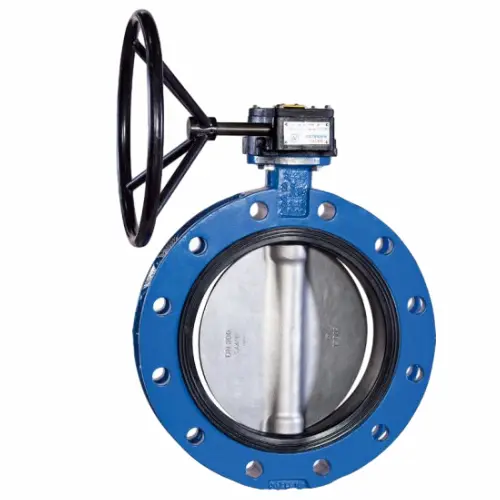 Product Introduction
Hydraulic double flanged butterfly valves combine the simple, compact structure of a butterfly valve with the power and remote control capability of hydraulic actuation.
In many industrial environments, especially in large water distribution networks, HVAC systems, chemical processing lines, and pumping stations, operators need reliable isolation valves that can be controlled remotely and deliver stable, repeatable operation under vibration, pressure fluctuation, or frequent cycling.
The double flanged body design provides strong structural support and uniform sealing across flanges, reducing the risk of leakage due to flange misalignment or uneven gasket compression. Compared with wafer or lug butterfly valves, double flanged valves offer better stability in systems with frequent actuation and heavier piping loads.
At Vcore Valve, we design and manufacture these valves with CNC‑machined disc profiles, reinforced seats, and high‑precision hydraulic actuators to ensure consistent performance throughout long service life.
Structural Characteristics and Engineering Rationale
Double Flanged Body
Double flanged butterfly valves are designed to be bolted between two flanges on either side. This configuration distributes load more evenly across the pipeline and prevents distortion in heavier piping systems—an important consideration for long‑term reliability in industrial facilities.
Hydraulic Actuation
Hydraulic actuators are selected where:
- Remote control is required
- High operating torque is needed
- Pneumatic or electric actuation is not ideal
- Systems involve long distance wiring or vibration
Compared with other actuation methods, hydraulic actuation provides higher force at low actuation speed, making it effective for larger sizes or higher differential pressures.
Disc and Seat Interface
The disc is precision machined to maintain tight and uniform contact with the seat. Depending on the service:
- EPDM seats for water and HVAC service
- PTFE seats for chemical compatibility
- Reinforced seats for abrasive or slurry environments
The proper pairing of seat material with disc design determines long‑term sealing performance, especially under frequent actuation.
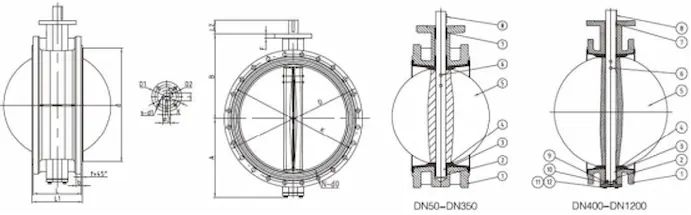
Typical Engineering Specifications
| Parameter | Specification |
|---|---|
| Valve Type | Hydraulic Double Flanged Butterfly Valve |
| Size Range | DN50 – DN600 |
| Pressure Rating | PN10 – PN25 |
| Body Material | Ductile Iron / Carbon Steel / Stainless Steel |
| Disc Material | Stainless Steel / Ductile Iron |
| Seat Material | EPDM / PTFE / NBR |
| Connection | Double Flanged (ANSI / DIN / JIS compatible) |
| Operating Medium | Water, Air, Oils, Chemicals |
| Actuator Type | Hydraulic Actuator |
| Temperature Range | -10°C to 180°C (seat dependent) |
Notes
Seat and material selection depend on actual fluid type, operating temperature, and pipeline conditions.
Hydraulic Actuator Details
Hydraulic systems are chosen for their ability to generate high torque at controlled actuation speeds. In medium to large diameter pipelines, a hydraulic actuator:
- Reduces mechanical shock during opening/closing
- Provides smoother actuation under system backpressure
- Is less sensitive to compressed gas supply inconsistencies (compared to pneumatics)
Hydraulic actuation is common in:
- Pump stations
- Large HVAC distribution loops
- Remote substation isolation valves
- Systems with long control line distances
At Vcore Valve, hydraulic actuators are tested for cyclic endurance and leak resistance before assembly to ensure consistent performance under continuous operation.
Application Case Insight
In a mid‑sized municipal water treatment plant, hydraulic double flanged butterfly valves from Vcore Valve were installed at multiple distribution branches. These valves replaced existing manual valves that required frequent maintenance due to vibration and fluctuating pressure.
After installation:
- Remote actuation reduced field technician intervention by 70%
- Pressure fluctuation dampening improved pump efficiency by measurable margins
- Uniform flange sealing eliminated recurring gasket compression issues
This case highlights how structural and actuation choices directly affect long‑term reliability and maintenance cost.
Installation and Operational Notes
Installers should:
- Verify flange alignment before bolting
- Apply even torque on flange bolts
- Confirm proper actuator connection with control system
- Drain trapped air from hydraulic lines before commissioning
During commissioning, gradual actuation through the full travel range helps seat the disc and confirms actuator synchronization with pipeline control signals.
Routine inspection includes:
- Visual seat and disc interface check
- Actuator hydraulic line integrity
- Mounting bracket and flange bolt torque
FAQs
What is a double flanged butterfly valve?
A double flanged butterfly valve is designed with flanges on both ends of the valve body for bolted connection between two pipeline flanges, providing structural rigidity and uniform sealing.
Where are hydraulic actuators preferred?
Hydraulic actuators are chosen when high torque, smooth motion, remote control, and vibration resistance are required, especially in large diameter industrial lines.
Can these valves handle abrasive media?
Yes, by selecting appropriate seat materials such as PTFE or reinforced elastomers, the valve can operate reliably in slurry or particulate‑laden fluids.
What standards are supported?
Materials and dimensions can be manufactured to comply with ANSI, DIN, JIS, or project‑specific specifications depending on customer requirements.
Is customization available?
Yes, Vcore Valve supports customized materials, flange drilling patterns, actuation feedback signals, and control integration.