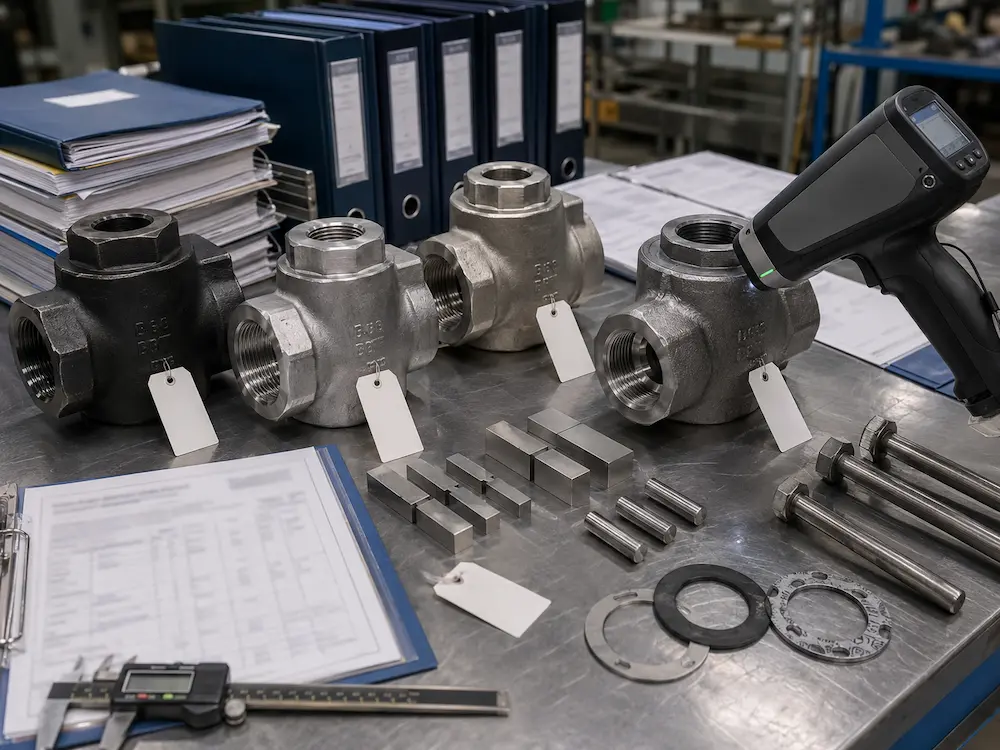
A valve material test report, often called an MTR or mill test certificate, is the document buyers use to verify that valve pressure-containing parts match the ordered material grade. For industrial valves, the MTR should be checked against the purchase order, valve datasheet, material standard, heat number, chemical composition, mechanical properties, heat treatment, PMI requirements and inspection records.
What Is a Valve Material Test Report?
A material test report is a quality document issued by the material manufacturer or valve manufacturer to show that the material has been tested and meets the required specification. For valves, MTR review is especially important for bodies, bonnets, stems, discs, balls, wedges, seats, bolting and other critical parts.
The report may also be called an MTC, mill certificate, EN 10204 3.1 certificate, material certificate or material test certificate. Different projects use different names, but the buyer’s goal is the same: confirm that the actual material supplied is the material ordered.
This document should be reviewed together with broader valve certificates and quality documents, not as a standalone paper.
Why MTR Review Matters for Industrial Valves
Valve material errors can cause corrosion, pressure boundary failure, temperature limitation, leakage, short service life or project rejection. A valve may look correct from the outside, but without material traceability the buyer cannot confirm whether the body, trim and bolting are suitable for the process.
MTR review helps confirm:
- Correct material grade
- Applicable ASTM, ASME, EN or project standard
- Heat number traceability
- Chemical composition
- Mechanical properties
- Heat treatment condition
- PMI or additional test requirements
- Connection with valve serial number or batch number
Key Sections in a Valve MTR
Material Standard and Grade
Start by checking the material designation. Examples include ASTM A216 WCB, ASTM A351 CF8M, ASTM A105, ASTM A182 F316, ASTM A182 F51, ASTM A182 F53 or other project-specified grades. The grade on the MTR must match the purchase order, datasheet and drawing.
Heat Number
The heat number links the valve part to a specific batch of steel or alloy. Buyers should confirm that the heat number on the MTR matches markings, traceability records, inspection reports or manufacturer documentation.
Chemical Composition
Chemical composition shows elements such as carbon, chromium, nickel, molybdenum, manganese, silicon, phosphorus and sulfur. For stainless steel, duplex, super duplex and nickel alloy valves, chemistry is critical for corrosion resistance.
Mechanical Properties
Mechanical properties usually include tensile strength, yield strength, elongation, hardness and sometimes impact test values. These values show whether the material meets strength and toughness requirements.
Heat Treatment
Heat treatment affects strength, hardness, corrosion resistance and toughness. For forged and cast valve materials, buyers should confirm whether the treatment condition matches the standard and service temperature.
Testing and Inspection Signatures
The report should identify the issuing party, test date, inspector or quality department, and certificate type. For high-risk projects, third-party inspection may also be required.
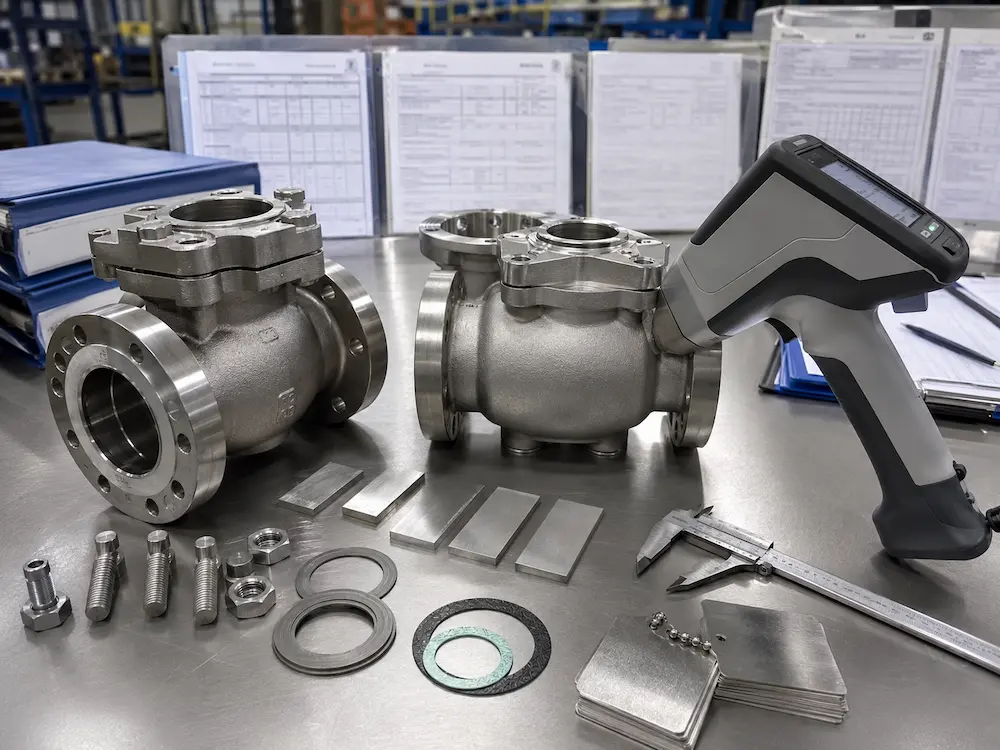
How to Check Chemical Composition
Compare the chemical analysis with the limits in the material standard. Do not only look at the grade name. For example, stainless steel valve selection depends heavily on chromium, nickel and molybdenum. Duplex and super duplex materials require stricter composition control.
For material comparison topics, buyers can review 304 vs 316 stainless steel valve material selection and F51 vs F53 valve material selection.
How to Check Mechanical Properties
Mechanical properties confirm whether the valve material has enough strength and ductility. Common values include:
- Tensile strength
- Yield strength
- Elongation
- Reduction of area
- Hardness
- Impact test temperature and energy when required
If the valve is used in low temperature, high pressure, steam, offshore or critical chemical service, mechanical properties should be reviewed carefully.
PMI and MTR Are Not the Same Thing
PMI means positive material identification. It is a test used to verify alloy composition on actual parts. An MTR is a document. PMI is a physical or instrument-based check. For important alloy valves, both may be required.
| Item | Purpose |
|---|---|
| MTR | Documents material chemistry, mechanical properties and heat number |
| PMI | Verifies alloy elements on the actual valve part |
| Inspection report | Records dimensional, visual, pressure or functional checks |
| Pressure test report | Confirms shell and seat test results |
Common MTR Review Mistakes
Mistake 1: Checking Only the Material Name
A material name alone is not enough. Confirm standard, grade, heat number, chemistry and mechanical values.
Mistake 2: Ignoring Trim and Bolting Materials
The body may be correct, but stem, ball, disc, wedge, seat ring, spring or bolting materials may still be unsuitable.
Mistake 3: Not Matching the MTR to the Valve Batch
The certificate must be traceable to the delivered valve. A generic certificate does not prove the delivered part is correct.
Mistake 4: Reviewing Documents After Production
Material requirements should be confirmed before order release, especially for special alloys, NACE, low temperature or offshore projects.
Buyer Checklist Before Accepting an MTR
- Does the material grade match the PO and datasheet?
- Is the standard version acceptable?
- Is the heat number traceable?
- Are chemistry values within limits?
- Do mechanical properties meet the standard?
- Is heat treatment shown when required?
- Is PMI required and recorded?
- Are pressure test and inspection reports also supplied?
Final Recommendations for Buyers
A valve MTR is not paperwork to file away after delivery. It is a technical document that protects the buyer from wrong materials, corrosion risk, project rejection and unsafe service. Review it early, match it to the valve, and ask the supplier to clarify any missing traceability before production or shipment.
How to Match an MTR with a Purchase Order
Good MTR review starts with the purchase order. The PO usually defines valve type, size, pressure class, material grade, trim, test standard and documentation requirements. The MTR should support those requirements, not introduce a different material name or untraceable batch.
- Compare material grade with the valve datasheet.
- Check whether body, bonnet, ball, disc, wedge and stem materials are all covered.
- Confirm heat number or batch number traceability.
- Check whether PMI is required by the PO.
- Confirm whether EN 10204 3.1 or other certificate type is required.
MTR Red Flags Buyers Should Not Ignore
| Red Flag | Why It Matters |
|---|---|
| No heat number | The material may not be traceable to the delivered valve. |
| Only a generic certificate | It may not prove the actual supplied material. |
| Chemical values missing | Corrosion resistance and alloy grade cannot be verified. |
| Mechanical values missing | Strength and toughness cannot be confirmed. |
| Material grade differs from PO | The valve may be rejected or unsuitable for service. |
Which Valve Parts Need Material Traceability?
For critical service, buyers should not check the body material only. Pressure-containing and wetted parts may require traceability, including body, bonnet, cover, ball, wedge, disc, seat ring, stem and bolting. For special alloys, even springs or small internal parts may need PMI confirmation.
How MTR Review Supports Supplier Qualification
Consistent MTR quality is a sign of supplier discipline. If certificates are incomplete, inconsistent or difficult to match with valve tags, the buyer should request clarification before shipment. A reliable supplier should be able to connect the MTR, inspection report, pressure test report and packing list into one traceable document package.
Reference Standards for MTR Review
When a buyer reviews a material test report, the standard printed on the certificate should be checked against the purchase order and project specification. For ASTM material grades, the official standards source is ASTM International; the MTR should show the correct ASTM designation, heat number, chemistry and mechanical test data for the valve part being supplied.
FAQ
What is an MTR for valves?
An MTR is a material test report that records material grade, heat number, chemical composition, mechanical properties and related test information for valve materials.
Is an MTR the same as a material certificate?
In many projects, MTR, MTC and material certificate are used similarly. The important point is whether the document is traceable and complete.
Why is heat number important?
The heat number links the certificate to a specific material batch, allowing traceability from document to actual valve part.
Do all valves need PMI?
No. PMI is usually required for alloy, stainless steel, duplex, nickel alloy or critical service valves, depending on project requirements.
What should buyers check first in an MTR?
Check material grade, standard, heat number, chemistry, mechanical properties and whether the certificate matches the delivered valve.