Quick Summary: Swing check valves and spring check valves both prevent reverse flow, but they close in different ways. A swing check valve uses a hinged disc and is often preferred for larger, steady-flow pipelines where low pressure drop is important. A spring check valve uses spring-assisted closure and is often preferred for compact systems, vertical lines, pump discharge service and applications requiring faster closing response. A spring check valve may help reduce valve slam when correctly sized, but it is not automatically a complete water hammer solution. The correct choice depends on flow rate, pressure drop, installation direction, cracking pressure, medium, temperature, pump shutdown behavior and project requirements.
A swing check valve is usually better for larger, steady-flow pipelines where low pressure drop and simple construction are important. A spring check valve is usually better for compact systems, vertical lines, pump discharge service, faster closing response, and applications where reverse flow or check valve slam must be reduced. Neither type is always better. Selection depends on flow rate, pressure drop, installation direction, pump shutdown behavior, medium, temperature, material compatibility and project requirements.
What Is a Swing Check Valve?
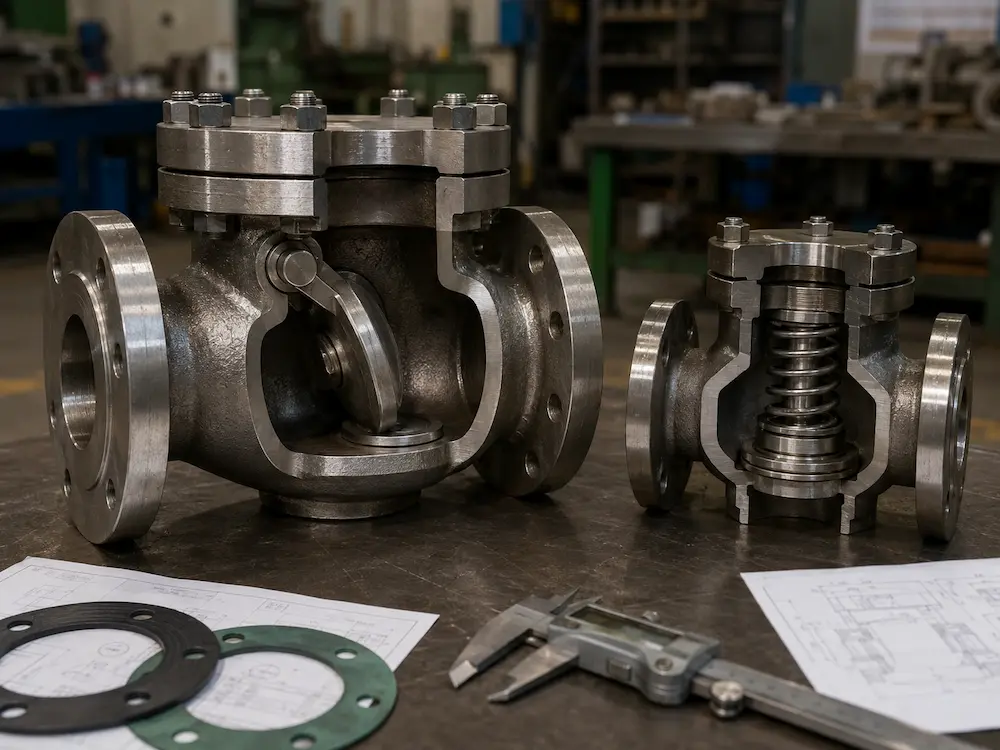
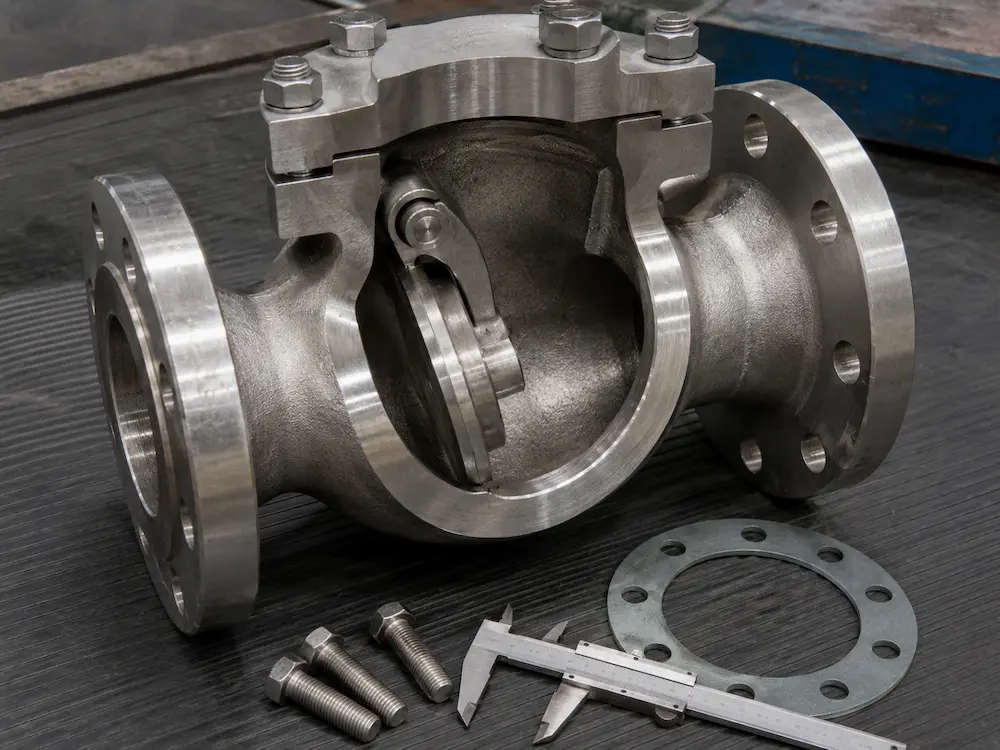
A swing check valve is a non-return valve that uses a hinged disc to control one-way flow. Forward flow lifts the disc away from the seat. When flow stops or reverses, gravity and reverse flow help the disc return to the seat.
Swing check valves are commonly used in water treatment, wastewater, utility lines, HVAC, marine systems, chemical auxiliary services and larger industrial pipelines. They are often selected where flow is relatively steady and pressure drop must be kept low.
Key Features of Swing Check Valves
- Hinged disc structure
- Simple construction and maintenance access
- Often lower pressure drop in steady large-flow service
- Common in medium and large pipe sizes
- Usually best reviewed for horizontal or confirmed vertical-upward flow
- May slam or chatter if flow is unstable, oversized or subject to fast pump shutdown
What Is a Spring Check Valve?
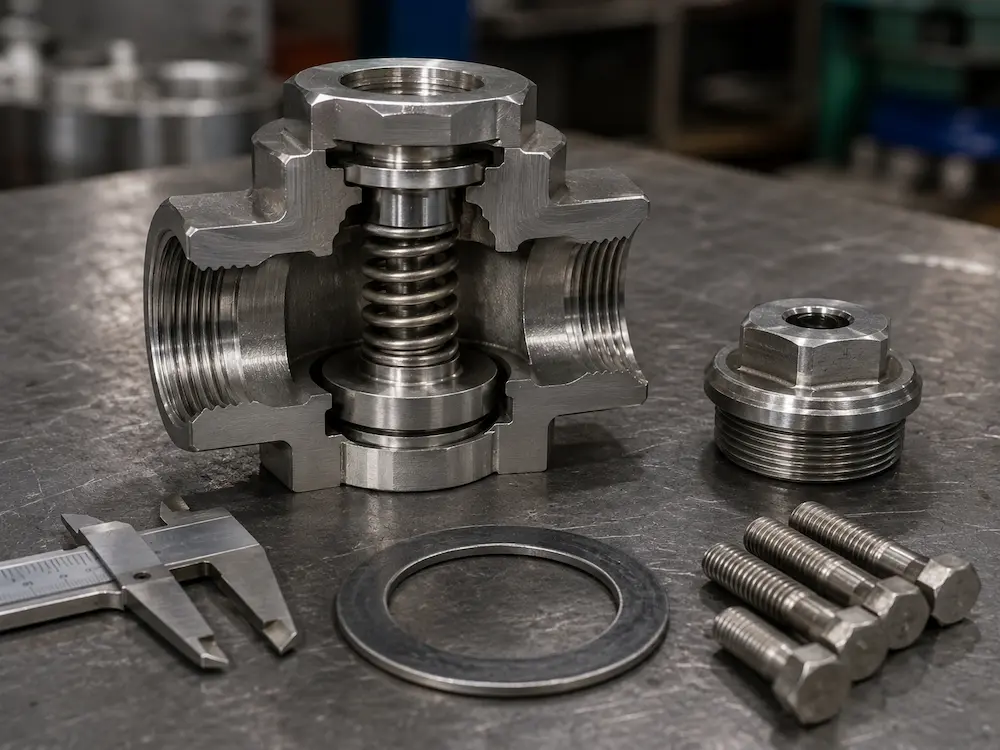
A spring check valve uses spring force to help the disc, poppet or plate close when forward flow decreases. The spring assists closure before strong reverse flow develops, which can be useful in compact equipment, vertical lines and pump discharge systems.
Spring check valves are not automatically better in every system. The spring adds cracking pressure and can increase pressure drop, so buyers should confirm flow rate, allowable pressure loss, spring material and maintenance access before selection.
Key Features of Spring Check Valves
- Spring-assisted closure
- Often faster closing response than a standard swing check valve
- May be suitable for compact equipment and vertical installation
- Useful where reverse flow develops quickly
- Cracking pressure and pressure drop must be checked
- Spring material must match the medium and temperature
Swing Check Valve vs Spring Check Valve: Core Difference Table
| Comparison Factor | Swing Check Valve | Spring Check Valve |
|---|---|---|
| Closing mechanism | Hinged disc closes by gravity and reverse flow. | Spring force assists disc, poppet or plate closure. |
| Closing speed | Usually slower, depending on disc weight, flow and orientation. | Usually faster, depending on spring design and flow condition. |
| Pressure drop | Often lower in steady large-flow pipelines. | May be higher because the spring force must be overcome. |
| Water hammer / slam risk | May slam if reverse flow develops before closure. | May reduce slam risk when correctly sized, but does not automatically solve water hammer. |
| Installation direction | Commonly horizontal; vertical use must be confirmed by design and flow direction. | Often more flexible for horizontal or vertical lines, depending on manufacturer approval. |
| Typical size range | Common in medium and large sizes. | Common in small and medium sizes; larger designs depend on duty. |
| Pump discharge suitability | May work in steady pump discharge service with controlled shutdown and stable flow. | Often better where faster closure is required, but pump curve and surge risk must be reviewed. |
| Vertical installation suitability | Possible only when the design and flow direction support reliable disc closure. | Often more suitable because spring assistance helps closure. |
| Maintenance consideration | Disc hinge, seat, pin and cover access should be checked. | Spring fatigue, spring material, seat wear and cracking pressure should be checked. |
| Main buyer risk | Oversizing, unstable flow or unsupported vertical installation. | Ignoring cracking pressure, pressure drop or spring compatibility. |
Quick Selection Guide: Swing or Spring Check Valve?
| Application Condition | Usually Better Choice | Why | Buyer Check |
|---|---|---|---|
| Large steady-flow pipeline | Swing check valve | Lower pressure drop and simple structure may be suitable. | Confirm flow stability and valve size. |
| Compact equipment or limited space | Spring check valve | Compact body and faster closure may be useful. | Confirm pressure drop and cracking pressure. |
| Vertical pipeline | Spring check valve or confirmed vertical check valve | Spring assistance can improve closure reliability. | Confirm flow direction and manufacturer approval. |
| Pump discharge with frequent start-stop | Spring check valve, dual plate or nozzle check valve review | Faster closure may reduce reverse flow. | Confirm pump curve and water hammer risk. |
| Low pressure drop requirement | Swing check valve may be preferred | Less spring resistance in steady flow. | Confirm minimum flow and disc stability. |
| High water hammer risk | Spring, dual plate or nozzle check valve review | Closing speed and surge behavior matter. | Do not assume one valve alone solves water hammer. |
| Wastewater or solids-containing media | Project-dependent | Clogging and disc movement must be reviewed. | Confirm solids content and maintenance access. |
How a Swing Check Valve Works
In forward flow, the disc swings open around a hinge or pin. When forward flow decreases, gravity and reverse pressure move the disc back toward the seat. This simple structure is one reason swing check valves are common in larger pipelines.
The limitation is closing response. If reverse flow develops before the disc reaches the seat, the disc may close sharply. That can create noise, vibration or check valve slam in some systems, especially when flow is unstable or the valve is oversized.
How a Spring Check Valve Works
A spring check valve uses spring force to help the closure member return to the seat. This can shorten closing time and reduce the amount of reverse flow before closure. It is often useful for compact equipment, vertical piping and pump discharge service.
However, the spring must be selected carefully. Too much spring force can increase cracking pressure and pressure drop. Too little spring force may not control reverse flow as expected. Spring material also matters in corrosive or high-temperature service.
Pressure Drop Comparison
Swing check valves often have lower pressure drop in steady large-flow pipelines because they do not need forward flow to overcome a spring. This can be useful in water transmission, cooling water and utility lines where energy loss matters.
Spring check valves may create higher pressure drop because the flow must open the valve against spring force. In low-pressure systems, small pumps or gravity-flow systems, cracking pressure and pressure loss should be checked before ordering.
Closing Speed and Water Hammer Risk
Swing Check Valve Closing Behavior
A swing check valve can perform well when flow is steady and reverse flow is limited. In systems with rapid pump shutdown, long discharge lines or high reverse-flow momentum, the disc may close after reverse flow has already started. This can increase slam risk.
Spring Check Valve Closing Behavior
Spring-assisted closure can reduce reverse flow before closure and may reduce check valve slam in some systems. But a spring check valve is not automatically a complete water hammer solution. Severe systems may require surge analysis, a non-slam check valve, nozzle check valve, controlled pump shutdown or piping design review. For background on surge behavior, see water hammer causes and solutions.
Installation Direction: Horizontal and Vertical Pipelines
Swing Check Valve Installation
Swing check valves are commonly installed in horizontal lines. Vertical installation may be possible only when flow direction, disc movement and manufacturer approval support reliable closure. A swing check valve should not be assumed suitable for every vertical pipeline.
Spring Check Valve Installation
Spring check valves are often more flexible for vertical installation because the spring assists closure rather than relying only on gravity and reverse flow. Still, flow direction, cracking pressure and manufacturer approval must be confirmed. For a deeper installation discussion, review whether a check valve can be installed vertically.
Which Is Better for Pump Discharge?
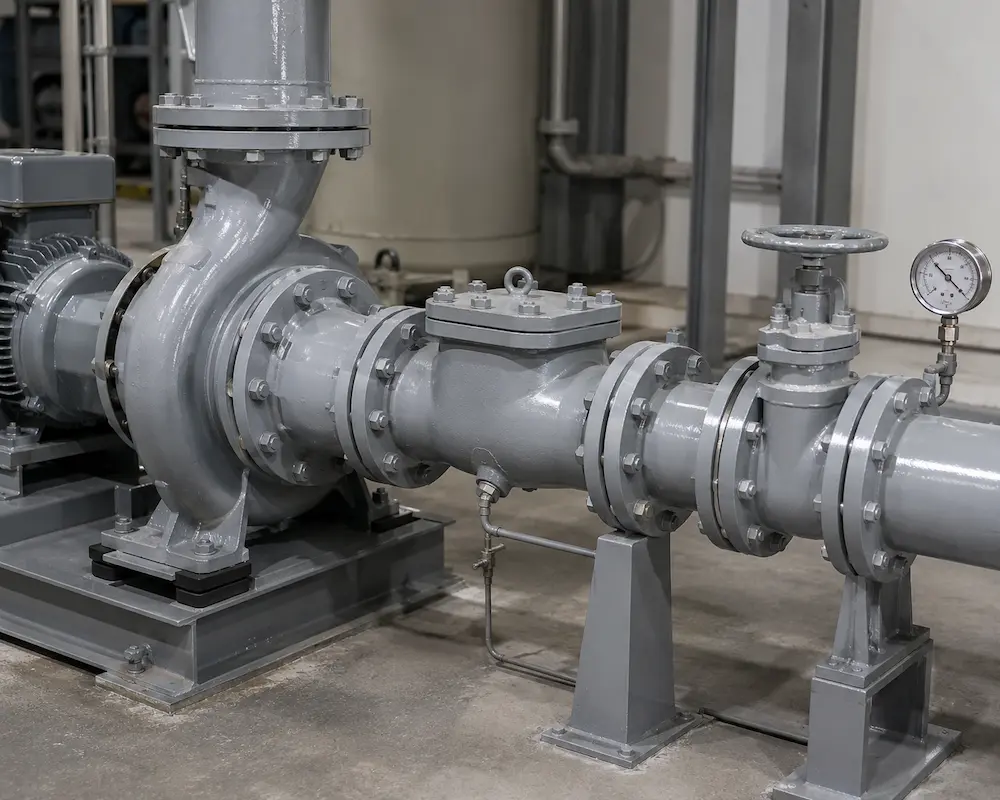
Swing check valves may work in steady pump discharge systems when flow is stable, reverse flow is limited and shutdown is not severe. They can be attractive where low pressure drop and simple construction are priorities.
Spring check valves may be better where faster closure is required, especially in compact pump skids, frequent start-stop service, vertical discharge lines or systems with higher reverse-flow risk. In severe pump discharge service, dual plate or nozzle check valves may also be considered depending on duty. The detailed guide on check valves for pump discharge explains how pump shutdown, backflow and water hammer risk affect selection.
Material and Seat Selection
| Material / Component | Common Options | Buyer Notes |
|---|---|---|
| Body material | Cast iron, ductile iron, carbon steel, stainless steel, bronze or alloy | Select by pressure, corrosion risk, temperature and project standard. |
| Disc / plate | Stainless steel, carbon steel, bronze or coated material | Must resist wear, corrosion and impact during closure. |
| Spring | Stainless steel, alloy spring material or special corrosion-resistant option | Critical for spring check valves and dual plate valves. |
| Seat | Metal, EPDM, NBR, FKM or PTFE | Affects leakage performance, temperature limit and media compatibility. |
| Gasket | PTFE, graphite, rubber or spiral wound | Must match flange standard, temperature and chemical service. |
Common Selection Mistakes
Mistake 1: Selecting Only by Valve Size
Pipe size alone does not define the correct check valve. Flow rate, pressure drop, minimum velocity, installation direction and shutdown behavior also matter.
Mistake 2: Assuming Spring Check Valves Are Always Better
Spring-assisted closure can be useful, but it adds cracking pressure and may increase pressure drop. In a large steady-flow pipeline, a swing check valve may still be the better fit.
Mistake 3: Ignoring Spring Cracking Pressure
If cracking pressure is too high, the valve may not open properly under low flow. If it is too low, closure response may not meet the system need.
Mistake 4: Assuming All Check Valves Can Be Installed Vertically
Vertical installation depends on valve type, flow direction, spring assistance and manufacturer approval. Do not assume interchangeability between swing, lift, spring, dual plate and ball check valves.
Mistake 5: Treating Water Hammer as Only a Valve Problem
Check valve type matters, but water hammer also depends on pump shutdown, pipe length, velocity, surge pressure, column separation and system controls.
How to Choose Between Swing and Spring Check Valves
Choose a swing check valve when the system has larger size, steady flow, moderate closure demand and low pressure drop requirement. Choose a spring check valve when the system has compact space, vertical installation, frequent pump cycling, faster closure demand or reverse-flow risk that needs closer review.
For broader check valve type comparison, see the industrial check valves selection guide. For product-level sourcing, buyers can also review Vcore Valve’s check valve product range.
Information Buyers Should Provide Before Quotation
- Valve size / pipeline size
- Pressure class or nominal pressure
- Medium
- Temperature
- Operating pressure and design pressure
- Normal, minimum and maximum flow rate
- Installation direction: horizontal or vertical
- Flow direction
- Pump discharge condition
- Water hammer or slam concern
- Allowable pressure drop
- Cracking pressure requirement
- Body material
- Seat material
- Spring material, if spring check valve
- Flange, wafer, threaded or welded connection
- Applicable standard
- Material certificate and pressure test requirement
Final Recommendations for Industrial Buyers
There is no universal winner between swing check valves and spring check valves. A swing check valve is often better for larger, steady-flow pipelines where simple construction and low pressure drop are important. A spring check valve is often better for compact systems, vertical lines, pump discharge service and faster closure response. The final decision should be based on system behavior, not only valve name.
FAQ
What is the main difference between a swing check valve and a spring check valve?
A swing check valve uses a hinged disc that closes by gravity and reverse flow. A spring check valve uses spring-assisted closure, so it usually closes faster.
Is a spring check valve better than a swing check valve?
Not always. A spring check valve is often better for compact systems, vertical lines and faster closure. A swing check valve may be better for large steady-flow pipelines with low pressure drop requirements.
Which check valve is better for pump discharge?
Spring check valves are often preferred when faster closure is needed, but swing, dual plate or nozzle check valves may also be suitable depending on pump curve, flow rate and water hammer risk.
Which check valve is better for vertical installation?
A spring check valve is often more suitable for vertical installation because spring force assists closure. However, flow direction and manufacturer approval must still be confirmed.
Does a spring check valve prevent water hammer?
Not by itself. Spring-assisted closure may reduce reverse flow and valve slam in some systems, but severe water hammer may require surge analysis, non-slam valve design or pump control review.
Does a swing check valve have lower pressure drop?
Often yes in steady large-flow pipelines, because there is no spring force to overcome. Actual pressure drop still depends on valve size, disc position, flow rate and design.
What information is needed to quote a swing or spring check valve?
Provide size, pressure class, medium, temperature, flow rate, installation direction, pressure drop limit, cracking pressure, material, connection type, standard and test requirements.