Quick Overview
Butterfly valve performance depends far more on the seat design than most buyers realise. Whether you choose a hard seat, soft seat or rubber-lined option directly affects sealing performance, service life, torque and maintenance cost. In this guide, Vcore Valve explains how different butterfly valve seats work, where they succeed, where they fail, and how to choose the right one for your system.
A Familiar Engineering Conversation
“Why is the valve leaking again?”
“The disc looks fine.”
“Yes—but the seat isn’t.”
At Vcore Valve, we hear this conversation far too often. In most cases, the issue is not the valve body or disc, but an incorrect butterfly valve seat selection.
Common User Pain Points
Unclear differences between seat types
Many buyers assume all butterfly valve seats behave the same, which leads to poor application matching.
Premature leakage
Incorrect seat material degrades quickly under temperature, pressure or chemical exposure.
High operating torque
Wrong seat design increases friction, leading to actuator oversizing or early failure.
Practical Solutions That Work
Select seat material based on media, not price
Chemical compatibility and temperature range should always come first.
Match seat type to pressure and cycle frequency
Soft seats seal better; hard seats last longer in severe service.
Understand lifecycle cost, not just initial cost
A cheaper seat replaced every year is rarely economical.
What Is a Butterfly Valve Seat?
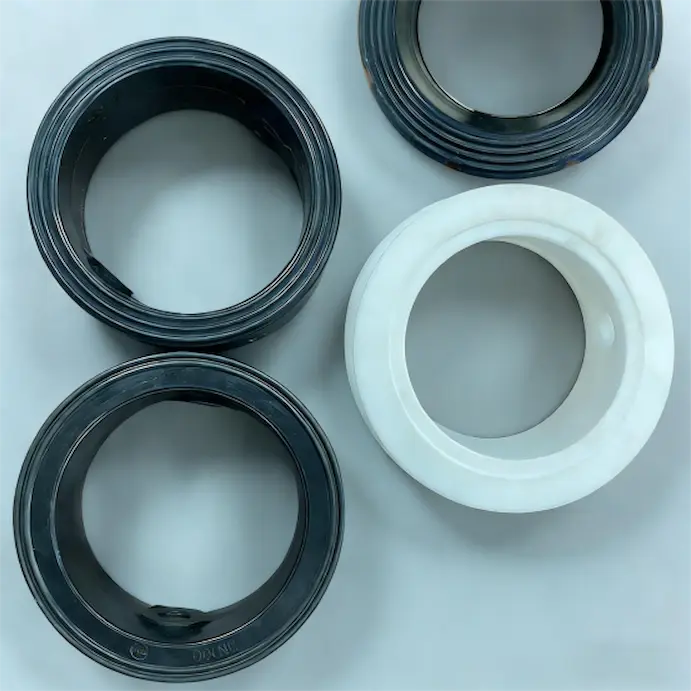
A butterfly valve seat is the sealing interface between the valve disc and the valve body. Its role is to prevent leakage when the valve is closed and to maintain stability during operation.
Seat design directly affects:
-
Shut-off performance
-
Operating torque
-
Wear resistance
-
Temperature and pressure capability
Main Butterfly Valve Seat Types Explained
Soft Seated Butterfly Valves
Soft seats are typically made from elastomeric or polymer materials.
Common materials include:
EPDM, NBR, PTFE, Viton
Advantages:
-
Excellent bubble-tight sealing
-
Low operating torque
-
Cost-effective for clean media
Limitations:
-
Limited temperature range
-
Vulnerable to abrasion and chemicals
For water-based applications, review our EPDM lined butterfly valve for water treatment. To obtain a comparable quotation, specify the liner compound, disc and shaft materials, pressure rating and flange standard. Include any chemicals, oils or cleaning agents present in the medium so the supplier can review seat compatibility before offering a price.
Hard Seated Butterfly Valves
Hard seated designs use metal or composite materials for sealing.
Typical materials:
Stainless steel, Inconel, hard-faced alloys
Advantages:
-
High temperature resistance
-
Suitable for abrasive or corrosive service
-
Longer service life in harsh conditions
Limitations:
-
Higher torque
-
Not always bubble-tight
Rubber Lined Butterfly Valves
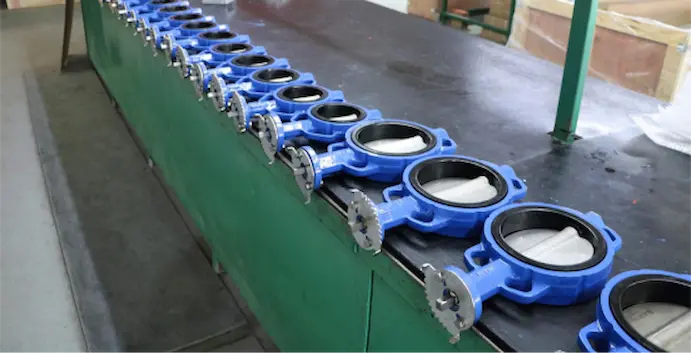
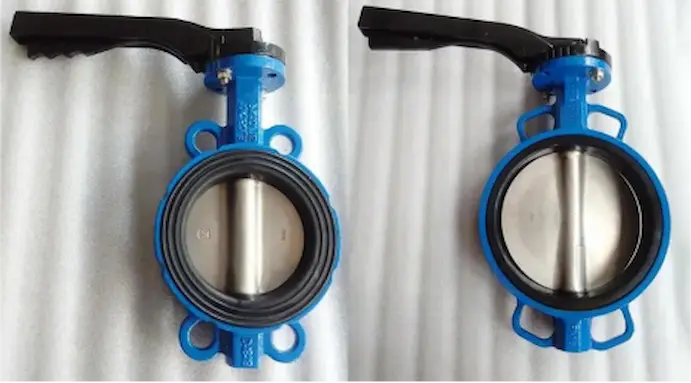
Rubber-lined designs integrate the seat into the valve body lining.
Key characteristics:
-
Thick elastomer lining
-
Excellent corrosion resistance
-
Common in water and wastewater
Limitations:
-
Limited pressure rating
-
Not suitable for high temperatures
Technical Comparison of Butterfly Valve Seats
| Parameter | Soft Seat | Hard Seat | Rubber Lined |
|---|---|---|---|
| Sealing performance | Excellent | Good | Excellent |
| Temperature range | Low–medium | High | Low |
| Abrasion resistance | Low | High | Medium |
| Operating torque | Low | High | Low |
| Typical applications | Water, gas | Steam, chemicals | Wastewater |
| Maintenance frequency | Medium | Low | Medium |
Real Application Examples
Water treatment plants
Rubber-lined butterfly valves provide corrosion resistance and a tight shut-off.
Chemical processing
Hard-seated butterfly valves withstand temperature and aggressive media.
HVAC and utilities
Soft-seated butterfly valves balance cost and sealing efficiency.
Data-Driven Insights
Industry testing shows that:
-
Soft seats reduce torque by up to 40% compared to metal seats
-
Hard seats extend service life by 2–3 times in abrasive media
-
Rubber-lined valves reduce corrosion-related failures by over 50% in wastewater systems
These differences directly impact actuator sizing, maintenance intervals and total cost of ownership.
Market Trends and Industry Direction
-
Growing demand for high-performance butterfly valves with composite seats
-
Increased use of PTFE and reinforced soft seats
-
Strong growth in water and wastewater infrastructure projects
-
Shift towards low-maintenance sealing solutions
Selection and Usage Advice from Vcore Valve
-
Define media chemistry and temperature first
-
Do not overspecify hard seats for clean service
-
Always verify seat compatibility with cleaning agents
-
Consider spare seat availability during selection
Compare Spare Parts and Actuator Package Costs
When comparing butterfly valve suppliers, request the valve and actuator package scope, required operating torque, spare seat availability, replacement procedure and spare parts lead time. Review the gear operated butterfly valve guide when manual gearbox operation is being considered. Confirm whether the quotation includes the gearbox or actuator, mounting bracket, coupling and specified accessories.
Conclusion
Choosing the right butterfly valve seat is not a minor detail—it determines whether your valve performs reliably for years or fails prematurely. At Vcore Valve, we help customers select seat designs based on real operating conditions, not catalogue assumptions.
If you are unsure which seat option suits your application, our engineering team is ready to assist.
Compare Lifecycle Cost Before Purchase
Compare butterfly valve offers using documented operating torque, specified leakage performance, media compatibility, spare seat cost and replacement requirements. Ask suppliers for test evidence relevant to the proposed valve configuration and service conditions. Include actuator sizing, maintenance access and spare parts lead time when assessing the total purchase and operating cost.
FAQ
What is the most common butterfly valve seat material?
EPDM and NBR are widely used due to their cost-effectiveness and good sealing performance in water applications.
Are hard-seated butterfly valves leak-proof?
They provide excellent sealing but may not achieve bubble-tight shut-off like soft seats.
When should rubber-lined butterfly valves be used?
They are ideal for water, wastewater and mildly corrosive fluids at low pressure.
Does seat material affect actuator size?
Yes. Hard seats generally require higher torque, leading to larger actuators.
Can butterfly valve seats be replaced?
In many designs, yes. Replaceable seats reduce downtime and maintenance costs.
How do I choose the right seat for chemical service?
Chemical compatibility charts and operating temperature must be reviewed carefully before selection.
Reference
-
API 609 – Butterfly Valves: Design and Performance
-
ISO 5752 – Metal Valves for Flanges and Face-to-Face Dimensions
-
ASME B16.34 – Valves Pressure-Temperature Ratings
-
Valve Manufacturers Association (VMA) Handbook
-
Crane Technical Paper No. 410 – Flow of Fluids
-
Union Valve Technical Knowledge Series
-
Vcore Valve Internal Engineering Guidelines and Field Experience