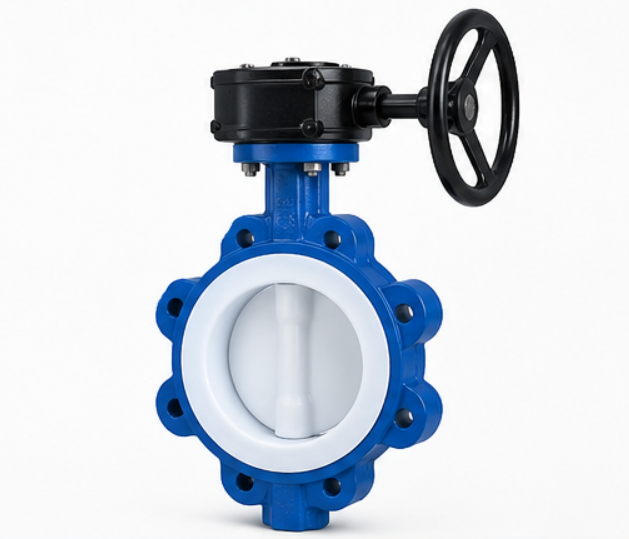
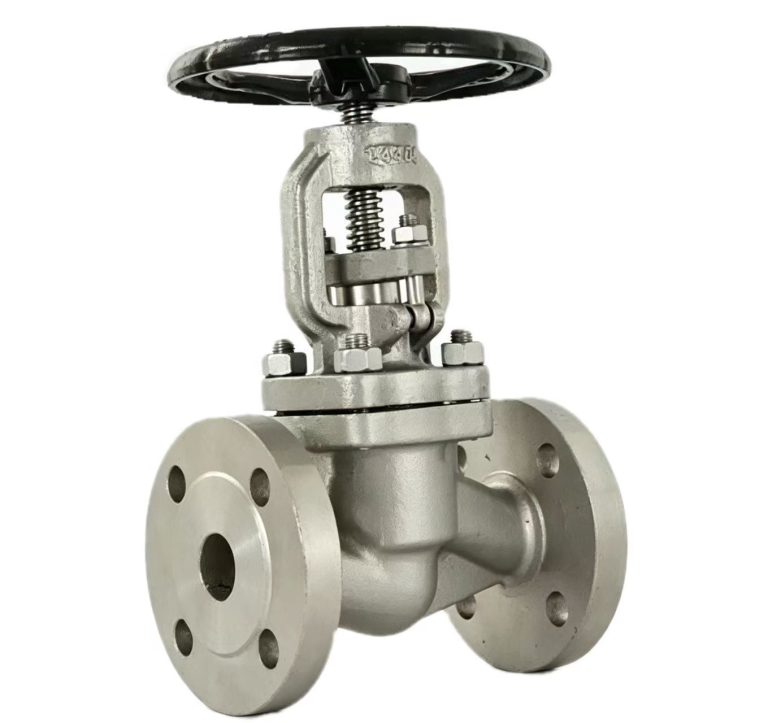
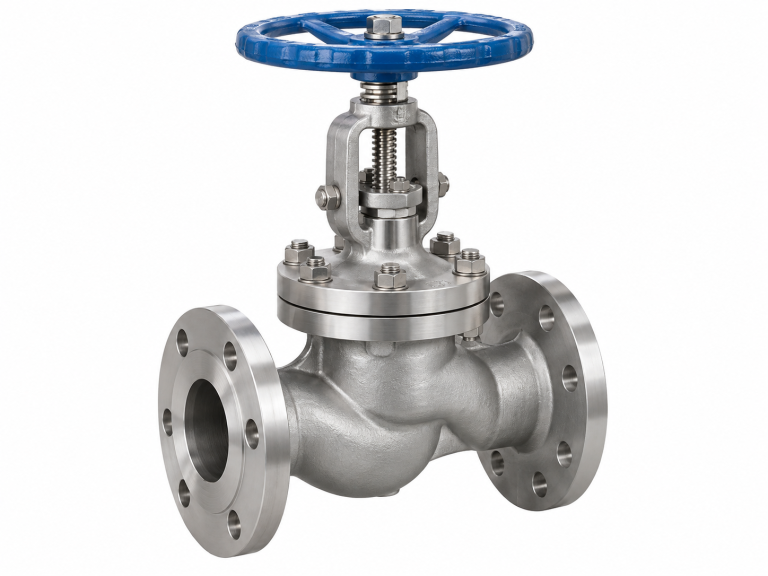
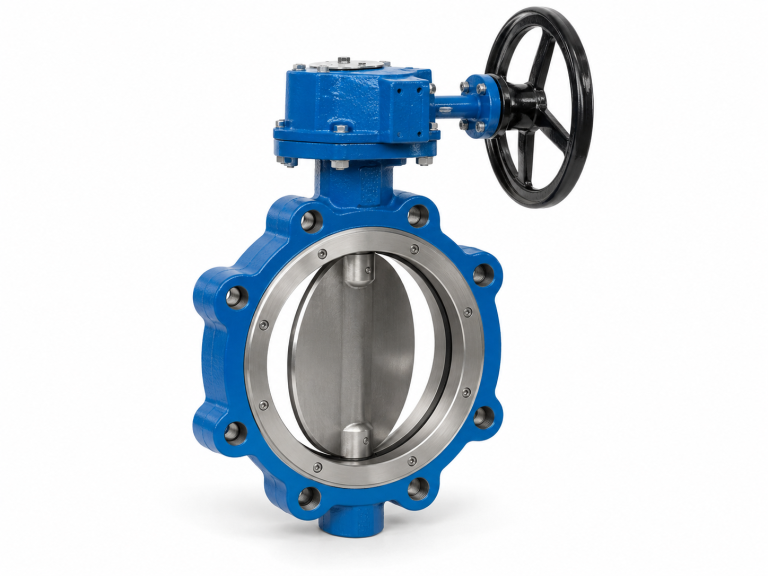
PTFE Lined Butterfly Valve for Chemical and High-Chloride Service
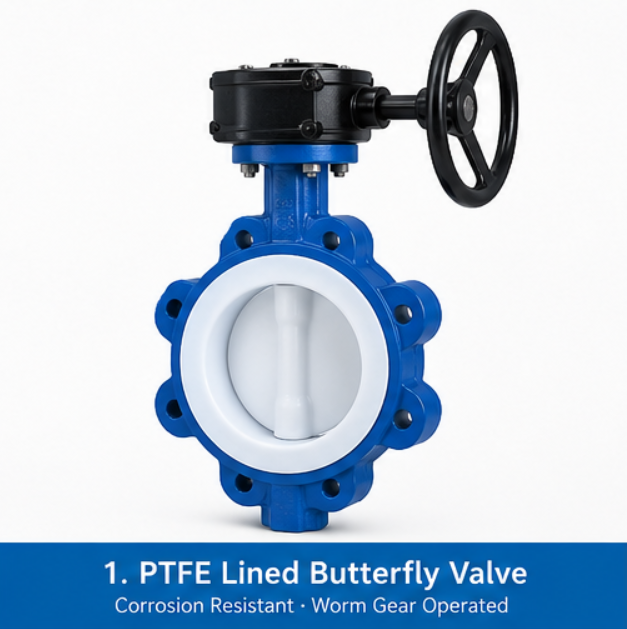
A PTFE lined butterfly valve is used where ordinary metallic or elastomer-seated valves may suffer rapid corrosion from aggressive process fluids. Vcore focuses this valve series on chemical processing, seawater, concentrated brine and high-chloride pipelines, where corrosion resistance and reliable isolation are primary selection requirements.
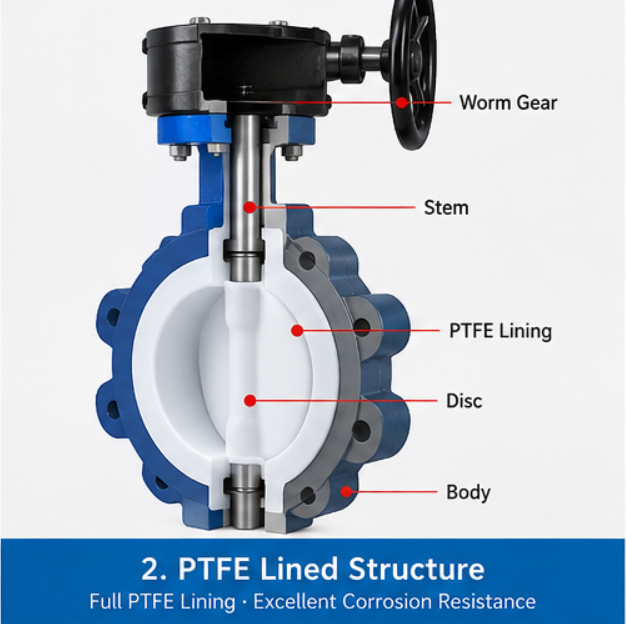
PTFE (polytetrafluoroethylene) provides a chemically resistant barrier between the process medium and the metallic valve structure. Depending on the approved design, the flow passage, seat area and other wetted surfaces can be protected by PTFE or another selected fluoropolymer. This makes the valve particularly useful for acids, alkalis, salt solutions, chemical wastewater, chlor-alkali processes and other corrosive services after compatibility review.
Why PTFE for Corrosive Chemical and Chloride-Rich Media?
In corrosive service, the valve body material alone is not always sufficient. Acids, alkalis, chlorides and concentrated salt solutions can attack exposed metallic surfaces and may cause pitting, crevice corrosion or other forms of localized corrosion. A properly engineered PTFE lining separates the process fluid from susceptible metallic surfaces and provides a highly corrosion-resistant wetted barrier.
This is particularly valuable in chemical plants where media composition can be aggressive, and in seawater or brine systems where chloride concentration is high. However, PTFE should not be described as universally compatible with every chemical. Final selection must consider chemical name, concentration, operating temperature, pressure, solids content, vacuum condition and permeation risk.
Recommended Service Temperature: -20°C to +150°C
For this Vcore product positioning, the recommended temperature envelope is -20°C to +150°C. This range is intentionally conservative for industrial valve selection because the practical temperature capability of a lined valve depends on more than the raw PTFE material itself. Valve size, pressure, liner support, sealing structure, thermal cycling and the actual process chemical all affect the allowable operating condition.
Applications approaching the upper temperature limit should therefore be reviewed against the actual datasheet rather than selected from temperature alone.
Valve Selection by Pressure, Sealing Requirement and Seawater Condition
| Working Condition | Recommended Configuration | Primary Reason |
|---|---|---|
| Highly corrosive chemicals, acids, alkalis and chloride-rich liquids | PTFE lined butterfly valve | Protects wetted metallic surfaces from chemical attack |
| Low-pressure, ambient-temperature seawater/brine with tight shutoff requirement | Double-offset + soft seat | Reduced seat rubbing with resilient sealing for tight isolation |
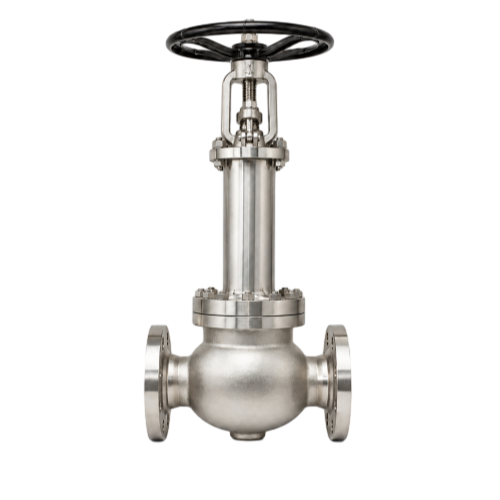
| Medium/high-pressure seawater containing sand or suspended solids | Triple-offset + metal seat | Better suited to pressure, erosion and abrasive severe service |
| High-pressure seawater desalination service | Triple-offset + metal seat | Severe-service construction for higher pressure and demanding cycling conditions |
Engineering note: These configurations are selection directions, not interchangeable trim options for one identical valve body. A PTFE-lined valve, double-offset soft-seated valve and triple-offset metal-seated valve are different design solutions. Vcore selects the structure according to the actual process conditions rather than forcing one butterfly-valve design into every corrosive application.
Worm Gear Operation
This product is configured with a worm gear operator. Compared with direct lever operation, a gearbox provides greater mechanical advantage and more controlled disc movement, especially on larger valves or where operating torque is higher. The gear operator also helps reduce sudden opening or closing and provides a clear manual operating interface for process isolation duties.
Gearbox sizing should be based on calculated valve torque, differential pressure, valve size, seat material and an appropriate service factor. ISO 5211 mounting can be specified where applicable according to the approved valve design.
Typical Product Configuration
| Product Type | PTFE Lined Butterfly Valve |
|---|---|
| Primary Service | Corrosive chemical, seawater, brine and chloride-rich media |
| Operation | Worm Gear |
| Lining / Wetted Barrier | PTFE; alternative fluoropolymer subject to project review |
| Recommended Temperature | -20°C to +150°C |
| Body Style | Wafer / Lug / Flanged according to selected model and project requirement |
| Body Material | Ductile iron / carbon steel / stainless steel / project-specified material |
| Disc Configuration | PTFE-lined, corrosion-resistant alloy or project-specific wetted material |
| Pressure Rating | Project-specific; confirm pressure together with temperature, size and lining design |
| Design / Test Standard | API / EN / ASME or project specification according to approved valve configuration |
| Primary Function | On-off isolation; throttling duty requires separate engineering review |
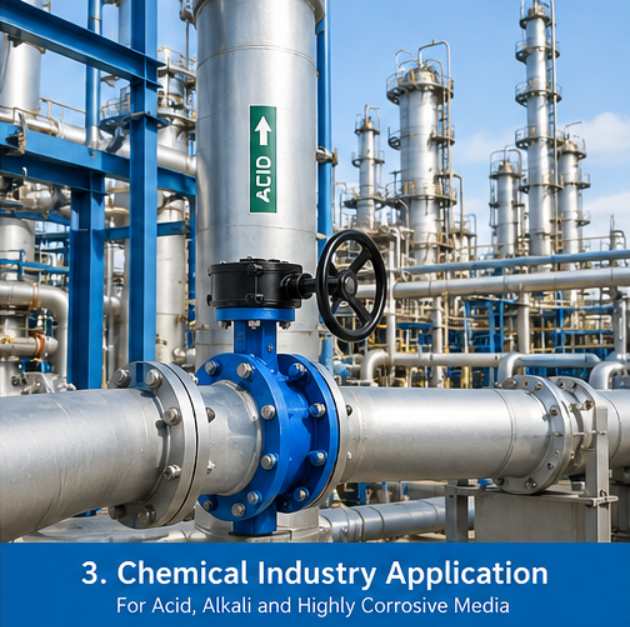
Typical Chemical Industry Applications
The main target market for this valve is the chemical industry. Typical installations include:
- Acid and alkali transfer pipelines
- Chlor-alkali production systems
- Chemical dosing and injection skids
- Pickling and surface-treatment lines
- Corrosive wastewater and neutralization systems
- Salt solution and concentrated brine pipelines
- Process chemical storage and transfer systems
- Seawater intake and chemical pretreatment systems
- Desalination auxiliary chemical systems
Seawater, Brine and High-Chloride Service
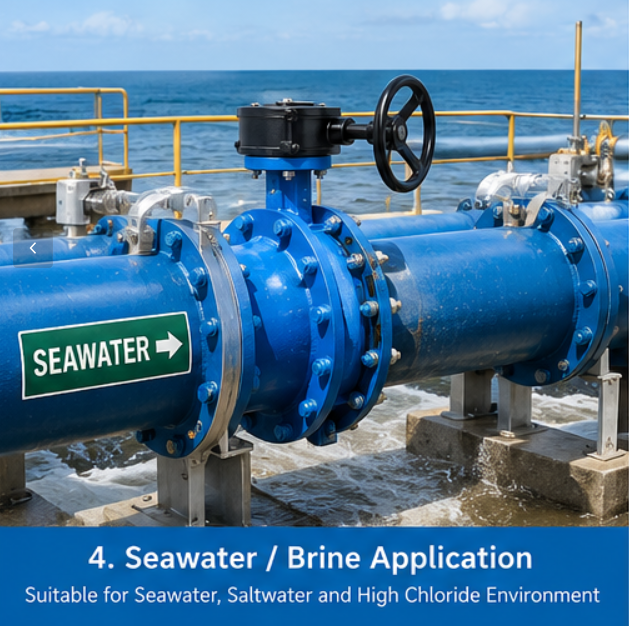
Seawater and brine contain high concentrations of chloride ions, which makes material selection critical. PTFE is useful as a corrosion-resistant barrier, but the complete valve must still be engineered as a system. The disc, stem, fasteners, sealing interfaces and any exposed metallic wetted components must be selected for the actual chloride concentration, pressure and temperature.
For relatively clean, low-pressure seawater at normal temperature, a double-offset soft-seated butterfly valve can provide efficient isolation and very tight shutoff when the selected valve is tested to the specified leakage standard. For higher differential pressure, abrasive suspended solids or sand, a soft sealing system may face accelerated wear. In those conditions, Vcore recommends evaluating a triple-offset metal-seated butterfly valve.
High-Pressure Seawater Desalination
High-pressure desalination systems impose a different duty from ordinary chemical transfer lines. Pressure, flow velocity, cycling frequency and chloride exposure must all be considered. Where the butterfly valve is used in a high-pressure desalination section, a triple-offset metal-seated design is generally the preferred direction because the geometry minimizes rubbing between sealing surfaces during most of the opening and closing stroke and is better suited to severe-service construction.
The final body, disc, stem and seat materials should be selected from the project water analysis and pressure/temperature datasheet. Duplex or super duplex stainless steels, nickel alloys or other corrosion-resistant materials may be considered where the specification requires them; they should not be assumed without project confirmation.
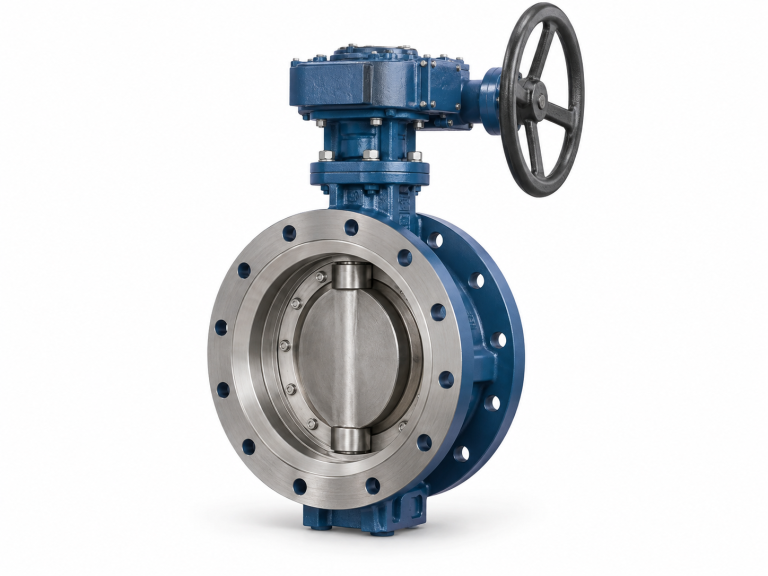
PTFE Lined vs Double Offset Soft Seat vs Triple Offset Metal Seat
| Selection Factor | PTFE Lined | Double Offset Soft Seat | Triple Offset Metal Seat |
|---|---|---|---|
| Main Strength | Chemical corrosion resistance | Tight shutoff at low/moderate pressure | Severe pressure/temperature/abrasion service |
| Typical Media | Acids, alkalis, chemicals, brine | Clean seawater, water, compatible process liquids | High-pressure seawater, abrasive or severe process media |
| Seat Concept | Fluoropolymer lined/sealing system | Resilient soft seat | Metal-to-metal / laminated metal sealing system |
| Solids / Sand | Requires careful review | Not preferred for abrasive solids | More suitable direction for abrasive severe service |
| Primary Industry Focus | Chemical processing | Water / seawater isolation | Desalination, power, petrochemical severe service |
Inspection and Quality Control
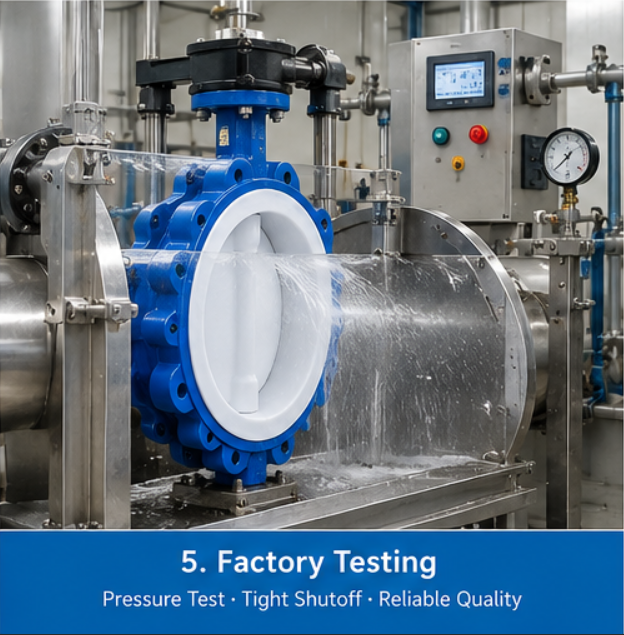
For lined butterfly valves, inspection should cover more than the metal pressure boundary. Depending on the purchase specification, Vcore can prepare inspection documentation around dimensional verification, material identification, lining appearance and continuity, valve operation, shell/seat pressure testing and final visual inspection.
For critical chemical service, the purchaser should state any required lining integrity test, holiday/spark test, material certificate, inspection and test plan (ITP), third-party inspection or project-specific acceptance criterion in the RFQ.
Information Required for Quotation
- Medium / chemical name
- Chemical concentration or seawater/brine composition
- Chloride concentration where relevant
- Operating and design temperature
- Operating and design pressure
- Valve size (DN / NPS)
- Required pressure class / PN rating
- Wafer, lug or flanged connection
- Required flange standard and face-to-face standard
- Solids / sand content and particle condition
- Required leakage / shutoff standard
- Body, disc and stem material requirements
- Required lining material
- Worm gearbox requirement and mounting orientation
- Inspection, certification and documentation requirements
Why Choose Vcore for Chemical Butterfly Valve Projects?
Vcore supports both standard valve supply and project-based customization. For corrosive chemical and seawater applications, the selection process starts from the actual medium rather than from valve size alone. We can review the chemical composition, chloride level, temperature, pressure, solids content, connection standard and sealing requirement before confirming the valve structure and materials.
This approach is especially important where the project may need to choose among PTFE-lined, double-offset soft-seated and triple-offset metal-seated butterfly valves.
Related products and technical resources:
- Butterfly Valve Product Category
- PTFE Lined Butterfly Valve
- Rubber Lined Butterfly Valve
- Double Offset vs Triple Offset Butterfly Valve
- Contact Vcore for Project Selection
Frequently Asked Questions
What is a PTFE lined butterfly valve used for?
It is mainly used to isolate corrosive process media where wetted metallic surfaces require protection. Typical services include chemical acids and alkalis, brine, high-chloride liquids, corrosive wastewater and selected seawater systems.
What temperature range is recommended for this Vcore PTFE lined butterfly valve?
The recommended product range is -20°C to +150°C. The actual allowable condition must be confirmed from medium, concentration, pressure, valve size, lining structure and the approved datasheet.
Can PTFE lined butterfly valves be used for seawater?
Yes, PTFE can be suitable as a corrosion-resistant wetted barrier in seawater and brine service. The complete valve material combination must still be checked because the disc, stem, fasteners and other exposed parts may also be affected by chlorides.
Which butterfly valve is recommended for low-pressure seawater with tight shutoff?
A double-offset soft-seated butterfly valve is a strong selection direction for clean, low-pressure, ambient-temperature seawater where tight shutoff is required, subject to the specified pressure and leakage test standard.
Which butterfly valve is better for seawater containing sand?
For medium/high-pressure seawater containing sand or abrasive suspended solids, a triple-offset metal-seated butterfly valve should normally be evaluated because resilient and PTFE sealing elements can experience accelerated wear in abrasive service.
Which butterfly valve is recommended for high-pressure desalination?
A triple-offset metal-seated butterfly valve is generally the preferred severe-service direction for high-pressure desalination sections. Final material and pressure-class selection must follow the project datasheet and water chemistry.
What actuator is supplied with this product?
This product is positioned with worm-gear manual operation. Gearbox torque and service factor are selected according to valve size, differential pressure and sealing configuration.
Request a Project-Specific Valve Selection
For chemical, seawater, brine or desalination projects, send Vcore the medium, concentration, chloride level, temperature, pressure, size, connection, solids content and leakage requirement. Our team can review whether the project is better suited to a PTFE lined butterfly valve, double-offset soft-seated butterfly valve or triple-offset metal-seated butterfly valve.