Quick Overview
In modern piping systems, choosing the correct connection method is just as important as selecting the valve itself. Two commonly used mechanical pipe joining methods are the clamp connection and the grooved connection. Although both rely on mechanical clamping structures, they are designed for completely different environments.
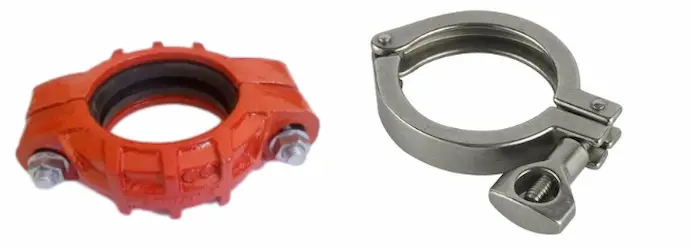
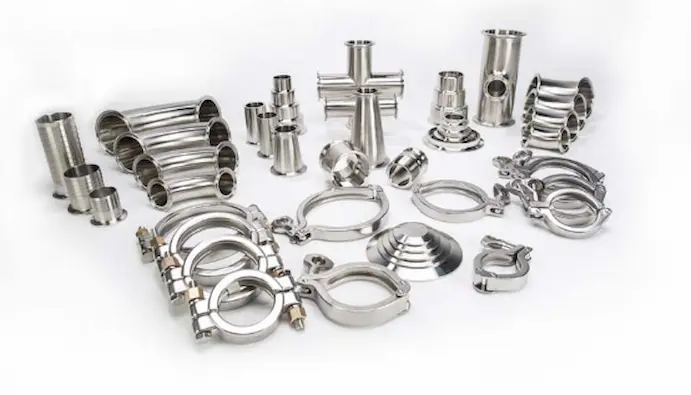
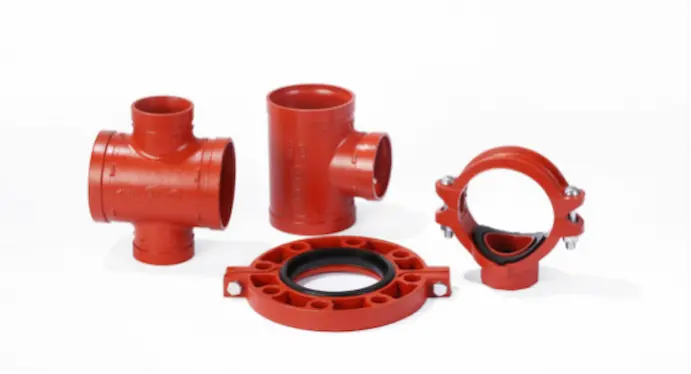
A clamp connection (often called a sanitary clamp or tri-clamp) is widely used in hygienic industries where cleanliness and easy disassembly are essential. By contrast, a grooved connection is engineered for rapid installation and strong mechanical restraint in large-scale industrial piping systems. Understanding the strengths, limitations, and ideal applications of each connection type helps engineers design safer and more efficient piping systems.
This guide from Vcore Valve explains the differences between clamp connection vs grooved connection, helping engineers and project managers choose the best solution for their pipelines.
Opening Scenario
Imagine two completely different industrial environments.
In a pharmaceutical factory, operators must frequently dismantle piping equipment for sterilisation and inspection. The pipeline connection must be easy to remove and must not allow contamination.
Meanwhile, in a large fire protection system or HVAC network, hundreds of metres of steel pipe must be installed quickly and reliably.
These situations require very different pipe joining technologies. In the first case, a clamp connection provides hygienic performance and quick maintenance. In the second, a grooved connection allows fast installation and strong mechanical coupling for large pipelines.
Pain Points
When engineers design pipeline systems, several issues often arise when choosing between clamp connection vs grooved connection.
1. Unclear application requirements
Many engineers are unsure which system suits their pipeline conditions. A clamp connection may be ideal for hygienic processing, but unsuitable for heavy industrial piping.
2. Installation speed vs cleanliness
Some industries require extremely clean pipelines, while others prioritise installation efficiency. Selecting the wrong grooved connection or clamp connection can create maintenance challenges.
3. Pressure and pipe size limitations
Pipeline pressure ratings and pipe diameters also affect the decision. A clamp connection usually handles lower pressures and smaller pipe sizes, while a grooved connection is designed for larger pipelines.
Solutions
To solve these challenges, engineers should evaluate the pipeline design requirements carefully.
1. Evaluate hygiene requirements
If the pipeline carries food, pharmaceutical products, or sterile fluids, a clamp connection is often the best solution because it minimises crevices and allows quick cleaning.
2. Consider installation efficiency
For large infrastructure projects such as fire protection systems or HVAC networks, a grooved connection significantly reduces installation time because welding is not required.
3. Match connection type with pipe size and pressure
A grooved connection can accommodate larger pipe diameters and moderate pressure levels, while a clamp connection is typically used in smaller hygienic systems.
At Vcore Valve, engineers often evaluate these parameters when recommending the most suitable pipeline connection system.
Case Study
A beverage processing facility required stainless steel pipelines for its production line. The plant needed frequent cleaning and strict hygiene compliance.
Initially, the system used threaded pipe joints, which created contamination risks and complicated maintenance.
The engineering team upgraded the system using sanitary clamp connections, which allowed rapid disassembly for cleaning and improved process hygiene.
In contrast, a separate cooling water system in the same facility used grooved connections for large steel pipes. This solution reduced installation time and simplified future maintenance.
This combination approach demonstrates how both clamp connection vs grooved connection can be used effectively in different parts of a single industrial system.
Data Analysis-Clamp Connection vs Grooved Connection
| Feature | Clamp Connection | Grooved Connection |
|---|---|---|
| Typical industries | Food, pharmaceutical, biotech | HVAC, fire protection, industrial water |
| Pipe diameter | ½″ – 12″ | 1″ – 24″ |
| Pressure capability | Lower pressure applications | Moderate pressure systems |
| Installation speed | Very fast manual assembly | Fast installation using bolts |
| Hygiene performance | Excellent | Not designed for hygienic systems |
| Maintenance | Easy disassembly | Moderate maintenance |
Sanitary clamp systems are optimised for hygiene and cleaning, while grooved connections focus on installation speed and mechanical strength.
Trends
Industrial pipeline systems continue to evolve, and several trends are shaping the future of clamp connection vs grooved connection technology.
Growing hygienic processing industries
Food processing, pharmaceuticals, and biotechnology industries are expanding globally. This increases demand for stainless steel piping systems using clamp connections.
Faster construction of infrastructure
Large facilities and commercial buildings require faster installation methods, driving the adoption of grooved connection systems.
Modular pipeline systems
Many modern facilities prefer modular pipeline systems that can be assembled quickly. Grooved connections support modular construction because pipes can be installed without welding.
Usage Advice
When selecting between clamp connection vs grooved connection, engineers should follow several practical guidelines.
First, consider the pipeline environment. If contamination control is critical, a clamp connection is usually the best option.
Second, evaluate installation speed. A grooved connection is particularly useful for projects that require rapid construction or system expansion.
Third, review maintenance requirements. Systems that require frequent inspection or cleaning benefit from the easy disassembly of clamp connections.
Finally, always match the connection type with pipeline pressure ratings and pipe size specifications.
Conclusion
Although they appear similar at first glance, clamp connection vs grooved connection systems serve very different purposes in industrial piping. A clamp connection is ideal for hygienic processes where cleanliness and frequent disassembly are essential. In contrast, a grooved connection provides strength, flexibility, and rapid installation for large industrial pipelines.
Selecting the correct connection system improves safety, reduces installation costs, and ensures long-term pipeline reliability.
At Vcore Valve, our engineering team helps customers choose the best pipeline connection solutions for their specific applications, ensuring efficient operation and reliable performance.
FAQs
What is a clamp connection?
A clamp connection is a sanitary pipe connection using ferrules, gaskets, and clamps to create a hygienic and easily removable joint.
What is a grooved connection?
A grooved connection joins pipes using grooved pipe ends, rubber gaskets, and bolted coupling housings.
Which connection type is better for hygienic industries?
A clamp connection is preferred because it allows easy cleaning and prevents bacterial contamination.
Where are grooved connections commonly used?
They are widely used in HVAC systems, fire protection pipelines, and industrial water systems.
Are grooved connections stronger than clamp connections?
In most cases, grooved connections handle larger pipes and higher pressure systems.
Do clamp connections require special tools?
Most clamp connections can be assembled or removed quickly without complex tools.
Reference
-
Industrial Piping Engineering Guide
-
Mechanical Pipe Coupling Design Standards
-
Pipeline Installation Handbook
-
Engineering Toolbox – Pipe Connection Methods