EPDM Flanged Diaphragm Valves for Demineralized Water Plants: Class 150 Selection Guide
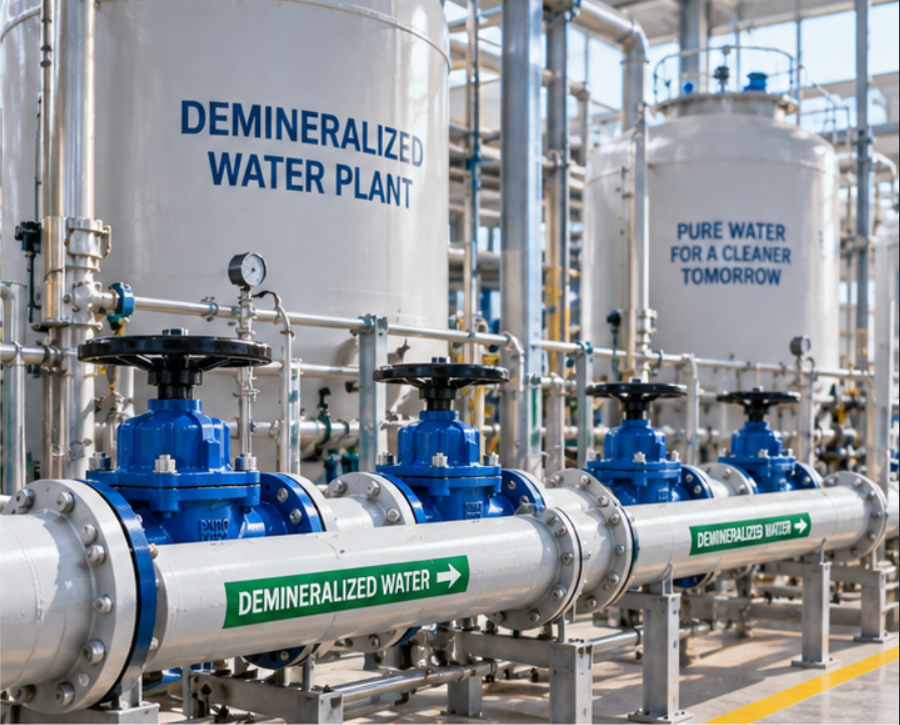
Demineralized water plants remove dissolved ionic contaminants from raw or pretreated water to produce low-conductivity process water. Depending on the plant design, the system may include ion-exchange vessels, reverse osmosis, electrodeionization, regeneration skids, chemical dosing, neutralization and treated-water distribution piping.
Many of these lines operate at modest pressure and temperature. This makes the EPDM flanged diaphragm valve attractive where tight shutoff, corrosion protection and isolation of the operating mechanism from the process fluid are important.
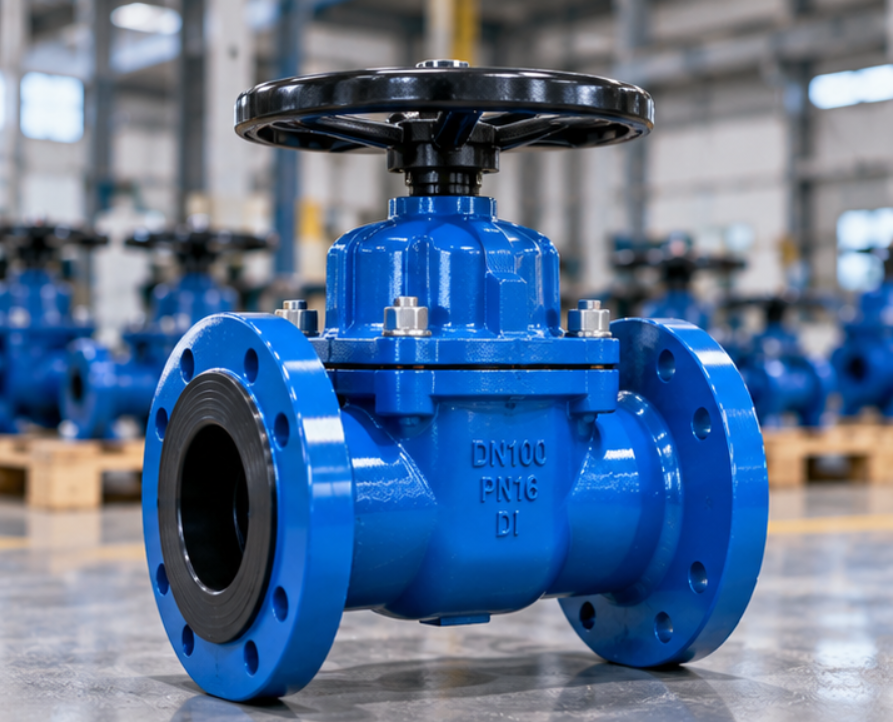
Why Diaphragm Valves Fit Demineralized Water Service
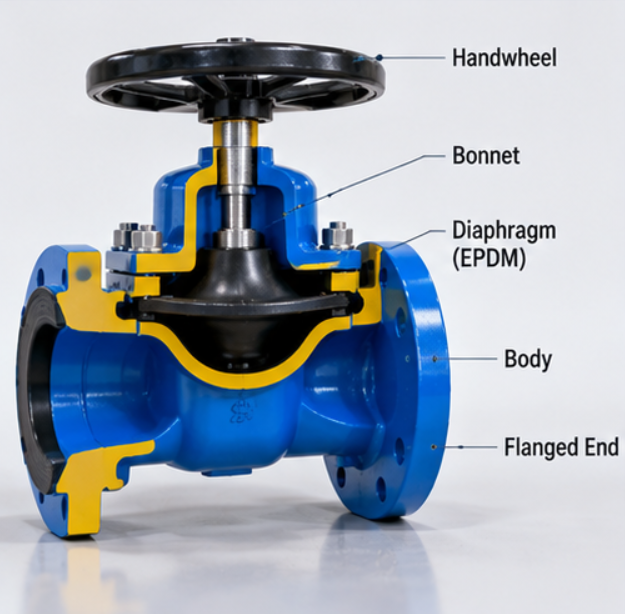
A diaphragm valve closes by pressing a flexible diaphragm against a raised weir or sealing surface. The diaphragm forms a barrier between the process medium and the bonnet/stem mechanism. This architecture reduces direct process exposure of moving components and allows wetted materials to be selected around the actual water or chemical chemistry.
- Process medium is isolated from the stem and bonnet.
- Resilient shutoff is practical for many low-pressure liquid lines.
- EPDM is useful for many compatible water-based services.
- Rubber lining can protect the metallic body from direct process contact.
- Flanged construction simplifies plant installation and maintenance.
- Manual, pneumatic or electric operation is available.
Typical Class 150, EPDM, 5–50°C Configuration
| Item | Typical Configuration | Buyer Check |
|---|---|---|
| Valve | Flanged weir-type diaphragm valve | Confirm structure from process duty |
| Pressure | Class 150 | Actual working pressure may be much lower |
| Temperature | 5–50°C | Confirm process/design temperatures |
| Diaphragm | EPDM | Confirm chemical compatibility |
| Lining | EPDM or project-specific elastomer | Match the actual stream |
| Body | Ductile iron/cast iron/carbon steel with lining | Follow project corrosion specification |
| Connection | Flanged | Confirm drilling, facing and F/F |
| Operation | Manual or pneumatic | Based on cycling and automation |
Why EPDM Is Common in Demineralization Plants
EPDM is widely used in water-treatment valve diaphragms, seats, seals and linings. For a broader comparison of EPDM and other corrosion-resistant sealing materials, see Vcore’s Anti-Corrosion Valve Materials Guide. It can provide resilient sealing for many water-based services and selected dilute chemical solutions. It is often considered for demineralized water, utility/rinse water and selected acid or alkaline streams after compatibility verification.
EPDM is not universal. It is generally a poor choice for many petroleum oils, hydrocarbons and solvents. Vcore’s Rubber Lined Valves for Chemical & Slurry Applications explains how EPDM, NBR, natural rubber and other lining compounds differ by medium. Regeneration chemicals must be checked by chemical type, concentration and temperature rather than assuming that every line in a demineralization plant can use the same elastomer.
Demineralized Water and Regeneration Chemicals Need Different Checks
| Stream | EPDM Direction | Confirm |
|---|---|---|
| Demineralized water | Often practical | Purity, temperature, contamination requirements |
| Raw/utility water | Often suitable | Chlorine and treatment additives |
| Dilute caustic | May be suitable | NaOH concentration and temperature |
| Acid regeneration | Review required | Acid type, concentration, temperature |
| Cleaning chemicals | Case-by-case | Exact formulation and exposure |
| Oil/hydrocarbon | Usually not standard EPDM | Select another compatible elastomer |
Where EPDM is not appropriate, a PTFE-faced diaphragm, PTFE/PFA-lined construction or another compatible material system may be required. For stronger corrosive chemical service, compare the PTFE Lined Diaphragm Valve.
Weir Type vs Straight-Through
For clean demineralized water and many treatment-chemical lines, a weir-type diaphragm valve is often the relevant structure. Its raised weir allows shorter diaphragm travel and controlled shutoff. Straight-through designs provide a more open flow path and are more often evaluated for viscous, dirty or solids-containing media.
Why Low Pressure Still Requires Correct Sizing
Low-pressure service does not remove the need to confirm maximum working pressure, design pressure, differential pressure, transient conditions and pump behavior. Excessive differential pressure or unsuitable throttling can increase diaphragm stress. Frequent automated cycling also makes actuator thrust and diaphragm fatigue important.
Manual or Pneumatic Operation?
A manual handwheel is normally sufficient for locally operated isolation valves with low cycling frequency. Pneumatic operation becomes attractive when regeneration, rinsing or transfer sequences are automated by PLC.
| Requirement | Manual | Pneumatic |
|---|---|---|
| Local isolation | Excellent | Possible |
| Frequent cycling | Less practical | Suitable when sized correctly |
| PLC sequencing | No | Yes, with controls |
| Position feedback | Optional | Limit switches/sensors available |
See Vcore’s Valve Actuator Selection Guide for broader actuator selection.
Flange and Replacement Dimensions
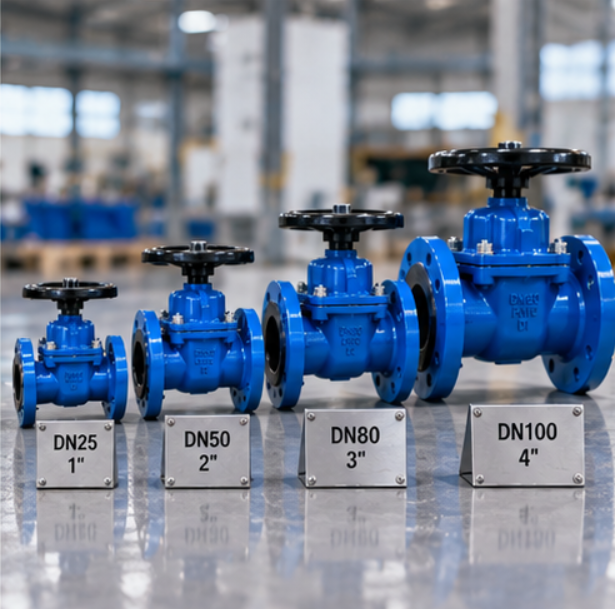
An RFQ should define DN/NPS, pressure class, flange drilling, flange facing, face-to-face dimension and mating-pipe requirements. This is especially important for replacement valves: a chemically compatible valve is not a drop-in replacement if its F/F dimension, bolt pattern or actuator envelope does not fit.
Diaphragm and Lining Maintenance
The diaphragm is a moving flexible sealing component. Service life depends on chemistry, temperature, differential pressure, closing force and cycling. Maintenance should inspect cracking, hardening, swelling, cuts, permanent deformation, lining separation and leakage. Automated skids with frequent cycling should consider spare diaphragms of the exact approved compound.
Diaphragm Valve vs EPDM Butterfly Valve
Both can use EPDM, but they solve different problems. Butterfly valves are compact and economical for general water isolation, especially at larger sizes. Diaphragm valves are attractive when isolation of the stem/bonnet, lined wetted surfaces or chemical-service flexibility matters.
For larger general water pipelines, compare Vcore’s EPDM Lined Butterfly Valve for Water Treatment. Where isolation of the bonnet and stem from the medium is more important, review the Rubber Lined Diaphragm Valve.
RFQ Checklist
- Size and quantity.
- Weir or straight-through design.
- Class 150 flange standard, drilling and facing.
- Working/design pressure.
- Working/design temperature, e.g. 5–50°C.
- Exact medium.
- Acid/caustic type and concentration where applicable.
- Body material and lining.
- EPDM diaphragm grade.
- Face-to-face dimension.
- Manual/pneumatic/electric operation.
- Actuator action and air pressure if pneumatic.
- Cycling frequency.
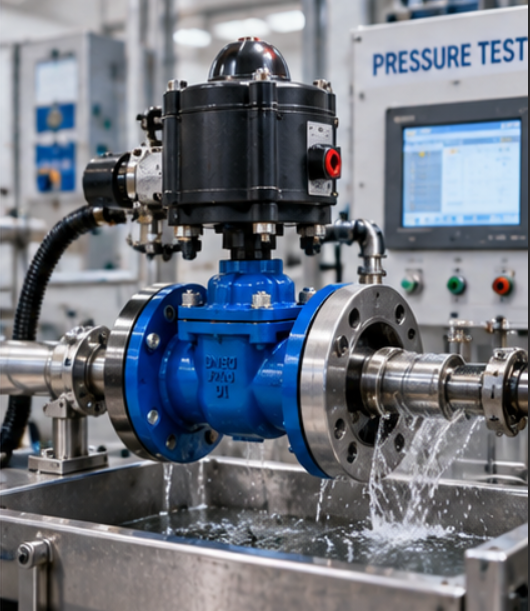
- Test requirements.
- GA drawing, material and test documentation.
- Spare diaphragm requirement.
Final Selection Principle
For a low-pressure demineralized-water plant operating around 5–50°C, a Class 150 flanged diaphragm valve with EPDM wetted elastomers can be a practical configuration. Selection should follow medium → concentration → temperature → pressure → valve structure → lining/diaphragm → operation → dimensional standard.
For broader system selection, see Vcore’s Water Treatment Valve Solutions. Buyers comparing lined valve families can also browse the Rubber-Lined Valve category.
FAQ
Is EPDM suitable for demineralized water?
EPDM is commonly considered for many water-based services. Final compatibility should still be checked against water chemistry, temperature and cleaning/regeneration chemicals.
Does Class 150 mean 150 psi?
No. Class 150 is a pressure-class designation. Actual operating pressure is specified separately.
Why use a diaphragm valve instead of a butterfly valve?
A diaphragm valve isolates the bonnet/stem mechanism from the process and can provide a lined wetted flow path. Butterfly valves are often more compact for large general water lines.
Is 5–50°C suitable for EPDM?
It is a moderate project range for many EPDM water-service applications, but the exact compound, pressure and chemical medium must be verified.