Safety Relief Valve vs Pressure Reducing Valve: How to Avoid RFQ Mix-Ups
Industrial buyers sometimes send an RFQ saying only “pressure relief valve,” “pressure reducing valve,” “PRV” or “safety valve.” These terms can refer to fundamentally different equipment. A wrong interpretation can produce a quotation for a valve that fits the thread size but cannot perform the required duty. This guide focuses on practical RFQ identification rather than repeating a general pressure reducing valve product description.
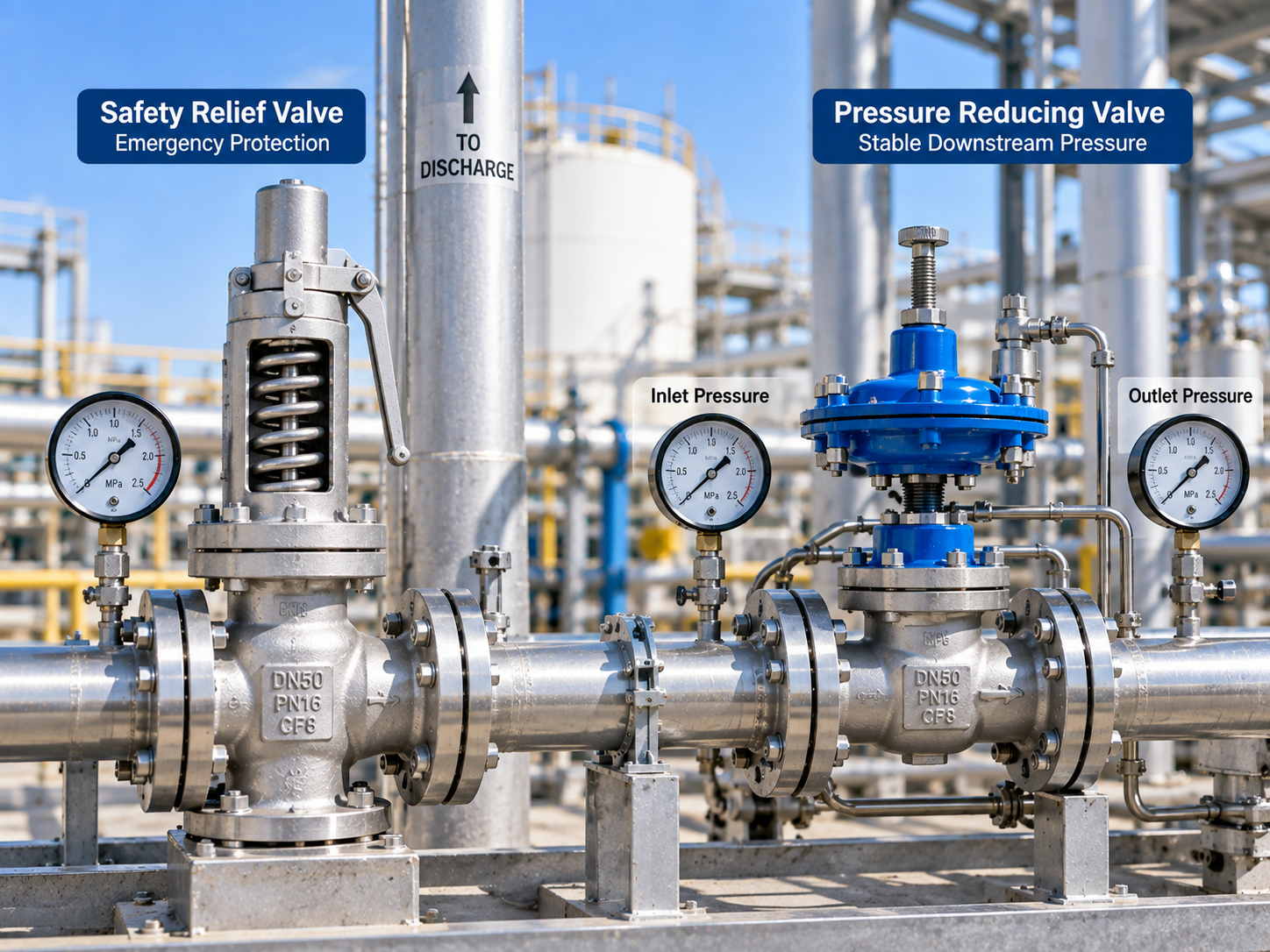
1. The Essential Difference: Emergency Discharge vs Normal Pressure Regulation
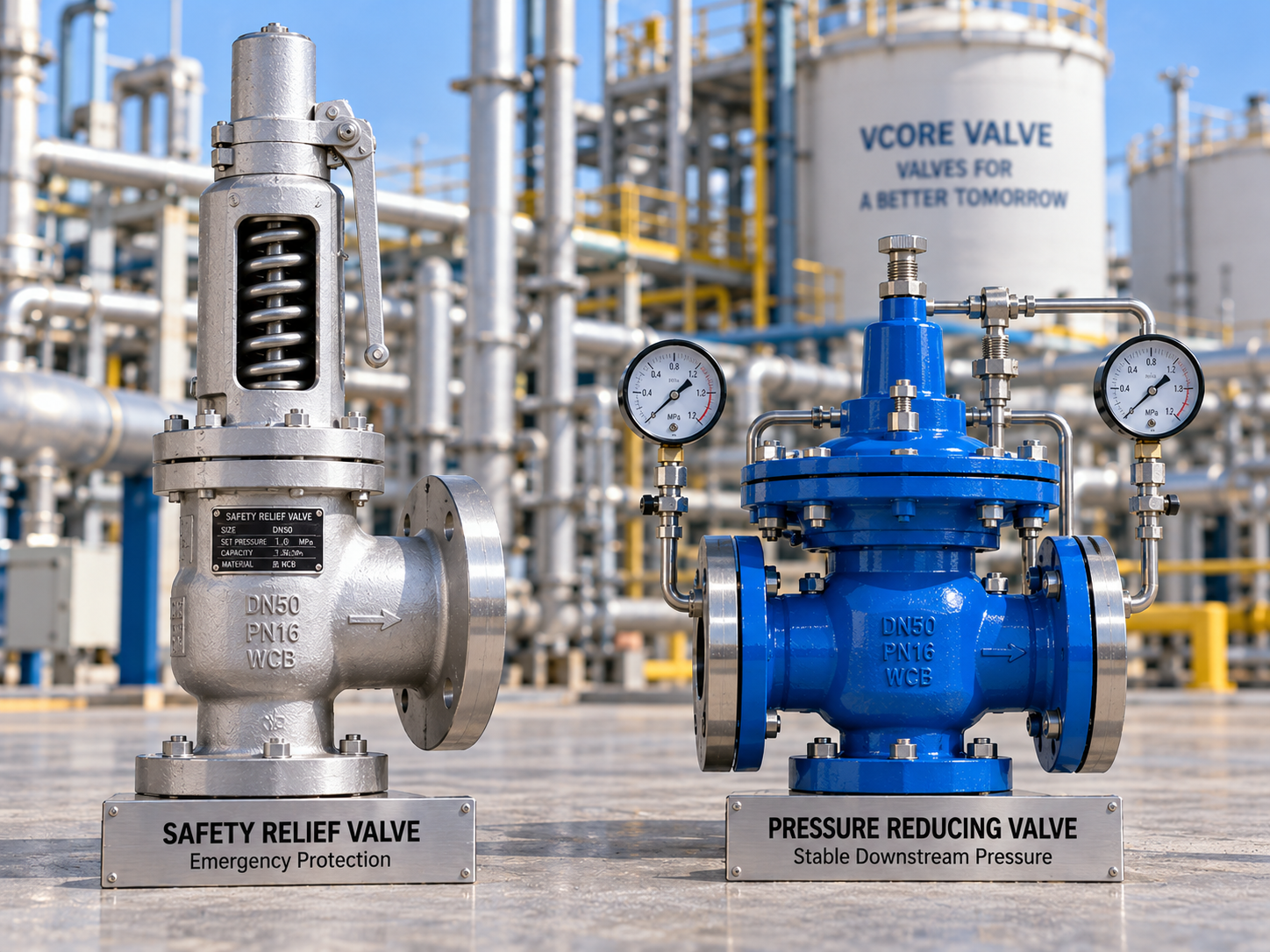
Safety relief valve: A spring-loaded safety valve or pilot-operated pressure-relief device is normally closed. When pressure at the protected system reaches the specified set pressure, it opens according to its design and releases fluid to a safe discharge destination. It closes again as pressure falls to its reseating condition. Its role is overpressure protection, not routine downstream pressure regulation.
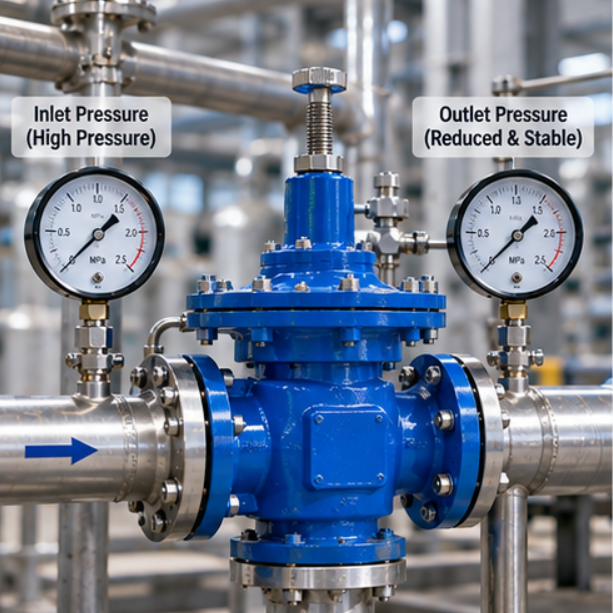
Pressure reducing valve: A pressure regulator senses downstream pressure and adjusts its opening as demand changes. With flow demand it normally operates in a regulating position, reducing higher inlet pressure to a lower controlled outlet pressure. At zero demand, some designs can close. Its role is normal process pressure control, not a substitute for a code-required safety device.
| RFQ question | Safety relief valve (SRV/PSV) | Pressure reducing valve (regulator) |
|---|---|---|
| Main purpose | Protect a system from overpressure by discharging fluid | Reduce and regulate downstream pressure during normal operation |
| Normal behavior | Normally closed; opens at set pressure | Modulates with downstream demand; may close at no flow |
| Pressure reference | Protected system/inlet pressure | Controlled downstream/outlet pressure |
| Outlet destination | Safe vent, relief header, return or collection system as designed | Normal downstream process pipeline |
| Primary sizing data | Required relieving capacity and relief conditions | Minimum/normal/maximum process flow and inlet/outlet pressure range |
| Set point meaning | Opening/set pressure for protection | Desired regulated downstream pressure |
| Typical arrangement | Protective branch connection from vessel or line | In series with the normal flow path |
2. Why “PRV” and “Pressure Relief Valve” Cause Quotation Errors
The abbreviation PRV is used for both pressure reducing valve and pressure relief valve in different industries and documents. “Safety valve,” “relief valve” and “safety relief valve” are also used differently across equipment types and applicable codes. Never classify a valve from the abbreviation alone.
For example, a buyer may specify “32 mm × 50 mm, 7.9 bar set pressure, water.” That description suggests a possible pressure-relief device with DN32 inlet and DN50 outlet, but it does not prove the type. Ask whether 7.9 bar is the opening/set pressure or the required downstream regulated pressure, and request the intended piping arrangement or a reference photo/drawing.
3. Can Inlet and Outlet Sizes Identify the Valve?
In many pressure reducing valve models, the inlet and outlet have the same nominal connection size because the valve is installed inline in a process pipeline. However, reducing stations can also use different upstream and downstream pipe sizes, reducers or specialized regulator bodies. Equal sizes are a useful clue, not a requirement.
Safety relief valves often use a larger nominal outlet than inlet to accommodate discharge flow and limit outlet-side losses. But equal-size inlet/outlet relief valves also exist. More importantly, the inlet and outlet connection sizes do not determine the required relief orifice area or certified capacity. Confirm the manufacturer’s selected model, orifice, discharge coefficient, relieving conditions and applicable code.
4. Full-Lift vs Low-Lift: Gas, Steam and Liquid Service
For many steam and gas overpressure-protection applications, full-lift or pop-action safety-valve designs are commonly used to obtain rapid opening and adequate discharge capacity. For many incompressible liquid applications, proportional/low-lift relief-valve designs can be suitable. This is a starting point, not a universal gas-versus-liquid selection rule: full-lift liquid-service valves, modulating gas-service devices and certified safety-relief valves for multiple media also exist.
Selection must follow the fluid phase at relieving conditions, required relieving rate, allowable overpressure, backpressure, discharge system, valve stability and governing code. Water can flash to steam during relief; two-phase flow needs its own engineering review. See Vcore’s pressure-temperature rating guide for the distinction between pressure class and actual service limits.
| Medium / scenario | Common design direction | Do not omit |
|---|---|---|
| Steam / compressed gas | Full-lift or pop-action safety valve is often considered | Required mass flow, relieving pressure/temperature, discharge backpressure |
| Water / non-flashing liquid | Modulating or low-lift relief design may be considered | Liquid capacity, viscosity, pressure losses, stable operation |
| Flashing liquid / two-phase | Application-specific certified safety-relief design | Two-phase sizing and backpressure review |
| Normal pressure reduction for any compatible fluid | Pressure reducing regulator | Inlet pressure range, outlet target, minimum-to-maximum flow |
5. A Steam Reducing Station May Need Both Valves
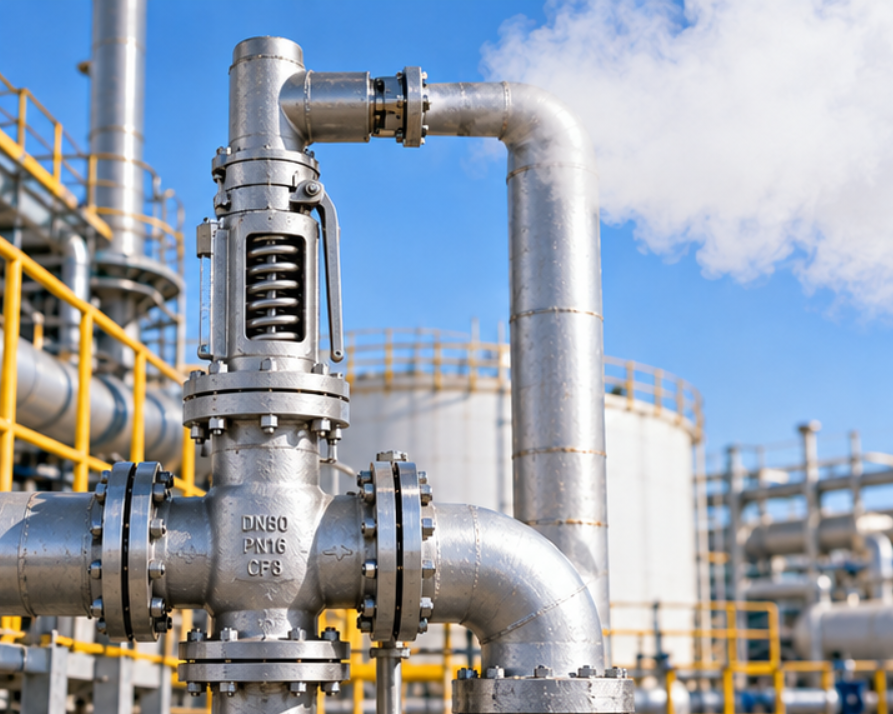
Consider a high-pressure steam header supplying lower-pressure process equipment. A pressure reducing valve maintains the normal downstream steam pressure. If that regulator fails open and the downstream equipment cannot withstand the maximum possible upstream pressure, a separately engineered safety valve may be required on the protected downstream system. Depending on discharge backpressure, a balanced bellows relief valve may be considered after engineering review. The safety valve must be sized for the credible overpressure scenario, potentially including the maximum flow through the failed-open reducing valve and other relevant sources.
The two valves are complementary, not alternatives: the regulator controls normal operation, while the safety valve provides independent overpressure protection when required by the system design and applicable code.
6. Which Data Should Be Requested Before Quoting?
| Data | Safety relief valve RFQ | Pressure reducing valve RFQ |
|---|---|---|
| Purpose | Overpressure protection and protected equipment | Normal downstream pressure regulation |
| Pressure | Set pressure; normal pressure; design/MAWP; allowable overpressure; backpressure | Minimum/normal/maximum inlet pressure; desired outlet pressure |
| Capacity | Required relieving mass/volumetric flow and basis of relief scenario | Minimum/normal/maximum process flow |
| Medium | Composition, phase, density/molecular weight as applicable | Medium, density and relevant process properties |
| Temperature | Operating and relieving temperatures | Operating and design temperatures |
| Connections | Inlet/outlet nominal sizes, end standard and discharge arrangement | Inlet/outlet size, end standard, piping layout |
| Other | Applicable code, certification, test/documentation, materials | Control accuracy, regulator type, materials, accessories, test requirements |
For a relief-valve inquiry, do not issue a firm engineered offer based only on inlet size, outlet size and set pressure. The required relieving capacity and relief scenario are critical inputs. For a regulator inquiry, confirm flow range and inlet/outlet pressure conditions before choosing the nominal valve size. Related purchasing checks are covered in Vcore’s valve pressure testing guide and control valve selection guide.
7. Three RFQ Examples
Example A: “32 mm × 50 mm, set pressure 7.9 bar, water”
Potentially a safety/relief valve because a set pressure and two unequal port sizes are given. Confirm whether the device opens to discharge at 7.9 bar, the exact inlet/outlet connection convention, required relieving capacity, maximum allowable pressure, temperature and discharge destination. Do not assume the type from size alone.
Example B: “DN50, inlet 12 bar, outlet 4 bar, 8 m³/h water”
Likely a pressure reducing valve inquiry because it specifies a lower target outlet pressure during normal flow. Confirm the minimum/maximum inlet pressure and flow, downstream pressure tolerance, pipe connections and material requirements.
Example C: “Steam header 10 bar, downstream equipment requires 4 bar”
Typically a pressure reducing station inquiry. Confirm the equipment’s MAWP and credible regulator-failure scenario to determine whether separate downstream overpressure protection is required and how it must be sized.
8. Copy-Ready Clarification Email for Ambiguous RFQs
Subject: Clarification Required – Pressure Relief or Pressure Reducing Valve
Dear Team,
Thank you for your inquiry. To ensure we quote the correct valve, could you please confirm whether you require:
1. A safety/relief valve that normally remains closed and opens to discharge fluid when the system reaches the specified set pressure; or
2. A pressure reducing valve that reduces inlet pressure and maintains a lower downstream pressure during normal operation?
Please also confirm whether the stated pressure is the relief set pressure or the required regulated outlet pressure, and whether the stated dimensions refer to the inlet and outlet connections. A reference photo or drawing would be helpful.
Thank you for your support. We look forward to your confirmation.
Best regards,
Vcore Valve Team
FAQ
Is a safety relief valve the same as a pressure reducing valve?
No. A safety relief valve discharges fluid to protect against overpressure. A pressure reducing valve regulates downstream pressure during normal operation.
Do pressure reducing valves always have equal inlet and outlet sizes?
No. Equal nominal sizes are common, but different sizes and pipe reducers are possible. Confirm the selected regulator model and approved drawing.
Does a larger safety valve outlet prove that it is a relief valve?
No. Unequal connection sizes are a clue only. Function, set pressure, flow path, required relieving capacity and product documentation establish the duty.
Should gas use full-lift and liquid use low-lift safety valves?
That is a common initial selection direction for certain applications, not a universal rule. Final selection depends on certified capacity, fluid phase, overpressure, backpressure and governing code.
Can a pressure reducing valve replace a safety valve?
No. Where an independent overpressure protective device is required, normal pressure regulation alone does not provide the required protective function.
For application-specific sourcing, compare Vcore’s pressure reducing valve with the safety valve product range, or send your RFQ and drawings.