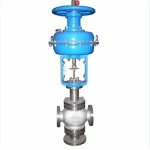
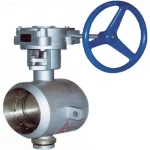
Control valve selection is a complete package decision. Start by defining the controlled variable and failure consequence, then select the valve body style, pressure-temperature rating, materials, trim architecture, flow characteristic, seat leakage class, actuator, positioner and inspection scope. Cv or Kv sizing remains essential, but it is only one approval gate. The final valve must control the process across all operating cases without unacceptable cavitation, flashing, noise, erosion, leakage, instability or actuator limitation.
A control valve should not be selected by copying a line item from a previous project or by choosing the same nominal size as the pipeline. Two valves with the same line size and pressure class may use completely different body styles, trim constructions, seat materials, actuators and accessories because their process duties are different.
A cooling-water valve, a high-pressure steam valve, a boiler feedwater valve and a slurry control valve may all regulate flow, but they do not face the same pressure recovery, temperature, erosion, leakage or failure risks.
This control valve selection guide provides a practical decision path for industrial buyers and engineers. It focuses on choosing the complete valve package after the process duty has been defined. Detailed Cv and Kv calculations are covered separately in How to Size a Control Valve.
Control Valve Selection Map
A reliable selection process moves through a series of engineering gates. A valve should not be approved because it passes only the capacity calculation.
| Selection Gate | Key Decision | Typical Failure if Ignored |
|---|---|---|
| 1. Control duty | Define whether the valve controls flow, pressure, temperature, level, mixing, diverting or another variable. | Wrong valve function or unsuitable control response. |
| 2. Capacity | Confirm required Cv or Kv and predicted travel at all operating cases. | Oversizing, insufficient maximum flow or unstable low-flow control. |
| 3. Body style | Match the flow path and mechanical construction to the medium and pressure-drop duty. | Blockage, erosion, excessive pressure loss or poor controllability. |
| 4. Materials and rating | Check body, bonnet, trim, packing, gasket and bolting against pressure, temperature and chemistry. | Corrosion, thermal damage, pressure-boundary failure or rapid wear. |
| 5. Trim and severe service | Identify cavitation, flashing, choked flow, noise, vibration, erosion and solids risk. | Pitting, trim breakage, noise, vibration or short service life. |
| 6. Shutoff | Select seat construction and leakage class from the actual process consequence. | Unacceptable leakage, damaged soft seat or oversized actuator. |
| 7. Actuation and controls | Confirm actuator output, fail action, signal, positioner, accessories and environment. | Failure to stroke, slow response, wrong fail position or control-system incompatibility. |
| 8. Verification | Define testing, calibration, material records and documentation before purchase. | Unverifiable configuration, incomplete records or site rework. |
1. Define the Control Duty and Failure Consequence
The first question is not “Which valve model do we need?” It is “What process variable must the final control element manipulate, and what happens if it fails?”
Common Control Duties
- Flow control: maintains a required liquid, gas or steam flow rate.
- Pressure control: regulates upstream pressure, downstream pressure or system differential pressure.
- Temperature control: adjusts steam, cooling water, thermal fluid or another utility to maintain process temperature.
- Level control: regulates vessel inlet or outlet flow according to liquid level.
- Mixing or diverting: combines or separates flow paths using a suitable two-way or three-way arrangement.
- Steam conditioning: controls steam flow, pressure or spray-water injection in a coordinated system.
The same valve body may not be suitable for every control duty. A precise low-flow chemical dosing loop may require different trim geometry and actuator resolution from a large cooling-water line. A steam pressure-reduction valve may require a different body, bonnet, packing and low-noise trim from a general water control valve.
Define the Required Fail Position
The safe position after loss of air, power or control signal must be selected from the process consequence:
- Fail-close: commonly considered when continued flow could overfill, overheat, overpressure or feed a hazardous reaction.
- Fail-open: commonly considered when continued cooling, minimum circulation or pressure relief is safer than closing.
- Fail-in-place: may be required where preserving the last position is preferable, but the actuator and accessory arrangement must support it.
Fail action should be confirmed by the process and safety review. It should not be copied automatically from another valve in the same line.
If the application only needs local upstream or downstream pressure control, an actuated control valve may not always be necessary. Compare the control architecture, utilities and pressure-response requirements in our Control Valve vs Pressure Regulator Guide.
2. Complete the Sizing Gate Without Turning the Selection Guide into a Sizing Report
Every control valve still requires sizing. The supplier should calculate the required coefficient and predicted travel for minimum, normal and maximum operating conditions using the actual process data and the coefficients of the selected valve and trim.
The selection guide does not repeat the Cv/Kv equations, liquid example or steam calculation. Those belong in the dedicated control valve sizing guide.
Before proceeding to body and trim selection, confirm that the sizing report provides:
- Required Cv or Kv for each operating case
- Selected rated capacity and port size
- Predicted valve travel for each operating case
- Flow regime and applicable correction factors
- Inlet and outlet velocity where relevant
- Cavitation, flashing, choked-flow and noise review where relevant
A valve with sufficient rated Cv is not automatically acceptable. It must also provide useful travel, suitable installed response, acceptable velocity and a body/trim design that can survive the pressure drop.
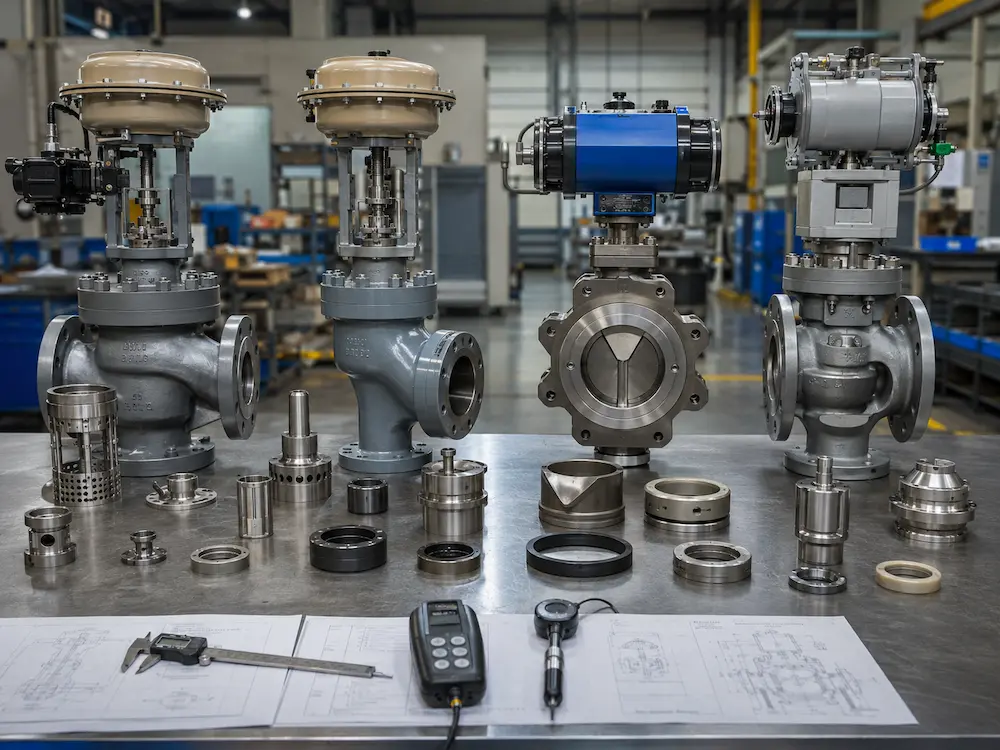
3. Select the Control Valve Body Style
Body style affects flow path, pressure recovery, available capacity, solids handling, maintenance access, actuator arrangement and severe-service capability.
| Body Style | Main Strengths | Typical Selection Risks | Common Applications |
|---|---|---|---|
| Globe control valve | Precise throttling, broad trim options, guided plug designs, reduced-capacity and severe-service trim availability. | Higher pressure loss, larger actuator requirement, possible blockage with fibrous or dirty media. | Steam, feedwater, gas, chemical dosing, pressure and flow control. |
| Angle control valve | Changes flow direction, can reduce piping elbows, supports expanded outlets, liners and severe-service configurations. | Installation direction and outlet erosion must be reviewed carefully. | Boiler feedwater, flashing liquids, heater drains, high pressure-drop service. |
| Segmented or V-port ball valve | High capacity, rotary operation, useful rangeability and comparatively open flow path. | Seat wear, torque, cavitation and shutoff limitations depend on design and direction. | Large flow, viscous media, pulp, general liquid and gas modulation. |
| Butterfly-style control valve | Compact size, low weight and economical large-diameter capacity. | Disc interference, dynamic torque, noise, cavitation and limited low-travel control must be checked. | Large cooling-water, air, gas and lower-pressure utility lines. |
| Eccentric plug control valve | Rugged rotary construction, streamlined flow path and reduced seat contact during most of the stroke. | Torque, orientation, erosion pattern and seat protection require review. | Slurry, coking, erosive, dirty and difficult process fluids. |
| Three-way control valve | Mixes, diverts or combines two flow paths in one body. | Port arrangement, flow direction, pressure balance and leakage between ports must be confirmed. | Heat-transfer loops, bypass systems, mixing and diverting duties. |
For a broad view of available product configurations, visit the Vcore Control Valve category.
Single-Seat, Double-Seat, Balanced and Unbalanced Designs
Body style alone does not define the internal pressure balance.
- Unbalanced single-seat trim can provide a direct seating arrangement but may require more actuator thrust at high differential pressure.
- Balanced trim can reduce net process force and actuator size, but additional seals or pressure-balancing paths may affect leakage, friction and temperature capability.
- Double-seat designs can balance forces and provide capacity, but simultaneous tight shutoff at both seats is more difficult because dimensional and thermal changes affect seat contact.
- Cage-guided trim supports plug stability and permits characteristic, reduced-capacity, low-noise or anti-cavitation configurations.
The buyer should request the actual internal arrangement, not only the generic description “globe control valve.”
4. Match Pressure-Temperature Rating and Materials
The pressure class printed on the datasheet is not enough to establish service suitability. Body material, temperature, end connection, bolting, gasket, packing and trim must be reviewed as one system.
Body and Bonnet Selection
Typical body material families may include carbon steel, low-temperature carbon steel, stainless steel, alloy steel, duplex stainless steel or project-specified alloys. Final selection depends on:
- Design pressure and design temperature
- Applicable pressure-temperature rating
- Corrosion rate and chemical compatibility
- Low-temperature toughness requirement
- High-temperature strength and oxidation
- Weldability and inspection requirements
- NACE, sour-service or other project material restrictions
Bonnet and Packing Arrangement
- Standard bonnet: suitable when packing temperature remains within the selected material limits.
- Extension bonnet: may separate packing from very hot or very cold process temperatures.
- Bellows-seal bonnet: may be considered for leakage-sensitive service, but bellows pressure, temperature and cycle limits still apply.
- Low-emission packing: should be specified separately when fugitive-emission control is required.
Seat leakage and stem-packing leakage are different requirements. A tight seat does not prove low fugitive emissions.
Trim Material Selection
Trim material should be selected from corrosion, galling, erosion, cavitation, hardness, temperature and differential-pressure requirements. Stainless steel trim is not automatically suitable for every corrosive or erosive service.
For a focused review of plugs, seats, cages, stems, hardfacing and coatings, use the Valve Trim Materials Guide.
5. Select the Trim Architecture and Flow Characteristic
The trim determines how the valve changes capacity, how the pressure drop is distributed and how the closure element is guided and seated.
Common Trim Arrangements
| Trim Arrangement | Why It Is Selected | What Must Be Confirmed |
|---|---|---|
| Full-size trim | Uses the normal port capacity of the selected body. | Normal-flow travel and oversizing risk. |
| Reduced trim | Reduces capacity while retaining the selected connection size or body. | Minimum passages, velocity, future capacity and replacement strategy. |
| Multi-hole or low-noise cage | Divides flow into multiple jets to manage energy and noise. | Passage size, solids, outlet velocity and predicted sound level. |
| Multi-stage trim | Distributes a large pressure reduction across several stages. | Stage loading, plugging, erosion, required capacity and maintenance access. |
| Hardened or hardfaced trim | Improves resistance to wear, galling or erosion. | Base material compatibility, coating process, hardness and repair method. |
| Soft-seat trim | Supports very tight shutoff in compatible clean service. | Temperature, pressure differential, chemical resistance, extrusion and particle damage. |
Linear vs Equal-Percentage
Flow characteristic should be selected from the installed system response, not only from the controlled variable. A linear inherent trim does not guarantee linear installed flow, because the pressure drop across the valve may change as system flow changes.
For the detailed distinction between inherent characteristic, installed characteristic, rangeability and application turndown, read Equal Percentage vs Linear Control Valve.
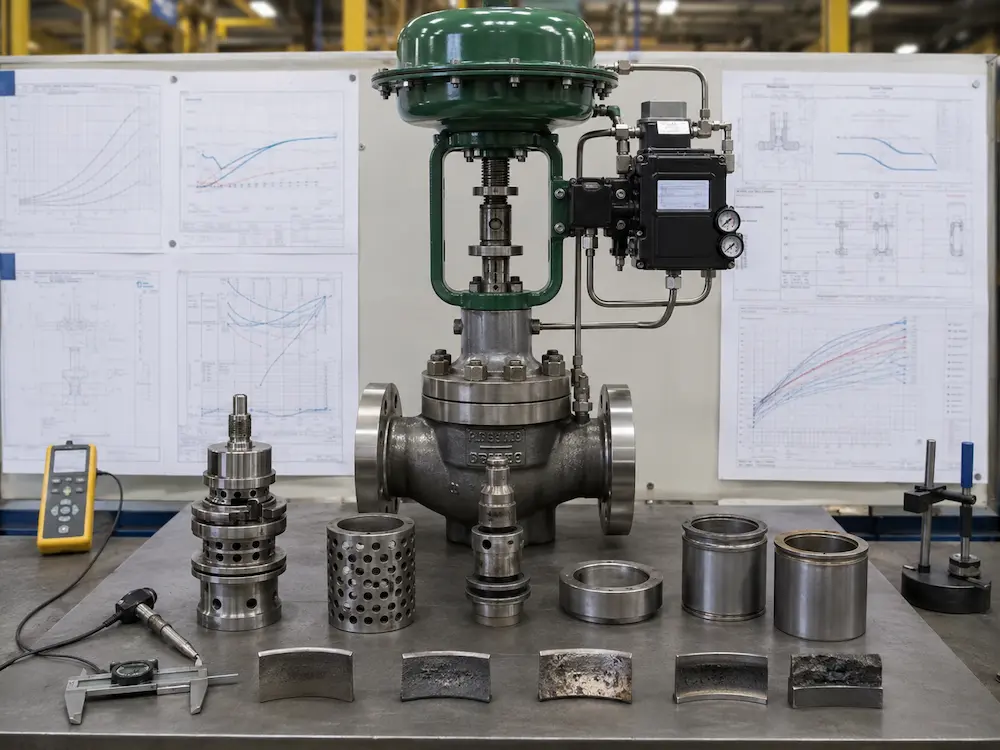
6. Identify Severe-Service Risks Before Choosing the Final Trim
Severe service is not defined by pressure class alone. It is created by the way energy is dissipated through the valve and by the medium’s physical and chemical behavior.
| Risk | Typical Indicators | Selection Response |
|---|---|---|
| Cavitation | High liquid pressure drop, pressure recovery, noise, vibration and pitting risk. | Anti-cavitation or staged trim, suitable body style, hardened materials and pressure allocation review. |
| Flashing | Liquid remains partly vaporized downstream of the restriction. | Angle body, expanded outlet, hardened outlet path, suitable flow direction and downstream piping review. |
| Aerodynamic noise | Large gas or steam pressure ratio, high exit velocity and high predicted sound level. | Low-noise or multi-stage trim, diffuser, larger downstream piping and acoustic review. |
| Erosion | Solids, droplets, flashing flow, high velocity or directional impingement. | Open flow path, hardfacing, replaceable liners, controlled direction and reduced local velocity. |
| Plugging or fouling | Fibres, slurry, crystallization, coke or small trim passages. | Larger passages, rotary or eccentric plug body, flushing and maintenance access. |
| Vibration | Unstable jets, excessive velocity, weak guiding, mechanical resonance or poor support. | Stable guiding, suitable trim, actuator stiffness, piping support and dynamic review. |
When cavitation, high pressure drop or noise is identified, review Control Valve Trim Options for Cavitation and Noise Reduction.
For demanding pressure-letdown duties, a dedicated High Pressure Control Valve or Angle Control Valve may be more suitable than a standard general-service valve.
7. Select Seat Construction and Leakage Class
Closed-seat leakage should be specified from the consequence of leakage and the selected standard. “Tight shutoff” and “zero leakage” are not adequate procurement descriptions.
Metal Seat
Metal seats are normally considered for high temperature, high pressure drop, abrasive service, cavitation, flashing or media that can damage a resilient seat. Shutoff depends on machining, lapping, alignment, hardfacing, seat load and actuator output.
Soft or Composition Seat
Soft seats can support very tight shutoff in compatible clean service. Their pressure, temperature, chemical, extrusion and particle limits must be confirmed before specifying them.
Class IV, V and VI Are Not Interchangeable
Class IV is commonly associated with general tighter metal-seat control valve service. Class V uses a more demanding liquid leakage criterion. Class VI is commonly associated with very low gas leakage and resilient-seat construction, but it should not be described automatically as absolute zero leakage under all service conditions.
Use the dedicated Control Valve Leakage Classes Guide to specify the standard, class, medium, test pressure, flow direction and seat construction correctly.
A modulating control valve should not automatically be treated as the only maintenance isolation barrier. Where positive isolation is required, provide a suitable isolation arrangement according to the piping and safety design.
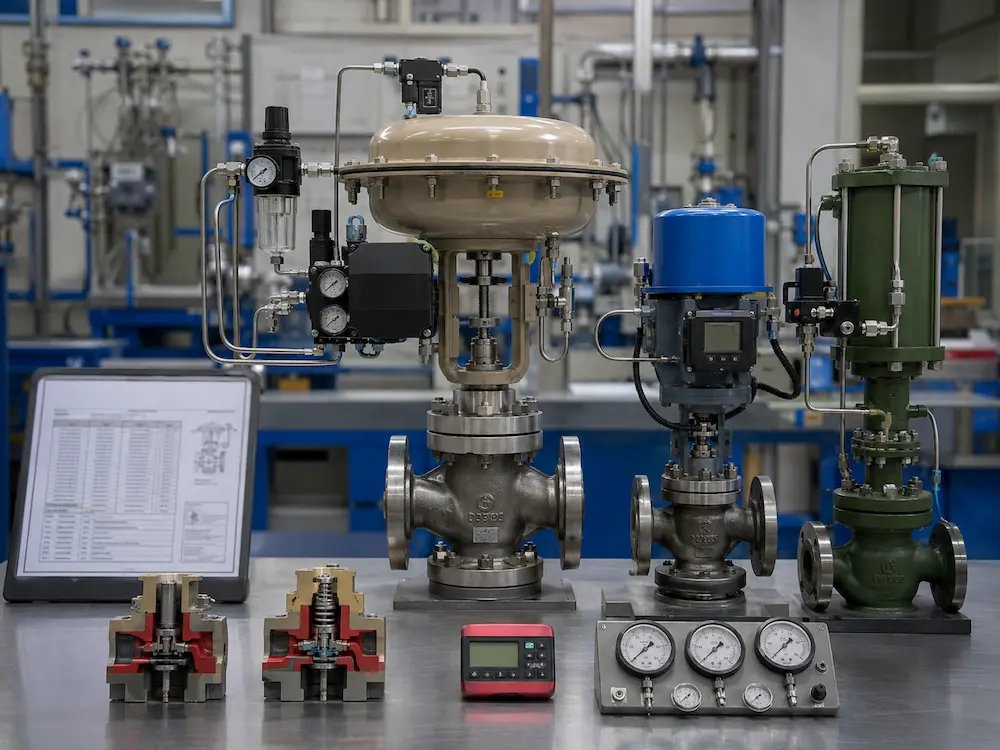
8. Select the Actuator, Positioner and Accessories as One Package
The actuator must move and seat the selected valve under the actual process forces and minimum available utility condition. It should not be selected from valve size alone.
| Actuator Type | Main Advantages | Key Checks |
|---|---|---|
| Pneumatic diaphragm | Simple spring-return fail action and common modulating service. | Available thrust, spring range, air supply, stroke and response speed. |
| Pneumatic piston | Higher thrust or torque and compact high-output arrangements. | Air volume, fail-safe method, stiffness, accessories and stroking time. |
| Electric | Useful where instrument air is unavailable and electrical integration is preferred. | Modulating duty, starts per hour, speed, enclosure, hazardous area and fail action. |
| Hydraulic or electro-hydraulic | High output and engineered fail-safe capability for demanding duties. | Hydraulic supply, accumulator, leakage, maintenance and control architecture. |
Actuator Sizing Inputs
- Maximum shutoff differential pressure
- Process force on the closure element
- Required seat load and leakage class
- Packing, guide and seal friction
- Minimum available air, hydraulic pressure or voltage
- Required stroke or rotary travel
- Fail action and spring requirement
- Required stroking time and duty cycle
For the full actuator decision process, see the Valve Actuator Selection Guide.
Positioner and Accessory Package
The control valve package may include:
- Digital or electro-pneumatic positioner
- Air filter regulator
- Volume booster or quick-exhaust device
- Solenoid valve
- Limit switches or position transmitter
- Local travel indicator
- Handwheel or manual override
- Lock-up valve or accumulator arrangement
- Hazardous-area certified electrical accessories
Accessory selection must match the control philosophy. A solenoid valve, for example, can override normal modulation and drive a pneumatic valve to its safety position. It should not be added merely because it appears in a standard accessory list.
9. Match the Valve Package to the Application
Steam and High-Temperature Service
Steam valves require review of temperature, pressure ratio, noise, outlet velocity, trim stability, packing, bonnet construction and thermal expansion. Metal seats, graphite packing, alloy materials or low-noise trim may be required.
Relevant products include the Steam Control Valve and High Pressure Control Valve.
Boiler Feedwater and High-Pressure Water
Feedwater service can combine high differential pressure, cavitation risk, erosion, tight process control and changing boiler load. Angle bodies, staged trims, hardened materials and suitable actuator thrust may be required.
Review the Boiler Feedwater Control Valve.
Steam Desuperheating and Spray Water
The valve controls cooling-water flow, but final steam temperature also depends on nozzle design, atomization, steam velocity, mixing distance, temperature-sensor location and loop tuning.
Review the Spray Water Control Valve.
Chemical and Corrosive Service
Confirm exact chemical composition, concentration, temperature, contamination and possible phase changes. Body corrosion resistance alone is insufficient if the trim, packing, gasket or actuator tubing is incompatible.
Slurry, Pulp and Dirty Fluid
Small cage passages and internal cavities may plug. A rotary or eccentric plug valve with a more open flow path may be preferable, depending on particle size, solids concentration, erosion and shutoff requirements.
Review the Eccentric Plug Control Valve.
General Automation and Modulating Service
For general industrial automation, the package should be selected by control accuracy, travel, actuator duty, signal, feedback, medium and pressure-temperature conditions rather than by the label “electric valve” or “pneumatic valve.”
Review the Modulating Valve for Industrial Automation.
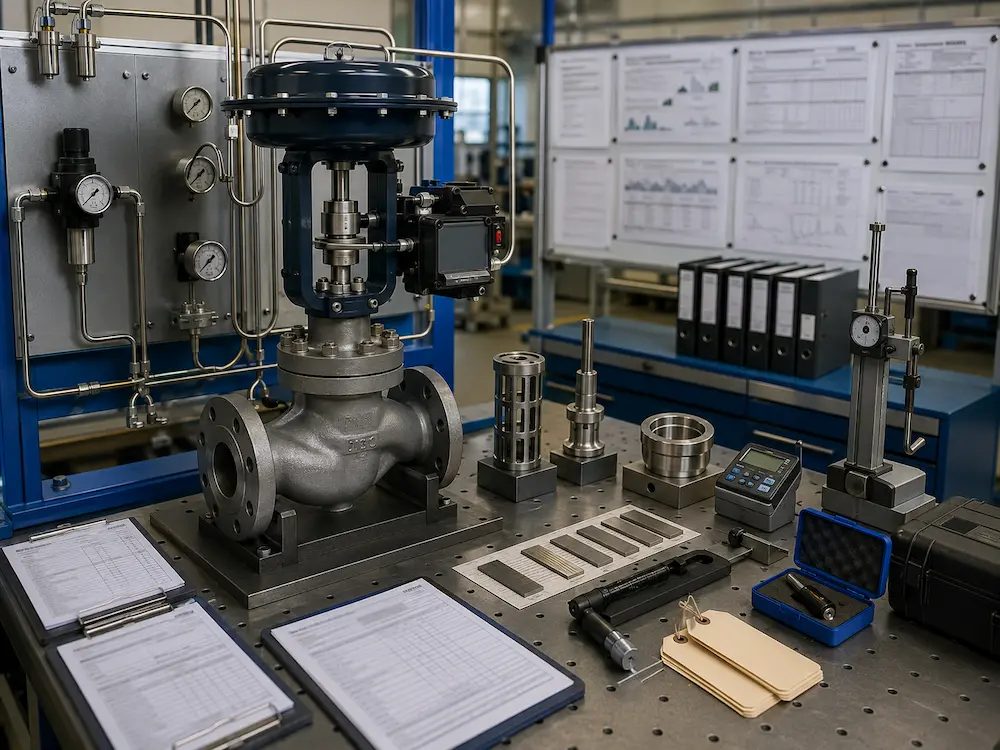
10. Define Inspection, Testing and Documentation Before Ordering
Testing should verify the exact valve, trim, actuator and accessory package being shipped.
| Inspection or Document | What It Confirms |
|---|---|
| Approved datasheet and drawing | Tag, body style, dimensions, flow direction, materials, trim, actuator and accessories. |
| Material certificates | Pressure-containing and specified trim material grades. |
| Dimensional inspection | Face-to-face, connection, orientation, travel and installation interfaces. |
| Shell pressure test | Pressure-boundary integrity under the agreed test procedure. |
| Seat leakage test | Closed-seat performance to the specified standard and class. |
| Functional stroke test | Full travel, mechanical freedom, opening direction and fail action. |
| Positioner calibration | Signal response, zero, span, feedback and configured action. |
| Actuator setting record | Bench set, spring range, supply pressure and seating adjustment. |
| Final data book | Approved records, certificates, test reports and traceability documents. |
Special services may also require PMI, NDE, fugitive-emission evidence, cryogenic testing, hardness checks, coating inspection, third-party witnessing or project-specific documentation.
11. Control Valve Procurement Decision Matrix
Before placing the order, confirm that the quotation answers each question below.
- Control duty: What variable is controlled, and what is the safe fail position?
- Process cases: Are minimum, normal, maximum, startup and abnormal cases defined where required?
- Sizing: Are required Cv/Kv and predicted travel provided for every operating case?
- Body style: Why was globe, angle, rotary, butterfly, eccentric plug or three-way construction selected?
- Pressure-temperature rating: Does the selected material and connection meet the design condition?
- Trim: Is the trim full-size, reduced, balanced, cage-guided, staged, hardened or low-noise?
- Flow characteristic: Is the selected characteristic justified by installed system behavior?
- Severe service: Are cavitation, flashing, choked flow, noise, velocity, erosion and solids addressed?
- Seat and leakage: Are seat material, leakage standard, class and test conditions stated?
- Actuator: Is output checked at maximum differential and minimum utility supply?
- Controls: Are signal, positioner, accessories, fail action and hazardous-area requirements defined?
- Inspection: Are tests, certificates, witness points and final documents included in the quotation?
Submit a Complete Control Valve Datasheet
Send Vcore Valve the controlled variable, medium, operating cases, pressure and temperature data, pipeline information, fail position, leakage requirement, control signal, material requirements and inspection scope. We can review the body style, trim, actuator and accessories as one package.
Related Control Valve Resources
- How to Size a Control Valve
- Equal Percentage vs Linear Control Valve
- Control Valve Leakage Classes
- Control Valve Trim Options for Cavitation and Noise Reduction
- Valve Trim Materials Guide
- Valve Actuator Selection Guide
- Industrial Control Valve Products
- High Temperature High Pressure Valves Guide
Technical References
- Emerson Control Valve Handbook
- IEC 60534-2-1 — Flow Capacity Sizing Equations
- ISA-75 Series — Control Valve Standards
- Fluid Controls Institute — Control Valve Standards
Frequently Asked Questions
What information is required to select a control valve?
Provide the controlled variable, medium, minimum, normal and maximum operating conditions, inlet and outlet pressures, temperature, pipe data, fail position, leakage requirement, control signal, materials and inspection requirements.
Is control valve size normally the same as pipe size?
No. The valve size and trim are selected from required capacity, pressure drop, predicted travel, velocity and severe-service conditions. The final valve may be smaller than the connected pipeline.
When should a globe control valve be selected?
Globe control valves are commonly selected for precise throttling, broad trim flexibility, steam, pressure control and severe-service duties. Dirty or fibrous media may require a more open rotary flow path.
When is an angle control valve useful?
An angle valve can change flow direction and may support expanded outlets, liners or severe-service trim. It is often evaluated for feedwater, flashing liquids, drains and high pressure-drop service.
How do I choose between metal and soft seats?
Metal seats are generally considered for high temperature, pressure drop, erosion or severe service. Soft seats can provide very tight shutoff in compatible clean service but have pressure, temperature, chemical and particle limits.
Does the highest leakage class always provide the best valve?
No. A tighter class may require a different seat, higher seating force and more restrictive materials. Select the leakage requirement from the actual process consequence and service condition.
Which actuator is best for a control valve?
There is no universal best actuator. Pneumatic, electric and hydraulic options should be compared by required output, utility availability, fail action, duty, response, environment and control-system interface.
What tests should be required before shipment?
Typical requirements include dimensional inspection, shell pressure test, seat leakage test, functional stroke test, positioner calibration, actuator setting verification and review of material and final documentation.