Equal Percentage vs Linear Control Valve describe a control valve’s inherent flow characteristic under a constant pressure drop. The installed characteristic can be different because the pressure drop available across the valve changes with system flow. Select the characteristic from the complete process system, required flow range, valve pressure-drop ratio and predicted travel—not from the controlled variable alone. Valve rangeability is a tested valve characteristic, while application turndown is the flow range the installed process must actually control.
Two control valves can have the same nominal size, pressure class and rated Cv yet produce very different process behavior.
One valve may respond almost proportionally to stem travel during a laboratory capacity test. Another may increase capacity slowly at low travel and much more rapidly near the upper end of the stroke. After installation, however, both responses can be reshaped by the pump curve, piping losses, equipment resistance and changing pressure drop across the valve.
This is why selecting an equal-percentage vs linear control valve is not simply a matter of choosing the characteristic traditionally associated with a particular application. The engineer must distinguish inherent characteristic from installed characteristic, then confirm whether the selected valve provides useful travel and stable process gain from minimum to maximum operating flow.
Equal Percentage vs Linear Control Valve-The Decision in One Table
| Selection Condition | Linear Characteristic May Be Considered | Equal-Percentage Characteristic May Be Considered |
|---|---|---|
| Valve pressure drop | Remains comparatively stable through the required flow range | Falls significantly as system flow increases |
| Required flow range | Moderate range with predictable process response | Wide operating range with low-load and high-load control |
| Low-travel response | Capacity increases more directly with travel | Capacity increases more gradually at lower travel |
| Upper-travel response | Capacity continues to increase at a similar inherent rate | Capacity increases more rapidly toward higher travel |
This table is a starting point, not a replacement for installed sizing. The correct characteristic must be checked using the actual minimum, normal and maximum process cases.
Inherent Flow Characteristic: The Valve Tested by Itself
The inherent flow characteristic is the relationship between valve travel and flow coefficient when the pressure drop across the test valve is maintained at a constant value.
It describes how the valve and trim are designed to change capacity. It does not include the changing resistance of the connected process system.
Linear Inherent Characteristic
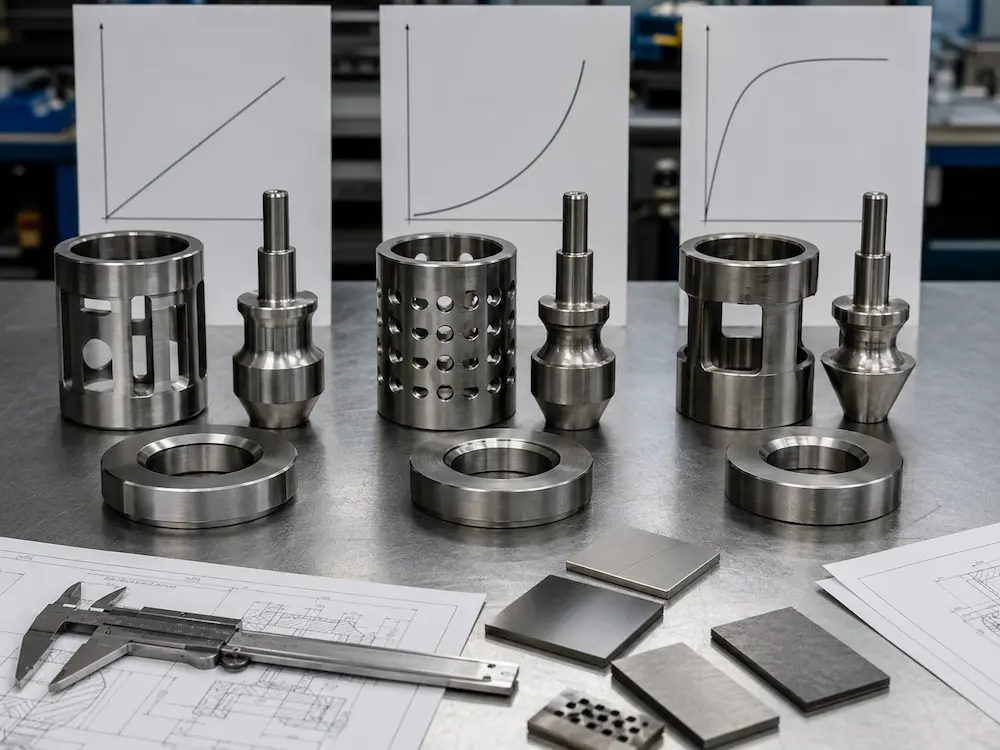
With an ideal linear inherent characteristic, equal increments of valve travel produce approximately equal increments of flow coefficient while valve pressure drop remains constant.
Equal-Percentage Inherent Characteristic
With an ideal equal-percentage characteristic, equal increments of travel produce approximately equal percentage changes in the existing flow coefficient.
The capacity therefore increases comparatively slowly at lower travel and more rapidly toward the upper part of the stroke. This can support low-load controllability while preserving higher capacity near full travel.
Quick-Opening Characteristic
A quick-opening characteristic provides a large portion of rated capacity early in the stroke. It is normally associated with on-off, relief or special sequencing duties rather than precise continuous modulation.
Installed Characteristic: What the Process Actually Sees
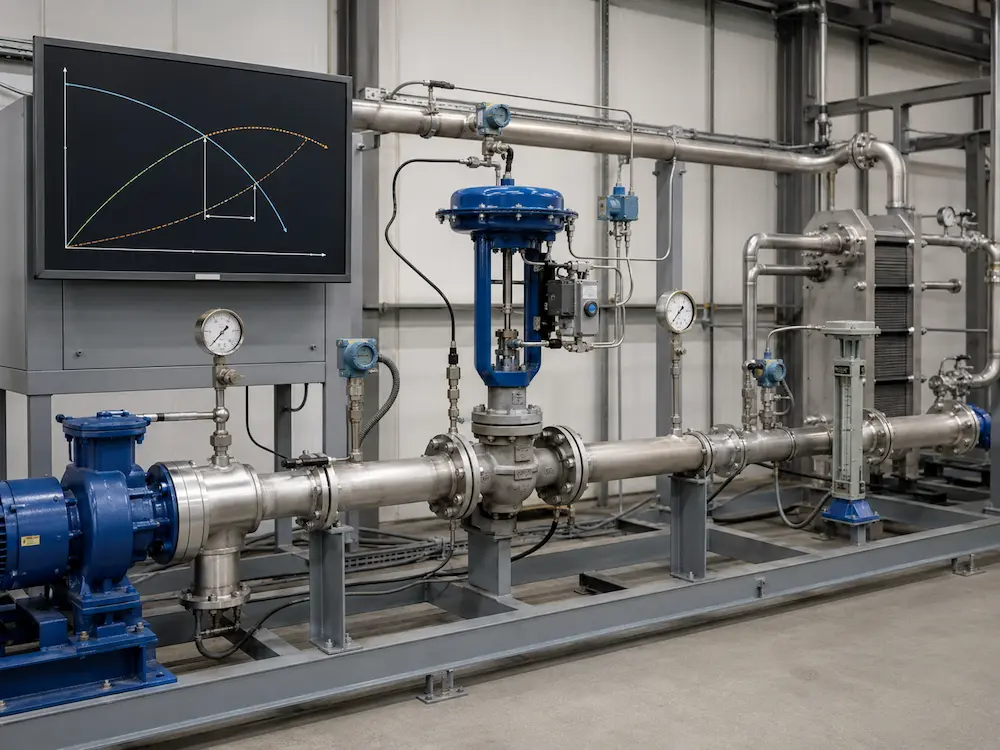
The installed flow characteristic is the relationship between valve travel and process flow after the valve has been installed in the complete system.
It can differ from the inherent characteristic because the pressure drop available across the valve usually changes with flow.
Total system pressure is consumed by piping, fittings, heat exchangers, filters, nozzles, static elevation and other process equipment. In pump-driven systems, the available differential pressure may also change according to the pump curve and operating point.
A trim labelled “linear” does not guarantee a linear relationship between actuator signal and installed process flow. Likewise, an equal-percentage trim does not guarantee that the installed system will remain equal percentage.
Valve Authority and Pressure-Drop Share
When the valve retains a substantial and relatively stable share of the system pressure drop, its installed characteristic remains closer to the inherent characteristic.
When the valve receives only a small share of the total system pressure drop at high flow, the installed characteristic can be strongly distorted.
Three Process Scenarios
Scenario A: Comparatively Constant Valve Pressure Drop
If the valve pressure drop is nearly constant and the process gain is predictable, a linear trim may provide a useful installed response.
Scenario B: Pumped System with Rising Piping Loss
In a recirculating water or chemical system, piping and equipment losses may rise substantially as flow increases. An equal-percentage characteristic may compensate for this pressure-drop decay.
Scenario C: Wide Load Range
Steam, fuel gas, feedwater, cooling water and process utility systems may operate over a wide load range. Equal percentage is often evaluated, but valve body style, reduced trim, split-range strategy or parallel valves may be more important than the characteristic alone.
Rangeability Is Not the Same as Process Turndown
Valve Rangeability
Inherent rangeability describes the ratio between the maximum and minimum controllable flow coefficients under defined valve test conditions.
A published rangeability such as 50:1, 100:1 or 300:1 is not a promise that the installed process can accurately control the same flow ratio.
Application Turndown
Application turndown is the ratio between the highest and lowest process flows that the installed control loop must reliably regulate.
Actual turndown can be limited by minimum controllable valve travel, sizing, installed gain, seat and packing friction, actuator and positioner resolution, flowmeter accuracy, sensor noise, controller tuning, leakage, cavitation, flashing and choked flow.
How Flow Characteristic Affects Valve Travel
The same required Cv can correspond to different valve travel depending on the selected characteristic and trim curve.
Always use the manufacturer’s exact capacity-versus-travel curve and installed sizing result. For the full sizing sequence, see How to Size a Control Valve.
Equal Percentage vs Linear by Application
| Application | Starting Point | What Must Be Verified |
|---|---|---|
| Pressure letdown with stable pressures | Linear may be evaluated | Pressure variation, choked flow, noise and actuator thrust |
| Pumped water or chemical loop | Equal percentage is often evaluated | Pump curve, piping losses, minimum flow and valve authority |
| Steam load control | Equal percentage is commonly considered | Load range, pressure, choked flow and noise |
| Tank level control | Depends on process geometry and control strategy | Static head, pump behavior and process gain |
Characteristic Selection Cannot Correct the Wrong Valve
Changing from linear to equal percentage will not correct every control problem.
- Oversized valve body
- Insufficient maximum Cv
- Incorrect valve style
- Blocked or erosive trim
- Cavitation, flashing or severe aerodynamic noise
- Insufficient actuator thrust or torque
- Positioner deadband, friction or mechanical backlash
See the Control Valve Selection Guide when the characteristic review indicates that the body, trim or actuator concept should be changed.
Why Positioner Characterization Is Not a Universal Substitute
Digital positioners and control systems may modify the relationship between command signal and valve travel, but they cannot change the valve’s maximum rated Cv, physical trim geometry, mechanical resolution, severe-service limits or actuator force.
Buyer’s Characteristic Selection Worksheet
- Define the control objective.
- Provide minimum, normal and maximum flow with corresponding pressures and temperature.
- Calculate installed Cv or Kv.
- Compare valve pressure-drop share through the operating range.
- Review predicted travel at all operating cases.
- Define required application turndown.
- Review valve body and trim suitability.
- Check cavitation, flashing, choked flow, noise, velocity and erosion.
- Confirm actuator thrust or torque, fail action and positioner resolution.
- Request the exact capacity-versus-travel curve for the selected trim.
What the Supplier Should Provide
- Selected valve body and trim designation
- Inherent characteristic
- Rated Cv or Kv
- Published inherent rangeability for the exact selected trim
- Required Cv or Kv for every process case
- Predicted travel at minimum, normal and maximum flow
- Installed characteristic or gain review where required
- Cavitation, flashing, choked-flow, noise and velocity results
- Actuator sizing and minimum utility assumptions
- Positioner configuration and signal characterization
Request a Flow Characteristic Review
Send Vcore Valve the minimum, normal and maximum flow cases, corresponding pressures, fluid properties, required turndown, valve type, actuator signal and fail position.
Related Technical Resources
- How to Size a Control Valve
- Control Valve Selection Guide
- Industrial Control Valve Products
- Control Valve Trim Options for Cavitation and Noise Reduction
- Valve Actuator Selection Guide
Frequently Asked Questions
What is the difference between a linear and equal-percentage control valve?
A linear inherent characteristic provides approximately equal increments of flow coefficient for equal increments of travel under constant valve pressure drop. Equal percentage provides approximately equal percentage changes in the existing flow coefficient.
What is an installed control valve characteristic?
It is the actual relationship between valve travel and process flow after the valve is installed in the piping system.
When should an equal-percentage control valve be selected?
It is often evaluated when the required flow range is wide or when the pressure drop available across the valve decreases significantly as flow rises.
When should a linear control valve be selected?
It may be considered when the pressure drop across the valve remains comparatively stable and the process supports a more direct relationship between travel and capacity.
Is valve rangeability the same as process turndown?
No. Inherent rangeability is a tested valve characteristic. Application turndown is the actual maximum-to-minimum process flow ratio the installed loop must control.
Can a digital positioner change a linear valve into equal percentage?
It can modify the relationship between command signal and travel, but it cannot change the physical trim, rated Cv, actuator force or severe-service limits.