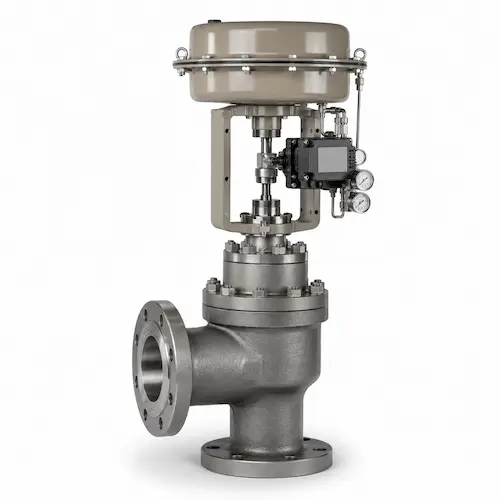
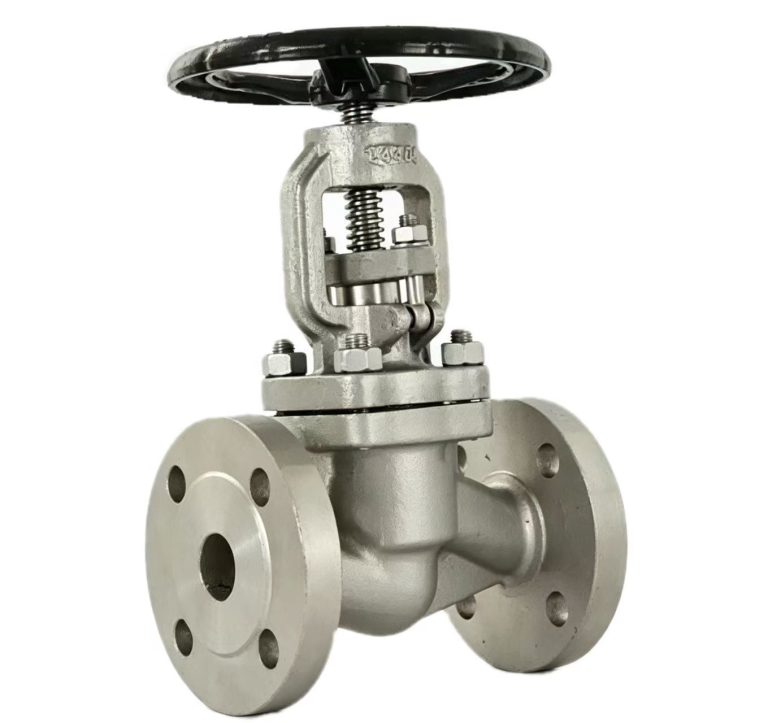
This valve is commonly used in steam systems, boiler feedwater, heater drain, pressure letdown, chemical process lines, erosive flow control and applications where the pipeline layout or process condition requires an angle body configuration. Correct selection depends on pressure drop, flow rate, temperature, medium condition, trim design, actuator sizing, leakage requirement and control performance.
Key Product Features
- 90-degree angle body flow path for selected severe service and process control applications
- Suitable for modulating flow control, pressure letdown or drain service after sizing review
- Can be configured for steam, boiler feedwater, chemical, flashing or erosive service
- Single-seat, cage-guided, balanced, anti-noise or anti-erosion trim options
- Pneumatic actuator, electric actuator or control accessory package available
- Positioner, air filter regulator, solenoid valve, limit switch or feedback device can be configured
- Flanged, butt weld or project-specific end connection according to piping requirement
- Body, trim, packing and leakage class confirmed according to approved datasheet
Product Configuration
| Configuration Item | Common Configuration | Project Options |
|---|---|---|
| Valve Type | Angle control valve | Angle globe control valve or project-specific severe service control valve |
| Main Function | Flow regulation and pressure control | High pressure drop, flashing, steam, drain or erosive service |
| Body Design | 90-degree angle body | Flanged, welded or special body design according to process condition |
| Body Material | Carbon steel or stainless steel | Alloy steel, duplex stainless steel or project-specified material |
| Trim Design | Single-seat or cage-guided trim | Balanced trim, anti-noise trim, anti-cavitation trim or hardened trim |
| Operation | Pneumatic actuator with positioner | Electric actuator, smart positioner, handwheel or fail-safe accessory package |
| End Connection | Flanged connection | Butt weld or project-specific connection according to piping standard |
Technical Specifications
| Specification Item | Typical / Available Options |
|---|---|
| Product Type | Angle control valve / angle type control valve / angle globe control valve |
| Primary Function | Modulating flow control, pressure control or pressure letdown service |
| Valve Design | 90-degree angle body, globe-style control trim, actuator-operated structure |
| Size Range | According to selected product series, Cv calculation and approved drawing |
| Pressure Rating | According to body design, body material, temperature and project specification |
| Body Material | Carbon steel, stainless steel, alloy steel, duplex stainless steel or project-specified material |
| Trim Material | Stainless steel, hardened trim, alloy trim, hard-faced trim or project-specific material |
| Seat / Seal Design | Metal seat, soft seat or selected shut-off design according to leakage requirement |
| Flow Characteristic | Equal percentage, linear or selected according to control requirement |
| Operation | Pneumatic actuator, electric actuator or control accessory package |
| Typical Media | Steam, water, boiler feedwater, condensate, chemical fluid, gas or process media after review |
| Testing Reference | According to approved inspection specification and selected product standard where applicable |
Technical note: Do not publish fixed Cv value, pressure drop limit, leakage class, temperature range, noise level, cavitation resistance or erosion resistance until the medium, flow rate, pressure drop, trim design, actuator sizing and approved project datasheet are confirmed.
How an Angle Control Valve Works
An angle control valve uses a valve plug, seat and actuator to regulate the flow opening. The actuator moves the stem according to a control signal, and the positioner adjusts valve travel to match the required control position.
The 90-degree angle body changes the flow direction inside the valve. This body arrangement can be useful in selected high pressure drop, flashing, erosive, steam drain or process letdown applications. Trim material, plug profile, seat design and outlet velocity should be reviewed carefully before selection.
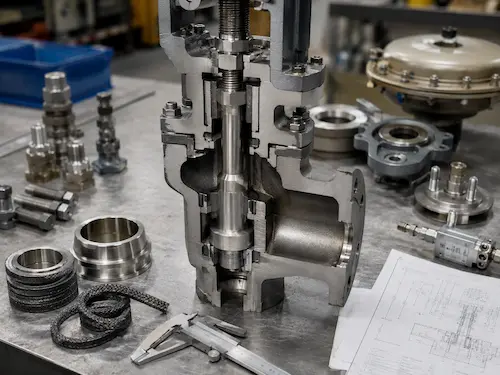
Angle Control Valve vs Globe Control Valve
| Comparison Item | Angle Control Valve | Globe Control Valve |
|---|---|---|
| Body Flow Path | 90-degree angle flow path | Straight-through or Z-type flow path depending on design |
| Typical Strength | High pressure drop, flashing, drain service, erosive or severe process control | General process control, steam, gas, water and clean fluid modulation |
| Pipeline Layout | Useful where flow direction change or drain-type layout is required | Useful for standard inline control valve installation |
| Selection Focus | Outlet velocity, erosion, flashing, trim material and body outlet protection | Cv, trim design, leakage class, pressure drop, noise and actuator sizing |
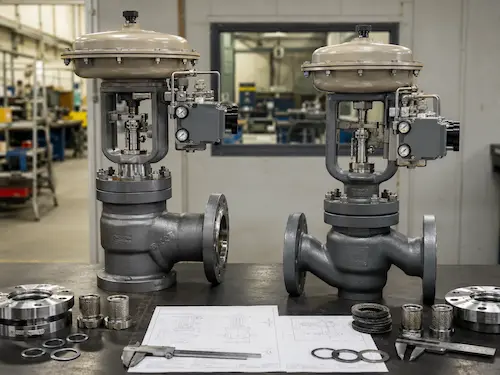
Angle Control Valve vs Steam Control Valve
A steam control valve is selected by service medium and control duty. It may use a globe body, angle body or other control valve body design. An angle control valve is selected by body geometry and flow path. When steam service also requires a 90-degree angle body, the valve can be configured as an angle steam control valve after detailed sizing review.
| Comparison Item | Angle Control Valve | Steam Control Valve |
|---|---|---|
| Main Definition | Defined by 90-degree angle body structure | Defined by steam service and control function |
| Common Service | High pressure drop, flashing, erosive, drain and chemical process service | Boiler steam, superheated steam, saturated steam and steam pressure control |
| Overlap | Can be used for steam if the angle body and trim are suitable | Can use angle body when steam process condition requires it |
| Selection Focus | Flow path, outlet velocity, erosion, trim and body protection | Steam pressure, temperature, pressure drop, noise, trim and packing |
For steam-specific control applications, review our Steam Control Valve. For general process control products, visit the Control Valve category.
Trim and Actuator Selection
Angle control valve performance depends heavily on trim design and actuator sizing. Severe pressure drop, flashing, erosion, vibration or high velocity may require hardened trim, special flow path design, outlet protection or multi-stage pressure reduction after engineering review.
| Selection Item | Purpose |
|---|---|
| Single-Seat Trim | Used where shut-off requirement and pressure drop are suitable for selected valve size |
| Balanced Trim | Helps reduce actuator force requirement in selected higher differential pressure service |
| Cage-Guided Trim | Supports stable plug guidance and can be configured for selected flow control conditions |
| Hardened Trim | Considered for erosive, high velocity or demanding pressure drop conditions |
| Anti-Noise Trim | Considered when gas or steam pressure drop may create excessive noise |
| Pneumatic Actuator | Common for fast and stable modulating control when instrument air is available |
| Electric Actuator | Selected where electric control, site automation or instrument air limitation applies |
| Positioner | Improves positioning accuracy according to the control signal |
 Typical Applications
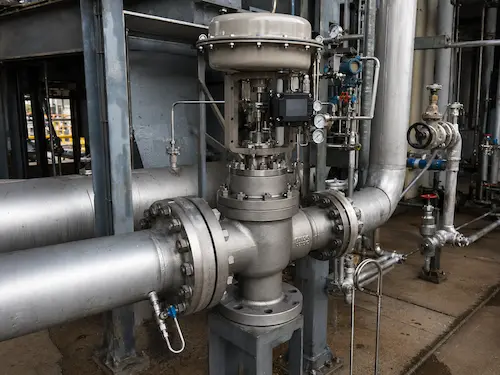 Typical Applications
- High pressure drop process control
- Steam pressure letdown and steam drain service after sizing review
- Boiler feedwater and condensate control applications
- Flashing liquid service after trim and outlet velocity review
- Erosive or high velocity process media after material review
- Chemical and petrochemical process control lines
- Power plant auxiliary control systems
- Industrial process units requiring a 90-degree control valve body layout
For power plant valve applications, review Power Plant Valves. For slurry or dirty fluid rotary control service, review our Eccentric Plug Control Valve.
Application Limits
- Angle control valves should not be selected only by nominal pipe size.
- High pressure drop service requires Cv calculation, trim selection and actuator sizing review.
- Flashing, cavitation, noise and erosion risks must be evaluated before selection.
- High outlet velocity may require outlet protection, hardened trim or piping review.
- Steam service requires suitable body material, trim material, packing and gasket selection.
- Dirty or solids-containing service may require special trim or a different valve type.
- Leakage class depends on selected seat design and test specification.
- Do not claim zero leakage, no erosion, no cavitation or universal severe service suitability without project confirmation.
Inspection and Documentation
| Inspection / Document | Purpose |
|---|---|
| Material Test Certificate | Confirms body, bonnet, trim, stem and pressure-containing material when required. |
| Dimensional Inspection | Checks face-to-face dimension, end connection, angle body orientation, actuator interface and valve marking. |
| Shell Pressure Test | Verifies pressure-containing body integrity under agreed test condition. |
| Seat Leakage Test | Checks shut-off performance according to selected leakage requirement. |
| Functional Stroke Test | Checks stem travel, actuator movement, valve opening range and mechanical response. |
| Positioner Calibration | Verifies valve response to control signal where positioner is supplied. |
| Trim Inspection | Checks plug, seat, cage, hard-facing, surface finish and fit-up condition. |
| Final Data Book | Collects drawings, certificates, inspection records, test reports and packing documents. |
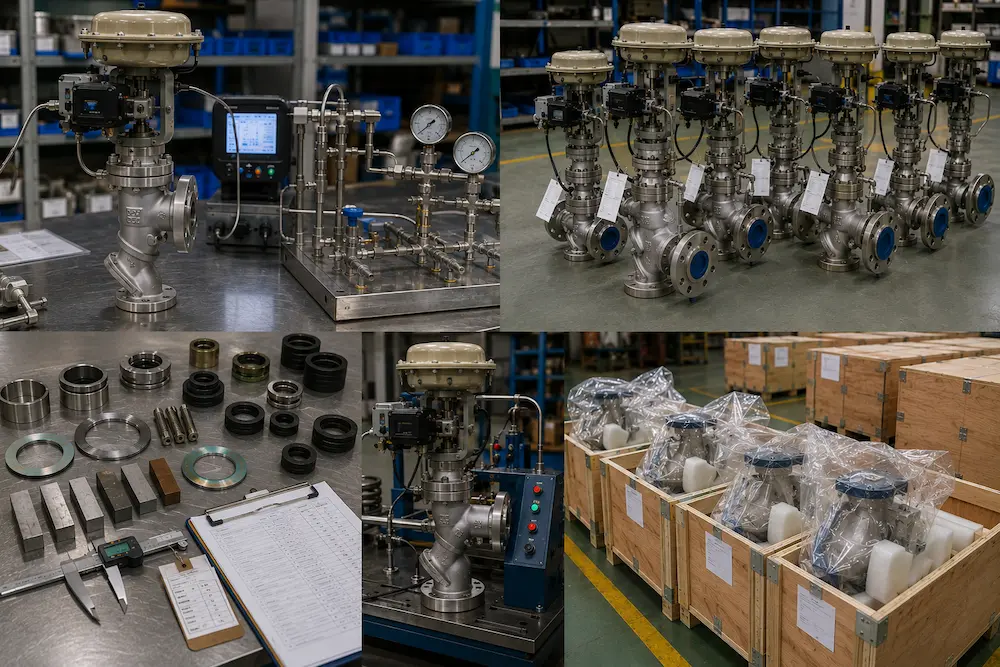
Export packing should protect flange faces, butt weld ends, plug and seat trim, stem packing area, actuator, positioner, tubing and control accessories. Valves can be packed with port covers, moisture-resistant wrapping, foam separation and reinforced plywood cases according to valve size and shipment method.
Information Required for Valve Selection
- Valve size and quantity
- Medium name and composition
- Minimum, normal and maximum flow rate
- Inlet pressure and outlet pressure
- Normal pressure drop and maximum differential pressure
- Operating temperature and design temperature
- Required Cv value if available
- Required flow characteristic: equal percentage, linear or other
- Flashing, cavitation, erosion, noise or vibration concern if specified
- Required leakage class if specified
- Control signal, fail position and actuator preference
- Body, trim, packing and gasket material requirement
- Connection standard, face-to-face requirement and installation orientation
- Testing, documentation and third-party inspection requirement
FAQ
What is an angle control valve used for?
An angle control valve is used for modulating flow control in applications such as high pressure drop, flashing, steam drain, erosive service, chemical process control and industrial pressure letdown.
Is an angle control valve the same as an angle valve?
No. An angle control valve is an actuator-operated modulating valve used for process control. A general angle valve may only be a manual 90-degree shut-off valve for utility or plumbing service.
What is the advantage of an angle body design?
The angle body changes the flow direction by about 90 degrees. This can be useful in selected severe service, drain service, flashing or high pressure drop applications where body geometry and outlet flow path matter.
Can angle control valves be used for steam service?
They can be considered for steam service when body material, trim material, packing, gasket, pressure-temperature rating, actuator sizing and pressure drop condition are confirmed by the approved datasheet.
What information is needed for quotation?
For quotation, provide medium, flow rate, inlet pressure, outlet pressure, pressure drop, temperature, required Cv, leakage class, control signal, fail position, actuator type, material requirement and inspection requirements.