Quick overview
Floating valves are widely used across industrial fluid systems where stable liquid level control, reliable shut-off, and long-term operational simplicity are required. Unlike a single valve structure, floating valves refer to a group of valve solutions that use floating or level-responsive mechanisms to regulate flow. This article explains the main types of floating valves used in industrial applications, compares their working principles, and outlines suitable materials such as stainless steel, ductile iron, and WCB for different operating environments.
Opening Scenario
Imagine an industrial water storage facility supplying process water to multiple production lines. Maintaining a stable water level is critical. Overfilling risks system overflow, while insufficient supply can interrupt operations. Instead of constant manual intervention, the system relies on floating valves that respond automatically to changing liquid levels, ensuring continuity, safety, and efficiency with minimal supervision.
Common User Pain Points
Confusion Between Floating Valve Types
Many users assume a floating valve refers only to a floating ball valve used in pipelines. In reality, floating valves include several designs, each serving different control purposes. Misunderstanding these differences often leads to incorrect selection.
Inappropriate Material Selection
Using unsuitable materials in industrial environments can result in corrosion, leakage, or premature failure. Applications involving water, chemicals, or fluctuating temperatures require careful material matching.
Limited Understanding of Control Mechanisms
Some floating valves rely on pressure-assisted sealing, while others use mechanical floats or hydraulic pilot control. Selecting a valve without understanding its control method can compromise reliability.
Practical Solutions and Selection Guidance
Match Valve Type to Control Objective
Pipeline isolation, tank level regulation, and automatic water replenishment require different floating valve designs. Identifying the actual control requirement is the first step toward correct selection.
Choose Proven Industrial Materials
Materials such as stainless steel, ductile iron, and WCB are commonly adopted for industrial floating valves due to their mechanical strength, corrosion resistance, and manufacturing maturity.
Prioritise Simplicity and Serviceability
In many industrial systems, a mechanically simple floating valve offers greater long-term reliability than complex automated alternatives, especially where power supply or advanced control systems are unavailable.
Main Types of Floating Valves Used in Industrial Systems
Floating Ball Valve (Pipeline Type)
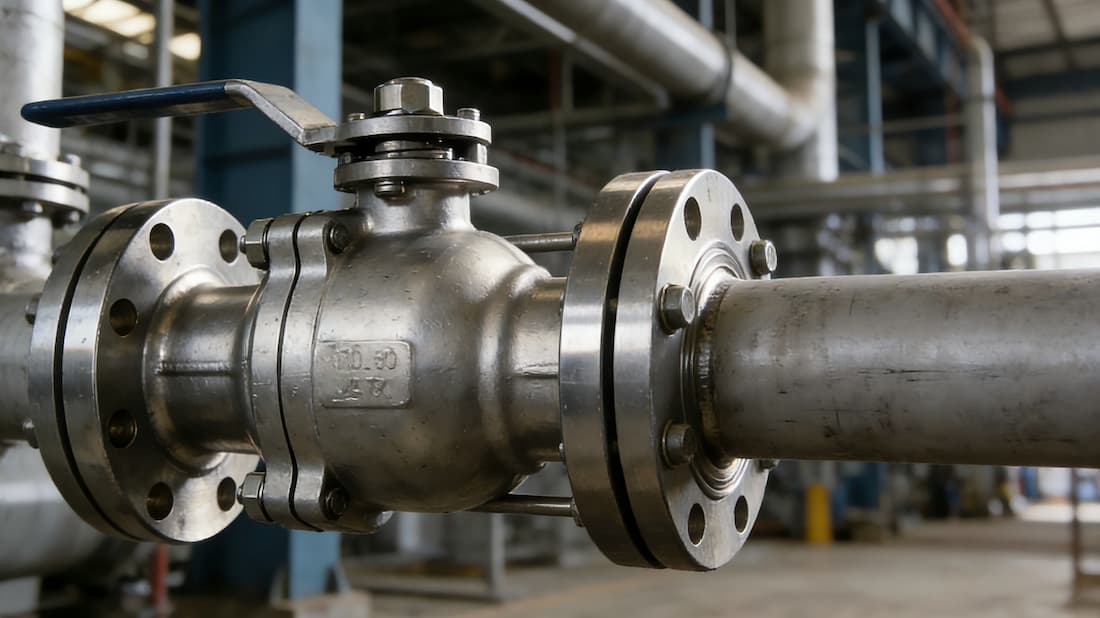
A floating ball valve is one of the most common valve designs used in industrial pipelines. In floating valve applications, it is typically used for on-off isolation rather than continuous modulation. The ball is not fixed rigidly and can move slightly under fluid pressure, allowing effective sealing against the valve seat.
This design is widely used in industrial water lines, cooling systems, and general fluid isolation services. Stainless steel, WCB are frequently selected depending on corrosion resistance and cost considerations.
Float-Controlled Hydraulic Control Valve
Float-controlled hydraulic valves are primarily used in tanks and reservoirs. A float ball senses the liquid level and operates a pilot system that opens or closes the main valve automatically. This design does not require electrical power and is highly reliable in continuous water supply systems.
These valves are commonly found in municipal water systems, industrial storage tanks, and process water replenishment lines. Ductile iron bodies with optional stainless steel trims are widely adopted.
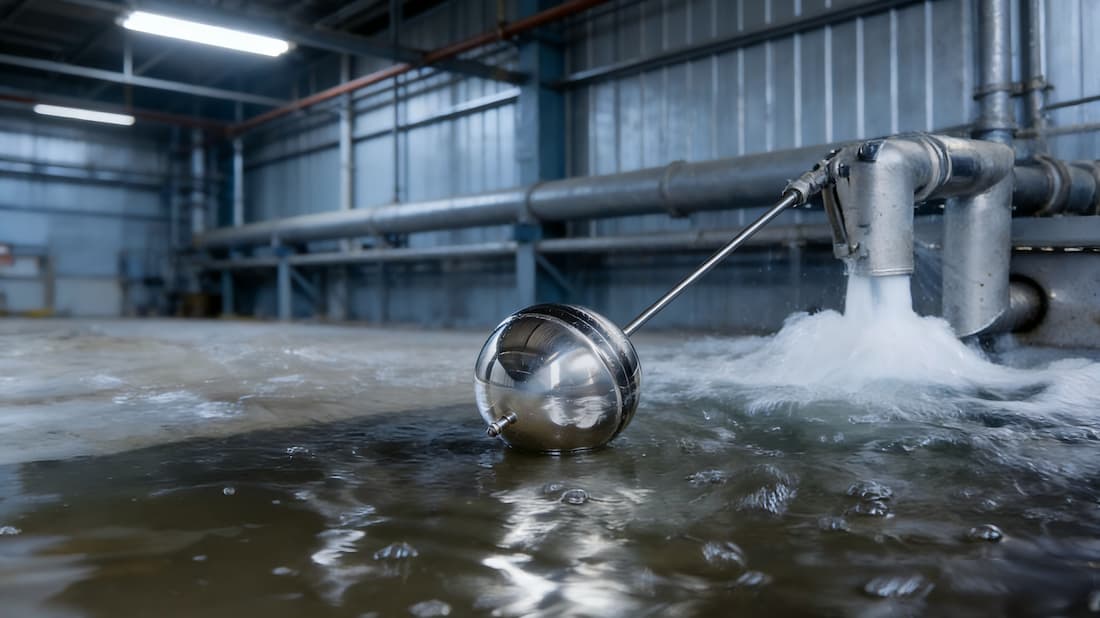
Float-Operated Angle Globe Valve
A float-operated angle globe valve uses a mechanical linkage between the float and the valve disc. As the liquid level rises or falls, the float directly actuates the valve. This design offers a simple and intuitive method of level control.
Such valves are suitable for industrial tanks, building water supply systems, and auxiliary process equipment where moderate flow control accuracy is sufficient.
Comparison of Common Floating Valve Types
| Valve Type | Control Method | Typical Installation | Common Materials | Typical Use |
|---|---|---|---|---|
| Floating Ball Valve | Pressure-assisted sealing | Pipelines | Stainless steel, WCB | Flow isolation |
| Float-Controlled Hydraulic Valve | Float + pilot control | Tanks, reservoirs | Ductile iron, SS trim | Automatic level control |
| Float-Operated Angle Globe Valve | Mechanical float linkage | Tank inlet lines | Stainless steel, ductile iron | Simple level regulation |
Case Examples from Industrial Applications
Water Storage Facility
A water storage system supplying industrial cooling circuits adopted float-controlled hydraulic valves to maintain constant tank levels. The system achieved stable operation without electrical control, reducing maintenance costs and operational risk.
Process Water Supply Line
An industrial plant selected floating ball valves made from SS for its internal water distribution network. The valves provided reliable shut-off performance and simplified maintenance across multiple production units.
Data and Technical Considerations
Material selection plays a significant role in floating valve performance:
-
Stainless steel offers excellent corrosion resistance and long service life.
-
Ductile iron provides strong mechanical properties with cost efficiency.
-
WCB is suitable for general industrial services involving moderate temperatures.
Seal materials, installation orientation, and flow conditions should also be considered during specification.
Industry Trends and Market Insights
Industrial users increasingly prefer floating valve solutions that combine mechanical simplicity with long-term reliability. In water-related industries, float-controlled valves remain popular due to their independence from electrical systems. At the same time, pipeline floating ball valves continue to dominate general isolation duties because of their compact design and standardised manufacturing.
Application and Usage Recommendations
Floating valves are best suited for liquid systems where level stability or reliable isolation is required. They are commonly applied in water treatment, industrial utilities, and auxiliary process systems. Selection should focus on operating medium, installation location, and control objectives rather than pressure rating alone.
Conclusion and Call to Action
Floating valves play an essential role in maintaining stable and efficient industrial fluid systems. By understanding the differences between floating valve types and selecting appropriate materials, operators can reduce downtime, simplify maintenance, and improve overall system reliability. For tailored floating valve solutions designed for industrial applications, consult an experienced valve supplier to ensure correct specification and long-term performance.
FAQ
What is a floating valve used for in industrial systems?
Floating valves are used to control liquid flow or maintain stable liquid levels in pipelines, tanks, and reservoirs without complex automation.
Is a floating ball valve the same as a floating valve?
No. A floating ball valve is one type within the broader category of floating valves. Other designs include float-controlled hydraulic valves and float-operated globe valves.
Which materials are commonly used for industrial floating valves?
Stainless steel, ductile iron, and WCB are commonly used due to their durability and suitability for industrial environments.
Are floating valves suitable for continuous operation?
Yes. Many floating valve designs are intended for continuous service, particularly in water supply and storage systems.
Do floating valves require electrical control systems?
Most floating valves operate mechanically or hydraulically and do not require external power.
References
1. Valve World. Industrial Valve Applications and Selection Guidelines.
2. Engineering Toolbox. Valve Types and Their Industrial Uses.
3 . American Water Works Association (AWWA). Water Control Valve Practices.