That boundary is important. This is not a fabricated success story. It is a real example of how an industrial valve requirement has to be converted into an auditable technical package before an order can safely move forward.
The Inquiry Was Small in Quantity but High in Engineering Risk
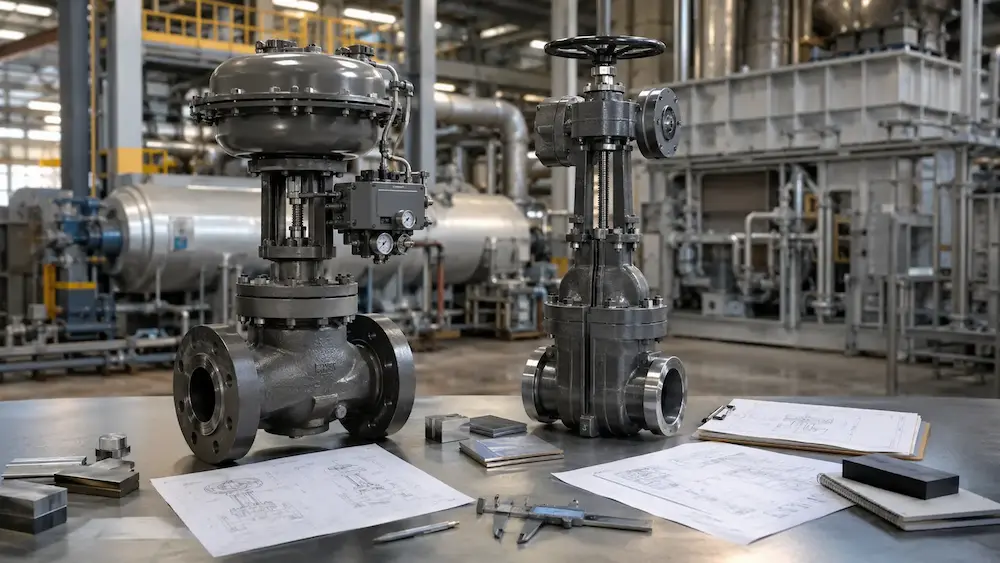
The recorded quantity was only six valves, but quantity is a poor measure of engineering difficulty. A single severe-service control valve can require more technical coordination than dozens of standard utility valves. Parallel slide gate valves can also involve project-specific pressure class, material, bonnet, end connection, operator and sealing requirements.
The two valve types perform fundamentally different jobs. The pneumatic control valve is associated with modulating a process variable. The parallel slide gate valves are isolation equipment intended to be fully open or fully closed. Combining them in one inquiry does not mean they can be reviewed through the same selection logic.
For Vcore, the first task was therefore not to force all six items into one generic quotation sheet. It was to separate the control duty from the isolation duty and identify the missing data that could change valve construction, price, dimensions and inspection scope.
One Project, Two Different Valve Decisions
The High-Temperature Pneumatic Control Valve
The preserved project record identifies the item as a high-temperature pneumatic control valve, but it does not provide enough publishable data to state the final size, pressure class, body material, trim, flow coefficient, pressure drop or fail action. Those details cannot be reconstructed from the product name alone.
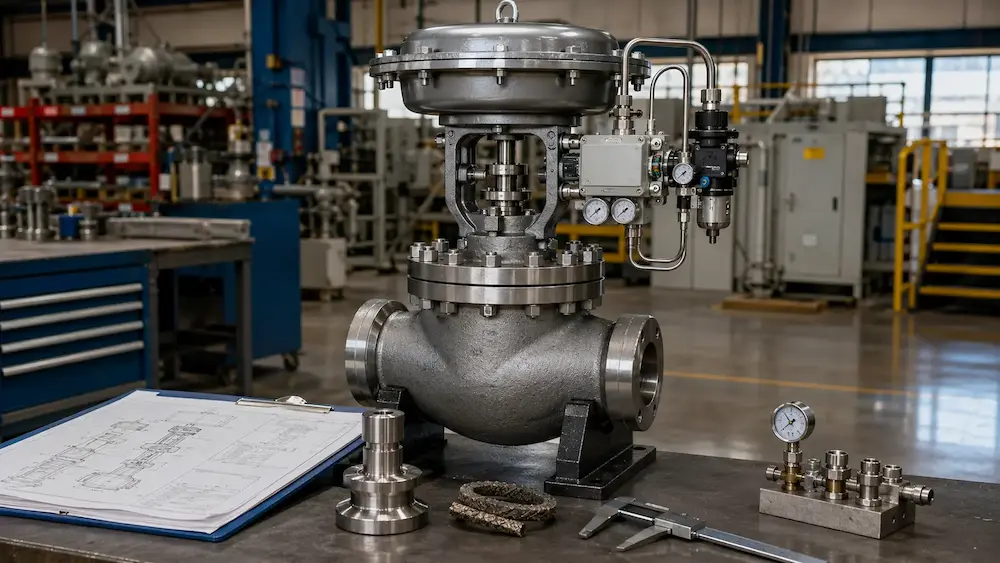
For a real control valve selection, the engineering team would need the inlet and outlet pressure at minimum, normal and maximum flow conditions; fluid state and composition; operating and design temperature; allowable noise; required rangeability; leakage class; actuator air supply; control signal; fail position; and applicable material or test requirements.
These inputs affect different parts of the assembly. Flow and pressure-drop data influence valve size and trim capacity. Temperature and medium influence the body, trim, packing, gasket and bolting. Available air pressure and required shutoff force influence actuator sizing. The process safety philosophy determines whether the valve should fail open, fail closed or remain in its last position.
A pneumatic actuator and positioner also have to be treated as part of the working control-valve assembly. Signal compatibility, air preparation, tubing, position feedback and accessory certification cannot be added casually after the valve body has been selected. For related products and application guidance, buyers can review our control valve range and Power & Steam Valve Solutions.
The Five Parallel Slide Disc Gate Valves
The second part of the inquiry covered five parallel slide disc gate valves. Unlike a wedge gate valve, the closure arrangement uses parallel seating elements rather than relying on a wedging angle between the gate and body seats. The exact disc, spreading, guiding and pressure-equalization arrangement depends on the selected design.
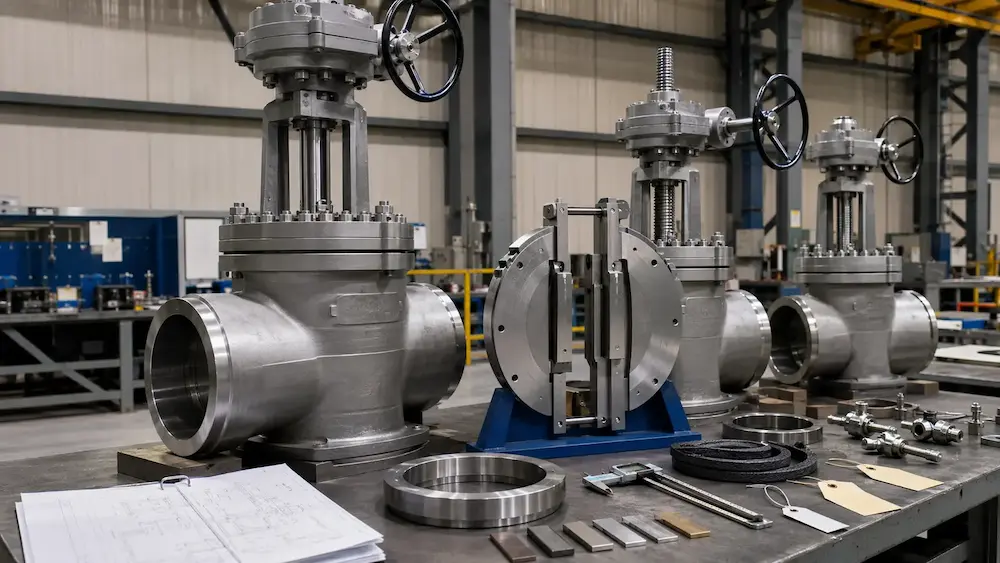
The term “parallel slide disc gate valve” still does not define the final product. Before configuration approval, the project would need to confirm size, pressure class, pressure-temperature conditions, medium, flow direction if relevant, body and trim materials, bonnet construction, stem arrangement, flange or butt-weld ends, manual or powered operation, bypass or pressure-equalization requirements, and leakage acceptance criteria.
Power and steam applications can also impose requirements for thermal cycling, high-temperature packing, hardfaced seating surfaces, alloy materials, nondestructive examination and special documentation. These are engineering possibilities, not confirmed features of this inquiry. They should only appear in a quotation when supported by the customer specification or an approved technical deviation.
Buyers comparing isolation-valve structures can also review the Vcore gate valve category and our guide to high-temperature and high-pressure valve selection.
The Most Useful Part of the Review Was Identifying What We Did Not Know
Industrial quotations often look complete because every line has a valve name, quantity and price. That appearance can be misleading. Commercial completeness is not technical completeness.
In this power plant valve project, the records preserved for publication confirm the customer application, valve types, quantities and the existence of factory quotation coordination. They do not confirm the detailed service conditions or final approved construction. Treating those gaps as if they had already been resolved would create several risks:
- A pressure class could be quoted without checking its pressure-temperature suitability.
- A control valve could be selected without verified flow and pressure-drop conditions.
- An actuator could be sized without the required thrust, air supply and fail action.
- Body or trim material could be assumed from general steam-service practice rather than the customer specification.
- A gate valve could be priced with the wrong bonnet, end connection or operator.
- Testing and documentation costs could be omitted before commercial agreement.
Recognizing these gaps is not a failure of the sales process. It is one of the most important controls in project-based valve supply. A responsible supplier should be able to distinguish “information received,” “supplier proposal,” “customer confirmation” and “approved for manufacture.”
How the Requirement Moved Through the Review Process
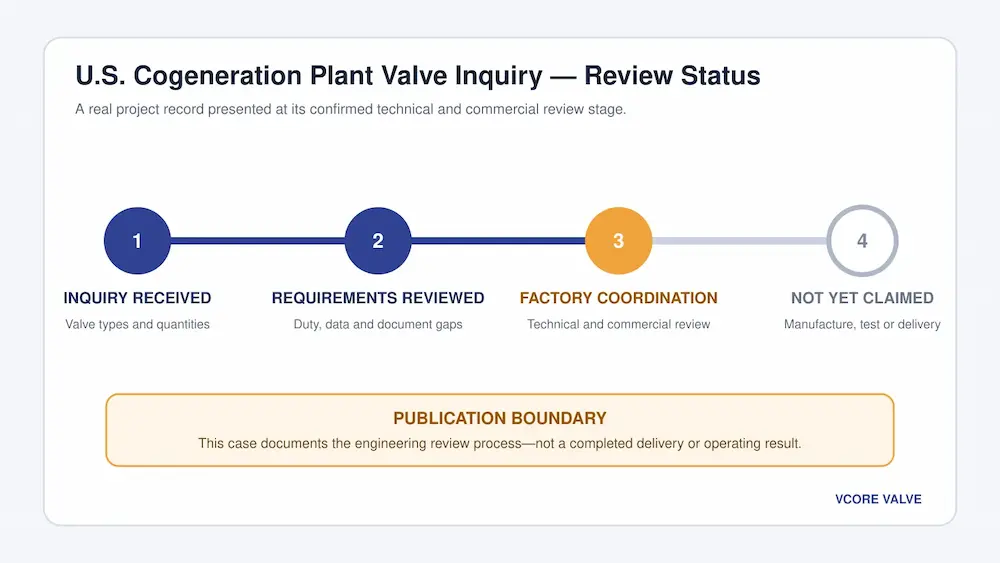
1. Product Scope Was Recorded
The inquiry was separated into one high-temperature pneumatic control valve and five parallel slide disc gate valves. This established the basic sourcing scope and prevented the two duties from being treated as interchangeable valve items.
2. Factory Capability and Pricing Were Coordinated
Vcore organized a factory-facing price confirmation record covering the two product groups. Prices and protected commercial terms are deliberately excluded from this public case. The purpose of mentioning the record is to show that the inquiry moved beyond a casual website question into structured supplier coordination.
3. Technical Release Points Remained Open
A commercial quotation can support budgeting, but it does not replace an approved datasheet or drawing. The next engineering stage would require closing the pressure, temperature, medium, size, material, connection, control, testing and documentation requirements for each line item.
4. No Manufacturing or Delivery Claim Is Made
The available record does not demonstrate an approved purchase order, released manufacturing drawing, completed pressure test, export packing or customer acceptance. This case therefore stops at the review stage. If the project proceeds and documented milestones become available, the page can later be expanded with verified manufacturing, inspection and delivery evidence.
What Would Be Required Before Release for Manufacture?
Before either valve type could be released, Vcore would expect an agreed technical basis. Depending on the project specification, that basis could include the following:
Service Data
Medium, phase, composition, design pressure, operating pressure, design temperature, operating temperature, flow conditions and required valve function. For the control valve, minimum, normal and maximum cases are particularly important.
Mechanical Configuration
Valve size, pressure class, end connection, face-to-face or end-to-end dimensions, body and trim materials, bonnet construction, packing, gasket, bolting, seat design and permitted installation orientation.
Actuation and Controls
Air-supply range, actuator action, fail position, control signal, positioner, solenoid valve if required, limit switches, position feedback, accessories and area-classification requirements.
Inspection and Documentation
Material certificates, approved drawings, bill of materials, pressure and seat tests, control-valve inspection, functional testing, NDE, coating inspection, nameplate information, final data book and third-party inspection requirements where applicable.
Applicable references also have to be stated rather than assumed. Depending on the approved scope, these may include ASME B16.34 for valve pressure-temperature and construction requirements, the IEC 60534 series for industrial-process control valves, and project-specified gate-valve or inspection standards. The applicable edition and purchaser requirements must be confirmed before they are placed on a certificate or nameplate.
Why We Are Publishing an Incomplete Project Record
Most public case studies show only the finished equipment and a positive conclusion. That format hides the stage where many valve problems actually begin: the transition from an incomplete inquiry to an approved technical definition.
This case is useful precisely because it shows that a supplier should know when not to make a claim. We can confirm the real inquiry scope and the review work that followed. We cannot confirm a final configuration or delivery result from the preserved records, so we do not invent one.
For EPC contractors, plant maintenance teams and industrial buyers, the lesson is practical. Send more than a valve name and quantity. Provide the service data, datasheets, piping or valve drawings, control philosophy and documentation requirements early. That information helps capable suppliers quote the same technical scope and reduces expensive clarification after order placement.
What Vcore Contributes to Similar Power Plant Inquiries
Vcore Valve coordinates industrial valve inquiries between overseas buyers and suitable manufacturing resources in China. Our role can include requirement organization, technical clarification, factory coordination, drawing follow-up, inspection-document review and export support according to the confirmed order scope.
We do not treat a preliminary quotation as final technical approval. For a power plant valve project, the valve design, material, actuation, testing and documentation should be confirmed together before manufacturing release.
If you are preparing an RFQ for steam, feedwater, condensate, high-temperature isolation or process control service, send Vcore Valve your datasheet, valve list or existing drawing. We can help identify missing information and organize the requirement for technical and commercial review.
Technical Context References
Frequently Asked Questions About This Power Plant Valve Project
Was this U.S. cogeneration valve project completed and delivered?
The available records confirm the inquiry, valve scope, factory pricing coordination, and technical-commercial review. They do not confirm completed manufacturing, testing, shipment, or site operation. Therefore, this article presents the case as an engineering review rather than a completed delivery.
Which valves were included in the inquiry?
The recorded scope included one high-temperature pneumatic control valve and five parallel slide disc gate valves for a cogeneration facility in the United States.
Why are the customer name and exact valve specifications not published?
The customer identity, pricing, and protected commercial information have been intentionally withheld. The available records also do not contain a final approved technical configuration, so missing sizes, pressure classes, materials, and operating conditions are not presented as confirmed facts.
What information would be required before manufacturing could begin?
Manufacturing release would require an approved technical basis covering the service medium, pressure, temperature, flow conditions, valve size and pressure class, materials, end connections, control requirements, fail action, testing, documentation, and approved drawings.
Can Vcore review similar power plant valve inquiries?
Yes. Vcore Valve can organize valve lists and datasheets, identify missing information, coordinate suitable manufacturing resources, and support technical, inspection-document, and commercial reviews according to the confirmed project scope.