Stainless Steel Ball Valve for Chemical Transfer: Body, Seat and Connection Selection
Two stainless steel ball valves can look identical and perform very differently on a chemical-transfer line. A compatible body may be supplied with a seal that swells in the solvent, a seat that cannot handle the combined temperature and pressure, or a threaded connection that does not match the plant pipework.
This guide explains how to prepare a ball valve for chemical transfer RFQ that a manufacturer can review and price. It focuses on tank outlet, pump transfer and batch-transfer isolation duties. For the wider choice of valve types, read Industrial Valves for Chemical Processing; the detailed stainless product configurations are covered separately by Vcore’s 316 Stainless Steel Ball Valve page.
1. Describe the chemical before requesting a material
“Chemical liquid,” “acid,” “solvent” and “process water” are insufficient fluid descriptions. State the chemical name and concentration, including whether the percentage is by mass or volume. For mixtures, provide the composition range and significant contaminants. Include an SDS and process datasheet where available; an SDS helps identify the substance but does not replace a corrosion assessment at the actual operating conditions.
| Fluid information | What to put in the RFQ | Why it changes the offer |
|---|---|---|
| Identity | Chemical/trade name, CAS number where useful, mixture components | Different chemicals require different alloy and seal reviews |
| Concentration | Normal and maximum concentration, percentage basis, dilution range | Corrosion and seal behavior can change with concentration |
| Temperature | Normal, maximum/minimum design, cleaning and startup temperatures | Changes metal compatibility and seat/seal limits |
| Phase and solids | Liquid/gas/two-phase; suspended solids, particle size, viscosity | Influences seat damage, blockage, torque and suitability |
| Contaminants | Water, chlorides, oxidizers and other relevant impurities | A nominally familiar chemical may have a different corrosion mechanism |
| Cleaning exposure | Flush/CIP chemicals, concentration, temperature and duration | The same valve must tolerate every permitted exposure |
Describe whether the valve sees a continuous stream, intermittent batches or long periods of stagnation. A transfer line that alternates between solvent and aqueous cleaning solution needs a review of both fluids and any residues or mixtures. Do not select materials from pH alone or assume that dilution always makes a chemical less corrosive.
A useful enquiry entry: “Methanol transfer, purity/concentration [value and basis], water and other impurities [values], normal temperature [value], design temperature [range], liquid phase, cleaning exposure [details].” Complete the brackets rather than copying the chemical name as a standalone specification.
2. Define the valve location and isolation duty
State whether the valve is at a storage-tank outlet, pump suction, pump discharge, loading connection or branch isolation point. Record operating pressure, design pressure, maximum differential pressure when closed and any vacuum exposure. Pump startup, blocked discharge and rapid closure can create conditions that differ from the normal transfer pressure.
A standard on-off ball valve should not automatically be assigned continuous throttling or severe two-phase service. If the duty includes control, flashing, abrasive solids or frequent cycling, provide the flow range and process conditions so the supplier can assess whether a different seat or valve design is required.
For liquid service, ask how trapped fluid in the body cavity is relieved when it heats up. The approved relief arrangement may affect sealing direction and installation orientation. State bidirectional shutoff requirements explicitly; do not infer them from the handle or external body shape.
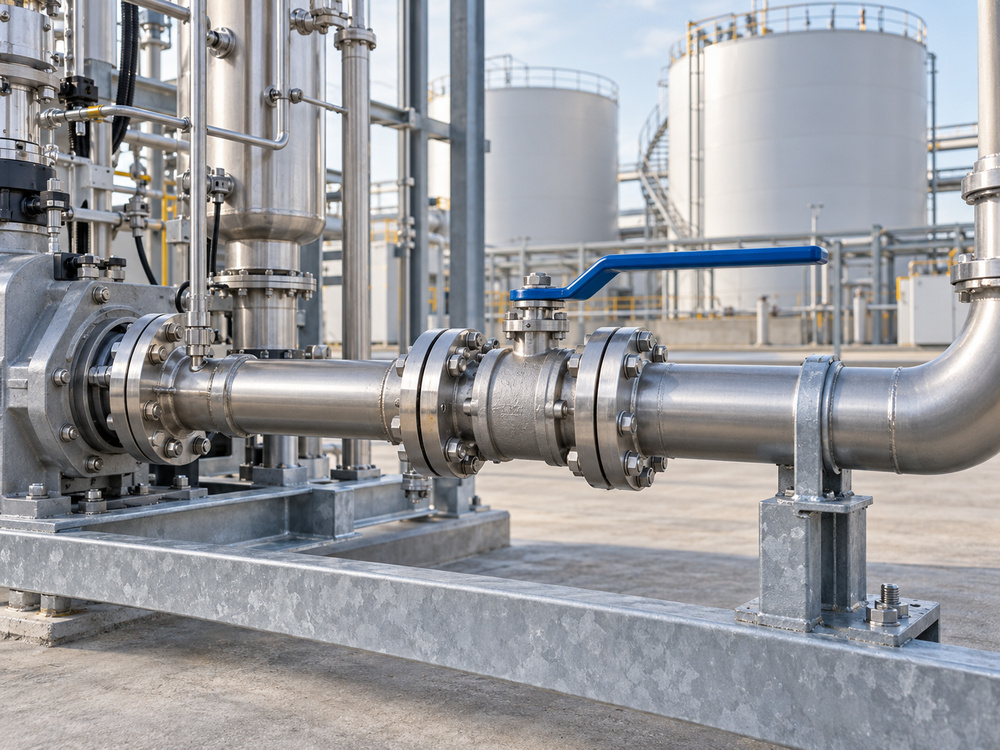
3. Specify the stainless grade for every wetted component
“Stainless steel” leaves the alloy unresolved, while “316” leaves the product-form specification unresolved. Ask for an itemized bill of materials covering the body, closures, ball, stem, seats, seals and any wetted springs or fasteners. The body and end pieces should each have an exact material standard and grade.
| Alloy family | Example cast designation | Example forged designation | RFQ review point |
|---|---|---|---|
| 304 family | ASTM A351 CF8 | ASTM A182 F304 | Use only after the actual fluid and exposure review |
| 316 family | ASTM A351 CF8M | ASTM A182 F316 | Identify product form, heat treatment and material documentation |
| Low-carbon 316 family | ASTM A351 CF3M | ASTM A182 F316L | Confirm project welding/corrosion requirements; not a universal corrosion upgrade |
| Higher alloy / lined alternative | Project-approved grade or lined construction | Project-approved grade where available | Separate technical review when ordinary stainless is unsuitable |
These designations are specification examples, not automatic substitute approvals. 316-family stainless steel contains molybdenum and may be considered for improved resistance in selected environments, but it is not universally suitable for acids, hot chlorides or every oxidizing mixture. A low-carbon grade does not solve all pitting, crevice-corrosion or stress-corrosion risks.
Use chemical-resistance charts to shortlist options, then check the specific concentration, temperature, impurities and exposure conditions. For uncertain or demanding duties, obtain a documented assessment from the project materials engineer and supplier; testing under representative conditions may be needed.
4. Separate the seat from body seals and stem packing
The seat seals against the ball. Body-joint seals prevent leakage between pressure-containing parts, and stem packing or stem seals prevent leakage along the shaft. A quotation that lists “PTFE seat” does not establish the materials of the other seals.
| Component / option | Selection consideration | Ask the supplier to confirm |
|---|---|---|
| PTFE seat | Broad chemical resistance and low friction in compatible duties | Exact grade, combined pressure–temperature envelope, creep and cycling limits |
| Reinforced / filled PTFE seat | Fillers change mechanical and chemical behavior | Filler type, fluid compatibility and approved valve envelope |
| PEEK or another engineered seat | May suit selected higher-load duties; not a universal chemical solution | Grade, fluid/concentration compatibility and validated seat design |
| Metal seat | May be evaluated for temperature or abrasion; leakage can differ | Substrate/coating, corrosion compatibility, torque and leakage acceptance |
| Elastomer body/stem seals | FKM, EPDM and other compounds have different compatibility | Exact compound, fluid exposure, swelling/permeation and temperature limits |
| PTFE / graphite packing or gaskets | Material and packing system must match the complete service | Chemical compatibility, temperature, external leakage and qualification scope |
Avoid approving “Viton/FKM” or “EPDM” solely by family name. Compound formulation matters, and a seal suitable for one solvent or cleaning fluid may be unsuitable for another. Ask for compatible replacements and spare-part identification at the quotation stage.
PTFE seated is not PTFE lined: A PTFE seat does not shield the exposed stainless body from the chemical. If the alloy is unsuitable, changing only the seat is not a corrosion solution. Compare the PTFE Seated Ball Valve with the PTFE Lined Ball Valve when evaluating alternatives. Lined designs also need pressure, temperature, vacuum and permeation review.
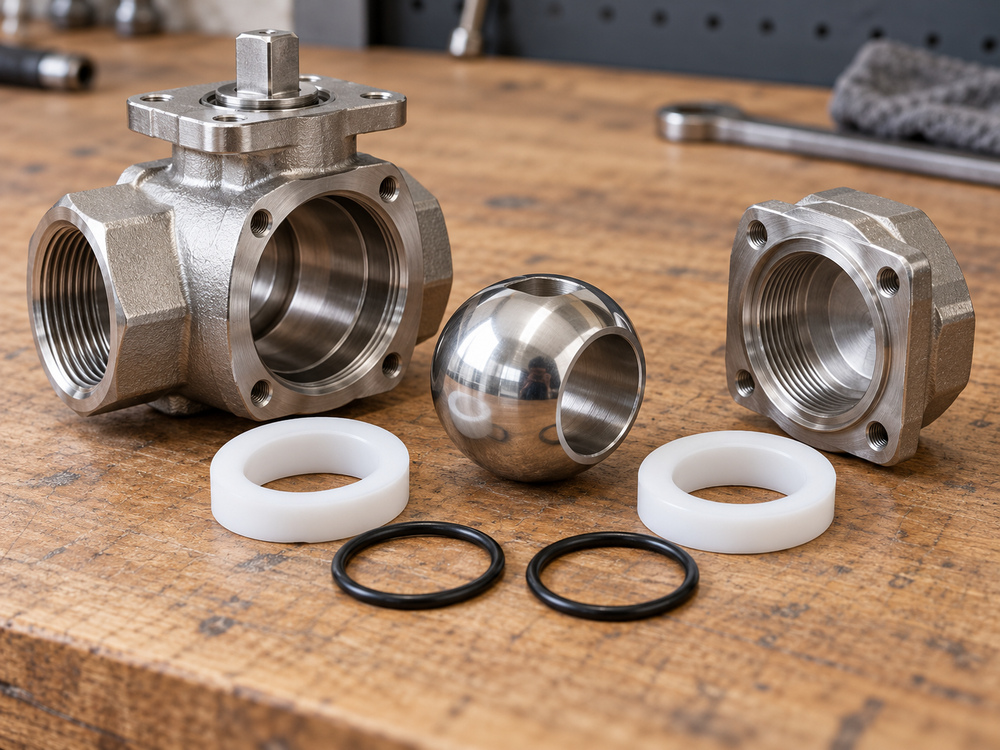
5. Cast or forged: make it a clear RFQ field
A chemically compatible cast CF8M body can be considered where the piping specification permits it. A forged F316 or F316L pressure boundary may be required by the owner, line class or offered valve design. Forging does not compensate for an unsuitable alloy, seal or connection.
Write “cast permitted,” “forged required” or “supplier to propose for approval,” and state which pressure-containing parts the requirement covers. Two-piece or three-piece construction does not prove the manufacturing route. Require the body and closure grades in the BOM and linked material reports.
If both routes are allowed, compare the same bore, rating, seals and inspection scope. Ask the supplier to state any change in material certification, examination scope or lead time when proposing an alternative body route.
6. Flanged or threaded: give the complete connection standard
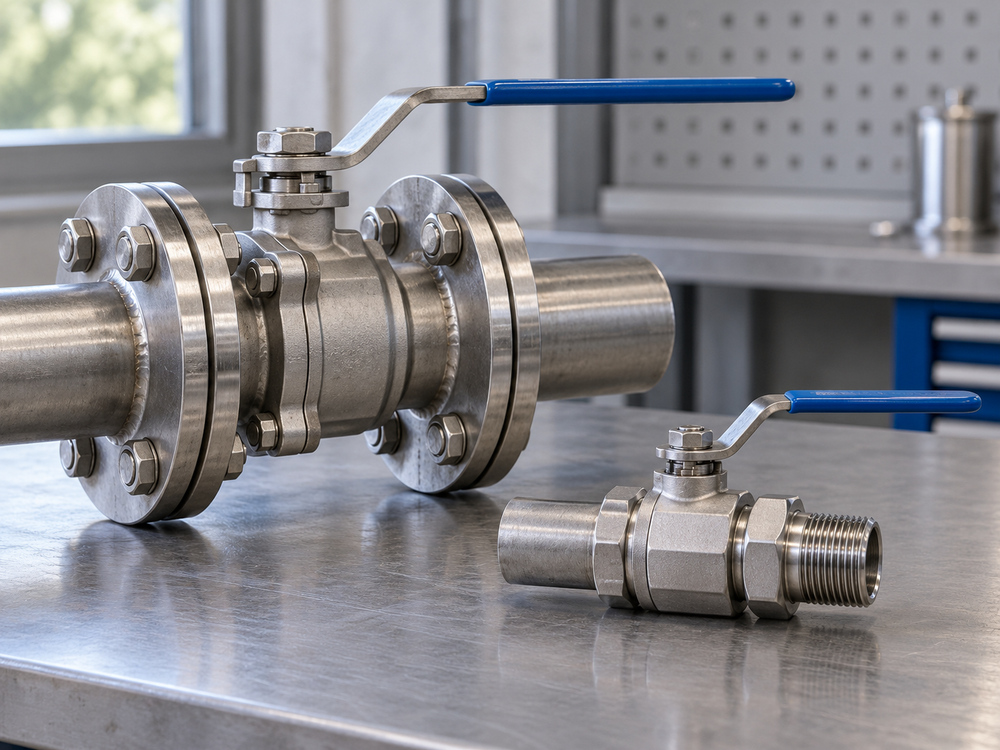
For a purchasing package spanning DN15–DN300, list each size, quantity, connection and pressure class separately. This range does not mean every stainless grade, seat or connection is available across one product series. Request confirmation for each tag and size/class combination.
Connection selection depends on the piping specification, leak-containment requirements, valve size, maintenance plan and mechanical loads. Threaded ends can suit approved small-bore installations, while flanged ends can facilitate removal. Neither connection is automatically acceptable for every chemical service.
| Connection | Required enquiry details | Installation / maintenance check |
|---|---|---|
| Flanged | DN/NPS, standard, PN/Class, RF/FF/RTJ as applicable, face-to-face length | Mating flange, gasket, bolting, alignment and removal clearance |
| NPT threaded | Size and specified NPT thread standard; valve rating | Compatible joint sealant, approved assembly and piping-class permission |
| BSPT / BSPP threaded | Exact standard and taper/parallel thread, mating part and seal arrangement | Do not treat NPT, BSPT and BSPP as interchangeable |
| Welded alternative | BW/SW, pipe outside diameter, wall thickness/Schedule and end standard | Qualified welding and manufacturer precautions for seats/seals |
A useful flange entry is “DN50, EN 1092-1 PN16, facing and face-to-face per attached piping specification.” For ASME piping, use “NPS 2, ASME B16.5 Class 150 RF,” with the required face-to-face dimension. These examples define interfaces; they do not establish suitability for an unspecified chemical or pressure.
For replacement valves, attach a drawing or photographs showing the nameplate, end connections and installed dimensions. A photograph helps identify construction but cannot establish hidden seal compounds or certify the alloy. Review Threaded Ball Valve options only against the approved connection requirements.
7. Check pressure, actuation and leakage as a package
Request the complete-valve pressure–temperature envelope for the quoted size, alloy, seat and connection. A room-temperature pressure rating or a polymer’s standalone temperature limit does not establish allowable pressure at the process temperature. See the Valve Pressure–Temperature Rating Guide for the rating framework.
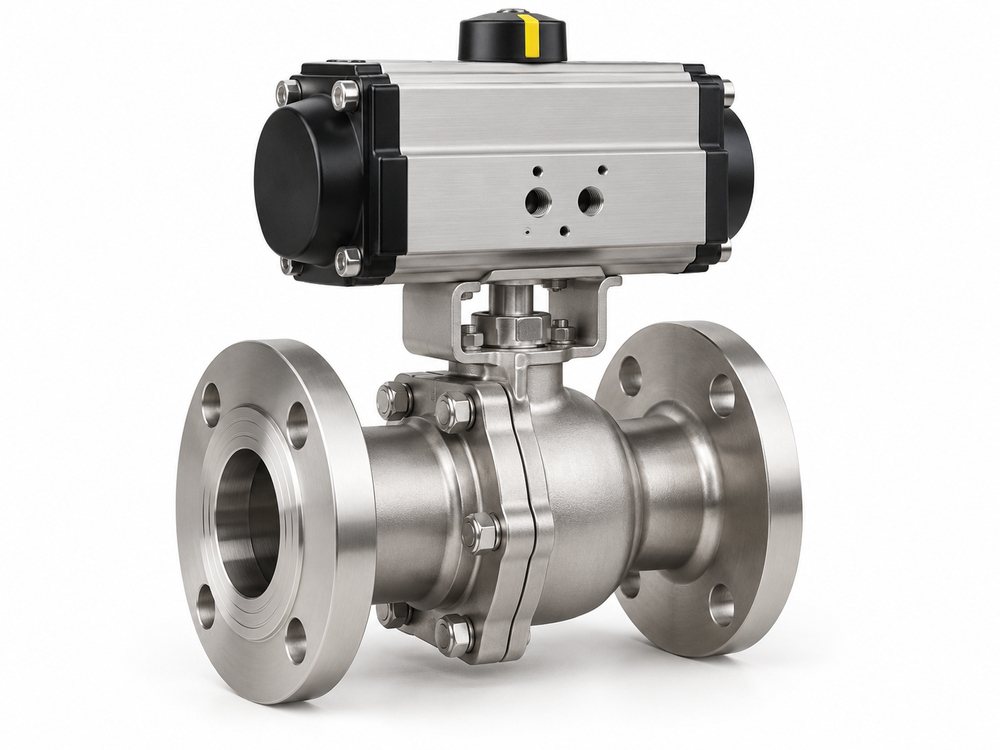
Manual offers should identify lever or gearbox operation and the maximum differential-pressure torque basis. Automatic offers need air pressure or electrical supply, on-off/modulating duty, fail position, cycle frequency, operating time, feedback and installation environment. For chemical-plant electric operation, refer to Electric Ball Valves in Chemical Plants.
Define seat leakage and external leakage separately. If the fluid is flammable or hazardous, specify the applicable fire-test evidence, anti-static verification, emissions qualification and hazardous-area equipment requirements where required by the project. Stainless construction and PTFE seats do not prove any of these qualifications.
8. Minimum information for a usable quotation
A supplier can issue a budget estimate using stated assumptions, but technical approval and a firm purchase require the unresolved items to be closed. Mark missing fields as “to be confirmed”; do not let the supplier’s assumed default silently become the purchase specification.
| RFQ block | Information to include |
|---|---|
| Identification | Project/tag, quantity, DN/NPS, isolation function and installation location |
| Process | Chemical composition/concentration, phase, contaminants, solids and cleaning exposures |
| Loads | Operating/design pressure and temperature, maximum differential pressure, vacuum, cycles and transients |
| Configuration | Body route, component grades, bore, body design, seats, seals, packing and exact end standards |
| Operation | Manual/actuated, supply, fail position, feedback, closure time and environment |
| Acceptance | Design/test standards and editions, leakage limits, MTC type/coverage, PMI/NDE and witness points |
| Commercial | Incoterm/named place, requested delivery, documents, spares, packing and warranty requirements |
Ask for a tag-specific datasheet, GA drawing, BOM and inspection-and-test plan. Specify MTC/MTR coverage and heat-number traceability; EN 10204 3.1 should be requested explicitly if required. PMI supports alloy identification but does not replace chemical compatibility assessment, all material tests or assembled-valve testing.
Shell and seat testing should follow the applicable API 598, API 6D, EN 12266 or agreed project procedure for the selected design. Define medium, pressure, duration, direction and acceptance. Agree fire-test or emissions evidence separately where required.

9. Copy-and-send chemical-transfer RFQ
Subject: RFQ — Stainless Steel Ball Valve for Chemical Transfer
Please quote the following on-off isolation valve and confirm compatibility with all listed process and cleaning exposures.
- Project/tag and quantity: [enter]. Size: [DN/NPS]. Location: [tank outlet / pump suction / pump discharge / branch].
- Fluid: [chemical name, concentration and basis, mixture composition, phase, contaminants and solids]. Attach SDS/process data.
- Temperature: normal [ ]; minimum/maximum design [ ]; cleaning exposure [chemical, concentration, temperature and duration].
- Pressure: normal [ ]; design [ ]; maximum shutoff differential [ ]; vacuum/transients [ ]. State units and gauge/absolute basis.
- Valve: [two-/three-piece or supplier proposal]; [full/reduced bore and required bore]; [cast permitted / forged required / proposal for approval].
- Body/closures: [exact standards and grades or request a documented recommendation]. Ball/stem: [ ]. Seat: [ ]. Body seals/packing: [exact grade/compound or proposal].
- Ends: [complete flange/facing/PN/Class standard or exact thread standard and seal arrangement]. Face-to-face and drawing: [ ].
- Operation: [lever/gearbox/pneumatic/electric]; supply [ ]; fail position [ ]; frequency/operating time [ ]; environment [ ].
- Acceptance: [design/test standards and editions, seat/external leakage, MTC coverage/type, PMI/NDE, special qualification and witness scope].
- Commercial: [Incoterm and named place]; required delivery [ ]; spare kits [ ]; packing/documents [ ].
Please return the datasheet, GA, complete wetted-material BOM, pressure–temperature limits, test/document scope and deviations. State quotation validity, MOQ, lead-time starting point, payment terms, warranty and net/gross weight. Identify unresolved assumptions before order acceptance.
FAQ
Is 316 stainless steel suitable for every chemical-transfer line?
No. Suitability depends on chemical composition, concentration, temperature, impurities and exposure. Select the complete wetted-material package for the actual duty.
Is “PTFE seat” enough to specify the seals?
No. Identify body seals, stem seals and packing separately, including the compound or grade and compatibility with cleaning fluids.
Does a PTFE seat protect the stainless body from acid?
No. Exposed metal still needs a corrosion assessment. A lined valve is a different construction with its own limitations.
Should chemical-transfer ball valves always be flanged?
No universal rule applies. Follow the piping specification, service containment requirements, maintenance plan and approved size/pressure configuration.
Can the manufacturer quote without the concentration?
A preliminary estimate may be possible with explicit assumptions. Concentration and temperature must be resolved before approving chemical compatibility and the final configuration.
Why provide a drawing if the size is already known?
The drawing confirms interfaces, face-to-face length, bore and clearance. Size alone does not define the installed geometry.
Prepare your quotation request: Send Vcore your chemical/process datasheet, quantity, size, connection requirements and inspection list through the contact page. Use the stainless steel ball valve configurations as a starting point; final materials, price and delivery follow technical review of the specified service.
Technical references: Swagelok Tube Fitter’s Manual, corrosion-chart guidance; ASME B16.34. Apply the project-approved standards and exact supplier configuration. Images are AI-generated illustrations, not completed-project records or approved engineering drawings.