Cast vs Forged Ball Valve: What Buyers Should Specify for Process Service
When reviewing a cast vs forged ball valve quotation, buyers often receive two very different offers carrying the same nominal size and pressure class. One may include a cast stainless body, standard seats and basic testing; the other may include forged pressure-containing parts, additional examination and a larger documentation package. The price difference cannot be explained by the body manufacturing route alone.
This guide focuses on project procurement for industrial water, chemical transfer and high-pressure equipment isolation. It addresses what to write in the RFQ, how to compare compliant alternatives and what to approve before production, rather than repeating a general introduction to casting and forging.
1. Cast vs forged: compare the purchase requirements
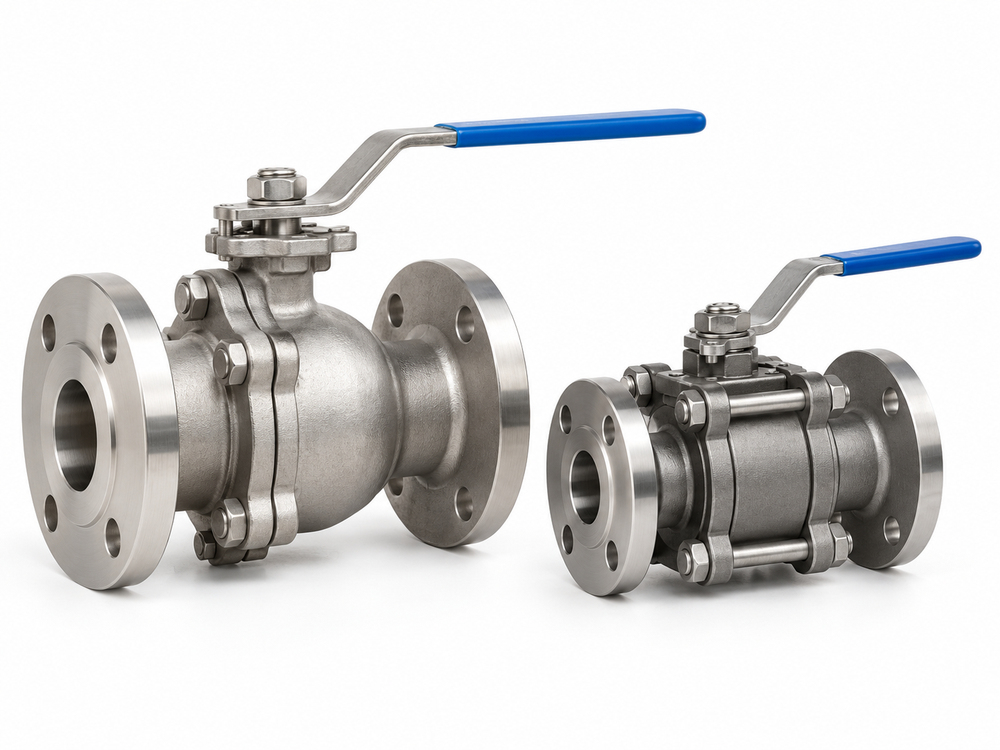
A cast body is produced from molten metal in a mould; a forged body is formed by working solid metal under controlled conditions. Those routes influence manufacturing controls and examination needs, but the buyer still needs an exact material specification, approved design and traceable inspection records.
| Purchase item | Cast ball valve | Forged ball valve | Buyer’s decision |
|---|---|---|---|
| Pressure boundary | Casting grade, heat treatment and casting-quality controls | Forging grade, heat treatment and forging-quality controls | Specify body and each closure/end piece separately |
| Size and configuration | Often commercially attractive for shaped bodies and flanged sizes | Common in compact high-pressure designs; larger forged valves also exist | Check the actual size/class/bore combination |
| Pressure and temperature | Approved material-specific rating and complete-valve limits | Approved material-specific rating and complete-valve limits | No automatic rating upgrade from “forged” |
| Inspection | Project-defined surface/volumetric examination; repair-weld controls where applicable | Project-defined surface/volumetric examination and material controls | Agree methods, extent and acceptance criteria |
| Cost and delivery | Influenced by pattern availability, foundry schedule, machining and inspection | Influenced by stock/die availability, forging schedule, machining and inspection | Compare equal technical and document scope |
Procurement rule: If the piping specification mandates forged pressure-containing parts, a cast alternative requires formal approval. If both routes are permitted, request two technically compliant offers against the same datasheet and require a clear deviation list.
2. DN15–DN300: size does not decide the manufacturing route
For a procurement package covering DN15–DN300, avoid dividing every small valve into “forged” and every large valve into “cast.” Supplier series overlap. Availability changes with pressure class, alloy, full or reduced bore, floating or trunnion-mounted ball, end connection and body-joint design. The range is a purchasing scope, not a claim that every combination is available from one series.
Small threaded valves may use cast stainless or forged pressure-containing parts. Larger flanged valves may be cast or forged. A full-port requirement can change body size, weight, torque and price even when DN is unchanged. Ask for the actual bore diameter and GA drawing; do not accept “full port” without its dimensional basis.
For threaded ends, identify NPT, BSPT or BSPP and the sealing arrangement. For flanged ends, state the flange standard, PN/Class, facing, face-to-face length and mating-pipe requirements. “DN50 PN16 flange” and “NPS 2 Class 150 RF flange” are different connection specifications and should not be substituted by name alone. Review Vcore’s Threaded Ball Valve configurations when preparing small-line enquiries.
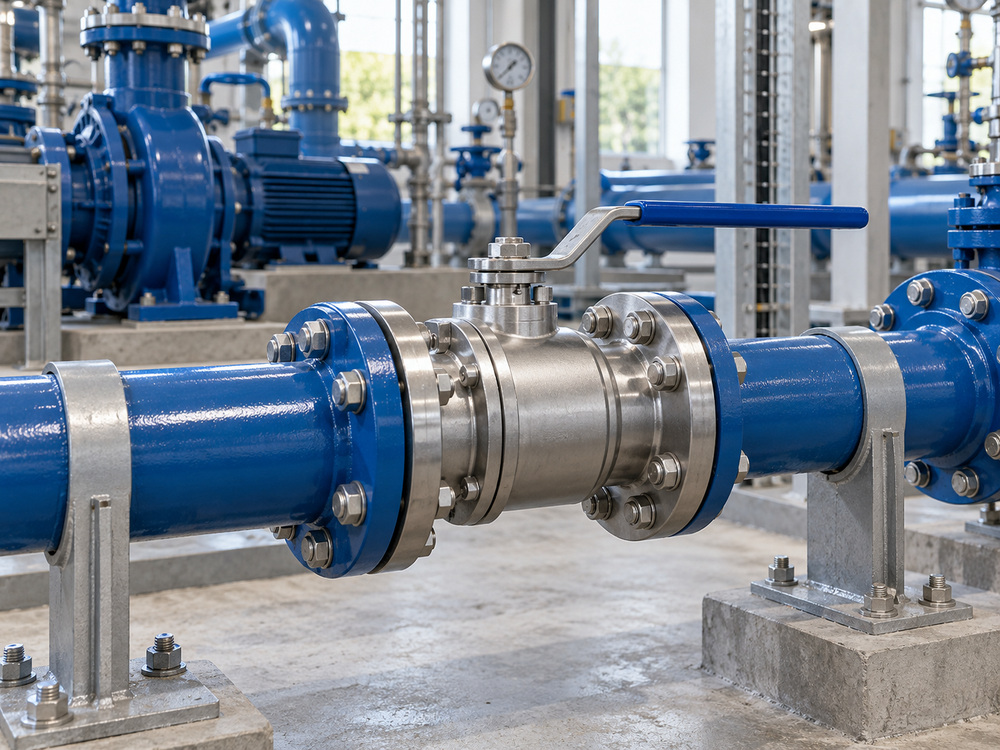
3. Industrial water: start with corrosion, maintenance and value
For clean industrial-water isolation at moderate pressure, a qualified cast-body ball valve can be a practical purchase. The commercial case is strongest when the required configuration is an established series with approved materials, a suitable seat envelope and readily available spares. Forged construction may still be required by the piping class or owner specification.
Record water chemistry, temperature, chlorides, treatment chemicals and solids. Carbon steel may need a corrosion strategy; stainless steel also requires a chemistry review. A change from casting to forging does not solve an unsuitable alloy selection. Sediment and frequent operation can affect seats even when the pressure body remains sound.
Confirm pressure loss, accessible lever/gearbox space, removal clearance, spare seat kits and maximum differential-pressure operation. For actuated valves, specify cycle frequency and closing-time requirements; fast closure can contribute to water hammer. Compare total installed cost, including actuator, pipe supports and maintenance access.
4. Chemical transfer: “stainless steel” is not a complete material specification
A chemical-transfer RFQ should identify the chemical, concentration, phase, contaminants, normal/design temperature and cleaning fluids. Evaluate the body, ball, stem, seats, body seals and packing together. A compatible pressure body can still be supplied with an incompatible elastomer or polymer seal.
| Material family | Example cast grade | Example forged grade | What to specify |
|---|---|---|---|
| Carbon steel | ASTM A216 WCB | ASTM A105 | Exact product-form standard, grade, heat treatment and service suitability |
| 316-family stainless steel | ASTM A351 CF8M | ASTM A182 F316 | Separate casting/forging designations and full wetted-parts BOM |
| Low-carbon 316-family stainless steel | ASTM A351 CF3M | ASTM A182 F316L | Project corrosion, welding and mechanical-property requirements |
These are examples for specification review, not automatic interchangeable grades. Do not describe an A105 forged body as “forged WCB,” or assume CF8M and F316 use the same certification requirements. A general “SS316 body” entry leaves the product form and material standard unresolved.
For suitable services, compare Vcore’s 316 Stainless Steel Ball Valve configurations. Hot chlorides, concentrated acids or mixed chemicals may need a different alloy or lining after a corrosion assessment. Forging does not make ordinary 316 universally resistant to these fluids.
Where the fluid is flammable or hazardous, define fire-test evidence, anti-static verification and fugitive-emission qualification as separate requirements where applicable. Neither cast nor forged construction proves these properties. State the permitted external and seat leakage criteria, along with the required isolation direction.
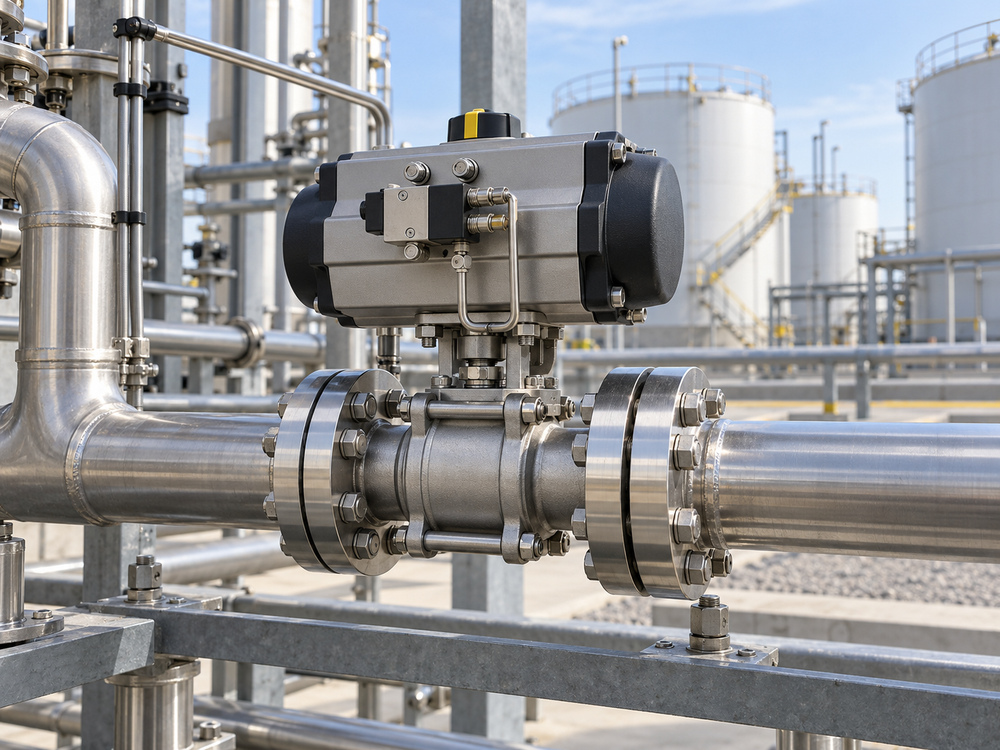
5. High-pressure equipment isolation: define the load case
Forged pressure-containing parts are often considered for compact high-pressure isolation valves and may be mandatory in the project specification. That preference must be supported by the offered design, material quality and examination scope. A qualified cast design can also be suitable where the governing specification permits it.
Give the supplier normal and design pressure, maximum closed-valve differential pressure, temperature range, pressure cycling, startup/shutdown frequency and credible transients. Frequent cycling needs a design assessment; it is not resolved simply by specifying a forged body. Verify stem strength, body-joint integrity, seat loading and operating torque.
Floating-ball and trunnion-mounted designs distribute loads differently. Selection depends on size, pressure, torque, seat configuration and service requirements. Ask the supplier to justify the offered arrangement instead of setting a universal DN cutoff. Review the High Pressure Ball Valve range and, for a relevant line class, the Class 900 Trunnion Ball Valve Procurement Guide.
For liquid service, address trapped body-cavity pressure and the approved relief path. For actuated equipment isolation, agree fail position, worst-case torque, supply conditions and functional-test scope. Body pressure integrity, seat shutoff and actuator capability are separate approval checks.
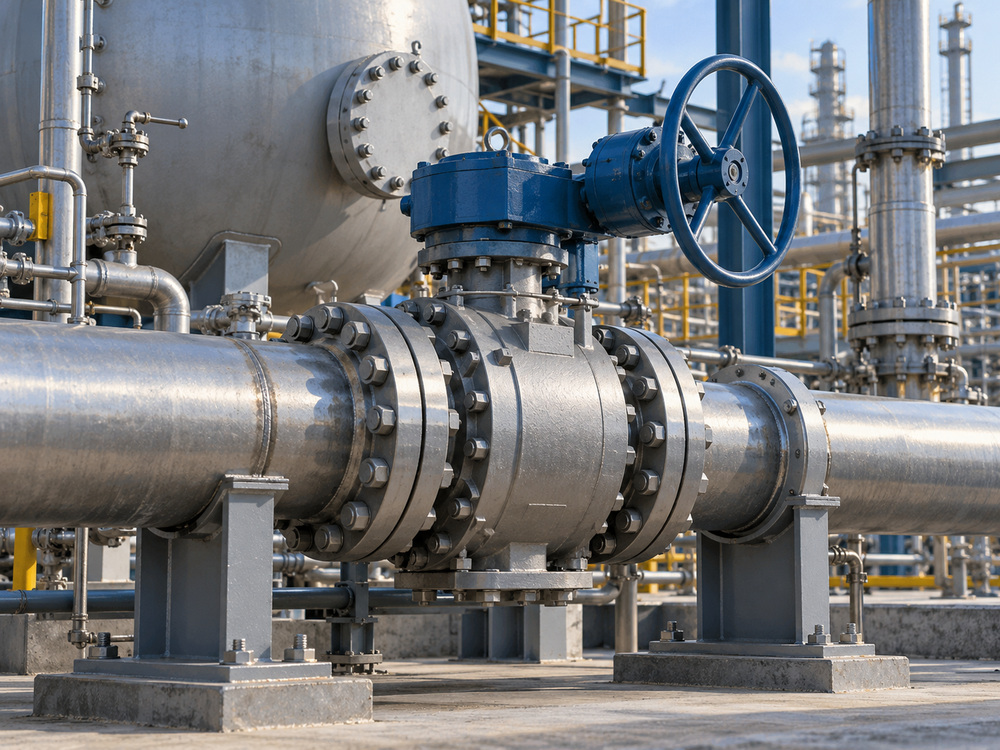
6. Temperature changes: request the complete-valve envelope
ASME pressure class is not a fixed pressure in psi or bar. The permissible pressure at temperature depends on the applicable material group, design standard and valve construction. End connections, seats, body seals and packing may impose tighter limits than the metallic body.
Ask for pressure and temperature limits for the exact offered size, grade, seat and connection. Record both minimum and maximum temperatures, including startup, cleaning and shutdown exposure. Where low-temperature toughness is required, specify material and impact-testing requirements rather than accepting a room-temperature hydrotest as proof.
For thermal cycling, review body-joint sealing, bolt-load retention and seat behavior with the supplier. For the detailed rating method, use the Valve Pressure–Temperature Rating Guide. If steam is part of the duty, see Ball Valve for Steam Service for the separate steam-specific assessment.
7. Inspection and MTC: agree the scope before ordering
Specify the governing design and test standards and agreed editions. API 608 or ISO 17292 may be relevant for process ball valves; API 6D applies where selected by the pipeline-valve specification. ASME B16.34 addresses covered valve design and pressure–temperature requirements. API 600 and API 602 should not be used as blanket ball-valve design specifications.
| Inspection / document | Buyer should define | Evidence to review |
|---|---|---|
| MTC / MTR | Covered components and certificate type, such as EN 10204 3.1 if specified | Heat number, grade, chemistry, mechanical results and heat treatment linked to the component |
| PMI | Alloy components, method, extent and acceptance | Traceable alloy-verification record; PMI alone does not prove mechanical properties or every carbon-grade distinction |
| NDE | PT/MT/UT/RT as suitable; locations, coverage, stage and acceptance limits | Qualified procedures and reports; neither route is automatically defect-free |
| Casting repair welding | Permitted repair scope, approval points and required re-examination | Repair records, qualified procedure and heat treatment where required |
| Shell and seat tests | Applicable API 598, API 6D or project procedure; medium, pressure, duration, directions and acceptance | Serial/tag-specific results with agreed witness points |
| Special qualification | Fire testing, emissions, anti-static or service-specific requirements where applicable | Evidence covering the offered configuration within its qualification scope |
Require a traceability map linking body and closure heat numbers to the material reports and valve tag/serial number. Agree the marking method and document format before manufacture. An MTC does not replace the assembled-valve shell or seat test, and a certificate of origin does not establish alloy chemistry.
A hydrostatic test is not a substitute for specified volumetric examination. Equally, asking for “100% NDE” without identifying method, coverage and acceptance creates pricing ambiguity. Tailor the inspection-and-test plan to the consequence of failure and governing specification.
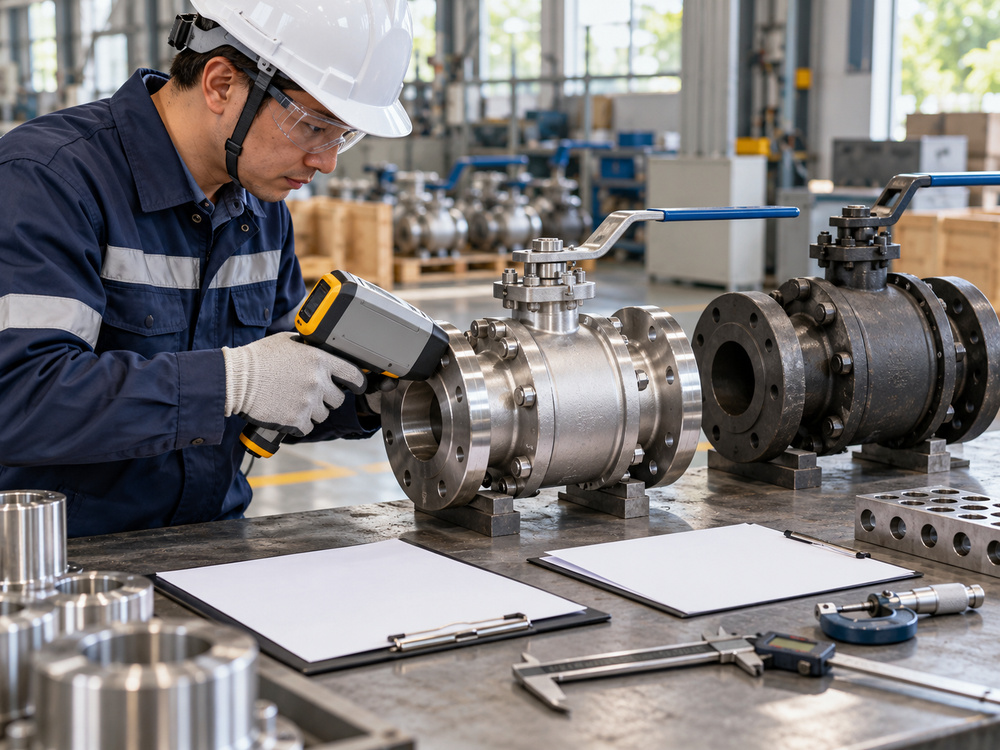
8. Lead time and cost: compare equal scope
Cast construction is not always cheaper, and forged construction is not always slower. Stock availability, alloy, quantity, machining capacity, pattern/die availability, special seats, NDE and third-party witness points can change the result. A standard stocked forged valve may be available sooner than a custom casting; a repeat cast-body series may be more economical than a new forged configuration.
Request a quotation breakdown covering the valve, actuator, special inspection, documentation, spares, export packing and freight. Confirm currency, Incoterm and named place, MOQ, quotation validity, payment terms and warranty scope. Ask for net/gross weight and packing dimensions to compare EXW, FOB or CIF offers accurately.
Define when lead time begins: purchase order, payment, technical approval or another agreed milestone. Separate drawing submission, buyer approval, production, testing, final dossier and dispatch. For replacements, include installation downtime and dimensional compatibility in the cost comparison.
9. Copy-and-send RFQ template
Subject: RFQ — Cast / Forged Ball Valve for Process Isolation
Please quote ball valves for the attached line list and confirm the offered construction against our piping specification.
- Tag, quantity and size: [tag / quantity / DN or NPS].
- Fluid and duty: [composition, concentration, phase, contaminants / on-off isolation / cycles].
- Pressure and temperature: [normal/design pressure, maximum differential pressure, minimum/maximum design temperature and credible transients].
- Rating and connection: [PN/Class, flange standard and facing / exact thread standard / welding-end details, face-to-face dimension].
- Construction: [cast or forged pressure-containing parts; permitted alternatives; floating or trunnion; full or reduced bore and minimum bore].
- Materials: [body and closure standard/grade; ball, stem, bolting, seat, seals and packing].
- Operation: [lever / gearbox / actuator, fail position, supply and required operating time].
- Standards and inspection: [design/test standards and editions, leakage criteria, MTC type, PMI/NDE extent, ITP and witness points].
- Special requirements: [fire-test evidence, anti-static, emissions or other project requirements where applicable].
- Commercial offer: [Incoterm and named place, lead-time milestones, payment, warranty, spares, net/gross weight and packing dimensions].
Please provide the datasheet, GA drawing, component BOM, pressure–temperature envelope and deviation list. If both body routes are permitted, quote compliant cast and forged alternatives with the same testing and documentation scope.
FAQ
Is a forged ball valve always better than a cast ball valve?
No. Select a compliant design for the actual service. Forged construction may be required for a particular project, but a qualified cast valve can be suitable where the piping specification permits it.
Does a forged body allow a higher pressure at the same Class?
Do not assume an upgrade. Verify the applicable material-specific rating and the complete-valve limits for the offered construction, size, temperature and connection.
Can cast and forged ball valves both use flanged or threaded ends?
Yes, depending on the product series. Connection type alone does not prove the body route. Confirm the component BOM and supplier drawing.
Can CF8M be replaced by F316 without approval?
Only after the project accepts the change in material product form and associated specification. Similar alloy-family descriptions do not eliminate design, certification or piping-class requirements.
Are MTC and pressure-test reports included automatically?
Agree their scope in the quotation and purchase order. Specify component coverage, certificate type, traceability and test requirements so suppliers price the same package.
Which route offers the shortest lead time?
The route with an available compliant configuration and confirmed production/inspection capacity. Ask for a milestone schedule rather than relying on a general casting-versus-forging rule.
Request a project-specific quotation: Send Vcore your valve datasheet, DN/NPS, pressure class, medium, temperature, end connections, materials and inspection requirements through the contact page. Review the stainless steel and high-pressure ball valve configurations as starting points for technical discussion. Final supply scope, price and delivery require confirmation for the selected model.
Technical references: ASME B16.34; API standards catalogue. Apply the project-approved standard editions and supplier documentation. Application images are AI-generated illustrations, not records of completed projects.