
Why 425°C Refinery Service Needs a Detailed Valve Specification
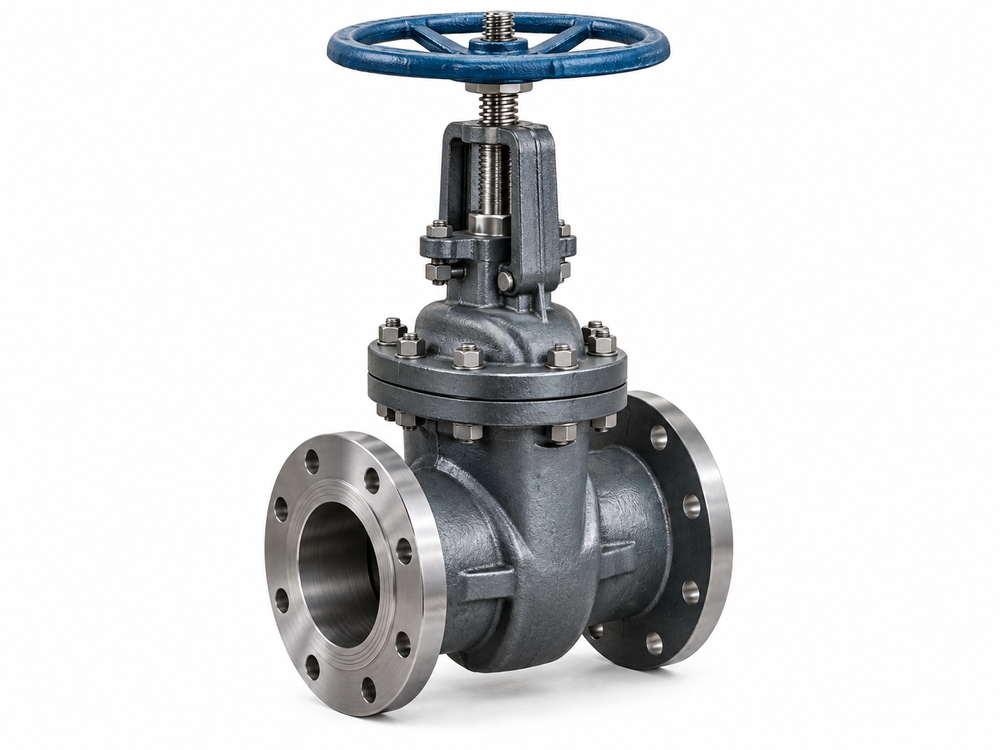
A gate valve normally provides full-open or full-closed isolation. When fully open, its unobstructed flow passage can help reduce pressure loss. However, reliable operation at elevated temperature depends on more than the valve body.
The wedge or discs, seats, stem, packing, bonnet gasket, bolting and operator must work together throughout the specified operating envelope. Changes during startup, shutdown and cleaning can be as important as normal running conditions.
Our petroleum valve solutions page introduces the broader application framework. For a 425°C refinery duty, the following checks make the quotation more specific and easier to evaluate.
1. Identify the Actual Process Medium
“Oil service” or “petrochemical service” is too broad for final valve selection. The RFQ should identify the fluid, its phase and any constituents that affect corrosion, erosion or deposit formation.
| Process Condition | What Buyers Should Confirm |
|---|---|
| Hot hydrocarbon liquid or vapor | Composition, phase changes, pressure and required containment. |
| Heavy oil or residue | Viscosity, deposit formation, operating frequency and cleaning procedure. |
| Coke-forming fluid | Potential buildup around seats and guides, and whether a specialist valve design is required. |
| Catalyst or other particles | Particle loading, erosion risk and the possibility of particles becoming trapped at the seat. |
| Hydrogen or corrosive contaminants | Composition, relevant partial pressures and the approved project metallurgy requirements. |
| Steam-out or cleaning service | Cleaning medium, pressure, temperature, duration and frequency. |
Temperature resistance does not establish chemical compatibility. A material selected for elevated-temperature strength may still be unsuitable for the actual process chemistry. Where hydrogen or refinery corrosion mechanisms are relevant, material selection should follow the project metallurgy assessment.
2. Confirm What “425°C” Means in the Datasheet
Buyers should distinguish normal operating temperature, maximum operating temperature and design temperature. If 425°C is the normal running temperature, the approved design temperature may be different. That value must come from the project design basis.
Provide the governing pressure-temperature combinations, including startup, shutdown, cleaning and any specified upset conditions. A valve should be reviewed against this envelope rather than a single temperature figure.
ASME Class 300 or Class 600 is not a pressure value in bar or psi. Allowable pressure depends on the material group, temperature, governing standard and any limitations of the complete assembly. An ambient-temperature rating should not be used to approve a valve for 425°C service.
3. Review Body Material Against the Project Specification
WCB, WC6, WC9 and forged alternatives may appear in elevated-temperature valve specifications. The correct choice depends on pressure, process chemistry, service duration, the piping material specification and applicable code requirements.
A quotation should identify the exact body and bonnet grades rather than simply describing the valve as “carbon steel” or “alloy steel.” Any proposed substitution should be stated clearly for purchaser approval.
For background on two commonly discussed cast alloy-steel grades, see our WC6 vs WC9 valve material guide. The comparison supports material review but does not replace the project’s approved material selection.
4. Specify Seat Leakage Separately from Temperature Capability
For service around 425°C, a suitable metal seating system is the normal starting point. However, “metal seated” does not define an allowable leak rate or guarantee shut-off performance under every operating condition.
The purchase specification should identify the wedge or disc material, seat material, hardfacing requirements, test standard and leakage acceptance criteria. If an API trim number is specified, request the corresponding material schedule.
Trim selection should consider process compatibility, wear, galling and thermal movement. A hardfacing alloy suitable for one service should not automatically be accepted for a different corrosive or deposit-forming stream.
If the plant requires a defined leakage limit at 425°C, agree the supporting evidence or additional test scope before placing the order. Routine ambient shell and seat tests do not establish a specific hot leakage rate.
5. Evaluate Coking and Deposit Risks Before Ordering
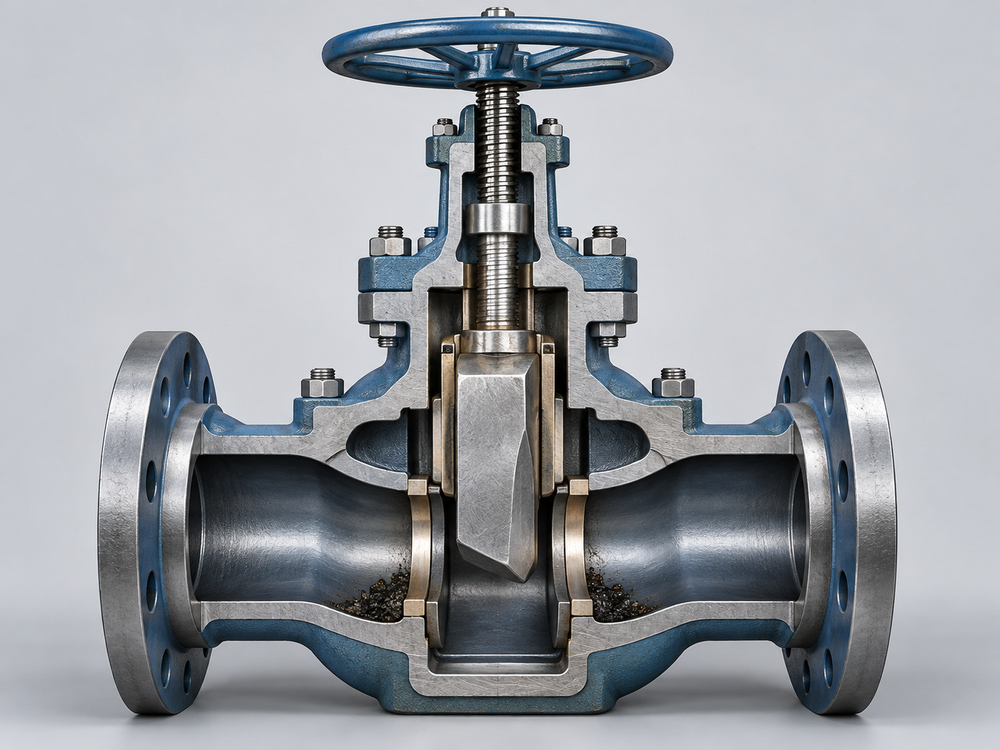
A refinery gate valve may remain in one position for an extended period. In some services, deposits can accumulate around the guides or seating surfaces and interfere with movement or shut-off.
For heavy or coke-forming media, discuss the expected deposit mechanism, operating interval and cleaning procedure with the supplier. Ask whether the proposed internal design has been reviewed for the stated duty.
Flushing or purge connections should be included only where their design and operating procedure have been approved. They are not a universal solution to fouling.
A flexible wedge can accommodate some dimensional changes, but it does not eliminate every risk of binding or deposits. Where solids, erosion or coking dominate the application, a specialist isolation design may be required.
Our rising stem gate valve provides a starting point for configuration discussions. Final suitability must be confirmed against the complete service datasheet.
6. Separate Stem Emissions from Internal Seat Leakage
Internal seat leakage and external leakage are different requirements. A valve can meet its seat-test acceptance criteria while still failing the project’s external containment requirement.
Specify the stem packing system, bonnet gasket arrangement, bolting materials and required emissions evidence. Graphite-based sealing systems are commonly considered for elevated-temperature service, but their suitability depends on the complete valve configuration and process conditions.
When low emissions are required, review the qualification scope for the proposed valve. A packing test alone is not equivalent to qualification of the assembled valve. Evidence obtained at a lower temperature should not be treated as direct proof of performance at 425°C.
Our valve fugitive emission testing guide explains the distinctions between packing qualification, valve qualification and production testing.
Where the project requires fire-test evidence, specify it separately. Fire-test qualification does not establish suitability for continuous operation at 425°C.
7. Confirm How the Valve Will Reopen
The maximum differential pressure during opening can differ from the normal line operating condition. Include this value in the RFQ so the supplier can review opening loads and the operator arrangement.
For gear-operated or actuated valves, the available thrust must be checked against valve requirements and component limits. Increasing actuator size without reviewing the stem and valve structure can create excessive loading.
The operating review should also consider hot closure followed by cooling, restart after a long shutdown and heating of trapped fluid. Thermal binding, pressure locking and cavity overpressure are separate mechanisms.
Any relief passage, equalizing arrangement or bypass requires engineering approval because it can affect isolation direction and operating procedures.
8. Provide Complete Connection and Installation Details
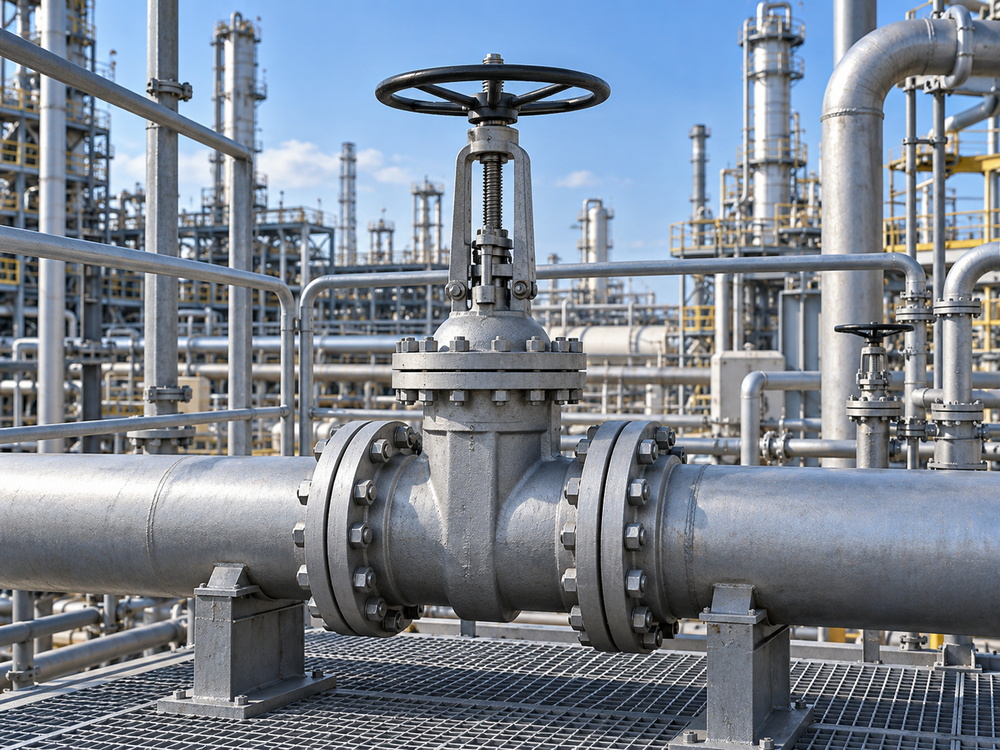
For a flanged valve, confirm the connection standard, pressure class, flange facing and mating-gasket requirements. For a butt-weld valve, provide the pipe outside diameter and wall thickness or Schedule, preferably with an approved weld-end drawing.
Also confirm face-to-face dimensions, installation orientation, stem travel clearance, operator access and piping support requirements. Thermal movement and maintenance access should be considered before the valve is purchased.
RFQ Checklist for a Gate Valve at 425°C
| RFQ Item | Information to Provide |
|---|---|
| Process duty | Unit, isolation function, fluid composition, phase, solids and deposit risk. |
| Operating conditions | Normal and design pressure-temperature combinations, including cleaning conditions. |
| Size and rating | DN/NPS, required pressure class and project specification. |
| Materials | Body, bonnet, stem, wedge or discs, seats, hardfacing, packing, gasket and bolting. |
| Construction and connections | Gate design, bonnet construction, end standard, facing or weld-end detail and face-to-face length. |
| Operation | Maximum opening differential pressure, operating frequency and handwheel, gearbox or actuator requirements. |
| Leakage requirements | Seat acceptance criteria, external containment and any required hot-performance evidence. |
| Inspection and documents | Applicable standards and editions, ITP, witness points, MTC, NDE/PMI scope and qualification evidence. |
| Commercial requirements | Quantity, delivery destination, Incoterm, required lead time and warranty terms. |
What to Check Before Shipment
Review the final drawing and bill of materials against the approved datasheet. Material certificates should be traceable to the supplied components, and any specified PMI, heat treatment or NDE records should cover the agreed inspection scope.
Pressure-test reports should identify the valve, test medium, pressure, duration and acceptance criteria. Review emissions or fire-test evidence against its actual qualification scope rather than accepting a generic certificate.
Use our valve factory acceptance test checklist to organize pre-shipment verification. Nameplate data, end protection, cleanliness, preservation and installation instructions should also be checked.
Confirm documentation and inspection requirements before production. Special materials, drawing approval and witness inspection can affect lead time and should be included in the delivery plan.
Frequently Asked Questions
Can a WCB gate valve be used at 425°C?
Temperature alone is insufficient for approval. The applicable pressure-temperature rating, code limitations, service duration, process chemistry and project material specification must be reviewed. The complete valve assembly must satisfy the approved design conditions.
Does a 425°C refinery gate valve always need a pressure-seal bonnet?
No. Bonnet construction depends on the pressure-temperature envelope, design requirements and maintenance strategy. Temperature alone does not determine whether a bolted bonnet or pressure-seal arrangement is required.
Does an ambient hydrotest prove hot shut-off performance?
No. It verifies the agreed requirements under the stated test conditions. A specific hot leakage requirement needs a separately agreed evidence or test plan.
Can a standard gate valve handle coke-forming fluid?
Suitability must be reviewed for the actual deposit mechanism, operating interval and cleaning conditions. A standard wedge gate should not automatically be selected for severe coking service.
Request a Gate Valve Quotation for Refinery Service
Vcore Valve supports project-based industrial valve supply for refinery and petrochemical applications. To prepare an accurate quotation, send your process medium, operating and design conditions, valve size, pressure class, material specification, connection details, operation method and quantity.
Include the required leakage criteria, inspection scope and documentation so the proposed configuration can be reviewed against your project requirements.
Contact Vcore Valve to discuss your refinery gate valve requirements.