Trunnion Ball Valve Design Guide: Seats, DBB, Cavity Relief, Torque and Pipeline Selection
A trunnion mounted ball valve is a quarter-turn isolation valve in which the ball is mechanically supported rather than allowed to move freely between the seats. That fixed-ball arrangement changes how pressure loads are carried, how the seats create sealing force, how operating torque develops, and how features such as double block and bleed (DBB), cavity pressure relief, emergency sealant injection, fire-safe construction and actuator sizing should be specified.
For engineers and procurement teams, the important question is not simply whether a valve is “trunnion mounted.” Two trunnion ball valves with the same nominal size and pressure class can behave very differently depending on seat design, body construction, bore, material, sealing philosophy, pressure-relief arrangement, actuator sizing and inspection scope. This guide focuses on those engineering details so that a trunnion ball valve can be specified for the actual pipeline duty rather than selected by name alone.
Quick Summary
- In a trunnion ball valve, the ball is mechanically supported at the stem and lower trunnion, so line pressure is not used to push the complete ball downstream into the seat.
- Spring-loaded or pressure-assisted seats move toward the fixed ball; seat design is therefore central to sealing, DBB capability and cavity-pressure behavior.
- SPE and DPE seat arrangements should be specified deliberately. They are not interchangeable, and not every trunnion valve automatically provides the same DBB or cavity-relief function.
- Lower and more predictable operating torque is one reason trunnion designs are widely used for large-diameter, high-pressure and automated pipeline isolation.
- API 6D, project specifications, fire-safe requirements, sour-service requirements and test/documentation scope must be confirmed separately rather than assumed from the words “trunnion ball valve.”
What Makes a Trunnion Ball Valve Different?
The defining feature of a trunnion ball valve is the way the ball is supported. The upper stem transfers operating torque, while a lower trunnion or support shaft carries part of the hydraulic and mechanical load. Bearings or bearing surfaces allow the ball to rotate while remaining substantially fixed in position.
Because the ball is supported, line pressure does not need to push the entire ball downstream to create the primary sealing load. Instead, the seats are designed to move axially toward the ball. Springs, line pressure and cavity pressure can all influence how the seat ring is energized, depending on the selected seat arrangement.
That working principle is the main reason trunnion mounted valves are widely used in high-pressure transmission pipelines, gas compressor stations, oil terminals, LNG and hydrocarbon facilities, pipeline manifolds, refinery isolation and other services where valve size, differential pressure and actuator torque can become difficult to manage with a conventional floating ball design.
Vcore already has a dedicated comparison of floating vs trunnion ball valves. That article explains which architecture is more suitable by size, pressure and cost. This guide goes deeper into the trunnion design itself: seats, cavity behavior, DBB, body structure, torque and project verification.
| Design Element | Engineering Meaning | Why It Matters |
|---|---|---|
| Fixed Ball Support | Ball is supported by the stem and lower trunnion / support | Helps control ball load and operating torque in demanding service |
| Movable Seat Rings | Seats move axially toward the ball to create sealing | Seat philosophy determines sealing direction and cavity behavior |
| Seat Springs | Provide initial seat contact at low differential pressure | Useful for reliable sealing across a broad operating range |
| Body Cavity | Closed valve may trap fluid between the two seats | Thermal expansion and pressure relief must be considered |
| Bearings / Trunnion Surfaces | Support rotation under hydraulic load | Influence torque, wear and long-term operability |
| Drain / Vent Connections | Allow cavity pressure management and service operations where provided | Important for testing, DBB verification and maintenance procedures |
How a Trunnion Ball Valve Works
The valve operates through a 90-degree rotation of the stem and ball. In the open position, the ball bore aligns with the pipeline. In the closed position, the solid side of the ball faces the flow and the two seat rings establish the required isolation.
The structural difference appears when pressure loads increase. A floating ball can move slightly downstream under pressure; a trunnion-supported ball does not rely on that movement. Hydraulic forces are transferred into the trunnion supports and valve body while the seat rings maintain contact with the ball.
This does not mean a trunnion valve has “no pressure-related torque.” Torque still depends on seat load, seal friction, bearing friction, pressure differential, temperature, contamination, seat material and how long the valve has remained stationary. The advantage is that the fixed-ball structure makes those loads more manageable for large valves and high-pressure applications.
Trunnion Ball Valve Seat Design: The Most Important Detail
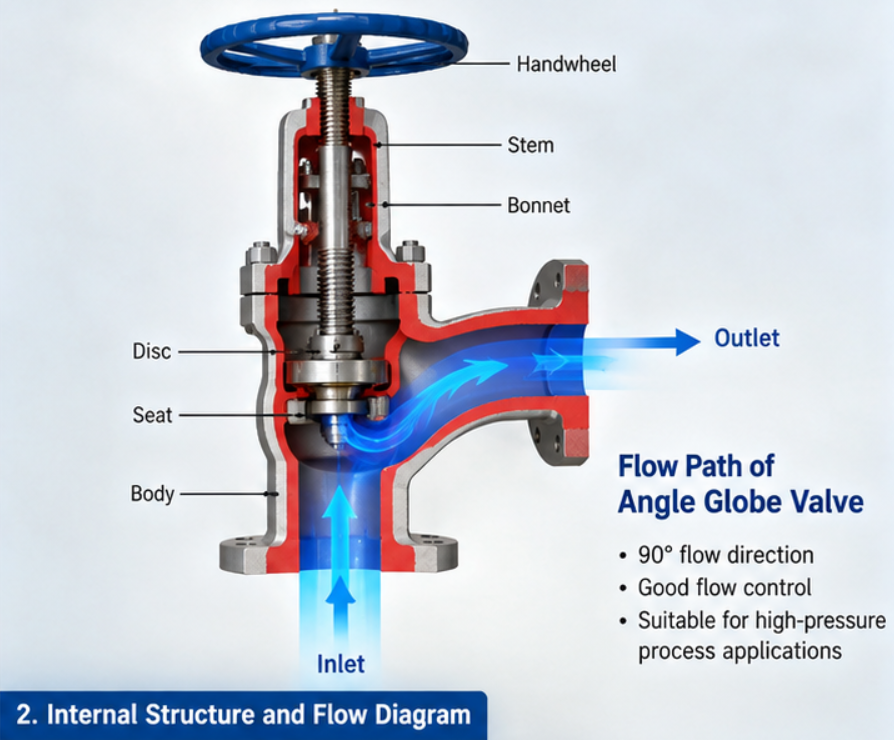
When buyers compare trunnion ball valves, the seat design deserves more attention than the external appearance. The seat system controls shut-off, low-pressure sealing, cavity-pressure behavior, bidirectional isolation capability and emergency sealing options.
Spring-Loaded Seats
Trunnion valves commonly use seat springs behind the seat ring. Their purpose is to maintain initial contact between the seat and the ball when differential pressure is low. As pressure increases, the hydraulic force acting on the seat geometry can increase or modify the sealing load.
This is more precise than saying that every trunnion ball valve seals identically at both low and high pressure. Actual performance depends on the seat geometry, pressure direction, seal material, spring load, cavity pressure and test acceptance criteria.
Single Piston Effect (SPE) Seats
An SPE seat is commonly designed so that line pressure helps push the seat toward the ball to seal, while excessive body-cavity pressure can move the seat away from the ball and relieve pressure back toward the lower-pressure side when the design conditions are reached. This self-relieving behavior can be valuable when trapped liquid in the cavity experiences thermal expansion.
The actual relief direction and pressure behavior must still be confirmed from the manufacturer’s seat schematic and approved drawing.
Double Piston Effect (DPE) Seats
A DPE seat can be designed so that pressure acting from either the line side or the body-cavity side energizes the seat toward the ball. This provides an additional sealing function, but it also means trapped cavity pressure may not automatically self-relieve through that seat.
For that reason, a DPE/DPE arrangement normally requires a deliberate cavity pressure-relief strategy. Projects may instead use combinations such as SPE/DPE depending on the required sealing and pressure-relief philosophy.
| Seat Arrangement | General Behavior | Key Engineering Question |
|---|---|---|
| SPE | Line pressure energizes sealing; selected designs can self-relieve excessive cavity pressure | Where does cavity pressure relieve, and under what conditions? |
| DPE | Pressure from line or cavity side can energize the seat toward the ball | How is trapped cavity overpressure safely relieved? |
| SPE / SPE | Both seats may provide self-relieving behavior depending on orientation and design | Does the required DBB / isolation philosophy match this seat arrangement? |
| SPE / DPE | Combines self-relieving and secondary isolation behavior | Which seat is upstream/downstream for the intended installation? |
| DPE / DPE | Strong bidirectional cavity-side seat energization capability | Is an independent cavity relief device required by the project? |
Double Block and Bleed (DBB) in Trunnion Ball Valves
DBB is one of the most commonly requested features on pipeline ball valves, but it is also one of the most frequently misunderstood. In practical valve procurement, a DBB-capable valve is expected to isolate pressure at both seats with a means to bleed or vent the body cavity so the sealing performance can be verified under the specified test condition.
A single trunnion ball valve can be designed with two independent seat sealing interfaces and a cavity drain or vent connection. This is different from a piping arrangement that uses two separate block valves with a bleed valve installed between them. Both may be described informally as “double block and bleed,” so the datasheet must make clear which arrangement is required.
For critical hydrocarbon pipelines, specify the seat arrangement, required pressure direction, cavity vent/drain size, test acceptance and whether the project requires DBB, DIB (double isolation and bleed) or another defined isolation philosophy. Avoid assuming that all API 6D-style trunnion valves provide the same function automatically.
Body Cavity Pressure Relief and Thermal Expansion
When a trunnion ball valve is closed, fluid can become trapped in the body cavity between the upstream and downstream seats. If the trapped medium is a liquid and its temperature rises, thermal expansion can increase cavity pressure even when pipeline pressure remains unchanged.
The valve design therefore needs an appropriate cavity-pressure management method. Depending on seat design, this may be provided by self-relieving seats, a dedicated external relief connection, a project-specific bypass or another approved arrangement.
This point is particularly important for liquid hydrocarbon service, buried pipelines, solar-heated aboveground valves, temperature-cycling systems and valves that may remain closed for long periods.
Why Trunnion Ball Valves Usually Need Less Operating Torque
Operating torque is a major reason engineers choose a trunnion design for large or high-pressure pipelines. Because the ball is mechanically supported, hydraulic loads are carried through the supports rather than forcing the whole ball tightly into the downstream seat as pressure increases.
That generally results in lower and more predictable torque than an equivalent oversized floating-ball arrangement. But actuator selection still needs actual manufacturer torque data. A valve should never be paired with an actuator solely from nominal size and pressure class.
Torque Values to Request
- Breakaway torque: torque required to start moving the valve from a stationary closed or open position.
- Running torque: torque required during ball rotation.
- End-to-close / seating torque: torque near the final closed position where seat loading may increase.
- Maximum differential-pressure torque: torque at the specified differential pressure.
- Service factor: additional margin based on actuator type, seat material, media, temperature, deposits and operating frequency.
Automated valves may use electric, pneumatic or hydraulic actuators depending on required closing time, available utilities, fail position and emergency shutdown philosophy. For larger high-pressure valve packages, verify the complete valve-actuator assembly rather than purchasing the actuator from nominal torque assumptions.
Side Entry, Top Entry and Fully Welded Trunnion Designs
The term “trunnion ball valve” describes ball support, not body construction. Several body architectures can use the same trunnion principle.
| Body Type | Main Advantage | Main Limitation / Review Point | Typical Selection |
|---|---|---|---|
| Side Entry / Split Body | Common construction with broad size and pressure availability | Internal maintenance may require pipeline removal or major disassembly | Oil & gas, petrochemical and general pipeline isolation |
| Top Entry | Internal components can be accessed from the top after safe depressurization | More complex body and maintenance procedure | Critical pipelines where valve removal is difficult |
| Fully Welded | Eliminates conventional bolted body joints and suits buried service | Body is generally not intended for field disassembly | Gas transmission, district heating, buried pipeline and utility networks |
For in-line maintenance strategy, compare Vcore’s Top Entry Ball Valve. For buried and welded pipeline systems, review the Fully Welded Ball Valve configuration.
Full Bore vs Reduced Bore
A trunnion ball valve can be supplied as full bore or reduced bore. Full-bore designs are often selected where low pressure drop, pipeline pigging, cleaning or unrestricted flow area is required. Reduced-bore designs can reduce valve size, weight and cost where some flow restriction is acceptable.
Do not describe a valve as “piggable” only because it is full bore. The actual bore geometry, internal transitions, seat arrangement and project pigging requirements must be checked against the approved drawing.
Soft Seats, PEEK and Metal Seats
Seat material affects leakage performance, temperature capability, operating torque, chemical compatibility and service life. Trunnion construction does not remove the need for proper seat selection.
| Seat Type | Typical Strength | Key Limitation / Review Point |
|---|---|---|
| PTFE | Low friction and broad chemical compatibility in suitable service | Temperature, pressure, creep and media compatibility must be checked |
| RPTFE | Improved mechanical properties compared with unfilled PTFE | Actual filler and chemical compatibility should be confirmed |
| PEEK | Higher mechanical strength and elevated-temperature capability in selected service | Higher cost and project-specific compatibility review |
| Metal Seat | Suitable for selected high-temperature, abrasive or severe service | Higher torque, surface hardening and leakage class must be reviewed |
Fire-Safe, Anti-Static and Blowout-Resistant Stem Features
Pipeline projects frequently specify several safety features together with trunnion construction, but each requirement should be verified independently.
- Fire-safe design: requires an applicable fire test requirement and evidence covering the selected valve configuration. API 6D compliance alone should not be treated as proof of fire testing.
- Anti-static design: provides electrical continuity across rotating interfaces where required for flammable service.
- Blowout-resistant stem: uses stem geometry and retention so internal pressure cannot eject the stem through the packing area under normal design conditions.
- Emergency sealant injection: may be supplied for seats and/or stem on selected large pipeline valves, but it should be considered an emergency maintenance feature rather than a substitute for correct primary sealing.
If the project has a fire-risk requirement, use Vcore’s API 607 vs API 6D Ball Valves guide to separate fire testing from pipeline valve product requirements. A related product configuration is the Fire Safe Ball Valve.
Trunnion Ball Valve Materials
Material selection should be based on medium composition, operating and design temperature, pressure class, corrosion mechanism, sour-service exposure, external environment and project documentation requirements.
| Component | Common Material Direction | Selection Check |
|---|---|---|
| Body / Closure | Carbon steel, low-temperature carbon steel, stainless steel, duplex, alloy or project-specific forging/casting | Pressure-temperature rating, toughness, corrosion and welding requirements |
| Ball | Stainless steel, coated carbon/alloy steel, duplex or project-specific alloy | Corrosion, hardness, coating and seat pairing |
| Stem / Trunnion | Stainless, precipitation-hardening stainless, alloy or duplex grades | Strength, corrosion, galling and sour-service restrictions |
| Seats | PTFE, RPTFE, PEEK, engineered polymers or metal | Temperature, pressure, media and required leakage performance |
| Seals / Packing | Elastomer, polymer and/or graphite systems according to design | Media compatibility, temperature, low-emission and fire-safe requirements |
| Bolting | Carbon/alloy/stainless bolting according to body and service | Temperature, corrosion, sour service and project hardness limits |
For H2S-containing service, NACE MR0175 / ISO 15156 requirements should be stated explicitly in the inquiry when applicable. Do not assume that a generic carbon-steel trunnion valve automatically meets sour-service hardness, material or documentation requirements.
API 6D, ISO 14313 and Other Standards
For pipeline ball valves, API 6D is a major product specification used internationally. It addresses pipeline valve requirements across design, manufacturing, testing and related quality controls. ISO 14313:2025 covers pipeline valves for oil and gas industries including lower-carbon energy and supplements API 6D, 25th edition, with additional requirements.
A project may also specify ASME pressure-class and flange requirements, material standards, fire testing, fugitive-emission requirements, sour-service requirements, NDE and owner-specific testing. The correct standards list therefore depends on the actual project.
| Standard / Requirement | Typical Role | Procurement Note |
|---|---|---|
| API 6D | Pipeline valve product specification | Confirm edition/addenda and project-specific supplementary requirements |
| ISO 14313:2025 | Pipeline valve requirements supplementing API 6D for covered applications | Use when specified by project or owner requirements |
| ASME B16.5 / B16.47 | Flange dimensional / rating framework where applicable | Confirm size range, class, facing and flange series |
| API 607 / API 6FA / ISO 10497 | Fire testing depending on valve type and project requirement | Certificate scope must cover the selected configuration |
| NACE MR0175 / ISO 15156 | Material requirements for H2S-containing oil and gas environments | Specify material, hardness and documentation requirements explicitly |
Testing and Inspection for Trunnion Ball Valves
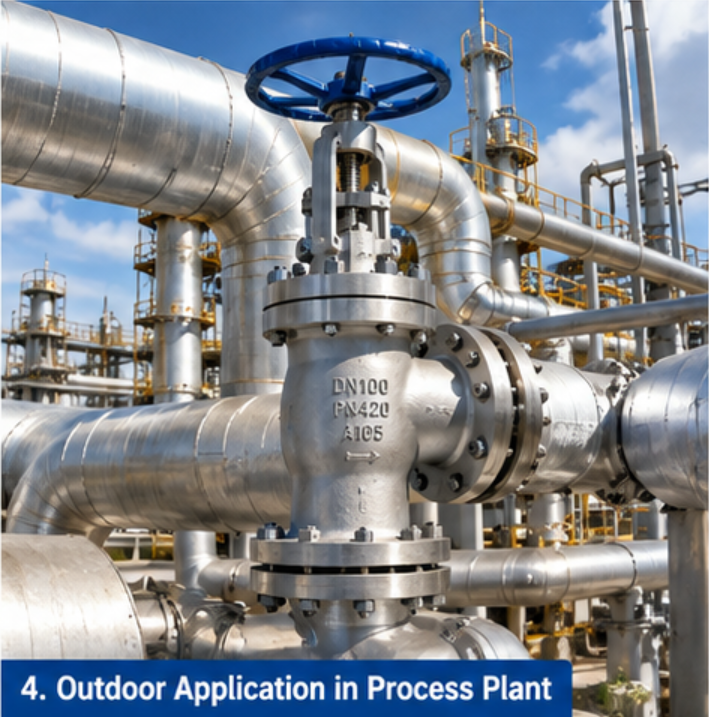
Testing should reflect the product specification and project inspection plan. For a pipeline trunnion valve, the scope may include shell pressure testing, seat leakage testing in specified directions, low-pressure gas testing when required, drain/vent verification, DBB or DIB verification, torque checks, dimensional inspection, material verification, NDE, coating inspection and functional testing of the actuator package.
For critical projects, the quotation should state which documents will be supplied with the valve. Typical requirements may include MTRs, GA drawings, datasheets, pressure test reports, NDE records, hardness reports, coating records, fire-test certificate scope, NACE compliance documents, nameplate photos and final inspection records.
Where Trunnion Ball Valves Are Commonly Used
| Application | Why Trunnion Design Is Often Selected | Additional Review |
|---|---|---|
| Natural Gas Transmission | Large size, high pressure, low torque and remote actuation | Fire-safe, anti-static, DBB/DIB, full bore and actuator sizing |
| Crude Oil / Product Pipelines | Reliable isolation and controlled seat loading | Cavity relief, piggability, corrosion and emergency sealing |
| Refinery / Petrochemical | High-pressure or critical hydrocarbon isolation | Fire testing, fugitive emissions and material compatibility |
| LNG / Low Temperature | Pipeline isolation in demanding energy service | Low-temperature materials, seat design and approved cryogenic configuration |
| Sour Gas / H2S Service | High-pressure pipeline isolation | NACE MR0175 / ISO 15156, hardness and material traceability |
| Buried Pipeline | Remote isolation with extended stem; fully welded designs may be used | External coating, stem extension, cavity venting and maintenance strategy |
For a wider look at where different ball valve structures are used, see Ball Valve Applications for Industrial Pipelines. Buyers dealing specifically with large pressure-rated lines can also review Vcore’s High Pressure Ball Valve page.
How to Select a Trunnion Ball Valve for a Project
The selection process should begin with service conditions and then move into valve architecture. Avoid starting with a catalog model and trying to make the process fit it.
Gas, crude oil, refined product, chemical, water, multiphase or special service.
Operating pressure, design pressure, pressure class and maximum differential pressure.
Normal, minimum and maximum design temperature, including shutdown conditions.
Full bore, reduced bore and whether pigging is required.
SPE, DPE or combined arrangement according to isolation and cavity-relief requirements.
State the exact project isolation requirement and test direction.
Side entry, top entry or fully welded according to maintenance strategy.
Body, ball, stem, trunnion, seat, seals, packing and bolting.
Use actual breakaway/running torque and project safety factor.
Standards, FAT, NDE, MTRs, coating, fire-safe/NACE documents and TPI requirements.
Common Trunnion Ball Valve Specification Mistakes
1. Assuming Every Trunnion Valve Is Automatically DBB
Ball support type does not by itself define the isolation function. Seat design and test criteria must be verified.
2. Ignoring Cavity Pressure Relief
A closed valve can trap liquid between the seats. The seat and relief philosophy should be reviewed before the valve is approved.
3. Buying an Actuator Before Confirming Valve Torque
Nominal pipe size is not enough to size an actuator. Obtain torque data for the actual seat, pressure and temperature condition.
4. Specifying Only the Body Material
The ball, stem, trunnion, seats, seals, packing and bolting can be equally important in corrosive, sour or high-temperature service.
5. Treating API 6D as a Fire-Test Certificate
Pipeline valve product requirements and fire type testing are separate issues. Specify the required fire test standard and certificate scope when fire-safe performance is required.
6. Assuming Full Bore Means Piggable
Piggability must be checked from the actual bore geometry and approved drawing, not from a marketing description.
Trunnion Ball Valve RFQ Checklist
| RFQ Item | Information to Confirm |
|---|---|
| Valve Size | DN / NPS and quantity by size |
| Pressure | ASME Class / PN, operating pressure, design pressure and differential pressure |
| Temperature | Operating, minimum design and maximum design temperature |
| Medium | Composition, gas/liquid phase, solids, H2S/CO2/chlorides and special hazards |
| Bore | Full bore or reduced bore; piggable requirement if applicable |
| Body Structure | Side entry, top entry, fully welded or project-specific construction |
| Seat Design | SPE, DPE, SPE/DPE, soft seat or metal seat and required sealing direction |
| DBB / DIB | Exact project definition, test direction and bleed/vent requirement |
| Cavity Relief | Self-relieving seat or external relief strategy |
| Materials | Body, ball, stem, trunnion, seat, seal, packing and bolting grades |
| Connection | RF / RTJ flange, butt weld or project-specific end connection |
| Operation | Gearbox, pneumatic, electric or hydraulic actuator; fail position if relevant |
| Special Requirements | Fire-safe, anti-static, NACE, low emission, sealant injection, locking, stem extension |
| Testing | API 6D / project test scope, gas test, DBB/DIB verification, torque test, FAT/TPI |
| Documentation | Datasheet, GA, MTR, NDE, test report, coating report and certificate scope |
Related Vcore Ball Valve Resources
Frequently Asked Questions
What is the main advantage of a trunnion ball valve?
Its mechanically supported ball helps control hydraulic loading and operating torque, making the design well suited to larger sizes, higher pressures and automated pipeline isolation. The actual advantage still depends on seat design, materials, pressure and service conditions.
Does every trunnion ball valve have spring-loaded seats?
Spring-energized movable seat rings are common in trunnion designs, but the exact spring system and hydraulic seat behavior depend on the manufacturer and valve design. Always confirm the sectional drawing and seat schematic.
What is the difference between SPE and DPE seats?
SPE seats are commonly configured to seal from line pressure while allowing selected cavity-pressure self-relief behavior. DPE seats can be energized by pressure from either side of the seat, which can improve isolation but may require a separate cavity-pressure relief strategy. Exact behavior must be confirmed from the approved design.
Is every trunnion ball valve a double block and bleed valve?
No. Trunnion support alone does not prove DBB capability. DBB depends on seat design, sealing direction, cavity vent or drain provisions and the test definition required by the project.
Why are trunnion ball valves common in high-pressure pipelines?
The fixed-ball support helps transfer hydraulic load into the valve structure and reduces excessive ball-to-seat loading. This normally provides more manageable operating torque in large-diameter and high-pressure service.
How should a trunnion ball valve actuator be sized?
Use manufacturer torque data for the actual valve configuration and service pressure, including breakaway, running and seating torque. Apply the project-required safety factor and consider seat material, temperature, contamination, operating frequency and fail-action requirements.
Need to Specify a Trunnion Ball Valve?
Send Vcore Valve the DN/NPS, pressure class, medium, operating and design temperature, bore requirement, connection, body and trim materials, SPE/DPE seat requirement, DBB/DIB definition, cavity-relief requirement, actuator type and inspection/documentation scope. For pipeline projects, attach the datasheet and piping class so the valve configuration can be reviewed before quotation.
Contact Vcore Valve for trunnion ball valve selection and project quotation support.