Quick Overview
A 1/4 turn ceramic disc angle valve is a type of valve commonly used in residential and commercial plumbing systems. These valves are known for their durability and ease of operation, requiring only a quarter turn to open or close the valve. Featuring ceramic discs, these valves provide smooth flow control and long-lasting performance. In this guide, we will explore the benefits, applications, and maintenance of 1/4 turn ceramic disc angle valves.
Opening Scenario: A Common Query
“Why is my faucet not shutting off properly? Is it time to replace the valve?”
When a faucet or fixture begins to leak or fails to shut off properly, it often points to a valve issue. The 1/4 turn ceramic disc angle valve is an ideal solution in these scenarios. But how exactly does it work, and why is it such a popular choice?
User Pain Points
Frequent Valve Leaks or Failures
Many users struggle with conventional valves that leak over time, causing water wastage and possible damage.
Difficult Operation
Older valves can be hard to turn, causing frustration and potential wear to plumbing fixtures.
Frequent Maintenance Requirements
-
-
Traditional valves with rubber seals or washers often require regular maintenance or replacement due to wear and tear.
-
Solutions & Expert Recommendations
Opt for a 1/4 Turn Ceramic Disc Valve
These valves provide an effortless 1/4 turn to open and close, reducing wear and tear on the valve and making operation smooth and efficient.
Durability with Ceramic Discs
Ceramic discs are highly resistant to corrosion and wear, ensuring a longer lifespan compared to rubber or plastic seals.
Low Maintenance
-
-
Once installed, 1/4 turn ceramic disc angle valves require very little maintenance, making them a convenient long-term solution.
-
Types of 1/4 Turn Ceramic Disc Angle Valves
Brass 1/4 Turn Ceramic Disc Angle Valve
-
Material: Brass body for durability and resistance to corrosion.
-
Use Case: Ideal for residential and commercial plumbing, including sinks and toilets.
-
Advantages: Excellent seal, quick operation, and long lifespan.
Stainless Steel 1/4 Turn Ceramic Disc Angle Valve
-
Material: Stainless steel body, offering enhanced corrosion resistance.
-
Use Case: Perfect for applications where water quality is a concern, such as drinking water systems.
-
Advantages: Resistant to rust, durable in high-pressure environments.
PEX-Compatible 1/4 Turn Ceramic Disc Angle Valve
-
Material: Compatible with PEX piping systems.
-
Use Case: Popular in modern residential plumbing.
-
Advantages: Easy installation with push-fit connections, making it ideal for DIY projects.
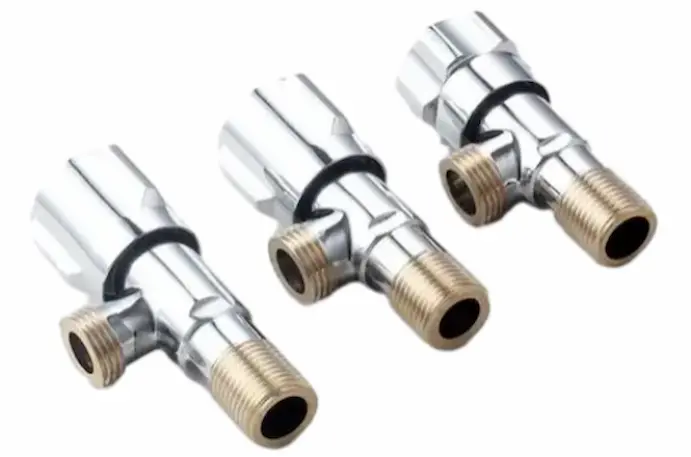
Data & Technical Comparison
| Valve Type | Main Use | Key Advantage | Must Confirm |
|---|---|---|---|
| Brass 1/4 turn ceramic disc angle valve | Fixture shutoff for sinks, toilets, faucets and appliances | Compact, economical, easy quarter-turn operation | Lead-free status, pressure rating, connection type, potable-water approval |
| Stainless steel ceramic disc angle valve | Corrosion-sensitive or specified material service | Better corrosion resistance in selected water conditions | Grade, pressure-temperature rating, seal material, certification |
| PEX-compatible angle valve | PEX plumbing systems | Faster installation when approved connection system is used | PEX standard, connection method, insertion depth, pressure rating, local code |
| Compression / threaded angle valve | Copper tube, threaded outlet, fixture supply lines | Common replacement and maintenance option | Tube size, thread type, ferrule, gasket, installation torque |
Typical Replacement Scenarios
Case Study 1 – Residential Plumbing:
-
In residential plumbing, a 1/4 turn ceramic disc angle valve may be used to replace an older multi-turn stop valve that has become hard to operate, leaks at the stem, or cannot fully shut off fixture water supply. Actual performance depends on water quality, connection condition, pressure, and installation quality.
Case Study 2 – Commercial Application:
-
A commercial building with heavy water use switched to stainless steel 1/4 turn ceramic disc valves, resulting in fewer service calls and reduced water waste due to the valve’s excellent sealing capabilities.
Usage & Selection Tips
-
Choose Based on Material: Select body material and connection type according to water quality, pressure, temperature, pipe material, potable-water approval, local code, corrosion risk, installation space, and maintenance requirements. Do not choose brass or stainless steel only by residential/commercial labels.
-
Verify Compatibility: Ensure your valve is compatible with the type of piping (e.g., PEX or copper) used in your system.
-
Check Pressure Rating: Always ensure the valve’s pressure rating matches the requirements of your system.
Conclusion
The 1/4 turn ceramic disc angle valve offers an efficient, durable, and low-maintenance solution for a wide range of plumbing applications. At Vcore Valve, we pride ourselves on providing high-quality valves designed for both residential and commercial needs. Whether you’re replacing a worn valve or installing a new system, our selection ensures reliable performance for years to come.
👉 Contact Vcore Valve today for technical support, installation guides, and personalized recommendations.
FAQ
Q1: What is a 1/4 turn ceramic disc angle valve?
A: It is a type of valve that only requires a quarter turn to open or close, using ceramic discs for a smooth and reliable seal.
Q2: How does a ceramic disc valve differ from traditional rubber-seal valves?
A: Ceramic disc valves offer longer lifespan and better durability, requiring less maintenance than traditional rubber-seal valves.
Q3: Can I use a 1/4 turn ceramic disc valve for high-pressure systems?
A: Yes, ceramic disc valves are available in stainless steel versions that are suitable for high-pressure environments.
Q4: What materials are commonly used for 1/4 turn ceramic disc angle valves?
A: Common materials include brass, stainless steel, and PEX-compatible variants.
Q5: Are these valves easy to install?
A: Yes, 1/4 turn ceramic disc valves are easy to install, with options for both push-fit and threaded connections.