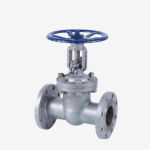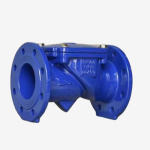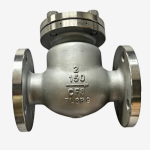
Quick Overview
In pump-driven systems, a check valve installed at the pump outlet is far more than a routine accessory. It plays a critical role in preventing reverse flow, protecting the pump from mechanical damage, stabilising pressure and ensuring long-term system reliability. This article explains the engineering logic, real-world risks and best practices behind this seemingly simple but essential valve choice.
Opening Scenario
Imagine a centrifugal pump that has just shut down after hours of operation. The motor stops, but the fluid inside the pipeline still has momentum. Without a properly installed check valve, that fluid rushes back toward the pump—often faster than expected. The result? Reverse rotation, water hammer, seal damage, and sometimes a very expensive lesson learned the hard way.
User Pain Points
Pump Damage Caused by Reverse Flow
Without a pump outlet check valve, backflow can force the impeller to rotate backwards, leading to bearing failure, shaft misalignment and seal leakage.
Pressure Surge and Water Hammer
Sudden flow reversal generates pressure spikes that can crack pipelines, loosen flanges and damage downstream equipment.
Unstable System Operation
In multi-pump systems, reverse flow can cause one pump to become a “turbine,” resulting in unstable flow rates and reduced efficiency.
Solutions and Engineering Recommendations
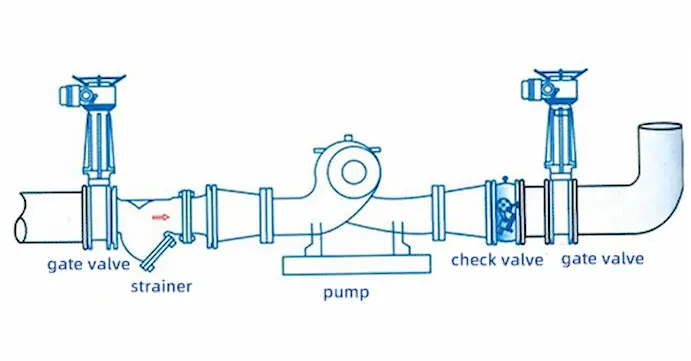
Install the Check Valve Immediately After the Pump Outlet
Placing the check valve at the pump discharge minimises reverse flow distance and reduces impact energy on the pump.
Select the Correct Check Valve Type
Different applications require different designs, such as swing check valves, lift check valves, or nozzle check valves.
Match Valve Characteristics with Pump Dynamics
Low-pressure loss, fast closing speed and suitable cracking pressure are essential for long-term pump protection.
Case Analysis / Practical Example
Case 1: Water Supply Booster System
A municipal booster station experienced repeated pump seal failures. Investigation showed delayed backflow due to an oversized swing check valve. Replacing it with a spring-loaded nozzle check valve reduced water hammer and extended pump life by over 40%.
Case 2: Industrial Cooling Water System
After relocating the check valve further downstream for “installation convenience,” frequent pipe vibration occurred. Moving the valve back to the pump outlet position solved the issue entirely.
Data, Engineering Principles and Comparison
Backflow Velocity Impact
The longer the distance between pump and check valve, the higher the reverse flow velocity before closure. Studies show that doubling this distance can increase impact pressure by more than 60%.
Valve Type Comparison
-
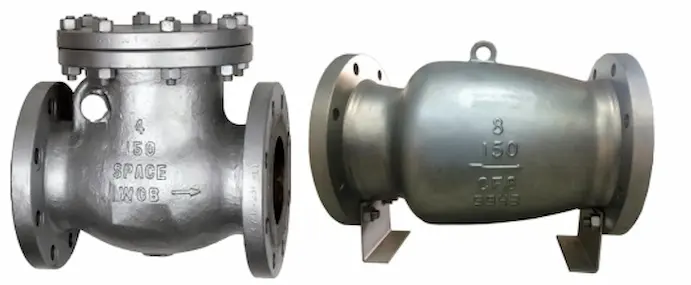
Swing Check Valve: Low resistance, slower closing, higher water hammer risk
-
Lift Check Valve: Better sealing, moderate pressure loss
-
Nozzle Check Valve: Fast closing, minimal backflow, ideal for pump outlets
From an engineering standpoint, nozzle check valves often provide the best balance for pump discharge applications.
Industry Trends and Market Insights
Modern pumping systems increasingly prioritise energy efficiency and predictive maintenance. As a result, demand is rising for low-loss, fast-closing check valves that reduce vibration, noise and lifecycle cost. Smart monitoring systems now even integrate valve performance data into pump diagnostics.
Style and Usage Recommendations
-
Always install the check valve in the correct flow direction
-
Avoid excessive distance between pump and valve
-
Consider maintenance accessibility without compromising safety
-
Select materials compatible with the pumped medium
At Vcore valve, we recommend evaluating the pump curve and transient conditions before final valve selection.
Conclusion
Installing a check valve at the pump outlet is not optional—it is a fundamental engineering safeguard. From preventing backflow to protecting costly pump equipment, the right valve in the right position ensures system stability and long-term reliability.
If you are unsure which industrial check valve suits your application, the Vcore valve engineering team is ready to help you select a solution that works reliably from day one.
FAQs
Q1: Can a check valve be installed far from the pump outlet?
It can, but it significantly increases the risk of water hammer and pump damage.
Q2: Which check valve is best for pump discharge lines?
In most cases, a nozzle check valve offers the fastest closing and lowest impact.
Q3: Is a check valve mandatory for all pumps?
For centrifugal pumps and vertical pumps, it is strongly recommended and often required by standards.
Q4: Does a check valve reduce pump efficiency?
A properly selected valve causes minimal pressure loss and protects efficiency overall.
Q5: How often should pump outlet check valves be inspected?
Inspection intervals depend on service conditions, but annual checks are commonly recommended.
Reference
General fluid mechanics principles, pump protection guidelines, valve engineering practices, and international piping standards such as API and ISO.