Quick Summary
Imagine you are tasked with choosing the right valve for your system. You have a choice between multiple valve types—each with its advantages and uses. But one thing is clear: choosing the wrong valve can lead to inefficient flow regulation, increased energy costs, or even system failures. While many valves excel in isolation, not all are suitable for flow control. Let’s explore which valves are better left out of your flow control applications and why.
Common Issues Caused by Incorrect Valve Selection
1. Inability to Control Flow Precisely
-
Problem: In industries such as chemical processing, oil and gas, or water treatment, maintaining a steady flow is crucial for product quality, energy efficiency, and system safety. Using the wrong valve can cause erratic flow, leading to poor system performance.
-
Solution: Certain valves, such as gate valves, which are designed for shut-off rather than flow control, should be avoided in applications requiring precise flow regulation.
2. Risk of Valve Malfunction Under High Pressure
-
Problem: In high-pressure systems, some valves struggle to maintain control under stress. If the wrong valve is used, it could fail, resulting in overpressure situations or even catastrophic accidents.
-
Solution: Valves such as globe valves are better suited for control in high-pressure applications, while ball valves and butterfly valves should be chosen for their ability to handle varying pressures more effectively.
3. Inadequate Sealing Leading to Leaks
-
Problem: Certain valves, like screw-down or needle valves, might be used for flow control but can fail to provide a proper seal over time. Leaks not only waste fluids but can also create safety hazards.
-
Solution: Ball valves and butterfly valves provide better sealing properties for controlling flow, especially in systems where leakage can cause contamination or loss of resources.

Which Valves Are Best for Precise Flow Control?
1. Avoid Gate Valves for Flow Control
-
Gate valves are excellent for fully opening or closing a pipeline, but are not suitable for controlling flow. They are often used in on/off applications but are not designed for throttling or fine adjustments. The primary problem with gate valves in flow control is that they can cause significant pressure drop and poor regulation at low flow rates.
2. Avoid Check Valves in Flow Control
-
Check valves are designed to prevent backflow, not to regulate or control flow. These valves open and close automatically, depending on the direction of flow, making them unsuitable for flow regulation. They don’t allow for fine-tuning of flow rates, which is essential in many industrial processes.
3. Avoid Globe Valves in Low-Flow Applications
-
Globe valves are often considered for flow regulation, but they are not ideal for low-flow applications. Due to their design, they create significant frictional losses, which can result in reduced flow efficiency. While they are perfect for high-pressure systems, their ability to regulate flow at lower rates is limited, making them less effective for throttling in some cases.

How the Right Valve Improved Flow Control in a Chemical Plant
Case Study: Gate Valves in Chemical Processing
In a chemical processing plant, the wrong valve choice can have serious repercussions. Initially, gate valves were used for flow control in some pipelines. However, the result was inconsistent flow and unstable pressure, which led to the creation of unwanted by-products in the process. Upon switching to ball valves and butterfly valves, the plant saw a significant improvement in flow stability and reduced product waste, proving that the right valve can make a big difference in performance.
Gate Valve vs Ball Valve: A Detailed Comparison for Flow Control
| Valve Type | Suitability for Flow Control | Ideal Application | Common Issues in Flow Control |
|---|---|---|---|
| Gate Valve | Poor | On/off applications | Pressure drop, inconsistent flow |
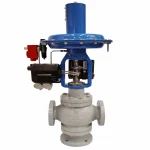
| Globe Valve | Moderate | High-pressure control | High friction, poor at low flow |
| Ball Valve | Excellent | Precise flow control, high and low pressure | Expensive compared to others |
| Check Valve | Poor | Backflow prevention | No control over flow rate |
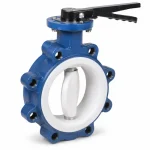
| Butterfly Valve | Excellent | General flow control, space-constrained systems | May not be as effective for fine control |
Rising Trends in Flow Control: Why Precision Matters
The growing demand for automation and precision in flow regulation has led to significant advances in valve technology. Actuators integrated with ball valves and butterfly valves allow for remote, real-time flow adjustments, offering higher efficiency and lower maintenance costs. As industries continue to shift towards more automated systems, it’s clear that traditional valves like gate valves and check valves will be phased out in favour of more precise and reliable alternatives.
Choosing the Right Valve for Your Flow Control Needs
-
In Flow Control Systems, Ball valves and butterfly valves are ideal for systems where fine control is necessary. These valves provide excellent flow regulation, reduce pressure losses, and are easier to maintain.
-
In On/Off Applications: Gate valves are a better choice in systems that do not require continuous flow regulation, such as isolation in pipelines or emergency shut-offs.
-
For High-Pressure Systems: Consider using globe valves for precise flow control under high-pressure conditions. However, for low-pressure or moderate-flow systems, consider ball valves or butterfly valves.

Conclusion
In conclusion, while valves like gate valves and check valves are crucial for specific tasks like shut-off or backflow prevention, they should not be used for flow control. For applications that require precise regulation, ball valves, butterfly valves, and globe valves are far more suitable. If you need help choosing the right valve for your process, reach out to Vcore Valves for expert advice and high-quality valve solutions.
FAQ
1. Which valve is best for precise flow regulation?
-
Ball valves and butterfly valves are ideal for precise flow control in a wide range of applications, offering smooth and stable regulation.
2. Can gate valves be used for flow control?
-
No, gate valves are primarily designed for isolation and on/off applications and should not be used for throttling or flow control.
3. Are check valves suitable for flow regulation?
-
Check valves are designed to prevent backflow, not to control flow. They cannot provide precise regulation.
4. What is the main issue with globe valves in low-flow systems?
-
Globe valves are inefficient in low-flow systems due to high friction and the potential for significant pressure loss.
5. What are the advantages of using butterfly valves for flow regulation?
-
Butterfly valves are ideal for general flow control due to their compact design and ability to manage moderate flows effectively with minimal pressure loss.
6. Why should I avoid using gate valves for flow regulation?
-
Gate valves are designed for on/off purposes, but they can cause erratic flow control, especially at lower flow rates, resulting in inefficient system performance.
7. What are the key differences between ball valves and gate valves for flow regulation?
-
Ball valves provide smoother and more accurate flow control compared to gate valves, which are only suitable for fully open or closed positions