Quick Summary: A vacuum breaker allows air to enter a pipeline, tank or equipment when internal pressure drops below atmospheric pressure, helping prevent vacuum formation, siphoning and possible equipment damage. A check valve allows flow in one direction and closes to reduce reverse flow. The two valves are often confused, but they solve different problems: vacuum breakers manage negative pressure or siphon risk, while check valves manage backflow. They are not direct substitutes. Selection should be based on the system problem, flow direction, pressure condition, installation location, medium, required sealing behavior and applicable project standards.
A vacuum breaker and a check valve are not the same device. A vacuum breaker admits air into a system to prevent vacuum, siphon effect or tank/pipeline collapse. A check valve prevents reverse flow of liquid or gas in a pipeline. A check valve cannot normally replace a vacuum breaker, and a vacuum breaker cannot normally replace a check valve. In some systems, both may be required because they solve different problems.
For buyers, the safest way to compare them is not by valve name alone, but by the problem the system is trying to solve: negative pressure, siphon risk, reverse flow, pump shutdown, water hammer, sealing requirement or code/project specification.
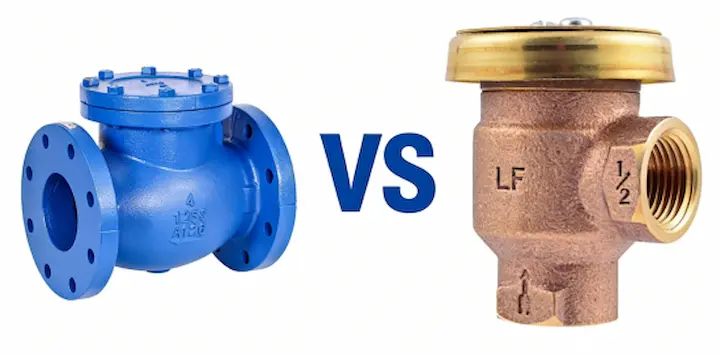
Vacuum Breaker vs Check Valve: Main Differences
| Item | Vacuum Breaker | Check Valve |
|---|---|---|
| Main function | Admits air to break vacuum or reduce siphon effect. | Prevents reverse flow within its design and sealing limits. |
| Main problem solved | Vacuum, negative pressure, siphoning and possible tank or pipeline collapse. | Backflow, reverse flow, pump protection and system direction control. |
| Flow behavior | Normally closed, then opens to admit air when vacuum condition occurs. | Opens with forward flow and closes when flow stops or reverses. |
| Can it prevent backflow? | Not designed as the main backflow isolation valve unless a specific certified device supports that duty. | Yes, within its pressure, sealing, installation and valve-type limits. |
| Can it break vacuum? | Yes, if correctly sized and installed at the right air admission point. | Normally no. A check valve should not be selected to break vacuum by leakage. |
| Typical location | High points, tank outlets, long drain lines and siphon-prone systems. | Pump discharge lines, reverse-flow protection points and selected horizontal or vertical pipelines. |
| Buyer must confirm | Vacuum condition, air inlet location, medium, pressure, elevation and material compatibility. | Flow direction, cracking pressure, closing behavior, valve type and pressure drop. |
How a Vacuum Breaker Works
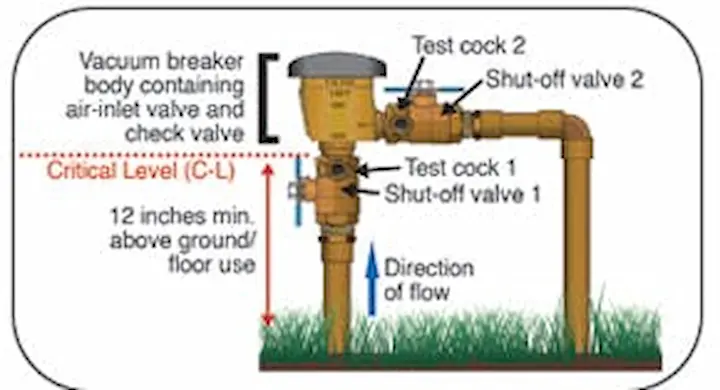
A vacuum breaker is an air-admission device. When pressure inside a pipe, tank or equipment falls below atmospheric pressure, the valve opens and allows air to enter. This helps interrupt a siphon effect and reduces the risk of negative pressure damaging equipment or drawing unwanted fluid into a line.
Its function is linked to vacuum condition and installation elevation. If it is installed at the wrong point, blocked from air entry or selected with the wrong material, it may not protect the system as intended.
How a Check Valve Works
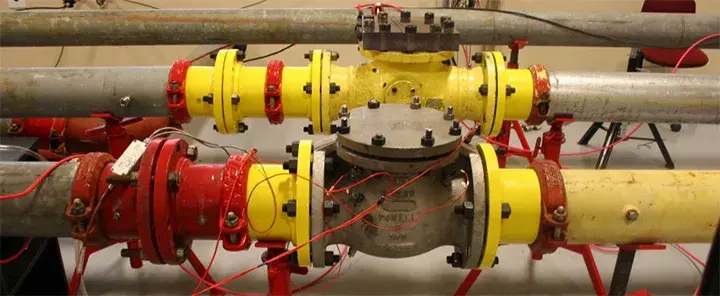
A check valve is a one-way flow valve. Forward flow opens the disc, plate, ball or other closure member. When flow slows, stops or reverses, the valve closes to reduce reverse flow. Depending on the valve type, it may also help protect pumps and equipment after shutdown.
Check valve selection should consider flow rate, orientation, cracking pressure, pressure drop, closing speed and water hammer risk. For pump discharge service, the article on check valves for pump discharge explains how backflow and shutdown behavior affect valve choice.
Which Valve Should You Choose?
| System Problem | Recommended Valve | Reason | Buyer Check |
|---|---|---|---|
| Backflow after pump stops | Check valve | Normally used to reduce reverse flow. | Confirm valve type, flow rate, cracking pressure and water hammer risk. |
| Vacuum in tank or pipeline | Vacuum breaker | Admits air to reduce negative pressure. | Confirm vacuum condition, air inlet, pressure and media compatibility. |
| Siphon effect in drain or discharge line | Vacuum breaker | Typically breaks siphon by allowing air entry. | Confirm correct high-point installation and air admission path. |
| Reverse flow plus vacuum risk | Both may be required | One controls reverse flow; the other controls vacuum or siphon risk. | Confirm layout, elevation, flow direction and installation sequence. |
| Need airtight isolation | Neither may be enough alone | May require an isolation valve or engineered protection arrangement. | Confirm sealing class, leakage tolerance and project requirement. |
Can a Vacuum Breaker Replace a Check Valve?
Usually no. A vacuum breaker is not designed as the main reverse-flow prevention device. It admits air under vacuum condition and does not provide the same sealing function as a check valve. If backflow prevention is required, use a check valve or a suitable backflow prevention arrangement specified for that duty.
Can a Check Valve Work as a Vacuum Breaker?
Usually no. A check valve reacts to forward and reverse flow. It does not intentionally admit air to break vacuum. Relying on leakage, disc movement or reverse-flow behavior is not proper engineering selection. If vacuum or siphon risk exists, use a vacuum breaker or a vacuum relief arrangement selected for that condition.
When Both a Vacuum Breaker and Check Valve May Be Needed
Some systems may require both valves because they control different risks. For example, a pump discharge line may need a check valve to reduce reverse flow after pump shutdown, while a tank outlet or long drain line may need a vacuum breaker to prevent siphoning or negative pressure. The final arrangement depends on system layout, elevation difference, flow direction, pressure condition and project specification.
If the check valve is installed in a vertical line, also confirm flow direction and valve type. This guide on whether a check valve can be installed vertically explains the limits for swing, lift, spring-loaded, dual plate and ball check valves.
Vacuum Breaker vs Vacuum Relief Valve
A vacuum breaker usually refers to a device that admits air to break vacuum or siphon effect. A vacuum relief valve may be selected to open at a defined vacuum setting to protect tanks or equipment. Terminology can vary by industry and project specification, so buyers should confirm the required set pressure, air admission capacity, material, connection and applicable standard.
Water Hammer and Check Valve Closing Behavior
A vacuum breaker does not solve every pressure-transient problem. In pump discharge or fast-closing check valve service, reverse flow and sudden closure can contribute to water hammer or valve slam. Review the valve type, dynamic closing behavior and pipeline layout before selection. For a broader explanation, see water hammer causes and solutions.
What to Confirm Before Selecting a Vacuum Breaker or Check Valve
| For Vacuum Breaker | For Check Valve |
|---|---|
|
|
For detailed installation checks, the check valve installation guide covers flow arrow, orientation, accessibility and inspection points. If the valve is near a pump outlet, also review why a check valve is installed at the pump outlet.
Final Selection Advice
Do not choose between a vacuum breaker and a check valve by name alone. Choose based on the risk. Use a vacuum breaker when the system needs controlled air admission to reduce vacuum or siphon effect. Use a check valve when the system needs one-way flow and reverse-flow control. Use both when the system has both risks and the project design supports that arrangement.
For check valve options, you can review Vcore Valve’s check valve product range and confirm valve type, material, pressure class, installation orientation and operating conditions before sending an RFQ.
FAQ
What is the main difference between a vacuum breaker and a check valve?
A vacuum breaker admits air to prevent vacuum or siphon effect. A check valve allows forward flow and closes to reduce reverse flow. They solve different system problems.
Can a check valve be used as a vacuum breaker?
Usually no. A check valve is not designed to intentionally admit air. If vacuum or siphon risk exists, use a vacuum breaker or vacuum relief arrangement selected for that duty.
Can a vacuum breaker prevent backflow?
A vacuum breaker may help address backsiphonage in certain systems, but it should not be treated as the main backflow isolation valve unless the specific device and standard support that function.
When should I use a vacuum breaker?
Use a vacuum breaker when the system has negative pressure, siphon risk, tank collapse risk or a required air-admission point. Confirm location, pressure, media and material compatibility.
When should I use a check valve?
Use a check valve when reverse flow must be reduced in a pipeline, pump discharge line or equipment protection point. Confirm valve type, cracking pressure, installation orientation and closing behavior.
Can a vacuum breaker and check valve be installed in the same system?
Yes, some systems may need both. A check valve controls reverse flow, while a vacuum breaker controls vacuum or siphon risk. Their installation order and location should follow the system design.
Is a vacuum breaker the same as a vacuum relief valve?
Not always. A vacuum breaker generally admits air to break vacuum, while a vacuum relief valve may open at a defined vacuum setting. Project terminology and specifications should be confirmed.