Quick Summary: A check valve can be installed vertically only when its design supports the required flow direction. Vertical upward flow is usually easier because the flow helps lift the disc, ball or plate, while gravity helps the valve close when flow stops. Vertical downward flow can be problematic because gravity may prevent reliable closing or opening. Swing check valves are often limited in vertical service, while spring-loaded, lift, dual plate, silent/nozzle or ball check valves may be suitable depending on design. Buyers should confirm flow direction, valve type, spring assistance, minimum velocity, cracking pressure, installation arrow and the manufacturer’s installation instruction before ordering.
For vertical piping, the practical answer is not simply yes or no. Some check valves work well in vertical upward-flow lines, some need spring assistance, and some should not be used in vertical downward-flow service unless the manufacturer has approved that orientation. A buyer should never assume a valve can be installed vertically only because it is a check valve.
This guide explains how upward flow, downward flow, valve type, cracking pressure, minimum velocity and installation direction affect vertical check valve selection. For broader product options, start with the check valve product range, then confirm the exact installation orientation before ordering.
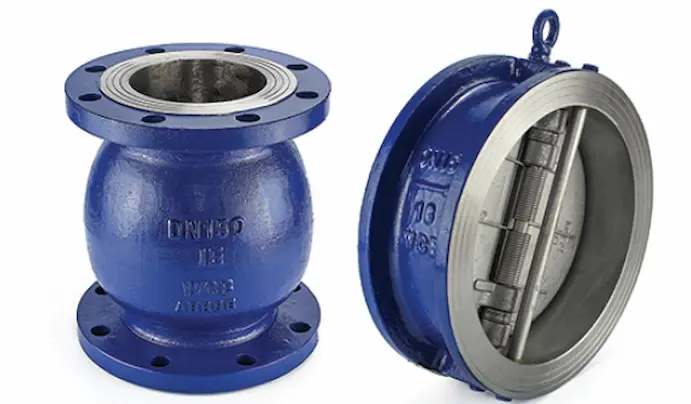
Can a Check Valve Be Installed Vertically?
Yes, a check valve can be installed vertically if the valve design, flow direction and manufacturer’s installation instruction allow it. The key question is whether the disc, ball, plate, poppet or spring can open at the required flow rate and close reliably when reverse flow begins.
In most vertical installations, upward flow is easier to handle than downward flow. With upward flow, the moving fluid helps lift the closing element, and gravity can help return it toward the seat when flow stops. With downward flow, gravity may work against reliable seating or may hold the moving element away from the seat, depending on the valve design.
Which Check Valve Types Can Be Installed Vertically?
The table below gives typical engineering guidance only. It is not a universal rule for every manufacturer or every model. Actual vertical installation suitability must be confirmed from the manufacturer’s flow diagram, datasheet and installation manual.
| Check Valve Type | Vertical Upward Flow | Vertical Downward Flow | Key Risk | Buyer Check |
|---|---|---|---|---|
| Swing check valve | Sometimes possible if the manufacturer allows it. | Generally not recommended. | Disc may not close properly or may chatter. | Confirm hinge/disc orientation and installation instruction. See also what is swing check valve. |
| Lift check valve | Often suitable if designed for vertical installation. | Usually not suitable unless specially designed. | Plug or disc may not return correctly. | Confirm vertical installation direction and minimum flow. |
| Spring-loaded check valve | Commonly suitable. | May be possible depending on spring design. | Spring force, cracking pressure and pressure drop. | Confirm cracking pressure, flow rate and orientation. |
| Dual plate / wafer check valve | Often suitable when spring-assisted and properly oriented. | Project-dependent. | Plate closing behavior and flow stability. | Confirm shaft orientation, spring design and flow velocity. |
| Ball check valve | May be suitable. | Usually requires careful confirmation. | Ball movement, seating reliability and solids accumulation. | Confirm ball material, seat design and line orientation. |
| Silent / nozzle check valve | Often suitable for pump discharge if correctly selected. | Project-dependent. | Pressure drop and flow velocity requirements. | Confirm sizing, flow rate and installation direction. |
Vertical Upward Flow vs Vertical Downward Flow
Vertical upward flow
Vertical upward flow is usually easier for check valve operation. The moving fluid helps lift the disc, ball, plate or poppet away from the seat. When flow stops, gravity may help the valve element return toward the seat. Even so, the valve still needs enough flow velocity and pressure differential to open fully and avoid chatter.
Vertical downward flow
Vertical downward flow is more difficult and often riskier. Gravity may hold the disc or ball away from the seat, slow closing, or create unstable movement. Some designs may fail to close reliably unless spring assistance or a special construction is used. Do not treat downward vertical flow as impossible in every case, but always require supplier confirmation before using it.
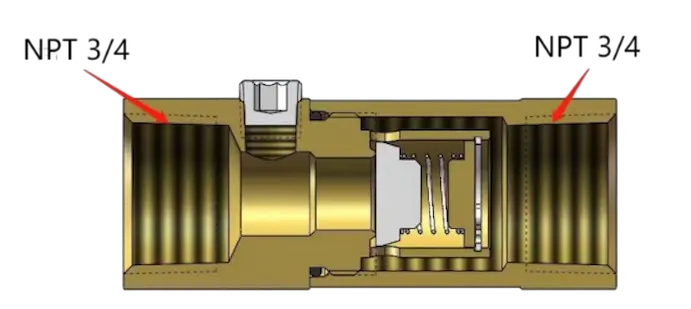
Common Vertical Installation Risks
Vertical installation problems usually come from selecting by valve size alone instead of checking the actual closing behavior. Common risks include:
- Reverse flow: the valve does not close quickly or tightly enough when the pump stops.
- Chatter: low flow velocity or oversized valves cause the disc or plate to oscillate.
- Water hammer and valve slam: delayed closure allows reverse flow momentum to develop before the valve shuts.
- Incomplete opening: insufficient pressure differential cannot overcome weight, spring force or friction.
- Solids accumulation: particles or slurry can interfere with ball movement or seating.
- Maintenance access problems: vertical piping may make inspection and removal more difficult.
Technical Notes by Check Valve Type
Swing check valve
Swing check valves may be used in some vertical upward-flow installations if the manufacturer allows it, but they are generally not recommended for vertical downward-flow service. The hinge position, disc weight and closing direction must be checked carefully.
Lift check valve
Lift check valves may be suitable for vertical upward flow when designed for that orientation, but vertical installation must be confirmed from the valve design and installation instruction. The plug or disc must be able to lift and return correctly at the expected flow rate.
Spring-loaded check valve
Spring-loaded check valves are commonly used in vertical lines because the spring helps close the valve without relying only on gravity. The buyer still needs to confirm cracking pressure, pressure drop, spring material, flow rate and whether the spring force matches the system conditions.
Dual plate / wafer check valve
Spring-assisted dual plate or wafer check valves are often used in compact piping and may be suitable for vertical upward-flow service, but shaft orientation, spring design and minimum flow velocity must be confirmed. They should not be described as automatically excellent for every vertical line.
Ball check valve
Ball check valves may work in vertical upward-flow service, but seating behavior, ball material, flow velocity and solids content should be reviewed. In dirty water or slurry service, the risk of solids accumulation should be checked before selection.
Vertical Pump Discharge Lines and Water Hammer Risk
Vertical pump discharge lines often require careful check valve selection because the valve may need to prevent reverse flow immediately after pump shutdown. The wrong valve type can cause reverse flow, slam, vibration, water hammer or pump protection failure.
Spring-assisted, silent or nozzle check valves may be considered where fast closure is required. Final selection depends on flow rate, pump curve, pipe layout, pressure conditions, allowable pressure drop and maintenance access. For a deeper pump-focused discussion, see check valves for pump discharge and why install a check valve at the pump outlet.
What to Confirm Before Installing a Check Valve Vertically
Before approving a vertical check valve installation, buyers should confirm the items below with the supplier, project engineer or installation manual.
| Buyer Confirmation Item | Why It Matters in Vertical Installation |
|---|---|
| Valve type | Swing, lift, spring-loaded, dual plate, ball and nozzle designs behave differently in vertical service. |
| Flow direction: upward or downward | Upward flow is usually easier; downward flow needs careful design confirmation. |
| Body flow arrow direction | The valve must be installed according to the cast or marked flow arrow. |
| Disc / ball / plate closing direction | The closing element must return to the seat reliably when reverse flow begins. |
| Spring-assisted or non-spring design | Spring assistance can improve closing in vertical lines but affects cracking pressure and pressure drop. |
| Minimum flow velocity | Low velocity can cause incomplete opening, chatter or unstable plate movement. |
| Cracking pressure | The system must generate enough pressure differential to open the valve. |
| Pressure drop | High pressure drop may reduce pump efficiency or system flow. |
| Pump discharge condition | Pump stop, restart and reverse-flow conditions affect closing speed and slam risk. |
| Water hammer / check valve slam risk | Delayed closure can create pressure surges and vibration. |
| Solid particles or slurry risk | Solids can prevent proper seating, especially in ball and swing designs. |
| Manufacturer approval | Horizontal/vertical approval should come from the datasheet or installation manual, not assumption. |
| Maintenance access and installation space | Vertical piping can limit access for inspection, removal and replacement. |
| Flange / wafer orientation | Wafer and dual plate valves may require a specific shaft or plate orientation. |
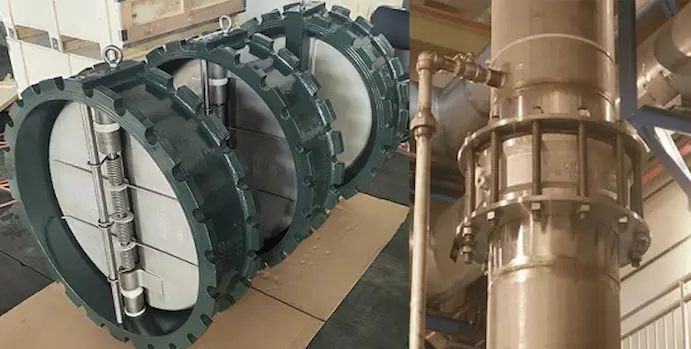
Installation Direction and Flow Arrow
The flow arrow on the valve body is one of the most important installation references. In a vertical line, the arrow must match the actual direction of normal flow. If the arrow points upward, the valve is intended to pass upward flow in that installation. If the process requires downward flow, the supplier must confirm the valve can close correctly in that orientation.
For broader installation checks, see our check valve installation guide. For vertical lines, do not rely only on the valve name. Confirm the installation manual, drawing, flow arrow, orientation and minimum flow requirements.
Final Recommendation
A check valve can be installed vertically only when the valve type and flow direction match the design. Vertical upward flow is usually easier to apply, while vertical downward flow should be treated as a special confirmation item. Swing check valves, lift check valves, spring-loaded check valves, dual plate / wafer check valves, ball check valves and silent/nozzle check valves all need different checks.
For procurement, ask the supplier for the datasheet, installation manual, flow direction arrow, cracking pressure, minimum velocity requirement, pressure drop data and any vertical-installation limitations. This is the simplest way to avoid reverse flow, chatter, water hammer, valve slam and commissioning rework.
FAQs
Can a check valve be installed vertically?
Yes, some check valves can be installed vertically, but only when the valve type, flow direction, internal closing design, minimum flow velocity and manufacturer installation instruction allow it. Vertical upward flow is usually easier than vertical downward flow.
Can a swing check valve be installed vertically?
A swing check valve may be used in some vertical upward-flow installations if the manufacturer allows it and the disc can close reliably. It is generally not recommended for vertical downward-flow service unless the valve design and installation instruction specifically permit it.
Can a check valve be installed in vertical downward flow?
Vertical downward flow is more difficult and should not be assumed acceptable. Gravity may hold the disc, ball or plate away from the seat, so spring assistance or a special design may be required. Supplier confirmation is necessary.
Which check valve is best for vertical installation?
There is no single best valve for every vertical line. Spring-loaded, lift, dual plate, ball, silent or nozzle check valves may be suitable depending on flow direction, flow rate, pressure drop, medium and manufacturer approval.
Is a spring-loaded check valve better for vertical lines?
A spring-loaded check valve is often easier to apply in vertical lines because the spring helps close the valve independent of gravity. However, cracking pressure, pressure drop, flow rate and installation orientation still need to be checked.
What happens if a check valve is installed in the wrong direction?
Wrong direction or wrong orientation can cause no flow, reverse flow, incomplete closing, chatter, vibration, water hammer, valve slam, leakage or pump protection failure. Always follow the body flow arrow and installation manual.
What should I confirm before ordering a check valve for vertical installation?
Confirm valve type, upward or downward flow direction, body flow arrow, disc or ball closing direction, spring assistance, minimum velocity, cracking pressure, pressure drop, pump discharge condition, solids risk, maintenance access and manufacturer approval for vertical installation.