Quick Answer
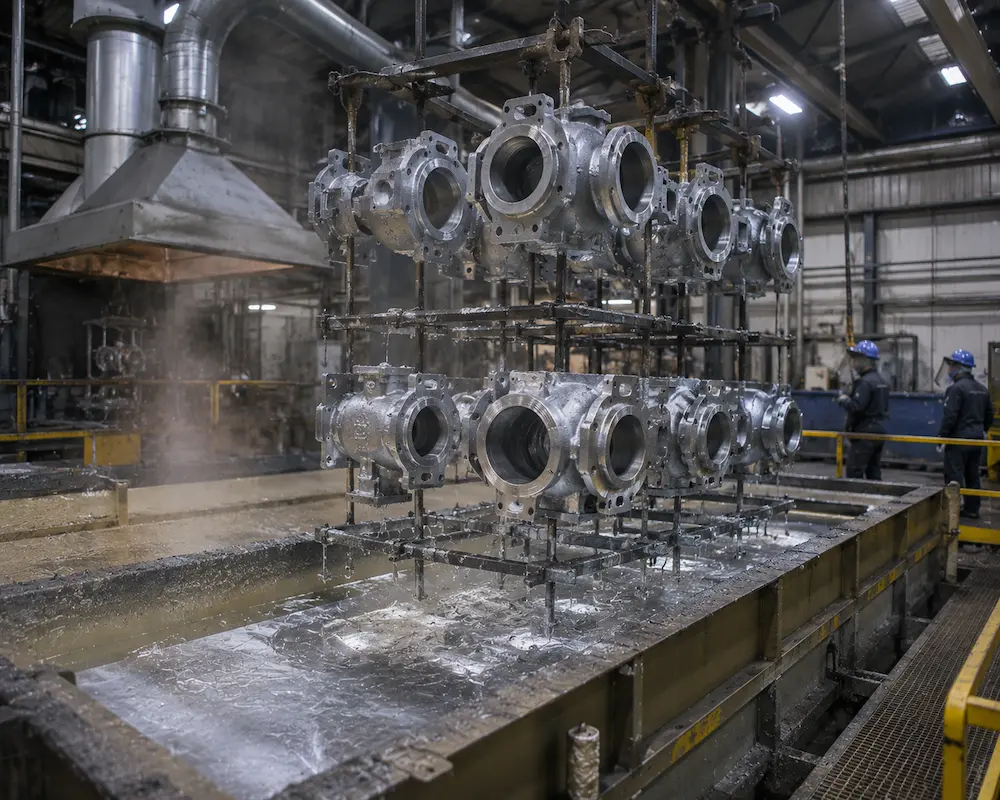
Valve body galvanizing is the application of a zinc coating to a suitable iron or steel valve body or component to reduce atmospheric corrosion. In batch hot-dip galvanizing, the prepared component is immersed in molten zinc, creating metallurgically bonded zinc-iron layers and an outer zinc layer.
Galvanizing is not suitable for every valve, material, fluid or operating environment. Complete assembled valves should not normally be hot-dip galvanized without a detailed manufacturing plan. Seats, seals, bearings, packing, precision threads, machined gasket faces, stem bores and other close-tolerance areas may require removal, masking or post-galvanizing machining.
What Is Valve Body Galvanizing?
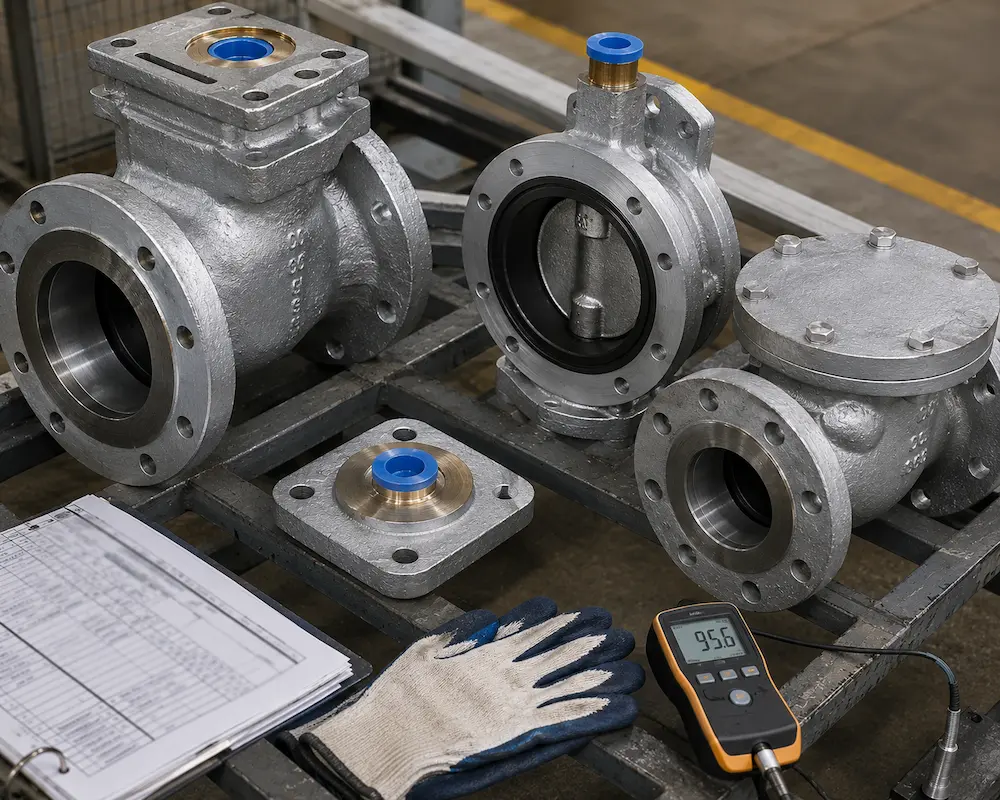
Valve body galvanizing generally refers to applying a zinc-based corrosion-protection layer to the external surface of a ferrous valve body or selected valve components. The term is sometimes used loosely, so the coating method must be clearly identified in the purchase specification.
Possible zinc-based protection systems include:
- Batch hot-dip galvanizing after fabrication
- Electroplated or mechanically applied zinc coatings
- Thermal-sprayed zinc
- Zinc-rich primer or paint
- A duplex system combining hot-dip galvanizing with paint or powder coating
These systems are not interchangeable. They differ in coating thickness, bonding mechanism, dimensional effect, repair method, appearance and suitable service environment.
How Does Hot-Dip Galvanizing Protect a Valve Body?
A hot-dip galvanized coating protects the base iron or steel in three principal ways.
1. Barrier Protection
The continuous zinc coating separates the underlying steel from moisture, oxygen and other environmental contaminants.
2. Zinc Patina Formation
When exposed to the atmosphere, zinc gradually develops corrosion products that form a protective patina. The stability of this patina depends on the exposure environment, including humidity, pollutants, salts and wet-dry cycling.
3. Sacrificial Protection
Zinc is more anodic than steel. If a small area of the coating is scratched or locally damaged, the surrounding zinc can corrode preferentially and provide limited cathodic protection to the exposed steel.
This does not mean that severe or extensive coating damage can be ignored. Damaged areas should be assessed and repaired according to the applicable coating specification.
Hot-Dip Galvanizing vs Zinc-Rich Paint
| Feature | Hot-Dip Galvanizing | Zinc-Rich Paint or Primer |
|---|---|---|
| Application method | Component is immersed in molten zinc after surface preparation | Liquid coating is sprayed or brushed onto a prepared surface |
| Bonding | Metallurgically bonded zinc-iron alloy layers | Mechanically bonded coating using an organic or inorganic binder |
| Coverage | Can coat accessible external and internal surfaces reached by the zinc bath | Coverage depends on spray access, surface preparation and application quality |
| Dimensional effect | Adds zinc to threads, bores, holes and mating surfaces unless controlled | Usually easier to control around precision areas |
| Field repair | Requires an approved repair method for damaged galvanized areas | Normally easier to repair or recoat locally |
| Typical valve use | Selected disassembled ferrous bodies, supports, brackets, fasteners or external parts | Common external corrosion-protection system for valve bodies and accessories |
A specification stating only “galvanized valve” is not sufficiently precise. The buyer should define the coating process, applicable standard, required surfaces, excluded surfaces, coating inspection, colour or topcoat requirements and repair procedure.
Which Valve Materials Can Be Galvanized?
Hot-dip galvanizing is primarily used on suitable ferrous materials. Depending on material chemistry, casting quality, component geometry and galvanizer capability, possible candidates can include:
- Carbon steel
- Cast steel
- Cast iron
- Ductile iron
- Forged steel components
- Selected carbon-steel brackets, supports and operator components
The steel chemistry can influence coating appearance, thickness and brittleness. Silicon and phosphorus content are particularly important because reactive steels can produce thicker zinc-iron alloy layers.
Brass, bronze, aluminium, thermoplastics and ordinary non-metallic valve components are not hot-dip galvanized using the same iron-and-steel process. Stainless steel, nickel alloys and other specialised materials should not be specified for galvanizing without a specific engineering and process review.
Can a Complete Assembled Valve Be Hot-Dip Galvanized?
In most cases, a complete assembled valve should not simply be immersed in a galvanizing bath. The valve should first be reviewed as a pressure-containing, precision mechanical assembly.
Components that are normally removed before galvanizing can include:
- Rubber, PTFE, PEEK and other non-metallic seats
- O-rings and body seals
- Stem packing
- Bearings and bushings
- Actuators, gearboxes and electrical accessories
- Lubricants and grease
- Springs and small precision internals
- Nameplates and identification labels
After galvanizing, the body may require cleaning, dimensional inspection, thread correction, machining, coating repair and final reassembly. The completed valve must still pass the required shell, seat and functional tests under the applicable valve standard.
Surfaces That May Require Masking or Post-Machining
Zinc coating increases the dimensions of the coated component. This can interfere with sealing, fit-up or movement if precision surfaces are not controlled.
Areas that may require masking or machining include:
- Raised-face and ring-type-joint flange sealing surfaces
- Body and bonnet gasket contact surfaces
- Seat pockets and seat-ring threads
- Stem bores and bearing surfaces
- Packing chambers
- Disc, ball or gate guiding surfaces
- Internal and external precision threads
- Actuator mounting pads
- Gearbox interfaces
- Machined alignment shoulders
- Welding preparation areas
Masking cannot always be applied reliably to every geometry. In some cases, it is more practical to galvanize first and then tap, ream or machine the required surface.
Hot-Dip Galvanizing Process for Valve Components
1. Engineering Review
Before production, the valve manufacturer and galvanizer should review the material, casting geometry, wall thickness, enclosed spaces, venting, drainage, machining allowances and surfaces that must remain uncoated.
2. Disassembly and Pre-Cleaning
Seats, seals, packing, bearings and other heat-sensitive or precision parts are removed. Paint, marking compounds, welding slag and contaminants that cannot be removed chemically must be mechanically cleaned.
3. Degreasing
Oil, grease, dirt and organic contamination are removed so that later cleaning and zinc reactions can occur uniformly.
4. Pickling
Acid cleaning removes rust and mill scale from the iron or steel surface. Excessive or unsuitable pickling should be avoided, particularly for components that may be sensitive to hydrogen-related damage.
5. Fluxing
A flux removes remaining oxides and helps prevent re-oxidation before the component enters the zinc bath.
6. Zinc Immersion
The prepared component is immersed in molten zinc. Zinc reacts with the iron in the base material to form zinc-iron alloy layers.
7. Withdrawal, Drainage and Cooling
The component is withdrawn at a controlled rate so excess zinc can drain. Valve bodies with pockets, ribs, cavities or complex casting geometry require appropriate venting and drainage.
8. Finishing and Inspection
Drainage spikes, excess zinc and rough areas that interfere with the component’s intended use are removed. Coating thickness, continuity, appearance and affected dimensions are inspected before machining and valve assembly.
Valve Body Design Considerations Before Galvanizing
Venting and Drainage
Hollow or enclosed sections require suitable vent and drain paths. Trapped air, cleaning liquid or molten zinc can create coating defects and serious processing hazards.
Distortion Risk
Heating and cooling can cause distortion, particularly in thin, asymmetric, welded or uneven-thickness components. Heavy cast valve bodies may be less sensitive than thin fabrications, but flange alignment, bonnet joints and machined bores should still be checked after processing.
Material Chemistry
Material chemistry affects zinc reaction rate and final coating structure. A thicker coating is not automatically a better coating if it becomes excessively rough or brittle.
Surface Finish
Galvanizing does not create a precision-machined surface. Areas requiring controlled roughness, flatness, concentricity or sealing contact should be excluded from coating or machined afterwards.
Identification and Traceability
Heat numbers, casting identification and pressure-class markings must remain traceable after coating. Identification methods should not damage the pressure boundary or interfere with the coating specification.
Where Galvanized Valve Bodies May Be Suitable
Galvanized external valve surfaces may be considered for:
- Outdoor water and utility installations
- Humid industrial environments
- Valve chambers exposed to condensation
- Agricultural and irrigation systems
- External steel operating components
- Selected above-ground pipeline accessories
- Valve supports, brackets and mounting hardware
- Atmospheric corrosion protection beneath a compatible duplex topcoat
Suitability must still be confirmed for the actual atmospheric classification, expected coating damage, accessibility, design life and maintenance strategy.
Where Galvanizing Requires Caution
Internal Wetted Flow Surfaces
Galvanizing is often more appropriate for external atmospheric protection than for the internal flow passage. Internal use requires confirmation of fluid compatibility, cleanliness requirements, zinc-release restrictions, erosion, pressure drop and applicable health or regulatory requirements.
Strong Acids and Alkalis
Zinc can be rapidly attacked in unsuitable chemical environments. “Chemical service” is not a sufficient specification; the chemical name, concentration, temperature and exposure pattern must be evaluated.
Seawater Splash and Tidal Zones
Wet-dry cycling, salts and physical washing can accelerate zinc consumption. A marine environment does not automatically mean that galvanizing alone is adequate.
Deionised or Very Soft Water
Water chemistry strongly affects zinc corrosion. Deionised water and some low-mineral waters can be aggressive to zinc coatings.
Abrasive Slurry or High-Velocity Flow
A zinc layer is not a substitute for an abrasion-resistant lining or hardfacing. Internal slurry flow can mechanically remove the coating.
High-Temperature Service
Galvanizing should not be assumed suitable for continuous elevated-temperature exposure. The temperature, thermal cycling and coating-system limitations must be checked for the specific application.
Potable Water and Hygienic Service
Materials and coatings in contact with potable water, food or pharmaceutical fluids may require specific regulatory approval. General industrial galvanizing compliance is not sufficient by itself.
Relevant Galvanizing Standards
| Standard | Typical Relevance |
|---|---|
| ASTM A123/A123M | Hot-dip galvanized zinc coatings on fabricated iron and steel products, including certain castings |
| ISO 1461 | General properties and test methods for hot-dip galvanized coatings on fabricated iron and steel articles |
| ASTM A153/A153M | Hot-dip zinc coating for iron and steel hardware, including selected fasteners and small components |
| ASTM A384/A384M | Design and fabrication practices for reducing warpage and distortion during hot-dip galvanizing |
| ISO 14713-2 | Design guidance and recommendations for articles to be hot-dip galvanized after fabrication |
| ASTM A780/A780M | Repair of damaged or uncoated areas in hot-dip galvanized coatings |
| ASTM D6386 | Preparation of galvanized surfaces before application of liquid paint |
| ASTM D7803 | Preparation of galvanized surfaces before powder coating |
The coating specification must be used together with the applicable valve product, pressure-testing, material and project standards. Galvanizing does not certify the valve’s pressure boundary, leakage class or operating performance.
Inspection Requirements for a Galvanized Valve Body
A practical inspection plan should include the following.
Document Review
- Base-material certificate and casting traceability
- Approved coating specification
- Drawing showing coated and uncoated surfaces
- Masking and machining requirements
- Galvanizing certificate or inspection report
- Approved coating-repair procedure
Visual Inspection
The coating should be continuous and free from uncoated areas, excessive zinc accumulations, sharp projections or defects that interfere with assembly, sealing or intended use. Colour variation alone does not necessarily indicate poor corrosion protection.
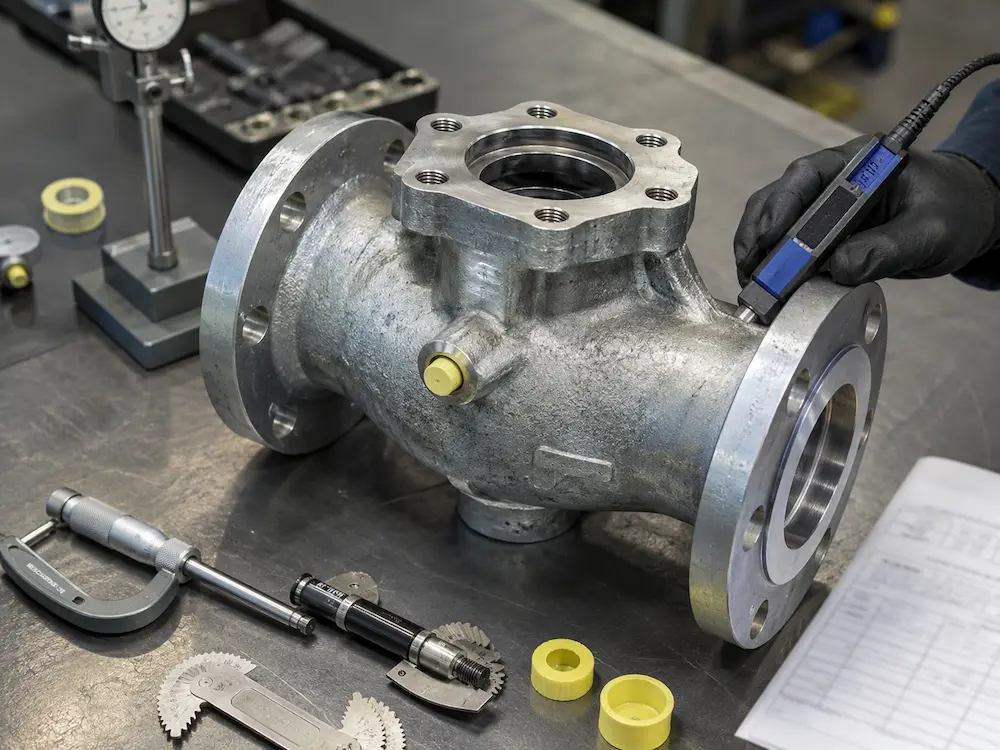
Coating-Thickness Measurement
Coating thickness should be measured using an appropriate calibrated method and evaluated against the applicable material category, component thickness and coating specification. One universal micrometre value should not be assigned to every valve body.
Dimensional Inspection
Inspect flange alignment, body-to-bonnet fit, bolt holes, threaded connections, stem bores, seat pockets and actuator interfaces after galvanizing and any required post-machining.
Coating Repair
Uncoated or damaged areas should be repaired only using a method permitted by the applicable specification. The repair area, surface preparation, repair material and final thickness should be documented.
Final Valve Testing
After machining, cleaning, reassembly and adjustment, the finished valve should undergo the required shell, seat and functional testing. Galvanizing inspection does not replace valve pressure testing.
Duplex Coating Systems
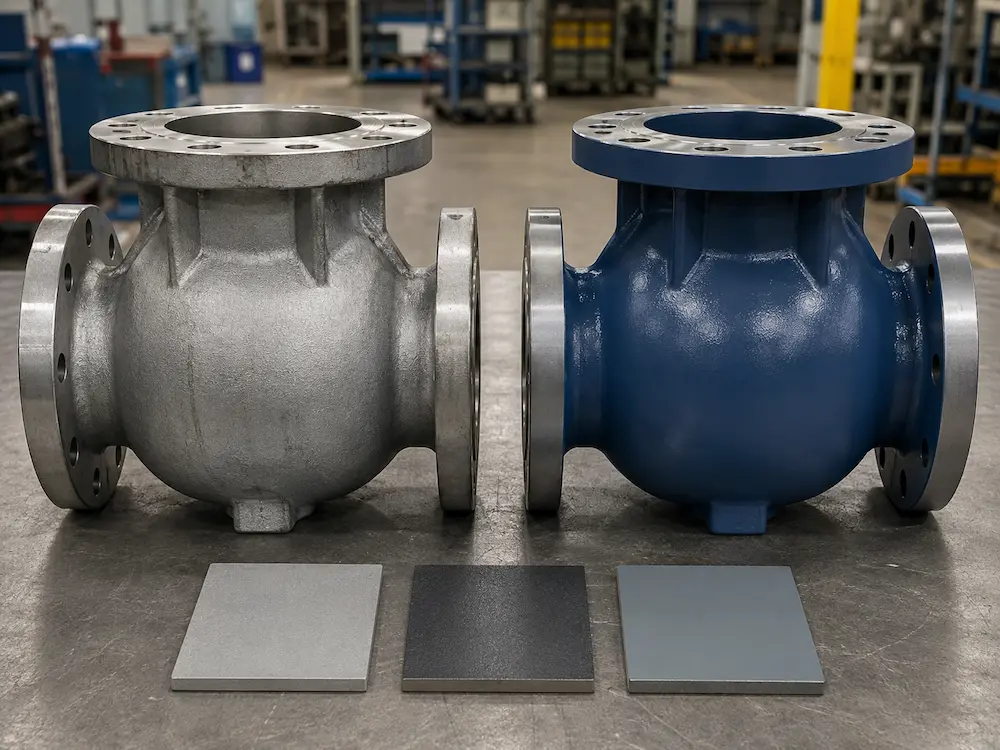
A duplex system combines hot-dip galvanizing with a compatible liquid paint or powder coating. The external paint or powder provides an additional environmental barrier, while the underlying zinc remains available as secondary protection if the topcoat is damaged.
A successful duplex system requires:
- Early coordination between the valve manufacturer, galvanizer and coating applicator
- Correct identification of the galvanized surface condition
- Removal of contaminants and zinc corrosion products
- Suitable surface profiling
- A paint or powder system compatible with zinc
- Controlled curing temperatures
- Inspection of adhesion, film thickness and coverage
Applying ordinary epoxy or polyurethane directly over an unprepared galvanized surface can result in poor adhesion, blistering or peeling.
Galvanizing vs Other Valve Protection Options
| Protection Method | Potential Advantages | Main Selection Considerations |
|---|---|---|
| Hot-dip galvanizing | Metallurgically bonded zinc coating with barrier and sacrificial protection | Component geometry, tolerances, material chemistry, bath access and service compatibility |
| Zinc-rich primer plus epoxy | Easier colour control and application around precision valve surfaces | Surface preparation, dry-film thickness, adhesion, damage and repair access |
| Fusion-bonded epoxy | Frequently used for water-service valve bodies and internal or external protection | Coating qualification, holiday testing, impact damage, temperature and fluid compatibility |
| Rubber or fluoropolymer lining | Can isolate the base metal from selected corrosive or abrasive media | Lining adhesion, temperature, permeation, vacuum, abrasion and chemical compatibility |
| Stainless or corrosion-resistant alloy body | Corrosion resistance is provided by the pressure-containing material itself | Alloy grade, chloride exposure, galvanic compatibility, pressure rating and lifecycle cost |
The best system is not necessarily the coating with the lowest initial price. Selection should consider the complete service environment, inspection access, coating damage, maintenance interval, downtime consequences and expected lifecycle cost.
Valve Body Galvanizing Selection Checklist
- Is the valve body made from a suitable ferrous material?
- Is the coating intended for external atmospheric exposure or internal fluid contact?
- Has the exact galvanizing method been specified?
- Which surfaces must remain uncoated?
- Can the valve be fully disassembled before processing?
- Are venting and drainage adequate?
- Could heating cause distortion or loss of dimensional accuracy?
- Will coating thickness affect threads, bores or sealing surfaces?
- Is the zinc compatible with the atmosphere or process fluid?
- Are potable-water or hygienic approvals required?
- Is a duplex topcoat required?
- Which ASTM, ISO or project standard applies?
- How will coating thickness and continuity be inspected?
- What repair method is permitted?
- Will the finished valve be pressure- and seat-tested after reassembly?
Conclusion
Valve body galvanizing can provide effective corrosion protection for suitable iron and steel components, particularly where external atmospheric moisture is the primary corrosion threat. However, it should not be specified as a universal solution for all valve materials, chemicals, marine environments or internal flow surfaces.
A reliable galvanizing specification must define the base material, coating process, coated surfaces, excluded machined areas, applicable standard, dimensional controls, inspection methods, repair procedure and final valve testing.
Vcore Valve can review your valve material, operating environment, fluid, coating requirements, inspection documents and applicable standards to help determine whether hot-dip galvanizing, a zinc-rich primer, fusion-bonded epoxy, a duplex coating or another corrosion-protection system is more appropriate.
Contact Vcore Valve and provide your valve data sheet, material requirements and service conditions for technical review.
Frequently Asked Questions
What is valve body galvanizing?
Valve body galvanizing is the application of a zinc coating to a suitable iron or steel valve body or component to reduce corrosion. Hot-dip galvanizing creates metallurgically bonded zinc-iron layers by immersing the prepared component in molten zinc.
Can every valve body be hot-dip galvanized?
No. Suitability depends on the body material, casting chemistry, geometry, wall thickness, machining tolerances, internal components and operating environment. Complete assembled valves should not normally be galvanized without disassembly and an approved manufacturing procedure.
Can the inside of a valve be galvanized?
Only when internal zinc contact is compatible with the fluid, cleanliness requirements, flow conditions and applicable regulations. Galvanizing is frequently more suitable for external atmospheric protection than for internal wetted surfaces.
Does galvanizing make a valve suitable for seawater?
Not automatically. Chloride concentration, immersion, wet-dry cycling, agitation, temperature and coating damage can significantly affect zinc consumption. Marine suitability must be evaluated for the exact exposure zone.
Can flange faces and threads be galvanized?
They can be coated, but zinc thickness may interfere with sealing and fit. Precision flange faces, threads, stem bores and seat pockets often require masking, oversizing, tapping, reaming or machining after galvanizing.
Which standard applies to hot-dip galvanized valve bodies?
ASTM A123/A123M or ISO 1461 may be relevant to suitable fabricated iron and steel products, including certain castings. Small hardware may fall under ASTM A153/A153M. The applicable valve product and pressure-testing standards must also be specified separately.
How is galvanized coating thickness checked?
Coating thickness is commonly measured with a calibrated magnetic instrument and evaluated according to the relevant standard, base-material category and component thickness. A single universal coating thickness does not apply to every valve component.
Can a galvanized valve body be painted?
Yes. Painting or powder coating over galvanizing forms a duplex system, but the zinc surface must be properly cleaned and prepared, and the selected coating must be compatible with galvanized steel.