Quick Overview
Choosing the right butterfly valve disc structure is just as important as selecting the valve type itself. Through shaft butterfly valves and split shaft butterfly valves differ significantly in strength, sealing behaviour, flow characteristics, and cost. This in-depth guide from Vcore Valve explains how each design works, where it performs best, and how to select the right option for long-term reliability.
Opening Scenario: A Design Question from the Field
“Why does this butterfly valve feel heavier to operate?”
This question often leads back to disc and shaft design. Many engineers overlook whether a valve uses a through shaft or split shaft, yet this detail can affect torque, durability, and maintenance. Understanding these differences can save both time and budget.
User Pain Points
Unclear disc structure differences
Many buyers struggle to understand how shaft design affects valve performance.
Unexpected operating torque
Incorrect shaft selection can result in higher torque and actuator oversizing.
Premature wear or vibration
Poor disc support may lead to instability in large-diameter or high-flow applications.
Solutions and Practical Recommendations
Match shaft design to valve size
Large-diameter butterfly valves benefit from split shaft designs to reduce flow resistance and weight.
Consider flow efficiency
Split shaft discs offer a cleaner flow path, reducing pressure drop and turbulence.
Balance strength and cost
Through shaft designs are simpler and robust, while split shaft designs offer better hydraulic performance at a slightly higher cost.
Case Analysis and Practical Examples
Case 1: Water treatment pipeline
A DN300 rubber-seated butterfly valve with a through shaft disc performed reliably under low pressure and moderate flow, offering a cost-effective solution.
Case 2: HVAC and industrial circulation system
A DN800 valve using a split shaft butterfly valve disc reduced pressure loss by over 8%, improving system efficiency and lowering pump energy consumption.
Technical Data and Structural Comparison
Structural differences
| Feature | Through Shaft Butterfly Valve | Split Shaft Butterfly Valve |
|---|---|---|
| Shaft configuration | One-piece shaft through disc | Two half shafts |
| Disc strength | Very high | High (well-balanced) |
| Flow resistance | Higher | Lower |
| Weight | Heavier | Lighter |
| Typical size range | Small to medium | Medium to large |
Working principle comparison
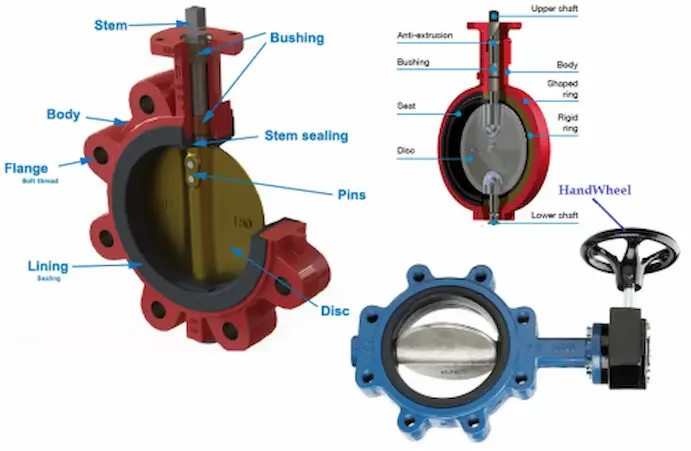
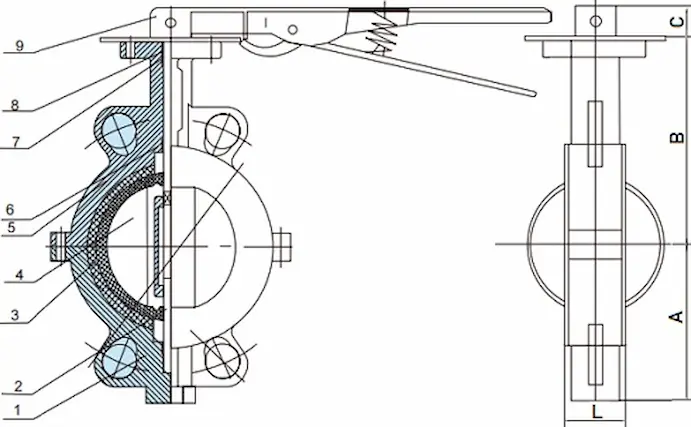
In a through shaft butterfly valve, the shaft passes directly through the disc centre, providing excellent structural rigidity but slightly obstructing flow.
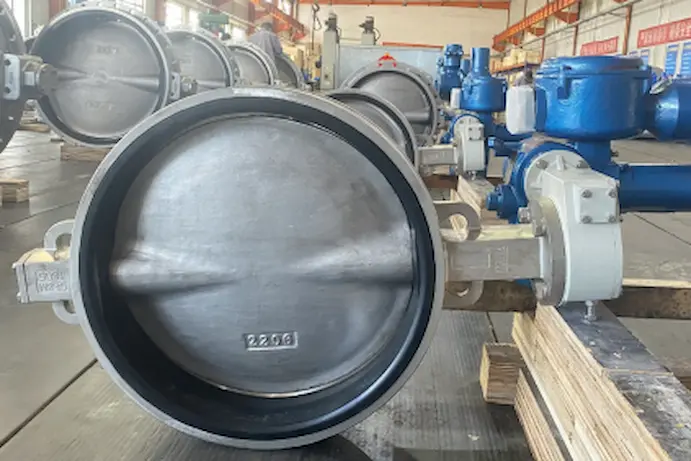
A split shaft butterfly valve uses two short shafts connected to the disc edges, leaving the centre unobstructed for smoother flow and lower pressure loss.
Market Trends and Industry Insights
Modern HVAC, water distribution, and energy-efficient systems increasingly favour split shaft butterfly valve designs due to their improved hydraulic performance. However, through shaft butterfly valves remain popular in compact systems where simplicity and mechanical strength are priorities. Vcore Valve supplies both designs to meet diverse global project requirements.
Style and Usage Recommendations
-
Choose through shaft butterfly valves for small to medium sizes and cost-sensitive projects
-
Select split shaft butterfly valves for large diameters and flow-optimised systems
-
Always consider actuator sizing, especially when flow velocity is high
-
Verify disc material compatibility with media and temperature
Vcore Valve engineers provide application-based recommendations to ensure reliable valve performance throughout its service life.
Conclusion
The choice between through shaft and split shaft butterfly valve discs directly affects flow efficiency, operating torque, and long-term reliability. Neither design is universally better—each excels in specific conditions.
If you’re selecting butterfly valves for a new project or upgrading an existing system, contact Vcore Valve for expert technical support and tailored solutions.
FAQs
What is a through shaft butterfly valve disc?
It is a disc design where a single shaft runs through the centre of the disc, offering strong structural support.
What is a split shaft butterfly valve disc?
A disc supported by two half shafts on either side, leaving the disc centre unobstructed.
Which design has lower pressure loss?
Split shaft butterfly valve discs generally provide lower pressure drop.
Are split shaft designs weaker than through shaft designs?
No. Modern split shaft designs are well-balanced and suitable for large diameters.
Which disc type is easier to maintain?
Both are reliable, but through shaft designs are mechanically simpler.
Does disc design affect actuator size?
Yes. Split shaft designs often reduce torque requirements.
Reference
-
API 609 Butterfly Valve Standard
-
ISO 5752 Valve Dimensions
-
Hydraulic Institute Flow Guidelines
-
Valve Manufacturers Association Technical Papers