Flanged Globe Valve for Steam, Boiler & Chemical Piping
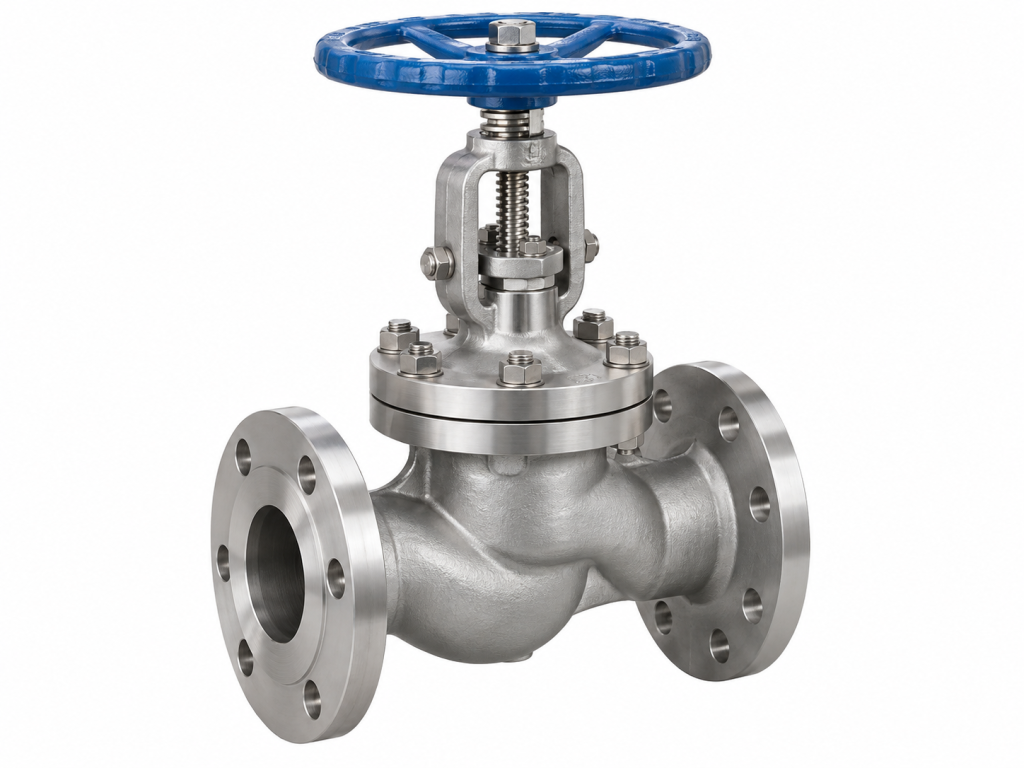
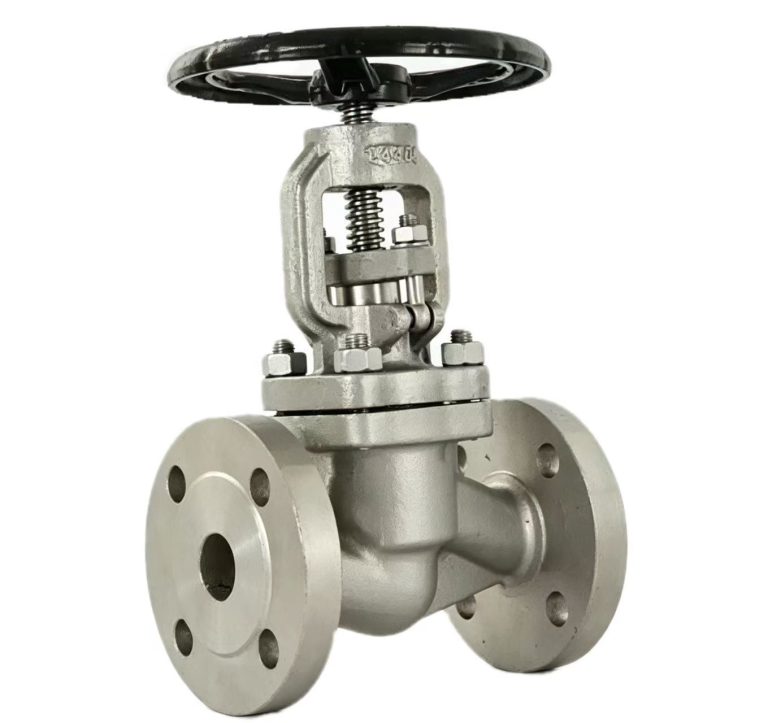
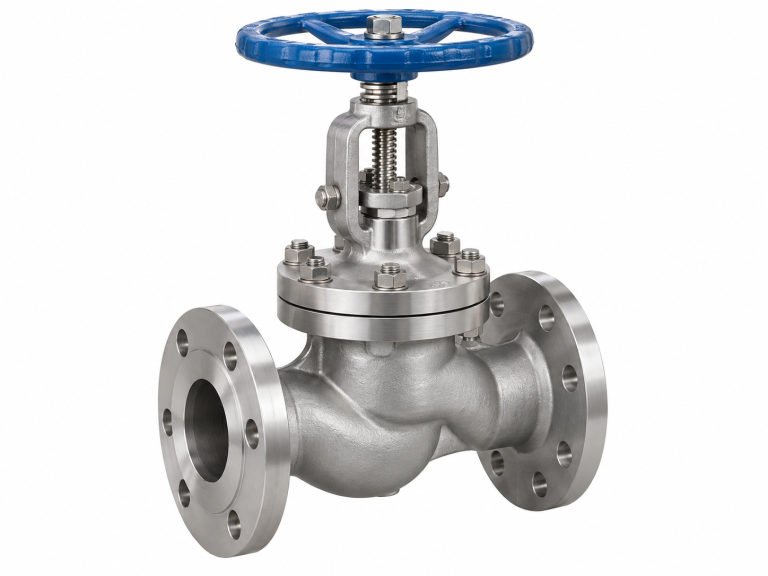
A flanged globe valve regulates flow by raising or lowering its disc relative to the seat. Compared with an isolation-only valve, its linear disc travel supports progressive manual throttling and a defined shut-off position. Vcore supplies flanged globe valves for industrial steam headers, boiler auxiliary pipelines, chemical plant utility lines and industrial water circuits. Valve selection is based on the service conditions and the buyer’s approved datasheet, not on nominal diameter alone.
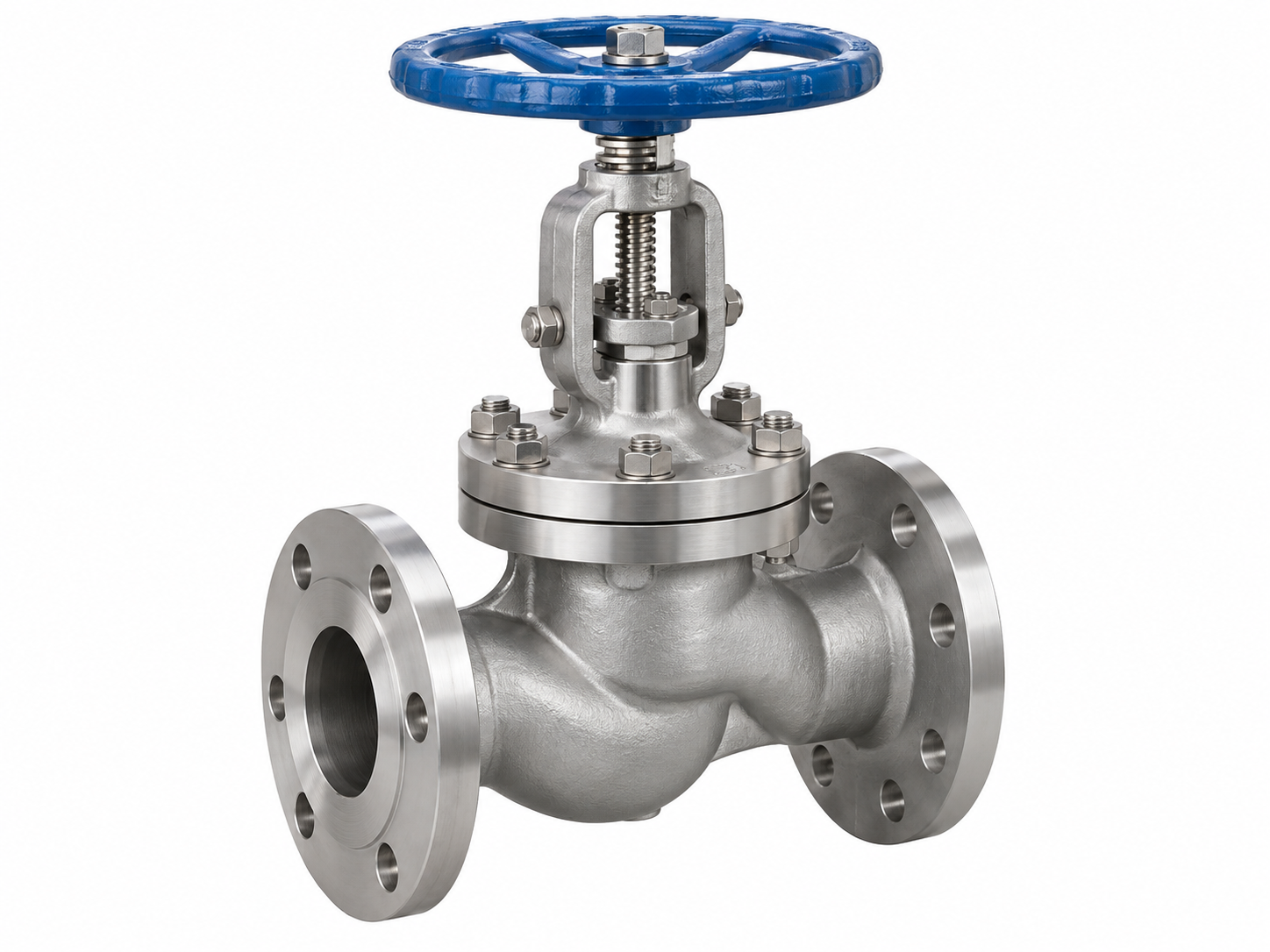
Where Flanged Globe Valves Are Used
Steam distribution and boiler auxiliaries
Globe valves can be installed at suitable points in steam distribution, boiler auxiliary and condensate return systems when local flow adjustment and shut-off are required. Confirm the design pressure and temperature, pressure-temperature rating, steam velocity, differential pressure, packing and gasket selection. High differential pressure, flashing or demanding continuous control may require a specially sized control valve rather than an ordinary handwheel globe valve. For automated steam modulation, see our steam control valve; for a distinct pressure-seal bonnet design in high-pressure service, see the pressure seal globe valve.
Chemical processing and plant utilities
Flanged globe valves can regulate compatible utility or process fluids in chemical plants. Confirm the fluid composition and concentration, corrosion potential, suspended solids, temperature, and sealing and fugitive-emission requirements. A stainless body alone does not guarantee chemical compatibility. For a more detailed material selection discussion, read our chemical and petrochemical globe valve selection guide and compare our stainless steel globe valve.
Industrial water and packaged filtration skids
Globe valves can provide local flow adjustment on industrial water treatment equipment and packaged filtration or purification skids where their pressure loss, materials and connection size are acceptable. Small residential whole-house filtration installations more often require compact threaded valves selected for potable-water contact and local plumbing requirements; this flanged industrial product is not represented as a default residential valve.
Flow Regulation, Pressure Drop and Shut-Off
The disc-to-seat opening changes progressively as the stem travels, allowing an operator to adjust flow. Actual flow rate and downstream pressure are functions of inlet conditions, valve opening and system resistance: an ordinary manually operated globe valve is not a self-acting pressure reducing valve or a substitute for a sized modulating control valve. Globe valves generally create more pressure drop than full-bore isolation valves. Specify the operating flow, differential pressure, frequency of throttling and any cavitation, flashing, erosion or noise concerns before selecting the trim.
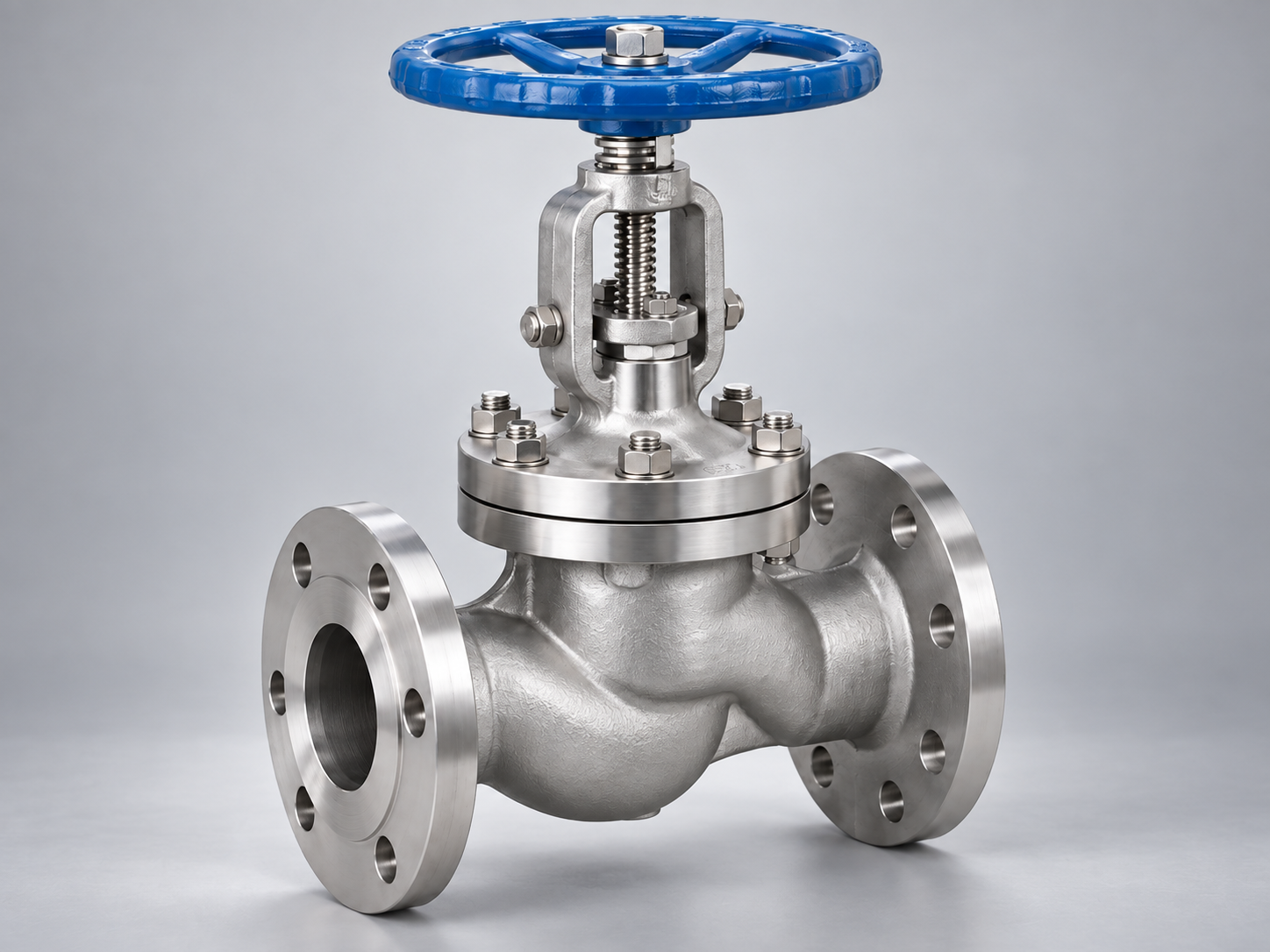
Technical Specifications and Customization
| Parameter | Available configuration / confirmation required |
|---|---|
| Product / pattern | Flanged straight-pattern globe valve; bonnet and disc design according to approved drawing |
| Function | Manual throttling and shut-off; continuous automatic control requires specific sizing and actuation review |
| Nominal size / pressure rating | DN / NPS and PN / ASME Class as specified in RFQ; manufacturer to confirm actual available combinations |
| Body / bonnet | ASTM A216 WCB, ASTM A351 CF8 / CF8M, suitable alloy steels or drawing-specified material, subject to service review |
| Stem / disc / seat | Separate material callouts and trim number with named trim standard; 13Cr, 316 stainless and hardfacing where specified |
| Bonnet sealing / packing | Bolted bonnet or project-specified construction; graphite or compatible alternative subject to temperature and medium |
| End connection | Flanged ends only for this product; specify ASME B16.5 / EN 1092-1 or relevant flange standard, RF / RTJ where applicable |
| Face-to-face | Specify ASME B16.10, EN 558 or approved drawing as applicable |
| Design and inspection | Applicable globe valve design standard and pressure / leakage test standard (e.g., API 598 or EN 12266-1), as agreed in RFQ |
| Operation | Handwheel standard configuration; gearbox, electric or pneumatic arrangements by engineering review |
| Operating limits | To be verified from material pressure-temperature ratings, packing, trim and service conditions; no universal limit is implied |
| Documentation | Approved GA drawing, dimensional datasheet, material certificates and test records as agreed in purchase order |
Globe Valve Trim: Why the Exact Material Combination Matters
“Trim” describes specified internal components and their materials; it is not the same as the body grade. The stem, disc sealing face, seat ring and backseat can use different base materials or hardfacing. Materials, machining and weld overlay affect procurement cost as well as wear, corrosion and sealing performance. A trim number must always be read together with its governing trim table, edition and approved material schedule.
| Common trim designation | Typical interpretation in commonly published API 600 trim charts | RFQ instruction |
|---|---|---|
| Trim 6 | 13Cr / 410-based internal parts with a specified Cu-Ni seat combination in common charts; not a universal designation for Stellite 6 sealing faces | State the exact stem, disc, seat and backseat materials; attach the governing trim table |
| Trim 8 | 13Cr / 410-based internals with hardfaced seating, often a Stellite-type seat face; not an all-316 trim | Identify hardfacing grade and location on the drawing |
| Trim 10 | 316-based stem and seating internals in common charts | Confirm component-by-component grades and whether any hardfacing is needed |
| Trim 12 | 316-based internals combined with hardfaced seating in common charts | Confirm overlay alloy, disc and seat face, and any additional corrosion requirements |
Quotation note: If your project’s Trim 6 or Trim 8 definition differs from a published standard chart, we can review your project-specific material schedule. We will price the confirmed bill of materials, not infer the construction from the number alone. Stellite is a hardfacing alloy family; specify the actual grade (such as Stellite 6) and the surfaces to receive it.
Installation: Flow Direction and Connection
For many conventional globe valve designs, the fluid enters beneath the disc and exits above it (“low in, high out” or flow-to-open). This arrangement is not a universal installation rule: high-pressure or other specialized designs may specify a different direction. Follow the arrow marked on the supplied body, the approved drawing and the manufacturer’s installation instructions. Where differential pressure matters, confirm the required operating force and disc stability.
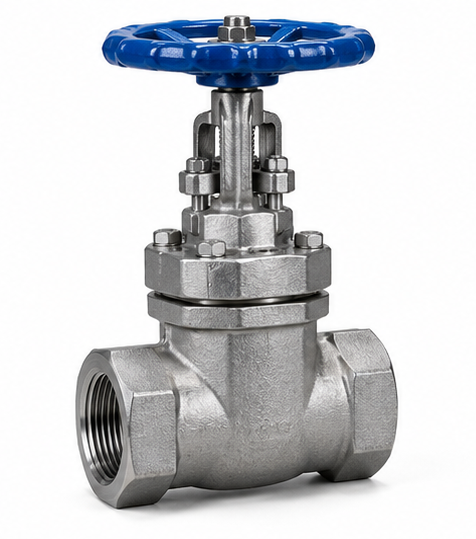
Before installation, verify pipe flange standard, pressure class, facing, gasket, bolting, face-to-face dimension, actuator clearance, support and accessibility. This listing covers flanged ends. Threaded female ends and butt-weld / socket-weld ends are alternative globe-valve constructions to specify separately; they must not be treated as interchangeable end connections for the quoted flanged product.
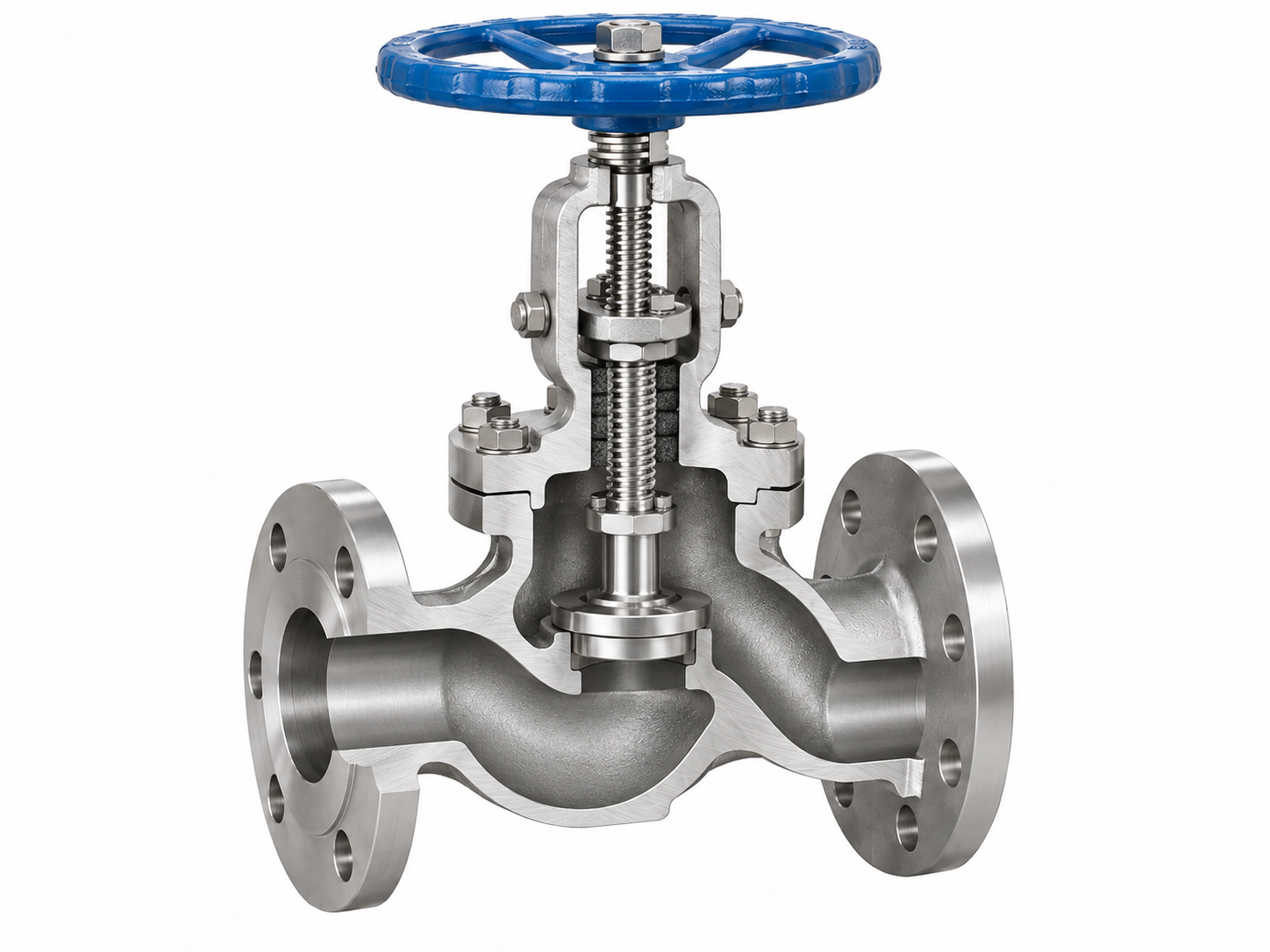
Inspection and Buyer Documentation
For an export or EPC order, specify dimensional inspection, body and trim material verification, shell pressure testing, seat leakage testing, surface finish, marking, packing and required inspection records at the RFQ stage. Acceptance criteria and test medium should be agreed in the inspection and test plan. Leakage performance is a tested specification, not a claim that every metal-seated globe valve is bubble-tight under all conditions.

Send a Flanged Globe Valve RFQ
For a technically comparable quotation, send valve size and quantity, fluid and chemical concentration where relevant, design and operating pressure / temperature, flow rate or required Cv / Kv if throttling, flange standard and facing, face-to-face dimension, body and bonnet grades, stem / disc / seat material schedule or trim designation with governing standard, packing and leakage requirements, operation method, drawings, and requested inspection documents. For alternative valve designs, see the complete Vcore globe valve range.

Frequently Asked Questions
Can a flanged globe valve reduce pressure?
Partially closing a globe valve creates a pressure drop, but downstream pressure depends on changing flow and inlet conditions. Use a properly designed pressure reducing or control valve if a stable downstream set pressure is required.
Should a globe valve always be installed low-in and high-out?
No. Under-disc entry is common for conventional designs, but flow direction depends on the valve configuration and service. Follow the supplied body’s arrow and approved installation documentation.
Does Trim 8 mean a 316 stem and 316 sealing faces?
No. Common published trim charts associate Trim 8 with 13Cr-based internals and hardfaced seating. Provide the governing standard and specific materials when ordering; all-316 internal configurations are commonly identified under other trim numbers.
Can this flanged model be used in whole-house drinking-water filtration?
Only if its size, end connections, wetted materials and required potable-water approvals match the installation. Small domestic systems typically use a different compact valve construction. Please send the actual system drawing and local approval requirements.