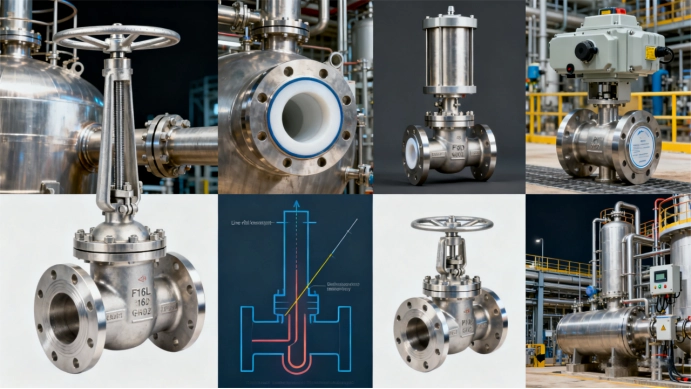
Why Globe Valves Are Used in Chemical and Petrochemical Plants
Globe valves are often selected in chemical and petrochemical plants when a line needs reliable shutoff, start-stop operation, or limited throttling with a more controlled closing element than a gate valve. Their body path changes flow direction through the seat area, so pressure drop is normally higher than a gate valve or full-port ball valve. This is acceptable in many utility, dosing, bypass, drain, vent, sampling and process lines, but it must be considered in pump head, energy loss and process stability calculations.
Not every globe valve is suitable for continuous regulation, high differential pressure, flashing, cavitation or dirty service. Chemical service also adds external-leakage control, corrosion, crystallization, deposits, gasket compatibility, packing life and maintenance-access questions. For the broader chemical valve framework, see our industrial valves for chemical processing guide. This article stays focused on globe valve selection rather than repeating the full chemical valve type comparison.
Industrial Globe Valve vs Globe-Style Control Valve
An industrial globe valve and a globe-style control valve may look similar from outside, but they are specified differently. A manual or on-off globe valve may provide isolation and limited throttling. A continuous modulating control duty must be evaluated as a complete control-valve package.
| Selection Point | Industrial Globe Valve | Globe-Style Control Valve |
|---|---|---|
| Main duty | Isolation, start-stop service or limited throttling. | Continuous regulation of flow, pressure, temperature or level. |
| Flow-regulation frequency | Occasional adjustment or manual balancing. | Frequent movement with stable travel and repeatability. |
| Sizing requirement | Usually based on line size, pressure class, shutoff and pressure drop acceptance. | Requires Cv or Kv sizing and travel review for all operating cases. |
| Trim design | Disc, seat and stem selected for shutoff, wear and service compatibility. | Trim architecture, flow characteristic, balance, noise and severe-service risks are reviewed. |
| Actuator and positioner | Manual, gear, electric or pneumatic on-off operation may be used. | Actuator thrust, positioner, accessories and control signal are part of the selection. |
| Leakage requirement | Seat leakage test is specified for the industrial valve standard or project requirement. | Control-valve leakage class may be specified separately and should not be confused with ordinary seat testing. |
| Severe pressure-drop review | High differential pressure may make operation difficult or damage trim. | Cavitation, flashing, noise, vibration and trim staging are evaluated during control-valve selection. |
| Typical procurement data | Size, class, material, end connection, shutoff, operation and tests. | Process cases, Cv, flow characteristic, fail action, actuator data, positioner and accessories. |
When continuous regulation, stable travel and process control are required, the application should undergo a separate control-valve selection and Cv-sizing process. Use the control valve selection guide for those duties. Adding a pneumatic actuator to an ordinary globe valve does not automatically turn it into a high-performance control valve.
Common Globe Valve Configurations for Chemical Service
Globe valves should be classified by structure and function, not by a ranking list. The suitable configuration depends on medium, temperature, pressure, differential pressure, leakage requirement and operation method.
Straight-Pattern Globe Valve
A straight-pattern globe valve may be considered for general process isolation, vents, drains, bypasses and moderate throttling where pressure drop is acceptable. Confirm body and trim material, seat construction, packing, gasket and the required flow direction before quotation. It is not ideal where very low pressure loss, pigging or high solid content is required.
Y-Pattern Globe Valve
A Y-pattern globe valve may reduce flow resistance compared with a standard straight-pattern globe valve and is often reviewed for steam, utility or high-temperature service. It still needs pressure-temperature rating, packing, bonnet and trim checks. Selection by shape alone is not enough.
Angle Globe Valve
An angle globe valve changes flow direction and may reduce the need for an elbow in some piping layouts. It can be useful for drain, boiler, steam or selected severe-service arrangements, but outlet velocity, erosion and maintenance access must be reviewed.
Bellows Seal Globe Valve
A bellows seal globe valve may be selected for toxic, volatile, odorous, flammable or leakage-sensitive media where stem leakage control is specified. The bellows material, welded construction, travel, cycle frequency, corrosion resistance and backup packing must be confirmed. Product options can be reviewed on the bellows globe valve page.
Cryogenic Globe Valve
A cryogenic globe valve is not suitable for LNG or low-temperature chemicals just because the product name includes “cryogenic.” Extended bonnet design, material toughness, packing behavior, testing, cleaning and project documentation must match the actual temperature and medium.
Pressure Seal Globe Valve
A pressure seal globe valve may be considered for selected high-pressure and high-temperature duties. It is not the default choice for all chemical systems. Body material, bonnet seal, hardfacing, packing, thermal cycling and operation method must be reviewed. See the pressure seal globe valve page for product-level options.
Actuated Globe Valve
An actuated globe valve may be selected for remote on-off service, interlock operation or limited automated positioning. Confirm thrust or torque requirement, stem travel, fail position, power supply, enclosure, accessories and control logic. For continuous modulating service, specify a control valve package rather than only adding an actuator.
Globe-Style Control Valve
A globe-style control valve is selected when process control performance matters. Cv, rangeability, flow characteristic, trim, actuator thrust, positioner, leakage class and severe-service risk must be checked as one package. This article identifies the boundary, while the detailed control-valve process belongs in the dedicated control-valve guide.
Quick Selection Table
| Service Condition | Common Globe Valve Direction | Main Engineering Check |
|---|---|---|
| General non-corrosive process isolation | Straight-pattern or Y-pattern may be considered. | Pressure class, shutoff, pressure drop and operation method. |
| Corrosive liquid service | Body and trim selected after compatibility review. | Medium, concentration, chloride, impurities, temperature and corrosion mechanism. |
| Toxic or leakage-sensitive media | Bellows seal or low-emission construction where specified. | Stem sealing, bellows material, backup packing and fugitive-emission requirement. |
| High-temperature utility or process service | Y-pattern or pressure seal design may be considered depending on service. | Pressure-temperature rating, bolting, gasket, packing and thermal cycling. |
| Low-temperature or cryogenic service | Cryogenic globe valve where specified. | Material toughness, extended bonnet, cleaning, testing and documentation. |
| Frequent throttling | Industrial globe valve may be limited; control valve may be required. | Frequency, travel stability, seat wear, pressure drop and heat generation. |
| High differential pressure | Severe-service review required. | Cavitation, flashing, noise, erosion, vibration and operating force. |
| Automated on/off duty | Actuated globe valve may be considered. | Stem force, travel, fail position, power supply and accessories. |
| Continuous modulating control | Globe-style control valve subject to control-valve sizing. | Cv, characteristic, trim, actuator, positioner and control system. |
| Fluids containing solids or crystallizing media | Use with caution; another valve type may be more suitable. | Plugging, erosion, deposit formation and cleaning access. |
Body, Bonnet and Trim Material Selection
Material selection for globe valves must cover the complete material system, not only the valve body. Carbon steel, stainless steel, low-temperature carbon steel, alloy steel, duplex or super duplex stainless steel, nickel alloys, titanium and project-specific alloys can all be valid in the right service and unsuitable in the wrong service.
304 or 316 stainless steel is not automatically suitable for all acids, chlorides or high-temperature chemical media. Monel, Inconel, Hastelloy-type alloys, duplex stainless steel and titanium must be selected according to the actual chemical environment. Stellite and other hardfacing materials are mainly reviewed for wear, erosion, galling, differential pressure or seat durability; they should not be described as universal corrosion-resistant materials. For deeper trim discussion, use the valve trim materials guide.
| Component | Common Material Direction | What Must Be Confirmed |
|---|---|---|
| Body and bonnet | Carbon steel, stainless steel, alloy steel, low-temperature steel or project alloy. | Pressure-temperature rating, corrosion allowance, external corrosion and standard scope. |
| Disc or plug | Matching alloy, stainless steel, hardfaced trim or selected alloy. | Erosion, galling, throttling frequency and shutoff requirement. |
| Seat ring | Integral, threaded, welded or replaceable seat with suitable facing. | Leakage test, wear, corrosion, thermal cycling and repair strategy. |
| Stem | Stainless or alloy stem material selected for strength and corrosion. | Stem load, packing compatibility, galling and environmental exposure. |
| Bellows, where used | Stainless steel or specified alloy bellows. | Medium compatibility, temperature, cycle frequency and weld inspection. |
| Packing | Graphite, PTFE or low-emission packing where specified. | Temperature, stem finish, emissions requirement and adjustment access. |
| Gasket | Graphite, spiral wound, PTFE or specified gasket. | Chemical compatibility, flange load, temperature and fire safety requirement. |
| Bolting | Standard or project-specified bolting materials. | Temperature, corrosion, sour service and coating requirement. |
| Hardfacing or coating | Stellite-type facing, nitriding or project coating where applicable. | Wear, erosion, galling, differential pressure and compatibility with the medium. |
Pressure, Temperature and Differential Pressure
Class or PN is not a fixed working-pressure value. The allowable pressure changes with temperature, body material and the applicable standard or project code. The selected globe valve must be checked against design pressure, design temperature, operating conditions, hydrotest requirement and body material. Packing, gasket, bolting, seat and actuator limits may be lower than the pressure boundary rating and should be reviewed separately.
High differential pressure can cause cavitation, flashing, erosion, noise, vibration, seat damage or operating difficulty. A manual globe valve cannot automatically replace a severe-service control valve in these conditions. Use the valve pressure-temperature rating guide when checking class, material and temperature effects.
Flow Direction and Installation
Globe valves should not be installed in an arbitrary direction based only on habit. Flow-to-open, flow-to-close or another manufacturer-specified direction depends on disc design, seat load, stem loading, differential pressure and the valve construction. Follow the valve-body flow arrow, manufacturer drawing and project specification.
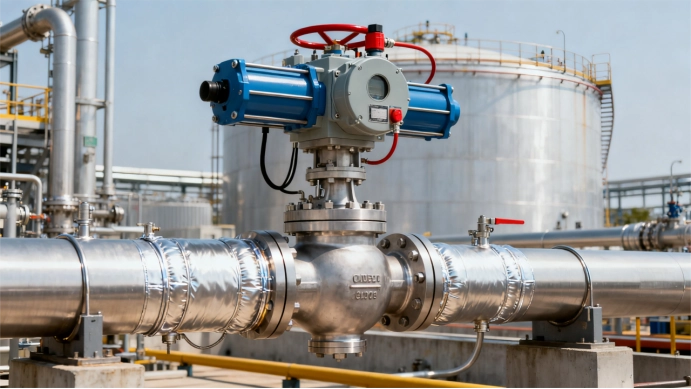
Installation review should include handwheel access, actuator weight, pipe support, bonnet clearance, insulation space, packing adjustment access and removal clearance. For actuated valves, confirm bracket stiffness, stem alignment, travel limit setting and fail position before commissioning.
Stem Sealing and External Leakage Control
Conventional packing may be acceptable for many utility and non-hazardous services if the packing material, stem finish, temperature and maintenance access are suitable. Low-emission packing may be specified when fugitive-emission control is required. A bellows seal with backup packing may be considered for toxic, flammable, volatile or leakage-sensitive media.
A bellows seal helps reduce the risk of external leakage around the stem, but it must not be described as providing unconditional zero leakage. Bellows material, welded construction, travel, cycle frequency, temperature and corrosion conditions must be confirmed. Fugitive-emission compliance should only be claimed when the actual design, testing and certification meet the specified requirement.
High-Pressure and Severe-Service Globe Valves
A pressure seal bonnet is mainly used for selected high-pressure and high-temperature duties. It should not be presented as the default choice for all chemical systems. The body material, bonnet seal, hardfacing, packing, thermal cycling, operating force and maintenance method must be reviewed.
Severe-service conditions may require special trim, hardfacing, guided plug construction, staged pressure drop, improved actuator sizing or another valve type. Ordinary globe valves should not be promoted as a universal solution for cavitation, flashing, high noise, erosive service or very high differential pressure.
When a Globe Valve May Not Be Suitable
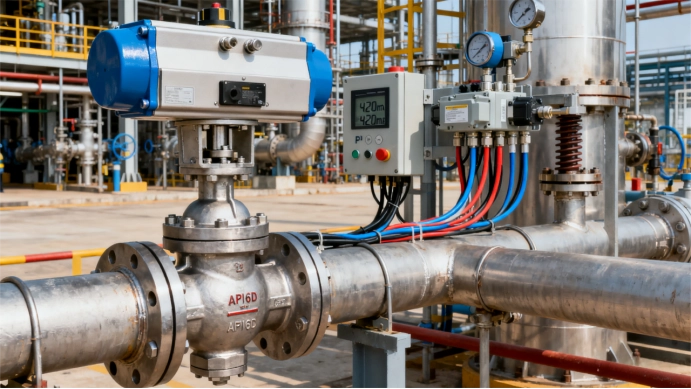
A globe valve may not be the right choice when the medium contains high levels of solid particles, fibers or crystallizing material that can block or damage the flow path. Other valve types may be more suitable when minimum pressure loss is required. Ordinary globe valves are generally unsuitable for full-bore pipelines, pigging service or applications where straight-through flow is essential.
A control valve should be evaluated when long-term, high-frequency, precise regulation is required. Large-size or high-differential-pressure operation may require gearbox, actuator thrust or stem-force calculations. When material compatibility is uncertain, buyers should not order only by specifying “stainless steel” or “alloy.” The chemical environment and project specification must define the material system.
Testing, Inspection and Documentation
Commonly requested documents for industrial globe valves may include dimensional inspection, shell pressure test, seat leakage test, material certificate, visual inspection, drawing and datasheet. Project-specified items may include PMI, NDE, low-temperature impact documentation, fugitive-emission test or certificate, bellows inspection, hardfacing inspection, actuator datasheet, third-party inspection, sour-service material review and special cleaning.
When ASME, API, ISO or another standard is specified, its scope and applicability must match the valve design and the project requirement. Do not assume every globe valve automatically complies with API 623, API 598, ASME B16.34, ISO 15848 or any other standard. Seat leakage testing for ordinary industrial globe valves should also be distinguished from control-valve leakage classifications.
Information Buyers Should Provide Before Quotation
Provide the following information before requesting a chemical or petrochemical globe valve quotation:
- Valve type and required function
- Size / DN / NPS and Pressure Class / PN
- Design pressure, operating pressure and maximum differential pressure
- Design temperature and operating temperature
- Medium name, chemical concentration, impurities and chloride content where relevant
- Solid particles, crystallization or scaling risk
- Required flow rate if throttling or control is involved
- Body, bonnet, disc, seat, stem and trim material
- Packing, gasket and bellows seal requirement
- End connection and standard
- Required flow direction
- Manual, gear, electric or pneumatic operation
- Fail position if actuated
- Leakage or shutoff requirement
- Applicable standards
- MTC, PMI, NDE and test-report requirements
- Fugitive-emission or special-cleaning requirement
- Quantity and project-documentation requirements
For product-level options, the industrial globe valve category page gives a purchasing overview. The quotation itself should still be based on the exact process data and project documents.
Need Help Selecting a Globe Valve for Chemical Service?
Send Vcore Valve the medium and concentration, pressure and temperature, maximum differential pressure, size and pressure class, body and trim material, packing or bellows requirement, end connection, operation method, leakage requirement, testing and documentation requirements. We can review whether a standard industrial globe valve, bellows seal globe valve, pressure seal globe valve, actuated valve or control-valve package is the more suitable direction. Use the contact page to send the project data.
Frequently Asked Questions
Why are globe valves used in chemical plants?
Globe valves are used where shutoff, start-stop operation, or limited throttling is required and the higher pressure drop is acceptable. Chemical service still requires review of medium, corrosion, temperature, pressure, leakage risk and maintenance access.
Can globe valves be used for both isolation and throttling?
Yes, many industrial globe valves can be used for isolation and limited throttling. Continuous, stable and precise regulation should be reviewed as a control-valve duty with Cv, trim, actuator and positioner checks.
What is the difference between an industrial globe valve and a globe-style control valve?
An industrial globe valve is usually selected by size, pressure class, material, shutoff and operating method. A globe-style control valve is sized and specified as a control package, including Cv, flow characteristic, trim design, actuator thrust, positioner and control performance.
Which material is suitable for a chemical globe valve?
There is no universal material for every chemical globe valve. Body, bonnet, trim, packing, gasket, bolting and any bellows must be selected according to the medium, concentration, impurities, chloride content, pressure, temperature and project specification.
When should a bellows seal globe valve be selected?
A bellows seal globe valve may be considered for toxic, flammable, volatile, odorous or leakage-sensitive media where stem leakage control is specified. Bellows material, cycle life, temperature, corrosion and backup packing requirements must be confirmed.
Are globe valves suitable for slurry or crystallizing media?
Globe valves are not the default choice for slurry, fibrous or crystallizing media because the flow path and seat area may plug, erode or accumulate deposits. The medium behavior and maintenance access should be reviewed before selection.
Which flow direction should be used for a globe valve?
Use the valve-body flow arrow, manufacturer drawing and project specification. Flow-to-open, flow-to-close or another direction depends on the disc, seat, stem loading, differential pressure and valve design.
What information is required to quote a chemical or petrochemical globe valve?
Provide valve function, size, pressure class, design and operating pressure, temperature, medium, concentration, impurities, differential pressure, materials, end connection, operation method, leakage requirement and inspection or documentation requirements.