Nozzle check valve water hammer prevention is an important topic in pump discharge and industrial pipeline design. In many systems, a standard check valve can prevent reverse flow, but it may not close fast enough to prevent check valve slam, pressure surge, vibration, and pipe stress.
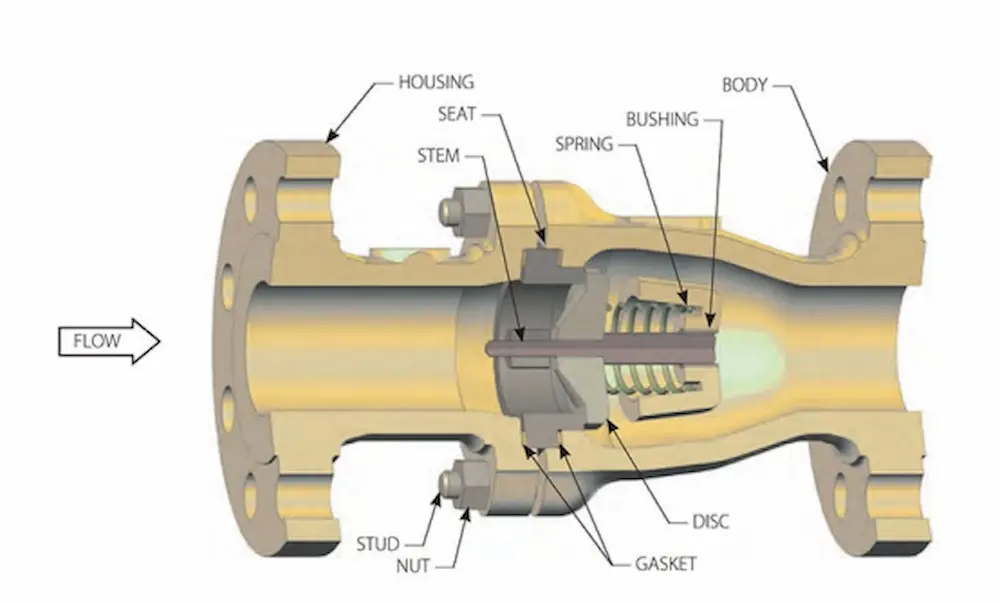
A nozzle check valve, also called a non-slam check valve or axial flow check valve in many applications, is designed to close quickly and smoothly when forward flow decreases. Its short-stroke, spring-assisted closure helps reduce reverse flow before the valve shuts. This makes it useful in pump discharge lines, long pipelines, cooling water systems, high-pressure water lines, compressor systems, and other applications where water hammer risk must be controlled.
However, a nozzle check valve is not required for every pipeline. It is usually selected when system conditions create high reverse-flow risk, frequent pump shutdown, high velocity, long pipeline length, or damaging check valve slam. For a broader overview of check valve types and selection logic, read our main guide on industrial check valves.
What Is a Nozzle Check Valve?
A nozzle check valve is a spring-assisted check valve designed for fast, non-slam closure. It usually has an axial flow path and a guided disc or plug that moves along the flow axis. When forward flow is sufficient, the disc opens. When flow decreases, the spring pushes the disc toward the seat before significant reverse flow develops.
The purpose of the nozzle check valve is not only to stop backflow. Its real value is to reduce the time between flow deceleration and valve closure. This helps prevent the closure element from slamming shut after reverse flow has already gained momentum.
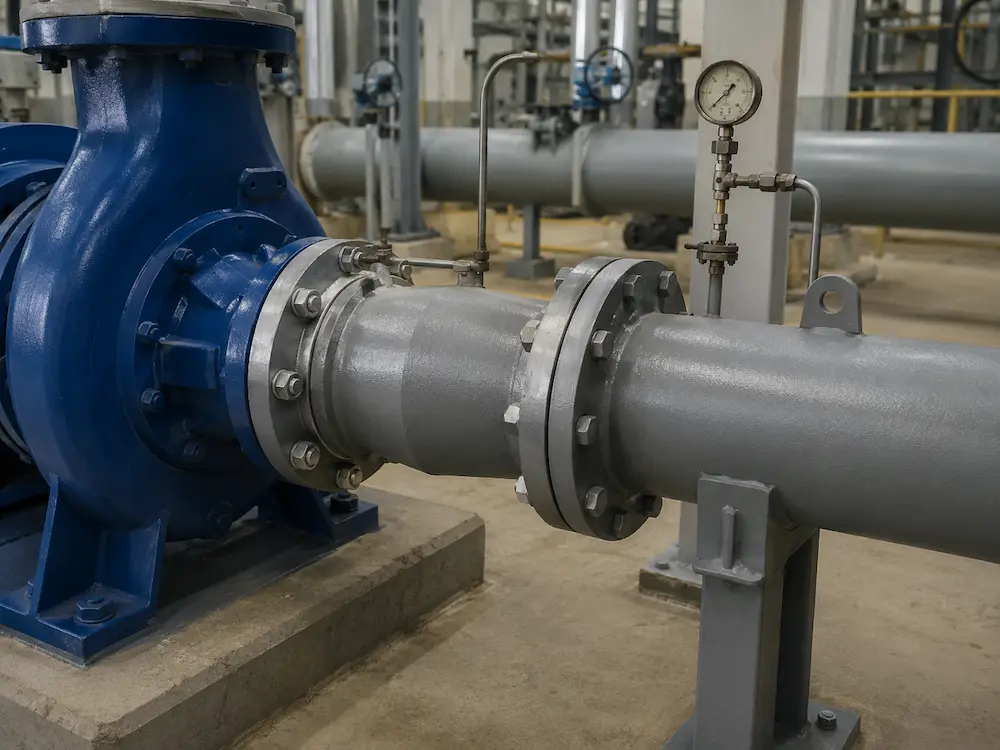
Nozzle check valves are commonly used in pump discharge systems, water transmission lines, cooling water systems, power plants, oil and gas pipelines, compressor discharge lines, and process fluid systems where pressure surge and reverse flow must be controlled.
Key Features of Nozzle Check Valves
- Axial flow path in many industrial designs
- Spring-assisted closure
- Short disc travel compared with traditional swing check valves
- Fast response when flow decelerates
- Reduced reverse flow before closure
- Suitable for pump discharge and high water hammer risk systems
- Higher engineering review requirement than basic check valves
What Is Water Hammer?
Water hammer is a pressure surge caused by sudden changes in fluid velocity. In check valve applications, it often occurs when reverse flow develops and then stops suddenly as the check valve closes. The pressure wave can travel through the pipeline and create noise, vibration, flange leakage, pipe movement, support damage, pump stress, or valve seat damage.
Water hammer is common in pump discharge systems, long water pipelines, high-flow systems, cooling water lines, fire water networks, and systems with fast valve closure or sudden pump shutdown.
The problem is not simply that the valve closes. The problem is that the valve closes at the wrong time. If the valve closes after reverse flow has already accelerated, the impact can be severe.
Why Standard Check Valves May Slam
Traditional swing check valves and some other check valve designs can work well in steady-flow pipelines. However, in pump discharge systems or rapidly changing flow conditions, the closure element may travel too far and close too late.
When a pump stops, forward flow begins to slow. If the valve disc is still open while the flow reverses, reverse flow gains velocity. When the disc finally closes against the seat, the sudden stop can create a loud slam and pressure surge.
Common Causes of Check Valve Slam
- Valve closes after reverse flow has already developed
- Oversized check valve causing unstable disc movement
- Low minimum flow velocity
- Long pump discharge pipeline
- High static head or high system pressure
- Frequent pump start-stop operation
- Parallel pumps starting and stopping at different times
- Incorrect check valve type for the system
- Poor installation position or insufficient straight pipe
How a Nozzle Check Valve Helps Prevent Water Hammer
A nozzle check valve helps reduce water hammer by closing before strong reverse flow develops. The spring-assisted disc has a short travel distance and responds quickly as forward flow decelerates. Because the closure element moves along the flow axis, the valve can close more smoothly than many hinged-disc designs.
This does not mean a nozzle check valve completely eliminates every surge problem. Water hammer depends on the full system, including pump characteristics, pipeline length, flow velocity, elevation change, pipe material, valve location, and shutdown behavior. But in many pump discharge applications, a correctly selected nozzle check valve can significantly reduce check valve slam risk.
Engineering Advantages
- Fast closure before large reverse flow develops
- Lower disc inertia compared with many large swing discs
- Spring-assisted response to flow deceleration
- Axial flow design in many models
- Reduced slam, noise, and vibration when correctly sized
- Useful for pump protection and pressure surge control
Nozzle Check Valve vs Swing Check Valve
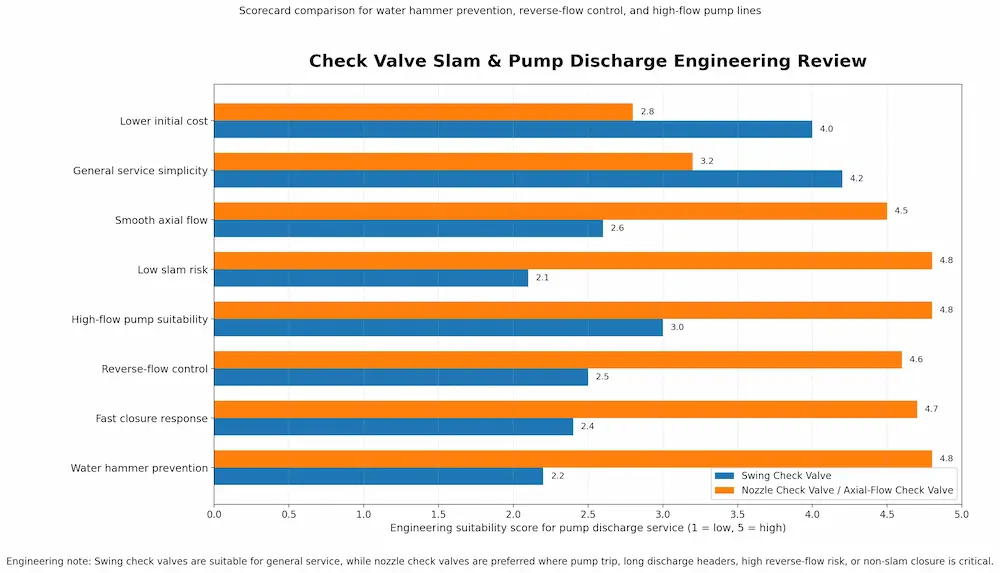
A swing check valve uses a hinged disc that swings open and closed. It is simple, common, and suitable for many steady-flow pipelines. However, the disc has a longer travel path and may close late in fast flow reversal conditions.
A nozzle check valve uses a short-stroke, spring-assisted closure element. It is usually selected when faster closure and non-slam performance are more important than basic low-cost backflow prevention.
| Comparison Factor | Nozzle Check Valve | Swing Check Valve |
|---|---|---|
| Closure Mechanism | Spring-assisted axial closure | Hinged disc closure |
| Closing Speed | Fast | Usually slower |
| Water Hammer Control | Better for high-risk systems when correctly selected | May slam in rapid flow reversal conditions |
| Installation Space | Compact inline design in many models | Larger body, especially in flanged swing designs |
| Cost | Usually higher | Usually lower |
| Best Use | Pump discharge, long pipelines, high water hammer risk | Steady-flow pipelines and general backflow prevention |
For a more detailed comparison of traditional check valve closure behavior, read our guide on swing check valve vs spring check valve.
Nozzle Check Valve vs Dual Plate Check Valve
Dual plate check valves also use spring-assisted closure and can close faster than many traditional swing check valves. They are compact and widely used in water treatment, HVAC, marine, and pump discharge applications.
A nozzle check valve is usually considered when the project requires stronger non-slam performance, axial flow design, or improved surge control in more demanding systems. The final choice depends on system data, pressure drop requirement, pump behavior, and budget.
| Comparison Factor | Nozzle Check Valve | Dual Plate Check Valve |
|---|---|---|
| Closure Design | Spring-assisted axial disc or plug | Two spring-assisted plates |
| Reverse Flow Control | Strong performance when properly engineered | Good in many compact pipeline systems |
| Face-to-Face | Depends on design | Often compact wafer or lug body |
| Water Hammer Risk | Often selected for higher-risk surge conditions | Useful for moderate slam reduction in many systems |
| Cost | Usually higher | Usually more economical |
For compact dual-plate structure selection, read our guide on dual plate check valve vs swing check valve.
When Is a Nozzle Check Valve Needed?
A nozzle check valve is usually needed when basic backflow prevention is not enough and the system requires fast, controlled, non-slam closure. The following conditions often justify a nozzle check valve review.
1. Pump Discharge Systems with Frequent Start-Stop Operation
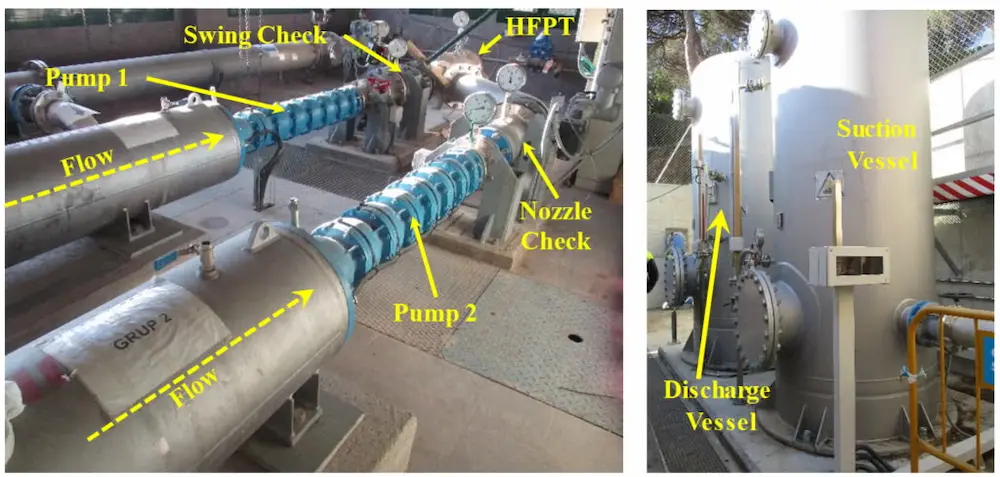
Pump discharge lines are one of the most common applications for nozzle check valves. When pumps stop frequently, reverse flow can occur repeatedly. A slow-closing check valve may slam and damage the system over time.
2. Long Pipelines
Long pipelines can store a large amount of moving fluid energy. When flow reverses, the mass of fluid can create severe pressure surge if stopped suddenly. A fast-closing nozzle check valve can help reduce reverse flow before closure.
3. High-Flow Water Transmission Lines
Large water pipelines, cooling water systems, municipal pumping stations, and industrial water transfer lines may face serious surge risk. Nozzle check valves are often reviewed where pump shutdown can produce strong reverse flow.
4. Parallel Pump Systems
In parallel pump systems, one pump may stop while others continue running. This can create complex flow reversal conditions. Check valve selection is critical to prevent reverse rotation, backspin, and pressure surge.
5. High Head Pumping Systems
When a pump pushes against high static head, reverse flow can develop quickly after pump shutdown. A nozzle check valve may help protect the pump and pipeline by closing before reverse velocity becomes severe.
6. Systems with Previous Check Valve Slam Problems
If an existing swing check valve or standard check valve produces noise, vibration, seat damage, gasket leakage, or pipe movement, a nozzle check valve should be considered as part of the engineering review.
7. Compressor Discharge and Gas Systems
In selected gas and compressor discharge applications, reverse flow can damage equipment or reduce system stability. A nozzle check valve may be used where fast closure and low-slam performance are required.
Where Nozzle Check Valves Are Commonly Used
| Application | Why Nozzle Check Valve May Be Used | Buyer Notes |
|---|---|---|
| Pump discharge line | Prevents reverse flow and reduces slam risk | Review pump curve, shutdown behavior, and flow rate |
| Cooling water system | Controls surge in high-flow water circulation | Check pressure drop and system velocity |
| Water transmission pipeline | Reduces reverse flow before closure in long pipelines | Surge analysis may be required |
| Power plant utility system | Protects pumps and high-value equipment | Confirm temperature, pressure, and documentation requirements |
| Oil and gas pipeline | Supports fast reverse-flow prevention | Review material, pressure class, NACE, and fire-safe requirements if applicable |
| Compressor discharge | Prevents reverse gas flow and equipment stress | Confirm gas composition, pressure, and sealing requirement |
| Industrial process line | Protects process equipment from reverse flow | Material compatibility and pressure drop must be reviewed |
When a Nozzle Check Valve May Not Be Necessary
A nozzle check valve provides strong engineering value, but it may not be necessary in every pipeline. In simple steady-flow systems with low surge risk, a swing check valve, spring check valve, dual plate check valve, lift check valve, or wafer check valve may be more economical.
Nozzle Check Valve May Be Over-Specified When:
- The pipeline has stable flow and low reverse-flow risk
- Pump shutdown is slow and controlled
- The pipeline is short and pressure surge is low
- The service is low-pressure utility water with minimal slam history
- Budget is limited and system risk is low
- Maintenance team prefers simpler check valve construction
The correct decision should be based on system risk, not only valve price. In low-risk systems, standard check valves may be sufficient. In high-risk systems, a cheaper valve can become expensive if it causes water hammer damage, pump failure, leakage, or downtime.
Selection Factors for Nozzle Check Valves
| Selection Factor | What to Confirm | Why It Matters |
|---|---|---|
| Flow Rate | Normal, minimum, and maximum flow | Ensures the valve opens fully and avoids chatter |
| Pump Data | Pump curve, head, shutdown behavior, parallel pump operation | Determines reverse flow and slam risk |
| Pressure | Operating pressure, design pressure, pressure class | Determines body design and flange rating |
| Temperature | Normal and maximum temperature | Affects body, spring, seat, gasket, and trim materials |
| Medium | Water, gas, oil, clean fluid, chemical, seawater | Determines material and corrosion compatibility |
| Pressure Drop | Allowable pressure loss or Cv requirement | Important for pump efficiency and system capacity |
| Installation Direction | Horizontal, vertical upward, vertical downward | Must match valve design and flow direction |
| Water Hammer Risk | Previous slam, surge, vibration, or pipe movement | Determines whether non-slam design is justified |
| Material | Body, disc, spring, seat, gasket, bolting | Ensures pressure, temperature, and corrosion resistance |
Material and Seat Selection
Nozzle check valve material selection depends on pressure, temperature, medium, corrosion risk, and project standard. Buyers should confirm body material, disc or plug material, spring material, guide material, seat material, gasket material, and bolting.
| Component | Common Options | Buyer Notes |
|---|---|---|
| Body | Carbon steel, stainless steel, ductile iron, alloy steel, duplex | Select by pressure, temperature, corrosion risk, and project standard |
| Disc / Plug | Stainless steel, alloy steel, coated or hardfaced material | Must resist impact, wear, and corrosion |
| Spring | Stainless steel, Inconel or other alloy spring material | Spring material is critical for fatigue and corrosion resistance |
| Guide | Stainless steel, alloy, hardfaced guide surfaces | Supports smooth axial movement |
| Seat | Metal seat, soft seat, elastomer, PTFE in selected service | Affects leakage, temperature rating, and media compatibility |
| Gasket | Graphite, PTFE, rubber, spiral wound, project-specified material | Must match flange face, pressure, temperature, and medium |
Common Selection Mistakes
Mistake 1: Using a Standard Swing Check Valve in a High-Surge Pump Line
A swing check valve may work in steady flow, but it may close too late in fast pump shutdown conditions. This can cause slam and pressure surge.
Mistake 2: Choosing a Nozzle Check Valve Without Flow Data
Nozzle check valves still require correct sizing. Without normal, minimum, and maximum flow data, the valve may not open fully or may cause excessive pressure drop.
Mistake 3: Ignoring Spring Material
The spring is a critical component. In seawater, chemical, high-temperature, or corrosive service, the wrong spring material can lead to failure.
Mistake 4: Treating Nozzle Check Valves as Universal Water Hammer Solutions
A nozzle check valve can reduce slam risk, but complete water hammer prevention may require system-level review, pump control, surge tank, air vessel, slow-closing valves, or pipeline redesign.
Mistake 5: Ignoring Pressure Drop
Fast closure is important, but pressure drop also matters. Buyers should confirm allowable pressure loss to avoid pump efficiency problems.
Mistake 6: Using the Valve in Dirty or Scaling Service Without Review
Nozzle check valves have guided moving parts. Dirty media, scale, sticky deposits, or solids may affect smooth movement and sealing.
How to Choose a Nozzle Check Valve
To choose a nozzle check valve correctly, buyers should treat it as an engineered component rather than a simple commodity valve. The supplier needs enough system information to confirm sizing, spring response, material, pressure class, sealing, and installation suitability.
| Question | Why It Matters | Selection Impact |
|---|---|---|
| Does the system have water hammer or slam history? | Confirms whether non-slam design is needed | Supports nozzle check valve selection |
| Is this a pump discharge line? | Pump shutdown often creates reverse flow | Requires pump and flow data review |
| Is the pipeline long or high head? | Stored fluid energy can increase surge severity | May justify nozzle or surge analysis |
| Is the medium clean? | Guided movement needs reliable internal clearance | Material and design review required |
| Is pressure drop limited? | Valve resistance affects pump efficiency | Need Cv or pressure drop data |
| Is the application critical? | Downtime or equipment damage is costly | Higher-performance check valve may be justified |
Information Buyers Should Provide Before Quotation
- Valve size and pipeline size
- Medium name and cleanliness condition
- Operating pressure and design pressure
- Operating temperature and maximum temperature
- Normal, minimum, and maximum flow rate
- Pump type, pump curve, head, and shutdown behavior if available
- Pipeline length and elevation difference if water hammer is a concern
- Installation direction: horizontal, vertical upward, or vertical downward
- Connection standard: flanged, wafer, welded, or other
- Required pressure class and flange standard
- Water hammer, non-slam, or low-noise requirement
- Body, disc, spring, seat, gasket, and bolting material requirements
- Pressure drop or Cv requirement if available
- Required drawing, datasheet, test report, material certificate, and inspection documents
Related Check Valve Guides
For broader check valve selection and installation details, these related guides may help:
- Industrial Check Valves: Types, Applications and Selection Guide — main guide for check valve types, backflow prevention, materials, and selection logic.
- Dual Plate Check Valve vs Swing Check Valve — compares compact dual plate design with traditional hinged-disc closure.
- Swing Check Valve vs Spring Check Valve — explains gravity closure and spring-assisted closure differences.
- Check Valve Product Range — compare swing, spring, lift, dual plate, nozzle, wafer, and other industrial check valve options.
Final Recommendations for Industrial Buyers
A nozzle check valve is usually recommended when water hammer, valve slam, reverse flow, pump protection, or pressure surge control is a real concern. It is especially useful in pump discharge lines, long pipelines, high-flow water systems, parallel pump arrangements, cooling water systems, compressor discharge lines, and critical industrial services.
For low-risk steady-flow pipelines, a swing check valve, spring check valve, dual plate check valve, lift check valve, or wafer check valve may be sufficient. But when an ordinary check valve causes slam, vibration, noise, leakage, or pump stress, a nozzle check valve should be reviewed.
If you need help selecting a nozzle check valve for pump discharge, cooling water, water treatment, power plant, oil and gas, compressor discharge, or industrial process service, Vcore Valve can review your working conditions and recommend a suitable check valve configuration.
For industrial sourcing, the key question is not only “Do I need a check valve?” The better question is: “Does this pipeline need a fast-closing non-slam check valve to prevent reverse flow before water hammer occurs?”
FAQ
1. What is a nozzle check valve used for?
A nozzle check valve is used to prevent reverse flow and reduce check valve slam in systems where fast closure is required, especially pump discharge lines, long pipelines, cooling water systems, compressor discharge lines, and high-flow industrial systems.
2. How does a nozzle check valve prevent water hammer?
A nozzle check valve uses a spring-assisted, short-stroke closure element that closes before strong reverse flow develops. This helps reduce the sudden impact that causes check valve slam and pressure surge.
3. Is a nozzle check valve better than a swing check valve?
A nozzle check valve is usually better for high water hammer risk and fast reverse-flow conditions. A swing check valve may still be suitable for steady-flow pipelines where slam risk is low and cost is more important.
4. Where should a nozzle check valve be installed?
Nozzle check valves are commonly installed on pump discharge lines, long water pipelines, cooling water systems, compressor discharge lines, and critical process lines where reverse flow and pressure surge must be controlled.
5. Is a nozzle check valve always required for water hammer prevention?
No. A nozzle check valve is useful in many high-risk systems, but complete water hammer prevention depends on the full system design, including pump shutdown, pipeline layout, flow velocity, pressure, and surge control equipment.