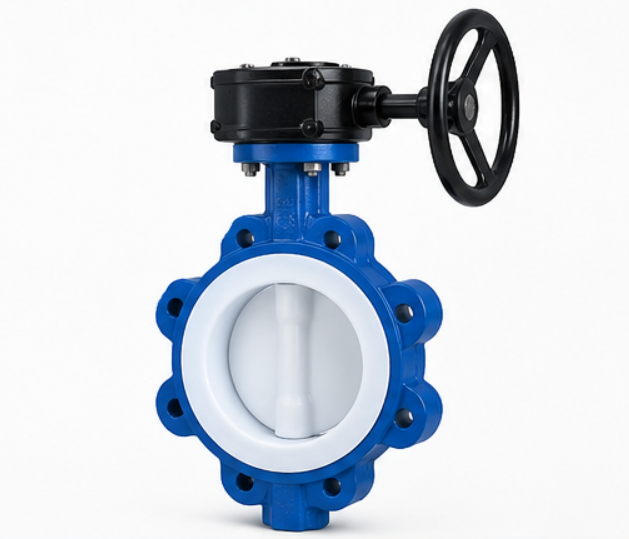
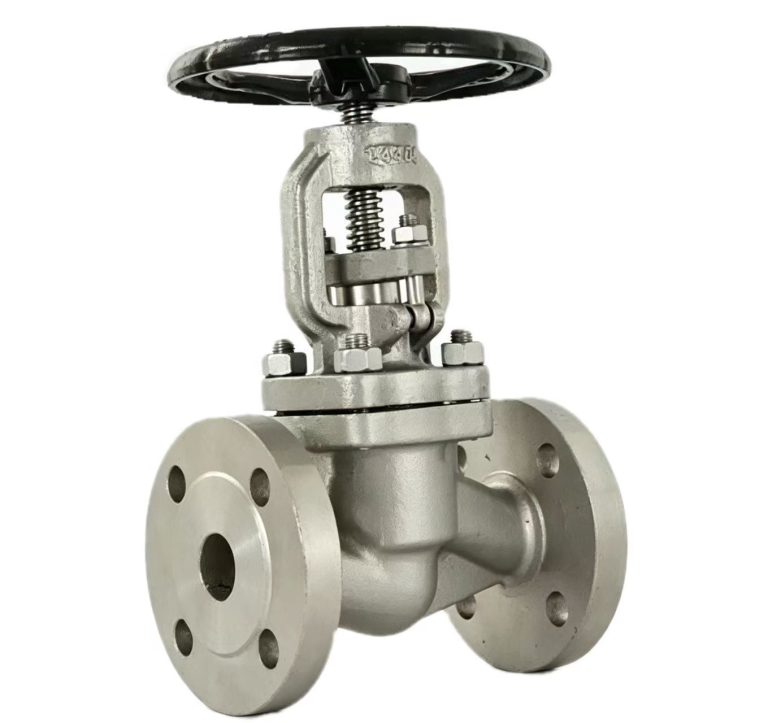
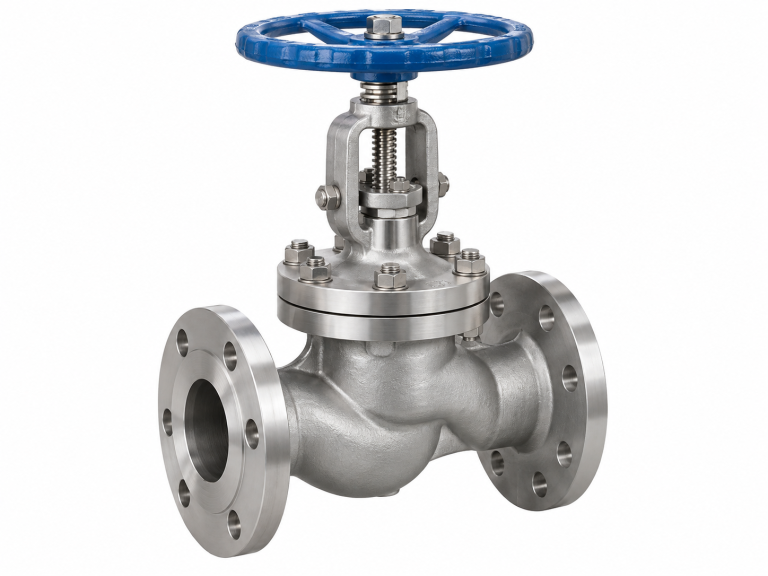
Product Overview
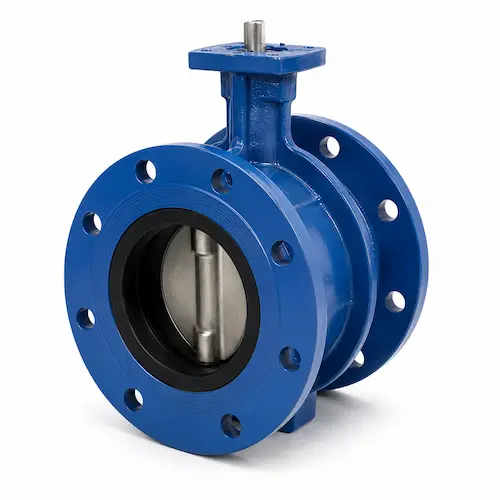
| Product Name | Rubber Lined Flanged Butterfly Valve |
|---|---|
| Valve Type | Double flanged concentric butterfly valve |
| Model / Series | D341X / D341J Series or project-specific model |
| Lining / Seat Material | EPDM, NBR, natural rubber, neoprene or other rubber lining based on media |
| Body Material | Ductile iron, cast iron, cast steel or carbon steel |
| Disc Material | Ductile iron coated disc, stainless steel disc, nylon-coated disc or rubber-lined disc |
| Connection Type | Double flanged connection |
| Operation Options | Lever, worm gearbox, pneumatic actuator or electric actuator |
| Typical Applications | Wastewater treatment, sewage pipelines, sludge service, pump stations, cooling water and industrial water systems |
What Is a Rubber Lined Flanged Butterfly Valve?
A rubber lined flanged butterfly valve is a quarter-turn valve with integral flanges on both sides of the body. The valve disc rotates 90 degrees to open, close or regulate flow. The internal rubber liner provides resilient sealing and reduces direct exposure of the valve body to wastewater, sewage, sludge or other water-based media.
The double flanged structure is different from wafer and lug butterfly valves. Instead of being clamped only between pipeline flanges, a flanged butterfly valve has its own full flanges. This makes the valve easier to align in some pipeline layouts and more suitable for larger sizes, heavier pipelines or installations where stronger connection support is required.
If your project does not require double flanged construction, you can also compare this product with our rubber lined butterfly valve options, including wafer, lug and double flanged configurations.
 Rubber Lining and Sealing Structure
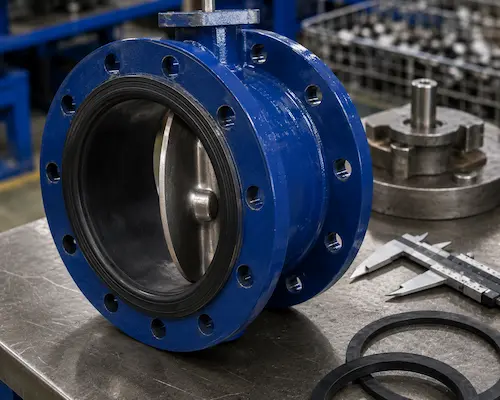 Rubber Lining and Sealing Structure
The rubber liner is one of the main functional parts of this valve. It protects the internal valve body and works as the soft sealing surface for the valve disc. When the disc closes, the disc edge compresses against the rubber liner to form a resilient seal.
For wastewater and sewage service, the lining material should be selected according to medium composition, pH value, temperature, suspended solids, chemical additives and operating frequency. EPDM is commonly used for water and wastewater service. NBR may be selected for oil-containing media. Natural rubber may be considered for selected abrasive slurry conditions. Neoprene or other elastomers can be reviewed according to project requirements.
For broader lining material comparison, you can refer to our article on PTFE lined valve vs rubber lined valve.
Main Structural Features
Double Flanged Body
The double flanged body provides direct bolting to pipeline flanges on both sides. This structure is useful for wastewater plants, pump stations, outdoor pipelines and larger valve sizes where installation rigidity is important.
Concentric Soft-Sealing Design
The disc rotates around the valve centerline and seals against the rubber liner. This structure is commonly used for water, wastewater, cooling water and selected low-to-medium pressure service.
Rubber-Lined Flow Passage
The lining helps isolate the metal body from corrosive or abrasive fluid. In wastewater systems, this can reduce body corrosion and improve service suitability when the correct rubber compound is selected.
Manual or Actuated Operation
Small sizes may be supplied with lever operation, while larger valves usually use worm gearbox operation. Pneumatic or electric actuators can be used for automated wastewater systems, remote operation or process control. For manual operation details, our article on gear operated butterfly valves may be useful.
Material Options
| Component | Common Options | Selection Note |
|---|---|---|
| Body | Ductile iron, cast iron, cast steel, carbon steel | Ductile iron with coating is commonly used for wastewater and water service. |
| Liner / Seat | EPDM, NBR, natural rubber, neoprene, other elastomers | Rubber compound must match medium, temperature and chemical condition. |
| Disc | Coated ductile iron, stainless steel 304, stainless steel 316, nylon-coated disc, rubber-lined disc | Disc material affects corrosion resistance, sealing and service life. |
| Shaft | Stainless steel 410, 420, 304, 316 or duplex stainless steel | Should be selected according to corrosion risk and torque requirement. |
| External Coating | Epoxy coating, fusion bonded epoxy or project-specific coating | Important for humid wastewater plants and outdoor pipeline installations. |
| Operation | Lever, gearbox, pneumatic actuator, electric actuator | Actuator selection should consider valve size, torque, control requirement and environment. |
Technical Specifications
| Specification Item | Available / Typical Options |
|---|---|
| Product Type | Rubber lined flanged butterfly valve |
| Valve Structure | Concentric butterfly valve with double flanged body |
| Model / Series | D341X / D341J Series or project-specific model |
| Nominal Size | DN50–DN1200 / 2″–48″, larger sizes available on request |
| Pressure Rating | PN10, PN16, Class 125, Class 150 or project-specific pressure rating |
| Body Material | Ductile iron, cast iron, cast steel or carbon steel |
| Liner / Seat Material | EPDM, NBR, natural rubber, neoprene or selected rubber compound |
| Disc Material | Ductile iron coated disc, stainless steel disc, nylon-coated disc or rubber-lined disc |
| Shaft Material | Stainless steel 410, 420, 304, 316 or project-specific material |
| Connection Type | Double flanged connection |
| Flange Standard | EN 1092, ANSI, DIN, JIS, BS or project-specific drilling |
| Face-to-Face Reference | ISO 5752, EN 558, API 609 or project requirement |
| Testing Reference | API 598, EN 12266 or customer inspection requirement |
| Operation Type | Lever, worm gearbox, pneumatic actuator or electric actuator |
| Suitable Media | Wastewater, sewage, sludge, cooling water, utility water, seawater and selected mild chemical wastewater |
| Not Recommended For | Media incompatible with the selected rubber compound, high-temperature chemical service, strong solvents or severe abrasive slurry without material review |
| Documentation | Pressure test report, material certificate, inspection report, operation manual and packing photos |
 Applications in Wastewater Service
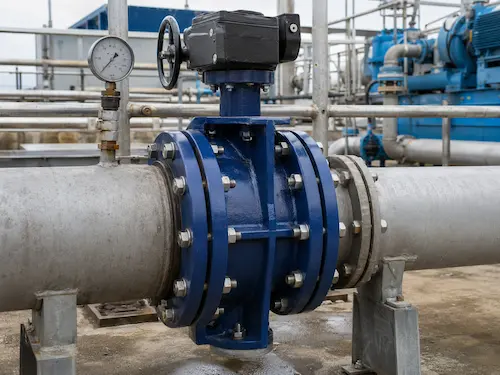 Applications in Wastewater Service
Rubber lined flanged butterfly valves are commonly used in wastewater and water treatment pipelines where corrosion protection, reliable shutoff and stable installation are required. They are suitable for many isolation and general flow control positions in treatment plants, pump stations and industrial wastewater systems.
For system-level application guidance, you can review our water treatment valve solutions page.
- Municipal wastewater treatment plants
- Sewage pipeline isolation
- Sludge handling lines
- Industrial wastewater discharge pipelines
- Pump station inlet and outlet lines
- Filtration and backwash systems
- Cooling water and utility water systems
- Seawater or brackish water lines with suitable disc and shaft material
- Large-diameter water pipeline isolation
Media Compatibility and Limitations
Wastewater service can vary widely. Some systems carry mainly water, while others contain sludge, suspended solids, chemical additives, chloride, biological matter or industrial contaminants. The valve should be selected according to actual medium composition instead of only using the application name.
| Media / Service | Recommended Consideration | Selection Note |
|---|---|---|
| Municipal wastewater | EPDM liner with coated body and suitable disc | Commonly suitable when solids and temperature are within design limits. |
| Sewage service | EPDM or suitable rubber compound | Check suspended solids, cleaning chemicals and operating frequency. |
| Sludge lines | Review rubber compound, disc clearance and flow velocity | High solids content may require special selection. |
| Cooling water | EPDM liner with epoxy-coated body | Confirm temperature and water treatment chemicals. |
| Seawater / brackish water | Suitable liner with stainless steel or coated disc | Disc and shaft corrosion resistance are important. |
| Oil-containing wastewater | NBR or another compatible material may be required | EPDM is generally not recommended for oil or hydrocarbon service. |
| Strong solvents or aggressive chemicals | Rubber lining may not be suitable | PTFE-lined or other corrosion-resistant options should be reviewed. |
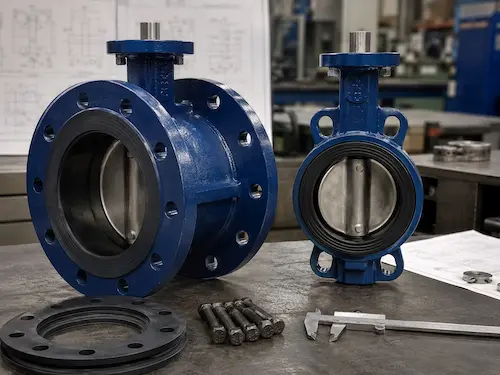
Flanged vs Wafer vs Lug Butterfly Valve
| Valve Type | Main Feature | Typical Advantage | Selection Note |
|---|---|---|---|
| Flanged Butterfly Valve | Integral flanges on both sides | Better installation stability for large sizes and heavier pipelines | Suitable for wastewater plants, pump stations and outdoor pipelines. |
| Wafer Butterfly Valve | Compact body clamped between flanges | Lower weight and shorter installation space | Common for compact water and utility systems. |
| Lug Butterfly Valve | Lugged body with bolting points | Can support selected one-side pipeline maintenance depending on design | Useful where maintenance access is important. |
| U-Section Butterfly Valve | Intermediate structure between wafer and flanged type | Improved alignment with compact design | Often selected for project-specific pipeline layouts. |
Wastewater Valve Selection Notes
For wastewater pipelines, valve selection should consider not only size and pressure, but also solids content, sedimentation, liner compatibility, operating frequency and installation space. If the wastewater contains abrasive solids or slurry-like media, our slurry valve solutions page may provide additional reference.
- Confirm whether the valve is used for isolation or frequent flow control.
- Check wastewater composition, pH value and chemical additives.
- Confirm suspended solids, sludge content and particle size.
- Select liner material according to chemical and mechanical service conditions.
- Confirm disc material, shaft material and external coating.
- Check flange standard, face-to-face dimension and installation clearance.
- Review actuator torque if pneumatic or electric operation is required.
- Confirm whether potable water approval or wastewater project documentation is required.
Inspection, Testing and Packing
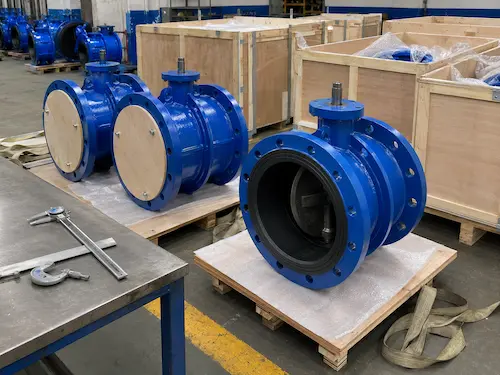
For rubber lined flanged butterfly valves, inspection should cover valve dimensions, flange drilling, lining condition, coating quality, disc movement, seat sealing and actuator operation when applicable. The rubber-lined sealing surface and flanged connection faces should be protected before shipment.
| Inspection Item | Purpose |
|---|---|
| Visual lining inspection | Check liner surface, bonding condition, flange edge and sealing area. |
| Dimension inspection | Confirm size, flange drilling, face-to-face dimension and actuator mounting interface. |
| Disc operation test | Check smooth opening and closing without abnormal rubbing or excessive torque. |
| Shell and seat test | Verify valve pressure resistance and sealing performance according to agreed standard. |
| Coating inspection | Check external anti-corrosion coating quality for wastewater plant environments. |
| Packing inspection | Confirm flange protection, moisture protection, crate condition and shipping marks. |
Export packing can include protective flange covers, bubble wrap, moisture-resistant packaging, plywood cases, reinforced crates and palletized loading. For larger valves or actuated valves, the valve body and actuator should be fixed securely to reduce movement during transport.
Information to Confirm Before Ordering
- Valve size and quantity
- Pressure rating and working temperature
- Wastewater composition and pH value
- Solids content, sludge content or particle size if applicable
- Flange standard and face-to-face dimension
- Body material, disc material, shaft material and rubber liner material
- Manual gearbox, pneumatic actuator or electric actuator requirement
- Installation position and pipeline orientation
- Testing standard and documentation requirement
- Packing method and delivery schedule
FAQ
1. What is a rubber lined flanged butterfly valve used for?
A rubber lined flanged butterfly valve is used for shutoff or general flow control in wastewater, sewage, sludge, cooling water, seawater and selected corrosive water pipelines. The rubber lining protects the internal valve body and provides resilient sealing with the valve disc.
2. Why choose a flanged butterfly valve instead of wafer type?
A flanged butterfly valve has integral flanges on both sides, giving the valve stronger pipeline connection support. It is often preferred for larger sizes, wastewater plants, pump stations, outdoor pipelines and installations where alignment and rigidity are important.
3. Which rubber liner is suitable for wastewater service?
EPDM is commonly selected for water and wastewater service, while NBR, natural rubber, neoprene or other elastomers may be selected according to oil content, abrasion level, chemical additives and temperature. The final liner should be chosen according to actual medium composition.
4. Can this valve be used for sludge or slurry service?
It can be used in selected sludge or slurry service, but the application should be reviewed carefully. Solids content, particle size, flow velocity, disc clearance, rubber compound and operating frequency all affect whether a flanged rubber lined butterfly valve is suitable.
5. What information is needed for quotation?
For an accurate quotation, it is recommended to provide valve size, pressure rating, wastewater composition, temperature, flange standard, body material, disc material, liner material, operation method, quantity and required inspection documents.