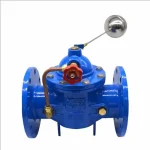
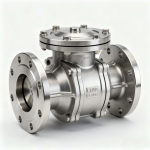
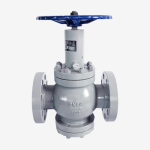
Main steam isolation valves in power plants should be selected from the actual isolation duty, steam pressure and temperature, thermal cycling, required shut-off behavior, line connection, operating differential pressure, valve operating frequency and any specified automatic closure requirement. Gate valves are commonly considered for full-bore isolation because they provide low flow resistance in the fully open position, but the final design may use pressure-seal or bolted-bonnet construction, flexible-wedge or parallel-slide closure, butt-weld or flanged ends, and manual, geared or actuated operation depending on the project. Main steam isolation is not a throttling duty, and a control valve should not be substituted for an isolation valve simply because both handle steam.
Power & Steam · Main Steam Line Selection Map
Main Steam Isolation Valve Selection for Power Plants
Main steam isolation is a high-energy shut-off duty. The engineering question is not simply “Which gate valve can handle the pressure?” but whether the complete valve, closure design, bonnet joint, end connection, operator and piping arrangement can isolate the steam line reliably across startup, normal operation, shutdown and credible transient conditions.
Main Steam Line Selection Map
Pressure seal or bolted bonnet
Flexible wedge or parallel slide
Butt weld or flanged
Manual, gear or actuator
1. Define the Isolation Duty Before Selecting the Valve
Normal Process Isolation
The valve is used to isolate a boiler, header or downstream steam section for startup, shutdown, maintenance or equipment separation. The project should define the maximum differential pressure at which the valve may need to open or close.
Protective or Automatic Isolation
If the valve is credited as part of an automatic trip or protective isolation function, the purchaser must define the required actuation logic, closure time, fail behavior, power source, instrumentation and applicable safety classification. These requirements should not be inferred from the words “main steam isolation valve” alone.
Scope note: this article addresses general thermal, combined-cycle and industrial power-plant main steam isolation. Nuclear safety-class MSIV applications can involve additional code, qualification and testing requirements and should be treated under the project-specific nuclear specification.
 2. Why Gate Valves Are Commonly Considered for Main Steam Isolation
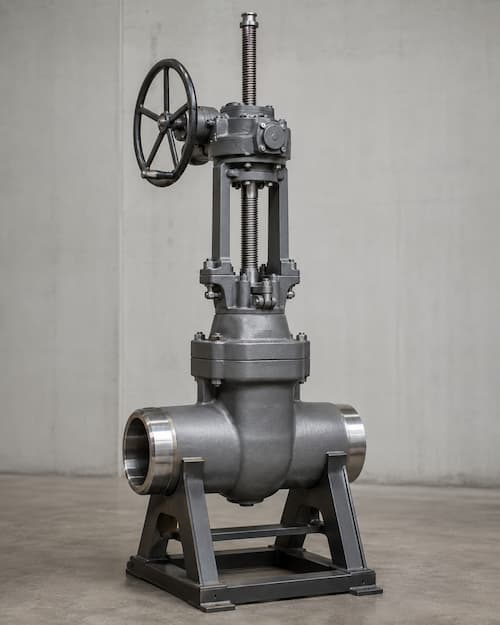 2. Why Gate Valves Are Commonly Considered for Main Steam Isolation
A gate valve provides a relatively straight-through flow path when fully open and is fundamentally intended for on/off isolation rather than continuous throttling. That makes it a logical candidate for a main steam line where low open-position pressure loss and positive isolation are important.
Use the gate valve fully open or fully closed.
Do not treat a main steam isolation gate valve as a control valve. Operating a gate for sustained throttling can expose the gate and seats to high-velocity steam, vibration and localized erosion.
Do not select by line size alone.
The nominal steam pipe size is only one input. Pressure-temperature rating, required bore, valve geometry, end connection, closure design, actuator force and project standard all remain part of the selection.
3. Pressure Seal or Bolted Bonnet?
The bonnet choice should follow the project design envelope rather than a single pressure threshold. Pressure-seal construction is widely used in high-pressure and high-temperature power applications because the body-to-bonnet joint uses internal pressure to increase gasket loading. Bolted-bonnet designs remain valid in many steam services when the selected design, pressure-temperature rating and project specification permit them.
| Selection Question | Engineering Direction |
|---|---|
| High-energy HP/HT main steam? | Pressure-seal bonnet deserves specific review because of its compact pressure-assisted body-bonnet joint. |
| Moderate pressure within an approved bolted-bonnet design? | Bolted bonnet may remain suitable when pressure-temperature rating and project requirements are satisfied. |
| Frequent thermal transients? | Review bonnet joint behavior, gasket system, live-loading if offered, and manufacturer maintenance guidance. |
| Plant standard already specifies bonnet construction? | Follow the approved project specification unless an engineered deviation is accepted. |
For the construction and product-level selection details, see the Pressure Seal Gate Valve page rather than repeating the pressure-seal mechanism here.
4. Flexible Wedge or Parallel Slide?
OPTION A
Flexible Wedge
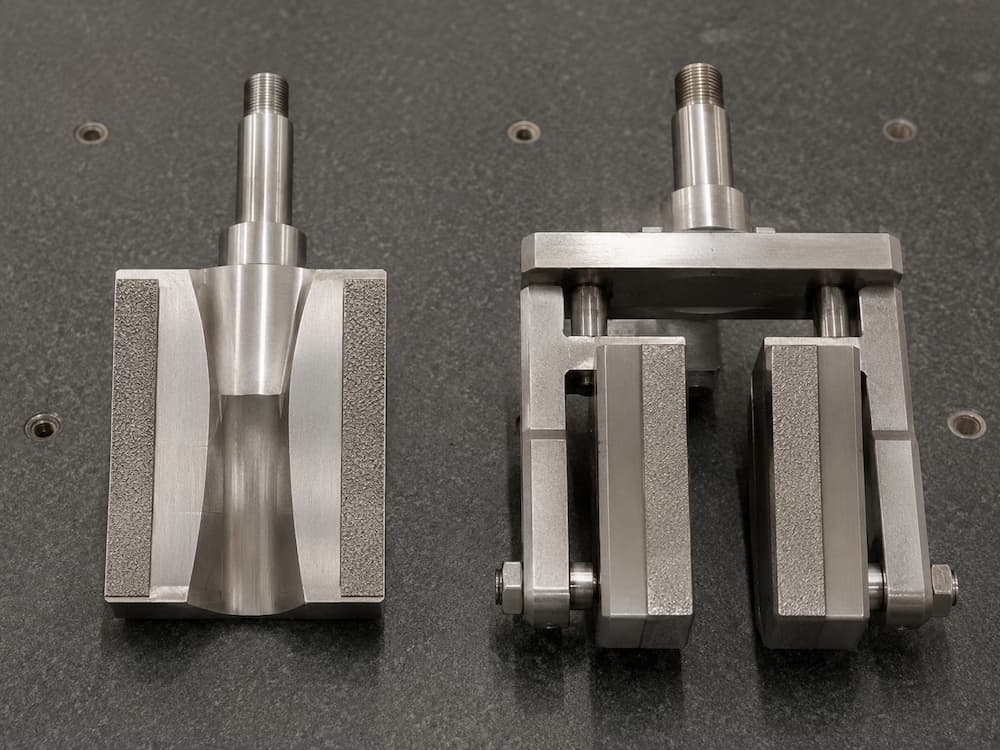
A flexible wedge is torque-seated between inclined seats. The wedge geometry is designed to accommodate some seat distortion and thermal movement while maintaining shut-off.
Review: thermal binding risk, hot-close/cool-down behavior, seat and wedge hardfacing, required torque, stem load and operator sizing.
OPTION B
Parallel Slide
A parallel-slide design uses parallel closure elements rather than wedge action. System pressure contributes to downstream-seat sealing, and the design can reduce sensitivity to thermal binding in high-temperature service.
Review: low differential-pressure shut-off behavior, disc and seat wear, cavity pressure management, bypass/equalizing arrangement and operator force.
There is no universal winner. The project duty, temperature transients, required shut-off behavior, maintenance philosophy and approved manufacturer design should decide the closure type.
5. Butt-Weld or Flanged Ends?
Butt-Weld Ends
Butt-weld ends are commonly considered in high-energy steam piping because they remove a large line flange joint and create a continuous welded pressure boundary. Their use requires correct welding procedure, compatible pipe and valve materials, heat treatment where applicable, NDE and enough installation space for field fabrication.
Flanged Ends
Flanged connections can simplify removal or replacement, but the flange, gasket and bolting system becomes another high-temperature pressure boundary that must satisfy the actual pressure-temperature rating and piping specification.
Do not state that every main steam isolation valve must be butt-welded. The project piping class and plant maintenance philosophy determine the connection.
6. Material Selection: Use the Actual Pressure-Temperature Envelope
Main steam temperature can place the valve in material regimes where elevated-temperature strength, creep behavior, thermal expansion, welding compatibility and long-term seat performance matter. Carbon steel, chromium-molybdenum alloy steels and higher-temperature alloy grades may all appear in power projects, but the article or supplier should not assign a universal body grade without the actual project conditions.
| Body / bonnet | Confirm pressure-temperature rating, elevated-temperature strength, casting or forging specification and piping material compatibility. |
| Gate / discs and seats | Review hardfacing, erosion resistance, galling, hot hardness and compatibility with thermal cycling. |
| Stem | Check strength, corrosion resistance, galling risk, thread / stem-nut design and operating load. |
| Packing / gasket | Select for the valve construction, maximum temperature, emissions requirement and maintenance philosophy. |
For the broader pressure-temperature and material framework, use the Valve Pressure-Temperature Rating Guide and High Temperature High Pressure Valves Guide.
7. Thermal Binding, Pressure Locking and Cavity Overpressure
High-temperature gate valves can experience several operating problems that are often incorrectly grouped together. The valve and piping system should review each mechanism separately.
A bypass or equalizing line should not be added by habit. Its direction, valve arrangement and operating procedure must match the actual gate design and system pressure relationship.
8. Select the Operator from the Worst Required Operating Case
The operator must overcome the valve’s required stem load or torque under the specified opening and closing differential pressure, packing friction, seating load and any dynamic requirement. The operator is not selected from valve size alone.
| Operator | Typical Reason to Consider | Project Check |
|---|---|---|
| Handwheel | Smaller or infrequently operated valves where manual force remains practical. | Maximum rim pull / operating force, access and opening differential pressure. |
| Gear operator | Larger valves where mechanical advantage is required but powered operation is not necessary. | Gear ratio, stem load, turns, access and maintenance. |
| Electric actuator | Remote operation, sequencing or automatic isolation where electrical actuation is specified. | Thrust/torque, duty cycle, power, controls, limit/torque switches and required closure time. |
| Pneumatic / hydraulic actuator | Project-specific fast or protective isolation where the plant philosophy requires it. | Available supply, fail action, stored energy, closure profile and dynamic valve load. |
9. Main Steam Isolation Valve RFQ Data
For quotation, the minimum high-value information is: size, design pressure, design temperature, material requirement, end connection, pressure class / standard and operator requirement. If the valve must open or close against a defined differential pressure or meet an automatic closure time, provide those conditions as well.
10. Inspection, Testing and Documentation
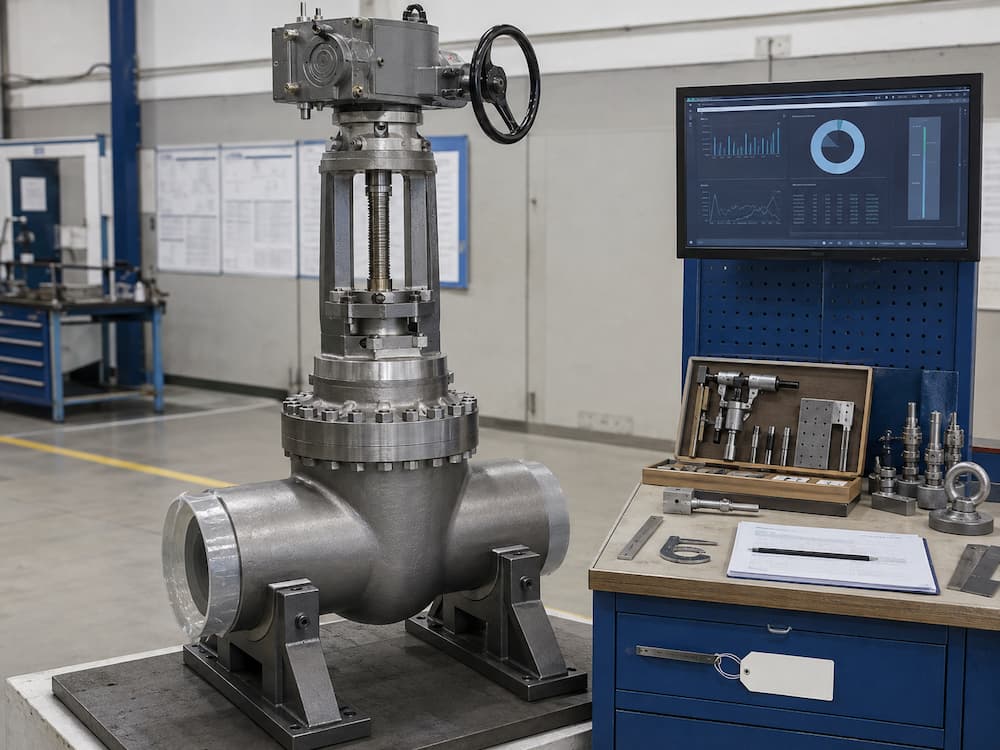
The purchase specification should define the applicable valve standard, pressure test standard, material documentation, NDE, actuator testing and any project-specific inspection requirements. ASME B16.34 covers pressure-temperature ratings, materials, dimensions/tolerances, nondestructive examination, testing and marking for applicable valve constructions, but the complete purchase specification may include additional standards and EPC requirements.
| Verification | Purpose |
|---|---|
| Material documentation | Confirm specified pressure-containing, trim and bolting materials where required. |
| Dimensional inspection | Verify end preparation, face-to-face / end-to-end, stem/yoke arrangement and approved drawing dimensions. |
| Shell / pressure-boundary test | Verify pressure-containing integrity to the applicable test procedure. |
| Seat leakage test | Verify shut-off performance to the specified valve/test standard. |
| Operator functional test | Check full travel, limits, torque/thrust settings and automatic function when included in the supply scope. |
| Final protection | Protect butt-weld ends or flange faces, stem, seat area, operator and accessories during shipment and storage. |
Main Steam Isolation Valve Selection Checklist
- Define whether the valve is normal isolation, maintenance isolation or a protective automatic isolation device.
- Confirm operating and design pressure and temperature.
- Confirm the full-open/full-close isolation requirement and any seat leakage criterion.
- Select the parent gate-valve design and applicable standard.
- Evaluate pressure-seal versus bolted-bonnet construction.
- Evaluate flexible-wedge versus parallel-slide closure.
- Confirm butt-weld or flanged ends from the piping class.
- Check thermal binding, pressure locking and cavity overpressure scenarios.
- Size the handwheel, gearbox or actuator for the worst required operating differential pressure.
- Define pressure testing, material records, NDE and project documentation before purchase.
Related Technical Resources
Technical References
Frequently Asked Questions
What valve is commonly used for main steam isolation?
Gate valves are commonly considered because they are intended for full-open/full-close isolation and provide a relatively straight flow path when open. The final valve design still depends on pressure, temperature, shut-off requirement, thermal cycling, connection, operator and project specification.
Does a main steam isolation valve always need a pressure-seal bonnet?
No. Pressure-seal construction is widely used in high-pressure and high-temperature power applications, but bonnet construction should be selected from the actual pressure-temperature envelope and project specification rather than from the service name alone.
Is a parallel-slide gate valve better than a flexible-wedge gate valve for main steam?
Not universally. Parallel-slide designs reduce wedge-related thermal binding concerns, while flexible-wedge designs can accommodate some seat distortion and provide a different shut-off mechanism. The correct choice depends on the specific steam duty and approved valve design.
Should a main steam isolation valve use butt-weld ends?
Butt-weld ends are common in high-energy steam piping because they eliminate a large line flange joint, but they are not mandatory for every project. The piping class, valve design, welding requirements and maintenance philosophy should determine the connection.
Can a main steam gate valve be used for throttling?
Gate valves are generally intended for isolation. Continuous throttling can expose the gate and seats to high-velocity steam and localized wear. A globe or control valve should be evaluated for regulation duties.
What information is needed to quote a main steam isolation valve?
At minimum, provide valve size, design pressure, design temperature, body material requirement, pressure class or design standard, end connection and operator requirement. Also provide maximum operating differential pressure and required closure time if these affect operation or actuator sizing.
Is every main steam isolation valve a nuclear MSIV?
No. The term may be used broadly for main steam isolation duties, but nuclear safety-class MSIV applications can have additional code, qualification, testing and safety requirements. Those requirements must come from the project-specific nuclear specification.