Seawater Butterfly Valve Actuators: How to Specify Coastal Corrosion Protection
A seawater butterfly valve may have correctly selected wetted materials yet become difficult to operate because its external bracket corrodes, a limit-switch box admits moisture or a cable entry traps salty water. A quotation describing the actuator as “marine grade” leaves these interfaces unresolved.
This guide focuses on the external actuator package for coastal intake, cooling-water and desalination installations. Use Seawater Valve Corrosion: Body, Disc, Shaft and Seat Materials for wetted-component selection, and Butterfly Valves for Desalination: Intake vs High-Pressure RO to establish the valve duty before specifying actuation.
1. Define the Coastal Exposure at Each Installation
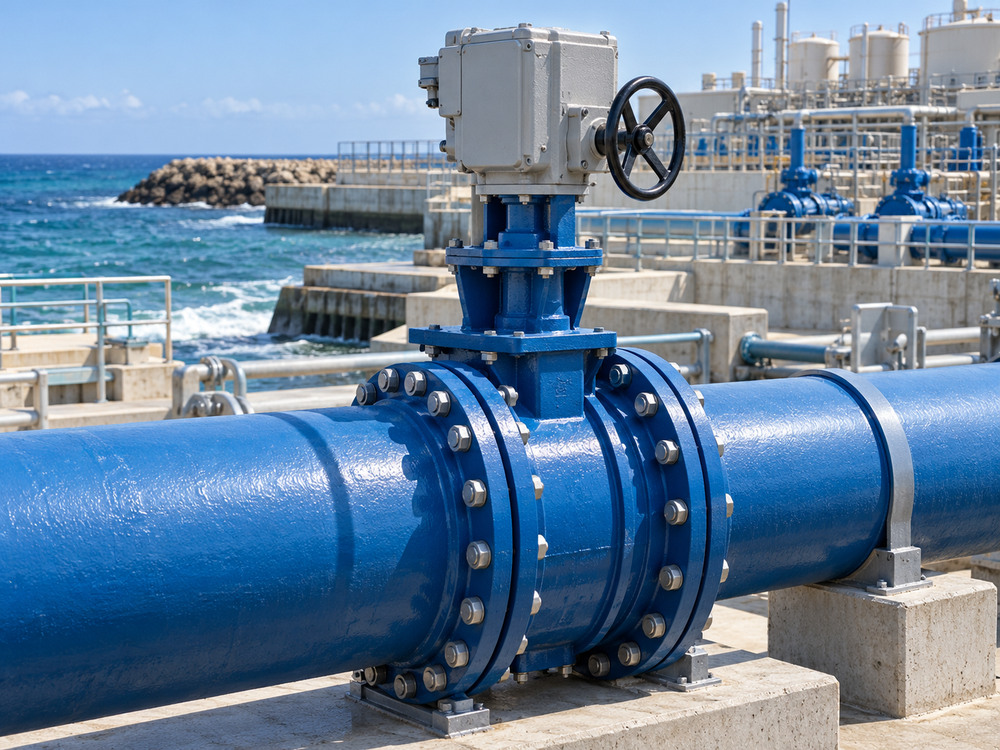
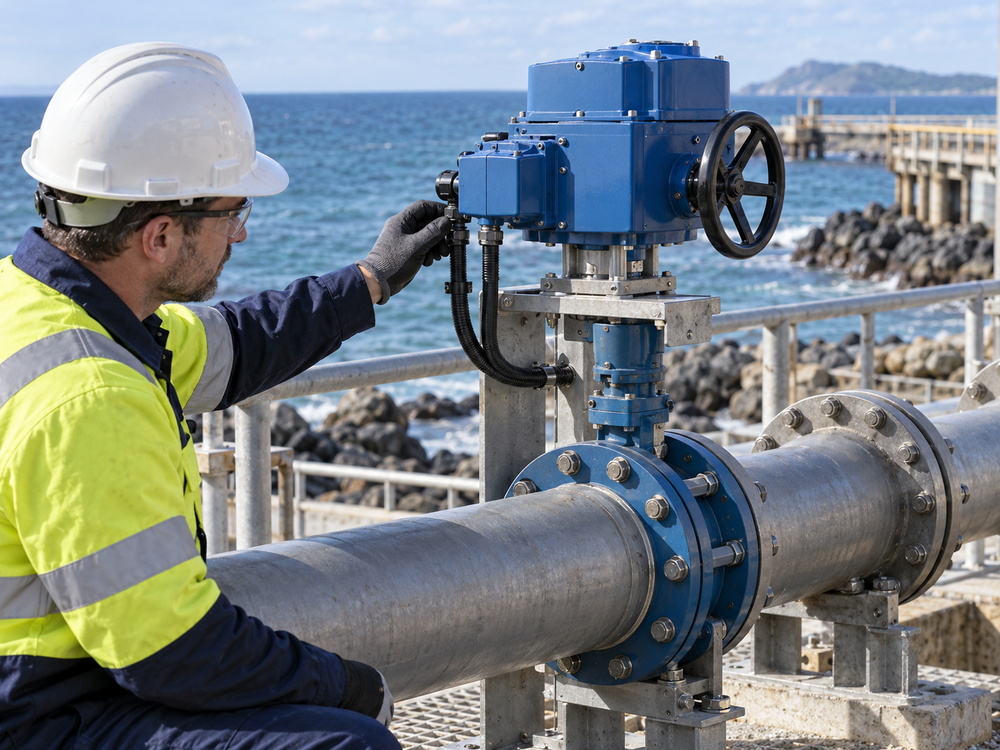
Distance from the shoreline is useful background, but it is not a complete exposure specification. A sheltered indoor actuator, a windward outdoor valve and a valve in a periodically flooded pit can require different protection. Record equipment elevation, direct spray, prevailing wind, rain shelter, washdown and access for inspection.
| Exposure | Information to provide | Package review |
|---|---|---|
| Salt-laden atmosphere | Outdoor location, shelter, wetting and drying | Housing finish, UV resistance and exposed fasteners |
| Direct seawater or brine splash | Source, frequency, concentration and temperature | Coating suitability, crevices and accessory protection |
| Temporary flooding | Water type, depth, duration and frequency | Declared immersion capability of every affected component |
| Washdown | Jet pressure, temperature and cleaning chemicals | Required jet protection, seals and entry arrangements |
| Humid enclosure or daily temperature swings | Ambient range, humidity and available heater power | Condensation control and storage provisions |
State whether operation is required during flooding or only after recovery. Also identify hazardous-area requirements where applicable; a coastal finish does not establish explosion protection. For the station arrangement and valve locations, see Seawater Intake Pump Station Valves.
2. Separate Coating Classification From Enclosure Protection
ISO 12944-2 provides environmental classification within the protective-paint framework. IEC 60529 defines the IP enclosure-protection framework. Use both where appropriate, with the agreed editions and the supplier’s declared scope.
When a project requests C5 or CX, require the supplier to identify its proposed protection system and the evidence supporting that application. Manufacturer literature may use legacy terms such as C5-M or C5-I. Ask for the referenced edition and a documented relationship to the project requirement instead of silently treating the labels as interchangeable.
IP68 alone is incomplete for a flooding specification. Obtain the declared immersion depth, duration, installation conditions and operating restrictions. If water jets are also expected, require suitable jet-protection evidence separately. A fresh-water immersion claim does not establish resistance to seawater corrosion.
3. Specify the Coating System and Its Substrate
Request a coating schedule identifying the housing material, preparation, pretreatment or primer, intermediate layers where used, finish coat, thickness acceptance and repair method. Aluminium, cast iron and steel need substrate-appropriate procedures. A steel test panel does not automatically qualify a finish applied to an aluminium actuator casting.
ISO 12944-6:2018 addresses laboratory assessment of protective paint systems for carbon steel structures. When a supplier uses this framework for an actuator, ask how its evidence applies to the actual substrate, geometry and manufacturing process.
| Coating requirement | Evidence to request | Acceptance concern |
|---|---|---|
| Substrate and preparation | Material, cleaning and preparation procedure | Compatible with the quoted casting or fabricated part |
| Layer construction | Product/system identity and application procedure | Same construction as the qualified system |
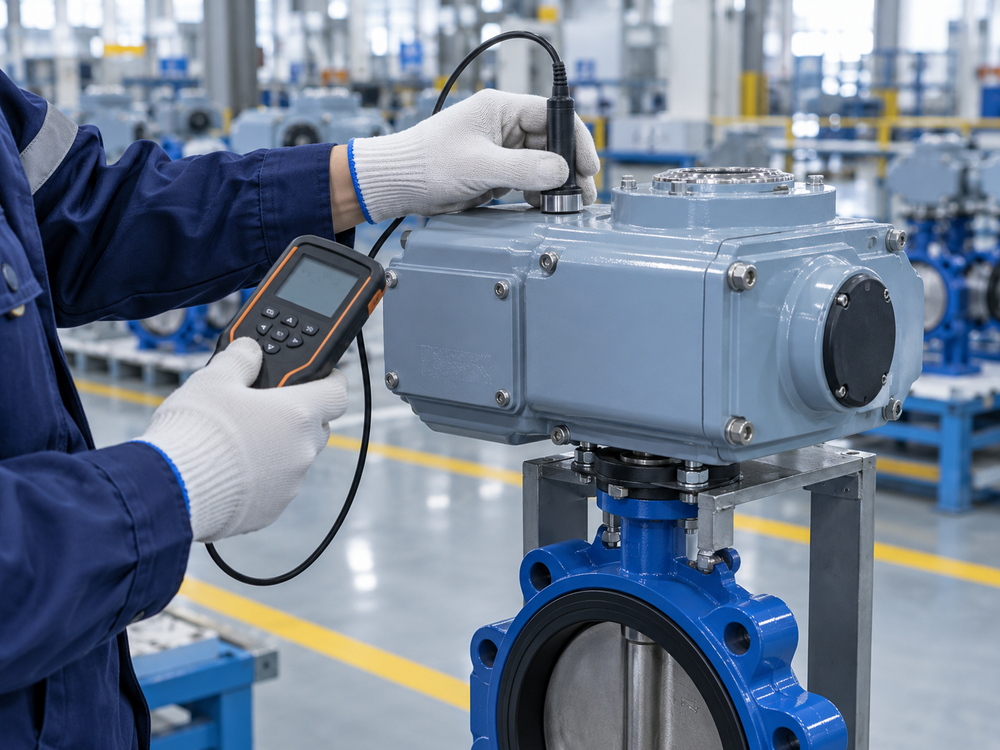
| Dry-film thickness | Approved limits, measurement method and records | Measured on suitable locations with substrate-appropriate equipment |
| Edges, recesses and joints | Coverage details and assembly sequence | Protection at bolt heads, cover edges and mounting interfaces |
| Outdoor finish | Weathering/UV suitability and colour requirement | Finish appropriate for exposed coastal installation |
| Repair | Approved touch-up procedure and materials | Damage repairable without compromising seals or operation |
Do not prescribe a universal coating thickness for every actuator. Select the system first, then agree its minimum and maximum limits. Uncontrolled extra coating can interfere with threads, fit surfaces, identification plates or moving parts.
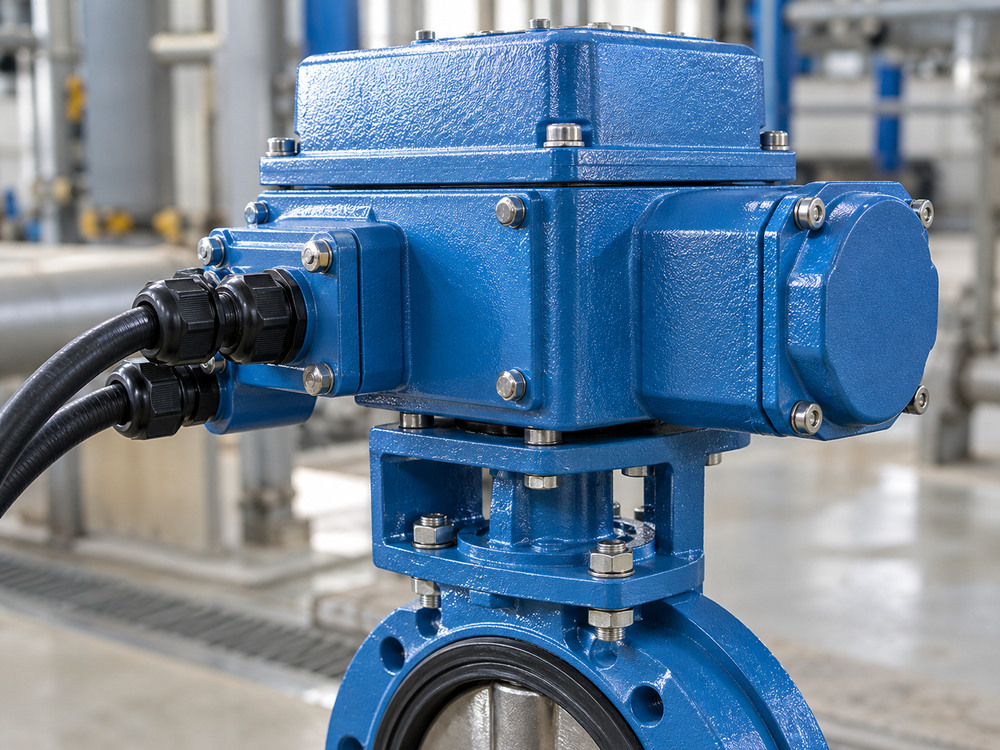
4. Review Electric Actuator Cable Entries and Condensation Control
An electric actuator enclosure is only one part of the installed electrical boundary. Review terminal covers, seals, glands, blanking plugs, junction boxes and local controls. Confirm cable diameters and entry threads before choosing glands; an adaptor or loose plug can undermine an otherwise suitable arrangement.
- Require entry components compatible with the enclosure, coastal exposure and any hazardous-area certification.
- Route cables to limit water tracking into entries, using the manufacturer’s permitted installation orientation and drip-loop arrangements.
- Specify anti-condensation measures where required, including heater supply and the procedure during power outages or storage.
- Confirm cover-opening clearance, seal replacement and access without damaging the finish.
Do not add a drain hole or substitute a breather without manufacturer approval. Modifications can change enclosure protection and certification. A protective canopy can reduce direct spray and solar heating, but it must preserve cooling, access and manual operation.
5. Include Pneumatic Actuator Accessories and Exhaust Paths
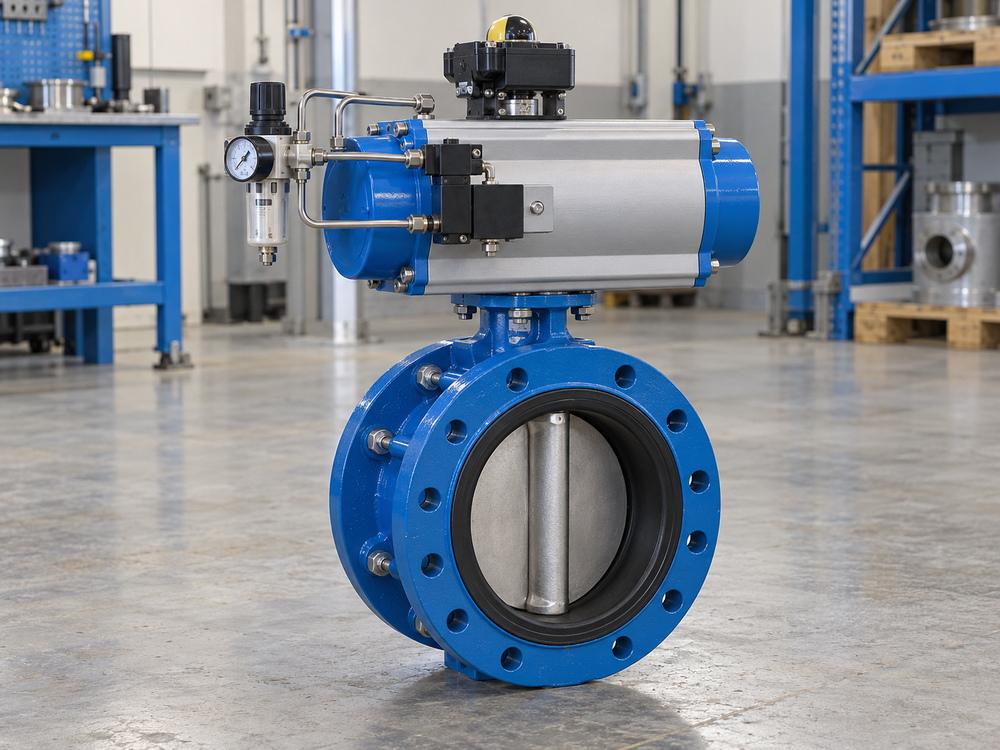
A pneumatic actuator package can include a solenoid valve, filter regulator, positioner, tubing, fittings, silencers and a limit-switch enclosure. These accessories often have different materials and protection declarations from the actuator itself. Request a component schedule rather than accepting one package-level adjective.
Identify how ambient air can enter through exhaust or spring-chamber vent paths, and ask the manufacturer for approved protection against salt spray and flooding. Remote exhaust arrangements may help in some installations, but added backpressure or blocked silencers can change stroke time and fail action. Any arrangement must be checked against the actuator and control-valve requirements.
Define supply-air pressure at the actuator during movement, air quality, ambient temperature and fail position. Demonstrate spring-return operation at the specified conditions with the actual accessory arrangement. A stainless solenoid body does not establish the suitability of its coil enclosure, connector, seals or fittings.
6. Protect Brackets, Couplings, Gearboxes and Fasteners
The bracket carries actuator reaction loads; corrosion here can compromise alignment and operation. Specify its material or coating, structural suitability, fasteners and accessible inspection surfaces. Include the coupling, exposed shaft extension, gearbox, handwheel and position indicator in the review.
Ask the supplier to address dissimilar-metal contacts and water-retaining crevices. Simply replacing every bolt with stainless steel may create strength, galling or galvanic-compatibility concerns. Fastener selection must satisfy both mechanical requirements and the exposure assessment.
Define treatment of mounting faces and fit surfaces with the manufacturer. Avoid applying paint to sealing faces or adding isolation washers that alter bolt preload or mounting stiffness without approval. Confirm access to manual override, grease points where provided, cover bolts and lifting features.
Vcore’s Double Offset Butterfly Valve and Rubber Lined Flanged Butterfly Valve pages provide configuration starting points. Confirm the coastal operating package separately for the selected model.
7. Verify Torque, Travel and Closing Time Alongside Protection
Corrosion protection cannot compensate for an incorrectly sized actuator. Obtain valve breakaway, running and seating torque over the relevant differential-pressure and temperature envelope. Compare these with the actuator output throughout travel, including the spring stroke and minimum available air pressure where applicable.
Agree the sizing allowance and check allowable valve shaft, coupling and gearbox loads. Excess output or an incorrect torque-trip setting can damage the assembly. Define on/off or modulating duty, cycle frequency, stops, position feedback and manual operation.
At a pump station, closing time should follow the hydraulic and transient requirements. “Fast closing” is not a universal improvement. Coordinate the isolation valve with the pump-trip sequence and the seawater desalination check-valve selection; the actuator coating specification does not resolve surge behavior.
8. Evaluate Corrosion Evidence and Factory Acceptance
A salt-spray report is useful when its specimen, method and acceptance criteria match the proposed finish. Request the substrate, preparation, coating layers, exposure method, duration, scribe condition where applicable, inspection criteria and result. Check whether the report covers coated panels, individual components or an assembled product.
Do not convert test hours into guaranteed years at the coast. Likewise, keep qualification evidence separate from production inspection. Qualification supports a defined system; production records show that the supplied equipment was built and finished as agreed.
| Stage | Buyer verification | Record |
|---|---|---|
| Design approval | Exposure, materials, coating, IP scope and accessory schedule | Approved datasheet, drawings and deviations |
| Finish inspection | Appearance, coverage, thickness and agreed supplementary checks | Coating inspection and repair records |
| Assembly inspection | Glands, plugs, seals, brackets and fasteners | Completed package checklist |
| Functional acceptance | Travel, feedback, settings and fail action where specified | Traceable test report linked to equipment identification |
| Dispatch | Entry closure, corrosion protection and packing | Preservation checklist and storage instructions |
9. RFQ Template for a Coastal Butterfly Valve Actuator
Provide enough information for bidders to price the same protection scope. Mark unknown items for engineering review rather than allowing each bidder to make an unstated assumption.
Suggested Supplier Request
Please quote a complete actuator package for seawater butterfly valve tag ___, DN/NPS ___, PN/Class ___, operating differential pressure ___ and temperature ___. The installation is ___, with salt-spray/splash exposure ___, ambient range ___, washdown conditions ___ and possible flooding depth/duration ___.
Confirm actuator type, supply, duty, fail position, torque sizing, stroke time and control interfaces. Submit a component schedule covering housing, gearbox, bracket, coupling, fasteners, cable entries, control enclosures and pneumatic accessories as applicable.
Identify the proposed coating system by substrate, preparation, layers, thickness limits, applicable environmental category/standard edition and supporting qualification evidence. Declare enclosure protection and any immersion conditions for each relevant component. Provide inspection scope, repair procedure, factory functional test records, deviations and storage/maintenance instructions.
Send Vcore Valve your valve datasheet and coastal exposure requirements for review of the proposed valve and actuator configuration. Agree documentation and witness points before production.
10. Preserve Protection During Shipping, Installation and Maintenance
Keep unused entries closed with approved plugs and protect finished surfaces from packing straps and lifting damage. Follow the manufacturer’s storage temperature, humidity and heater requirements. Inspect after transport and again after site installation, especially where contractors have opened covers or replaced cable-entry components.
At handover, record coating condition, entry components, seal condition, actuator settings and completed strokes. Establish inspection intervals from exposure, criticality and manufacturer guidance. Remove salt deposits using an approved cleaning method; repair damage with the specified procedure and investigate recurring water ingress rather than repeatedly repainting the exterior.
11. Frequently Asked Questions
Is IP68 enough for a coastal butterfly valve actuator?
No. Confirm the declared immersion conditions and installed entry arrangement, then specify coastal corrosion protection separately for the housing, hardware and accessories.
Should every coastal actuator be specified as C5 or CX?
No. Select the environmental category and protection requirements from the actual site exposure and project specification. Require the supplier to identify the standard edition, proposed system and applicable evidence.
Does an aluminium actuator housing need corrosion protection?
Yes, its protection still needs review. Require a substrate-appropriate finish and evaluate joints, fasteners, coating damage and dissimilar-metal interfaces for the coastal exposure.
Do salt-spray test hours predict service life?
No direct conversion is justified. Review the test method, specimen, coating system and acceptance criteria as qualification evidence, then assess applicability to the installed environment.
Which pneumatic accessories should be included in the specification?
Include the solenoid, filter regulator, positioner, switch box, tubing, fittings and exhaust or vent arrangements supplied with the actuator. Confirm each component’s exposure limits and its effect on operation.
What should be submitted with the quotation?
Request the actuator datasheet, torque-sizing basis, component material schedule, coating specification, enclosure declarations, relevant qualification evidence, inspection scope and a clear deviation list.