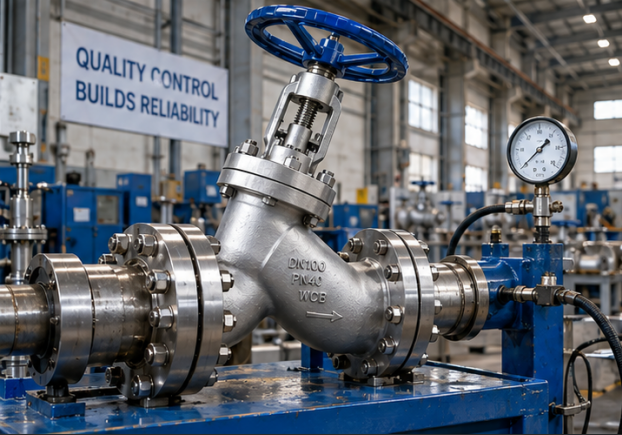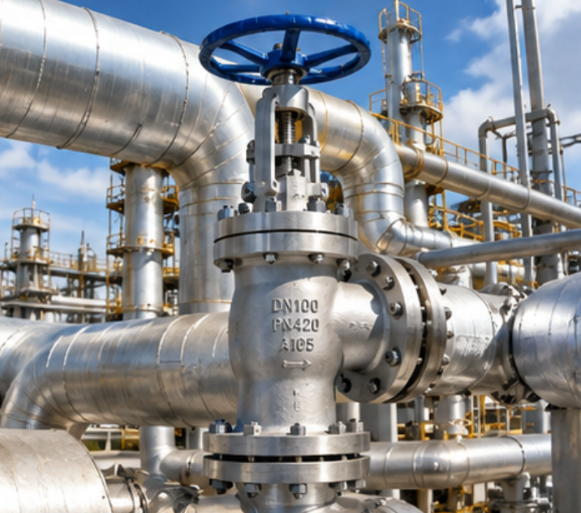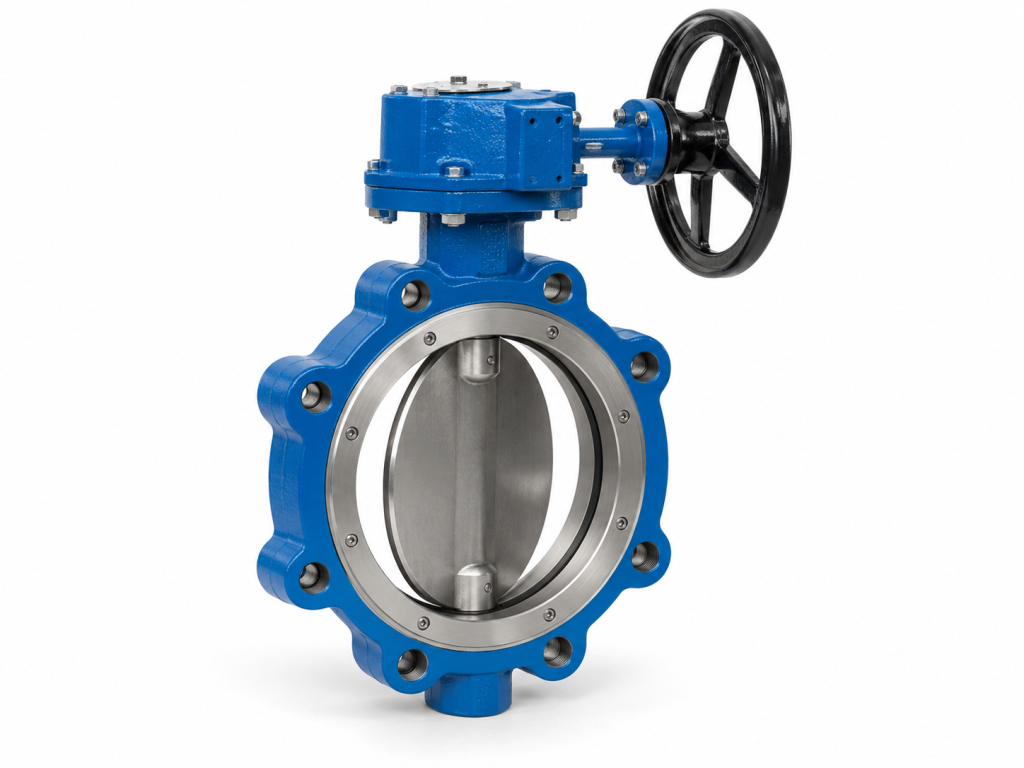
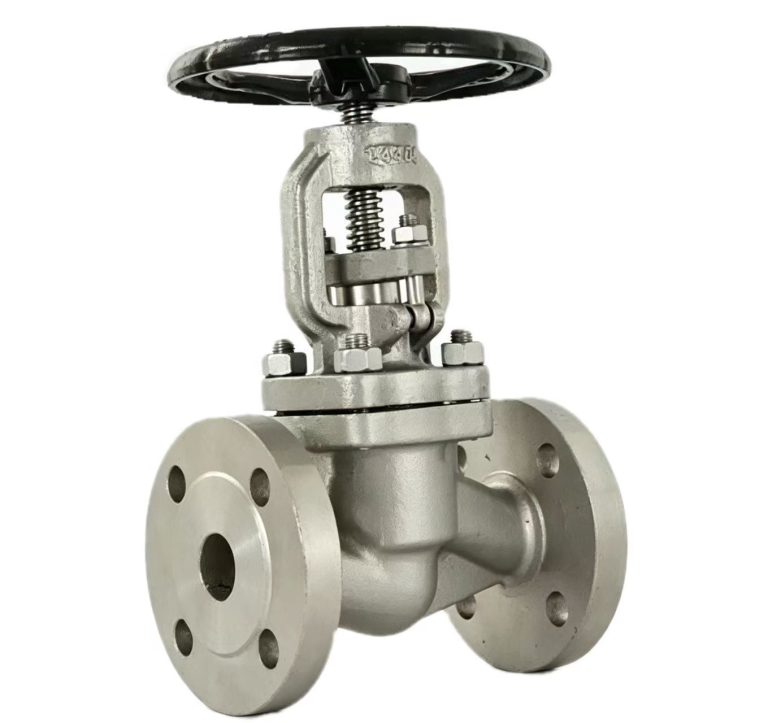
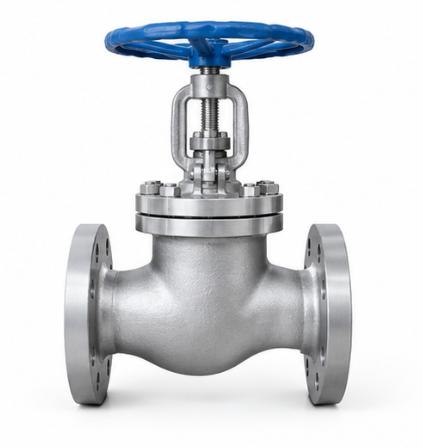
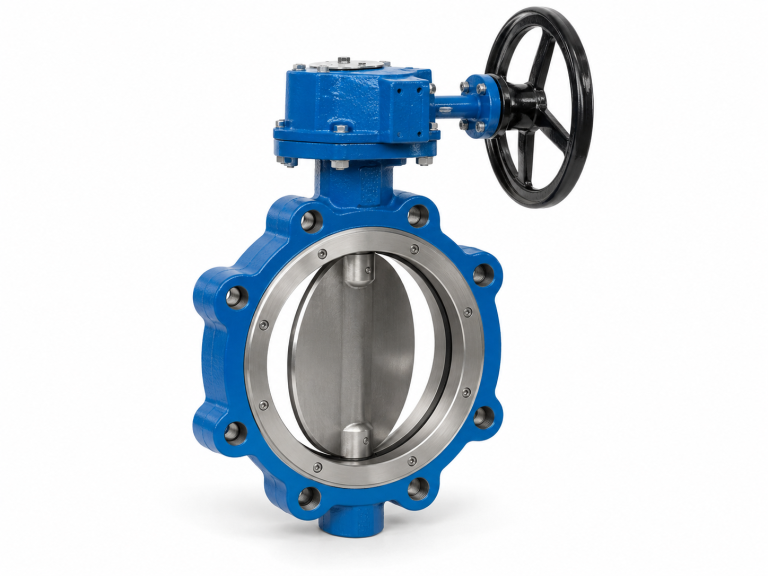
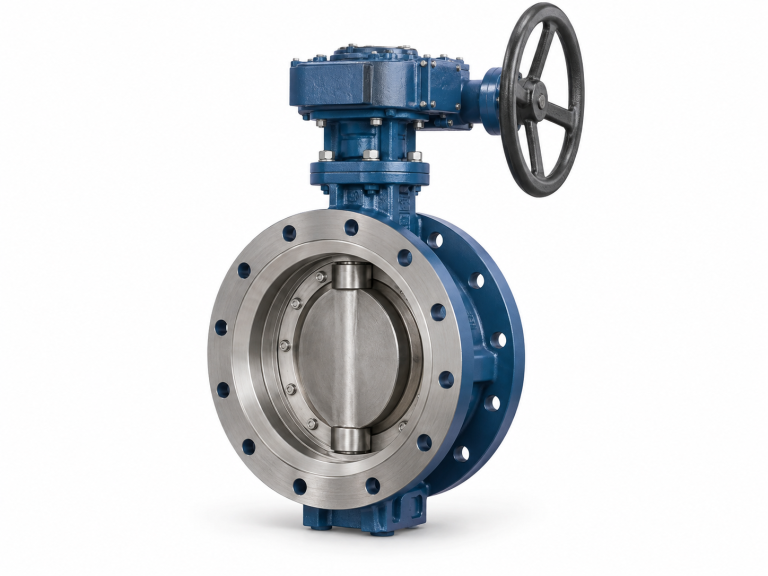
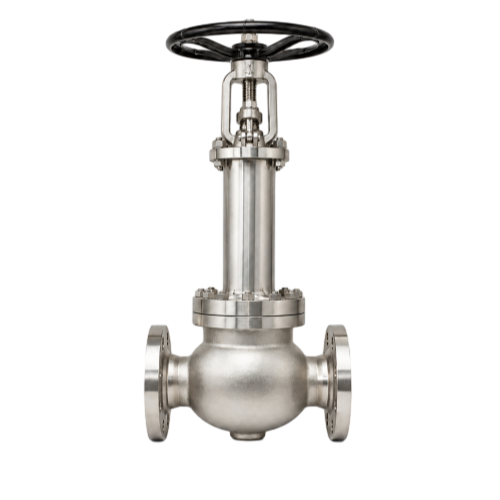
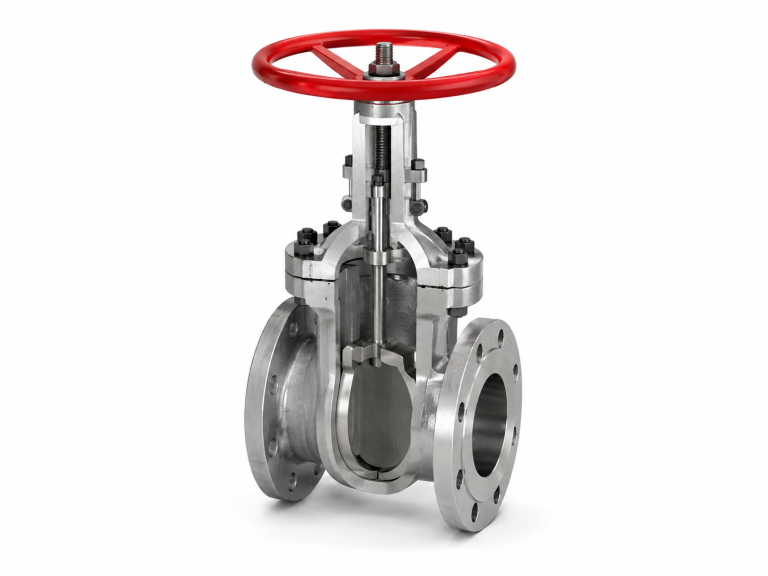
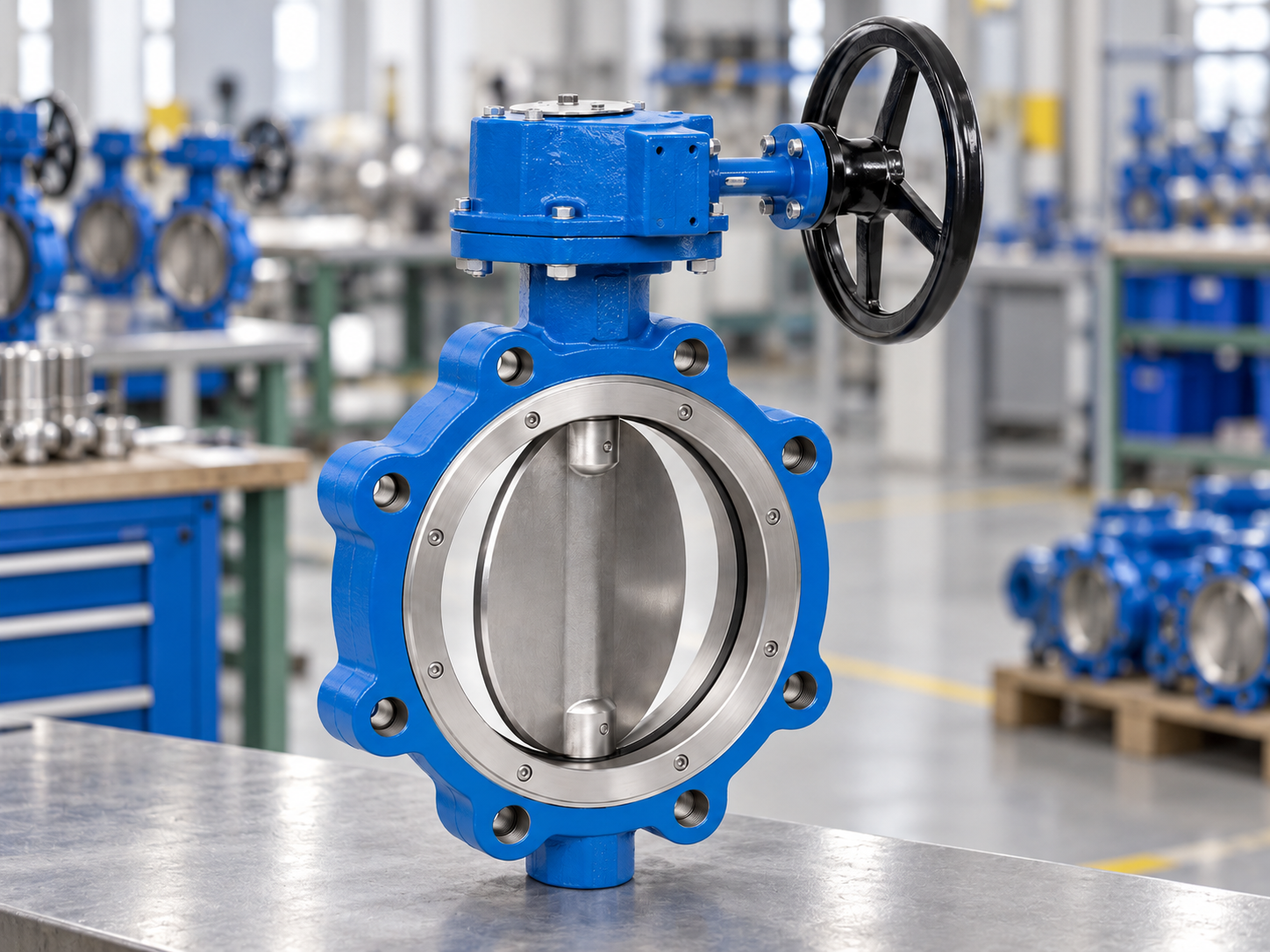
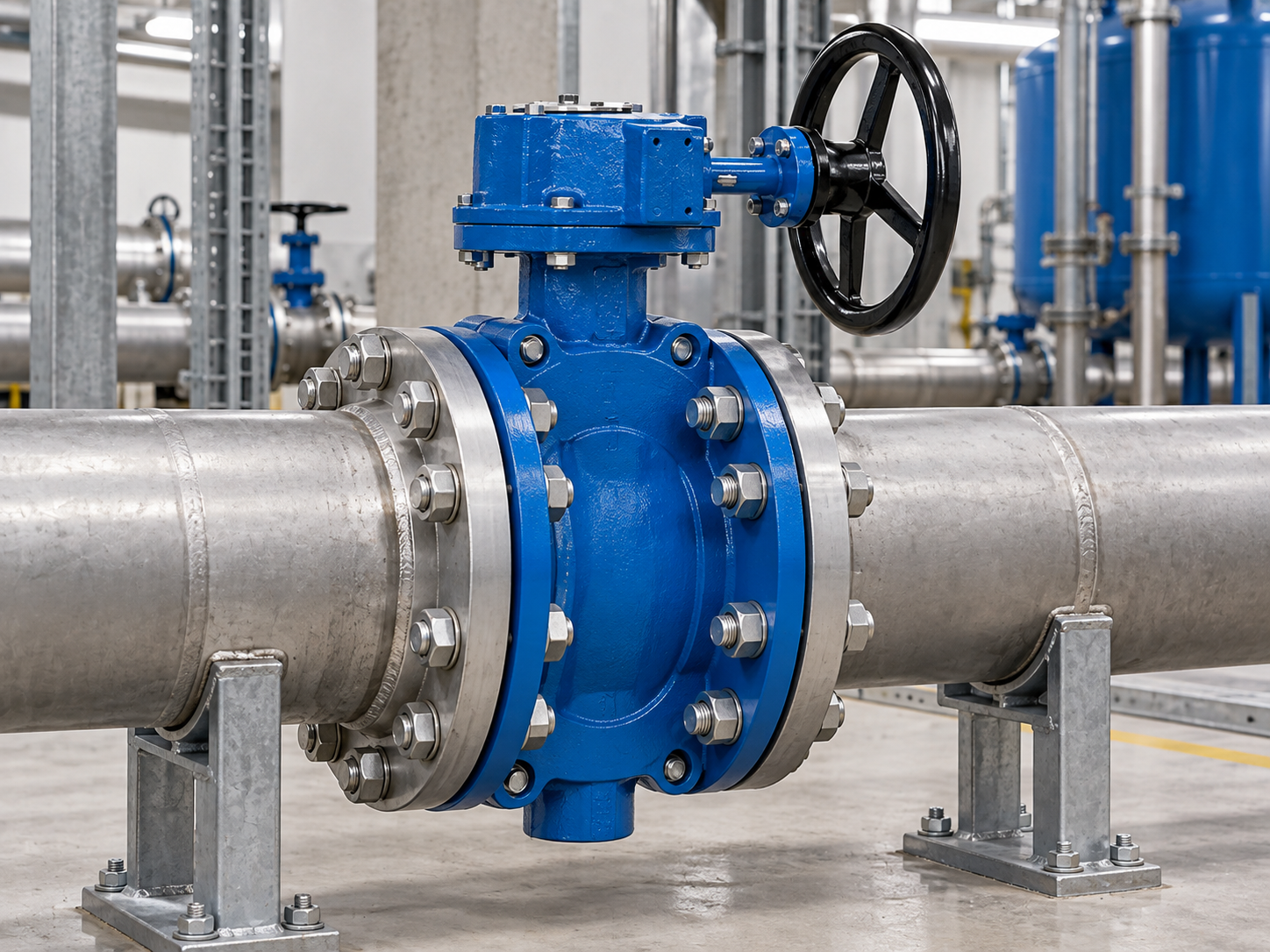
Double offset butterfly valve designed to reduce seat friction and operating torque while providing compact quarter-turn isolation for industrial pipelines.
Double Offset Butterfly Valve for High-Performance Industrial Service
A double offset butterfly valve, also called a double eccentric butterfly valve or high-performance butterfly valve, is a quarter-turn valve designed to improve sealing life and reduce operating friction compared with a conventional concentric butterfly valve.
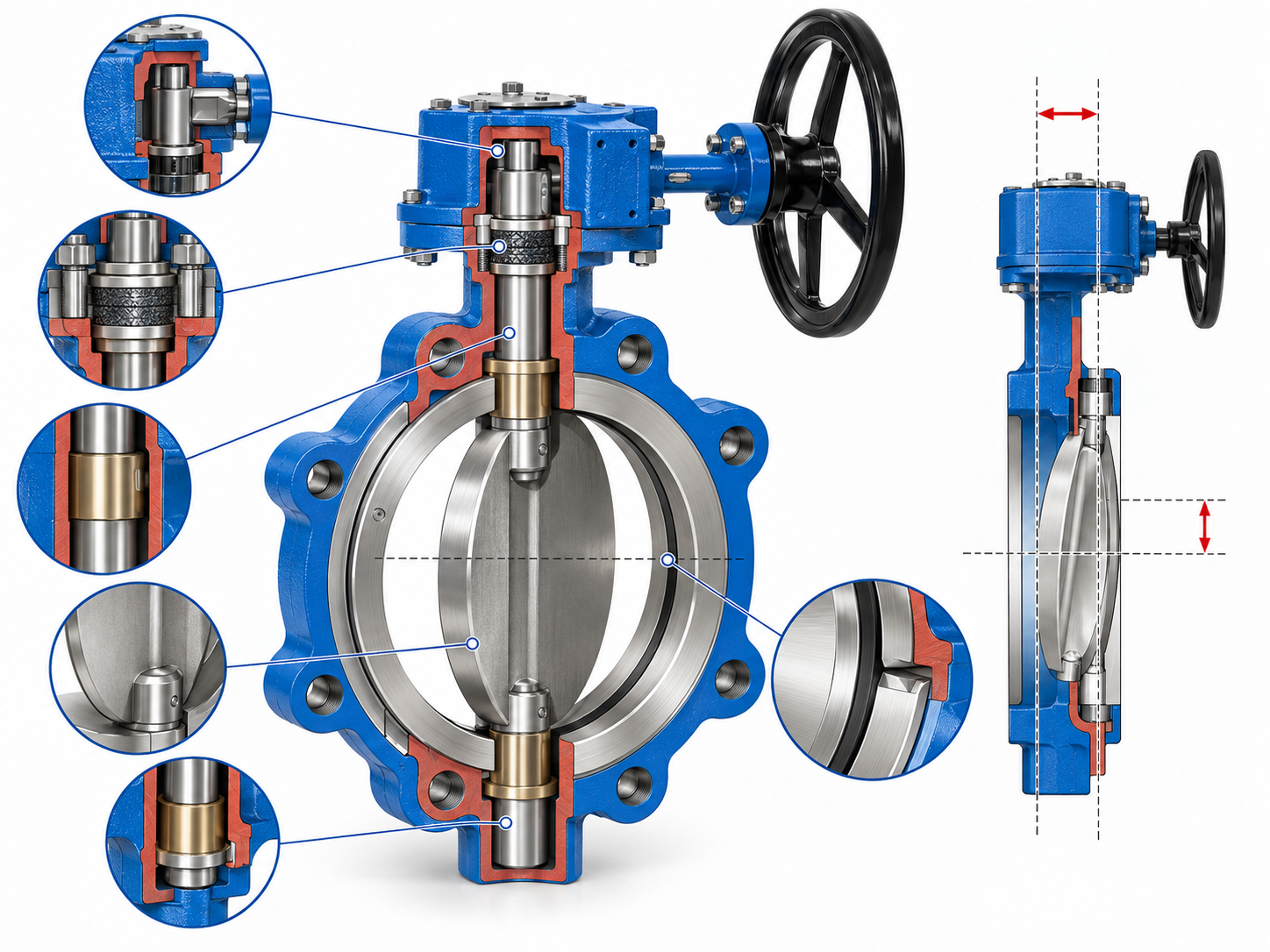
The shaft is displaced from the disc sealing plane and from the valve bore centerline. These two offsets create a cam-like motion: as the disc begins to open, it moves away from the seat rather than continuously rubbing across the sealing surface. This reduces seat deformation and can lower operating torque while allowing the valve to serve higher-performance isolation and, where appropriately sized, flow-control duties.
Double offset butterfly valves are widely considered for water and wastewater, HVAC and district energy, steam and utilities, oil and gas, chemical processing, power generation, marine systems and other industrial pipelines. Final suitability depends on the selected body, disc, shaft, seat, packing, actuator and pressure-temperature design.
How the Two Offsets Work
The performance improvement comes from the relationship between the shaft, disc and seat rather than simply from a heavier valve body.
- First Offset: The shaft is positioned behind the disc sealing plane. This allows the sealing edge of the disc to move away from the seat as the valve opens.
- Second Offset: The shaft is displaced from the centerline of the valve bore. The resulting eccentric movement creates a cam action that further reduces seat contact during rotation.
Compared with a concentric butterfly valve, the seat is exposed to less continuous wiping and compression during the opening and closing cycle. The result can be improved seat life, lower torque and more stable shutoff performance when the valve is correctly selected for the application.
Reduced Seat Friction
Double-offset geometry causes the disc to move away from the seat rapidly during opening, reducing continuous rubbing and seat deformation.
Lower Operating Torque
Reduced disc-seat friction can lower required operating torque compared with many concentric designs, supporting more efficient gearbox or actuator selection.
High-Performance Shutoff
Pressure-assisted or energized seat designs can provide tight shutoff when matched to the correct pressure direction, seat material and valve construction.
Compact Quarter-Turn Design
The valve retains the space-saving 90-degree operating principle of a butterfly valve while extending the application range beyond many resilient-seated concentric designs.
Multiple Body Styles
Wafer, lug and double-flanged body styles can be reviewed according to line class, size, bolting arrangement and installation requirements.
Manual or Automated Operation
Gearbox, pneumatic, electric or hydraulic actuation can be selected according to operating torque, cycle frequency, fail position and control requirements.
Technical Specifications
| Item | Vcore Configuration |
|---|---|
| Product Type | Double Offset Butterfly Valve / Double Eccentric Butterfly Valve / High-Performance Butterfly Valve |
| Valve Function | Isolation and project-specific throttling / flow control |
| Body Style | Wafer, lug, double flanged or project-specific configuration |
| Nominal Size | Project-specific; confirm DN / NPS with RFQ |
| Pressure Rating | PN or ASME Class according to approved valve design and project datasheet |
| Body Material | Carbon steel, stainless steel, ductile iron or project-specified material depending on valve design and service |
| Disc Material | Stainless steel, carbon steel / coated construction, duplex, bronze or project-specified material |
| Shaft Material | Stainless steel or project-specified high-strength / corrosion-resistant material |
| Seat / Seal | PTFE, RPTFE, energized polymer seat, resilient seat or application-specific metal / composite design where available |
| Packing | PTFE, graphite or project-specific packing system according to temperature and fugitive-emission requirement |
| Operation | Gear operated, pneumatic, electric or hydraulic actuator |
| Design Standard | API 609, EN 593 or applicable project standard as specified |
| Pressure-Temperature Design | ASME B16.34 or applicable design standard where specified |
| Face-to-Face | API 609, ASME B16.10, EN 558 / ISO 5752 or approved project drawing as applicable |
| Flange Standard | ASME B16.5, ASME B16.47, EN 1092-1 or project-specified drilling as applicable |
| Testing | API 598, ISO 5208, EN 12266-1 or project-specified test standard as applicable |
| Fire-Safe Requirement | Qualified fire-safe construction can be reviewed when required; qualification scope must be confirmed for the selected model |
| Fugitive Emission Requirement | Low-emission packing / qualification to API 641, ISO 15848 or project requirement where available and specified |
| Operating Temperature | Project-specific; determined by body, seat, packing, pressure class and media |
| Typical Media | Water, steam, air, gas, oil, compatible chemicals, seawater and project-specific industrial fluids |
How a Double Offset Butterfly Valve Works
The valve disc rotates through approximately 90 degrees from fully closed to fully open. As opening begins, the eccentric shaft geometry causes the disc sealing edge to disengage from the seat rapidly. This limits rubbing through most of the disc travel.
During closing, the disc follows the reverse cam path and makes controlled contact with the seat near the final closed position. Depending on valve design, the seat may be pressure-assisted or energized to improve shutoff performance.
Because the valve combines a compact flow path with lower seat friction, it can be used for both on/off service and selected control applications. For throttling duty, actual Cv, pressure drop, cavitation risk, noise, operating angle and actuator sizing should be checked rather than assuming that every double offset valve is suitable for continuous control.
The two eccentric offsets create a cam-like disc movement that reduces continuous rubbing between the disc and seat.
Body Style and Connection Options
| Body Style | Typical Use | Buyer Check |
|---|---|---|
| Wafer | Compact installation between mating pipeline flanges with reduced body weight and space. | Confirm flange drilling, face-to-face, through-bolt arrangement and installation clearance. |
| Lug | Pipeline installation using body lugs around the valve perimeter; commonly selected where installation flexibility is important. | Confirm lug drilling, bolt engagement, pressure direction and any dead-end service requirement. |
| Double Flanged | Rigid pipeline connection, often considered for larger sizes or installations requiring integral flanges. | Confirm flange standard, face-to-face dimension, pipe loads, support and alignment. |
Seat and Material Selection
Seat design is one of the most important differences between double offset butterfly valve configurations. PTFE and RPTFE seats are widely used in high-performance designs because they combine low friction with chemical resistance. Energized seat arrangements may use a resilient element behind the polymer sealing surface to maintain contact across changing pressure conditions.
Some double offset designs are also available with fire-safe or metal-seated configurations, but these should not be treated as interchangeable with a triple offset metal-seated valve. The actual sealing principle, leakage acceptance, temperature capability and fire qualification must be checked on the selected model.
For more detail, review our Butterfly Valve Seat Types Guide and Butterfly Valve Disc Material Selection Guide.
Actuation Options
| Operation | Typical Application | Selection Requirement |
|---|---|---|
| Gear Operated | Manual isolation for medium and large valve sizes. | Confirm required operating torque, handwheel orientation and site access. |
| Pneumatic Actuator | Automated isolation, frequent cycling, ESD or process control. | Confirm air supply, fail action, control signal, accessories, cycle time and torque margin. |
| Electric Actuator | Remote operation and modulating service where electric control is preferred. | Confirm voltage, control signal, enclosure requirement, operating time and torque. |
| Hydraulic Actuator | High-torque or specialized remote operation. | Confirm hydraulic pressure, fail-safe requirement, operating time and system interface. |
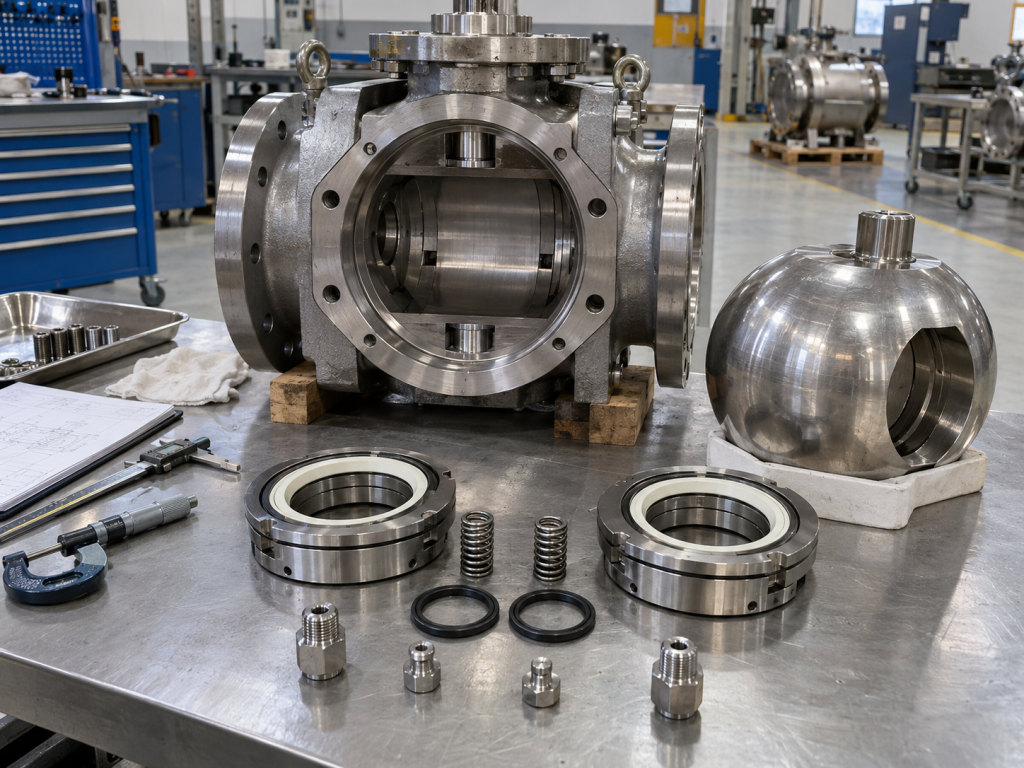
Factory inspection should verify body dimensions, disc and shaft alignment, seat condition, full travel and actuator interface before shipment.
Typical Industrial Applications
- Water & Wastewater: large pipelines, pump stations and process water systems requiring more durable sealing than many concentric valves.
- HVAC & District Energy: chilled water, hot water, condenser water and district heating / cooling networks.
- Steam & Utilities: selected steam and utility duties with a seat and packing system rated for the actual temperature.
- Oil & Gas: utility, process isolation and selected hydrocarbon applications subject to material and sealing compatibility.
- Chemical Processing: corrosive or aggressive media where body, disc, shaft and seat materials are selected accordingly.
- Power Generation: cooling water, utility systems and selected process applications.
- Marine & Seawater: with suitable corrosion-resistant disc, shaft and body materials.
Double Offset vs. Concentric vs. Triple Offset Butterfly Valve
| Design | Disc-Seat Contact | Typical Seat Direction | Typical Selection |
|---|---|---|---|
| Concentric | Disc remains in contact with the resilient seat through a larger portion of travel. | Rubber / elastomeric resilient seat. | Water, HVAC, utilities and general service where compact low-cost isolation is required. |
| Double Offset | Cam-like movement reduces continuous seat contact and friction. | PTFE / RPTFE, energized polymer, resilient or design-specific high-performance seat. | Higher-performance isolation, steam / utilities, chemicals, oil and gas, higher cycle service and selected control duties. |
| Triple Offset | Third angular offset creates a conical sealing geometry with minimal rubbing through most of travel. | Typically metal-seated severe-service sealing systems. | Critical isolation, high-temperature service, thermal cycling and severe process conditions. |
For a detailed engineering comparison, read Double Offset vs Triple Offset Butterfly Valve. You can also review the complete Vcore Butterfly Valve range.
Manufacturing, Inspection and Testing
Double offset valve performance depends on dimensional accuracy, shaft support, disc alignment and the condition of the sealing surfaces. Inspection should therefore verify the selected valve against the approved datasheet, GA drawing and project specification.
- Material verification and review of required material documentation.
- Body, flange, face-to-face and actuator-interface dimensional inspection.
- Disc, shaft, bearing and seat inspection.
- Assembly alignment and full open / close travel verification.
- Gearbox or actuator functional inspection where supplied as a complete valve package.
- Shell and seat testing according to the approved test standard and leakage acceptance criteria.
- Final marking, flange protection, documentation review and export packing.
For testing background, see our Valve Pressure Testing Guide.
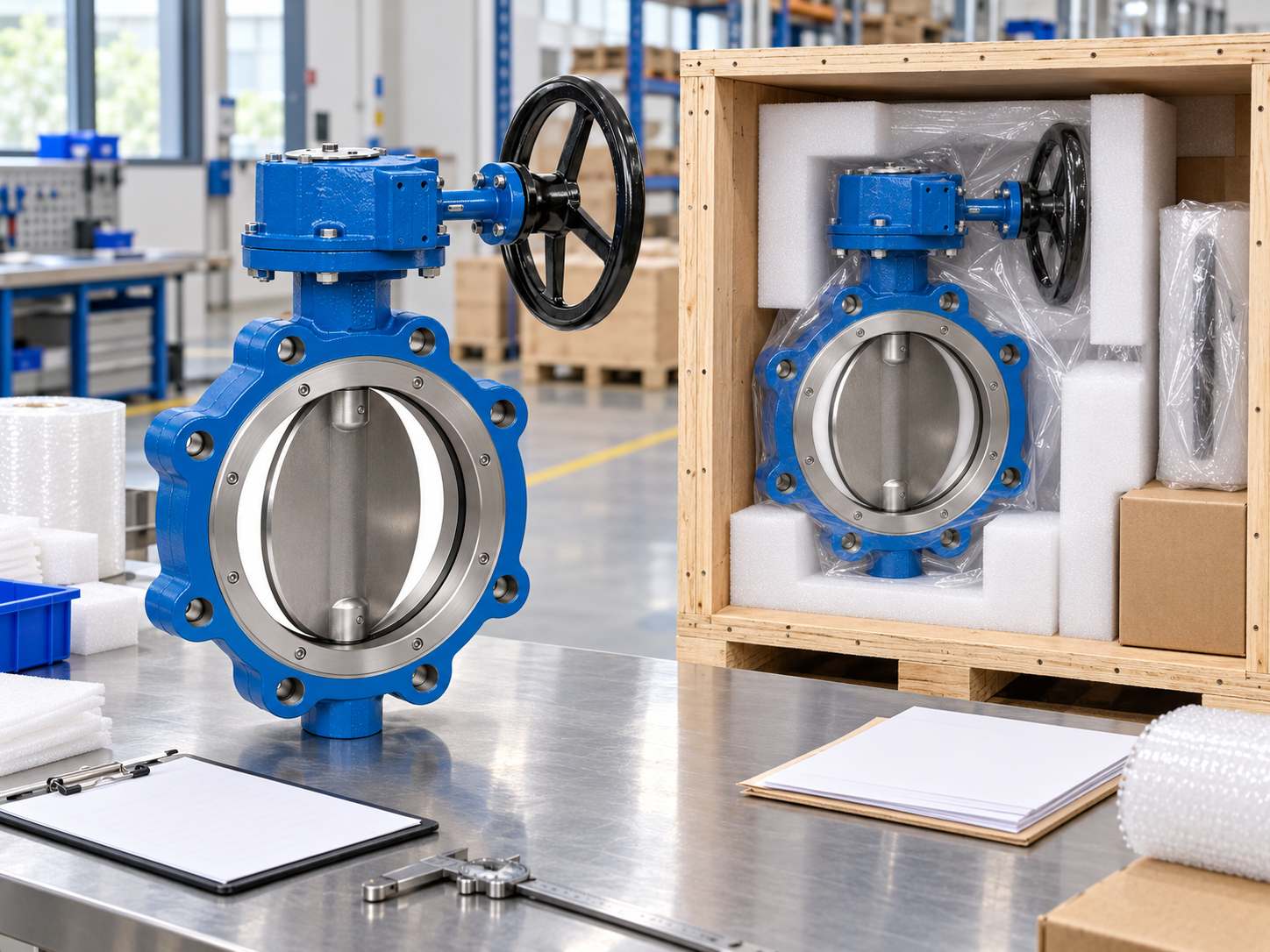
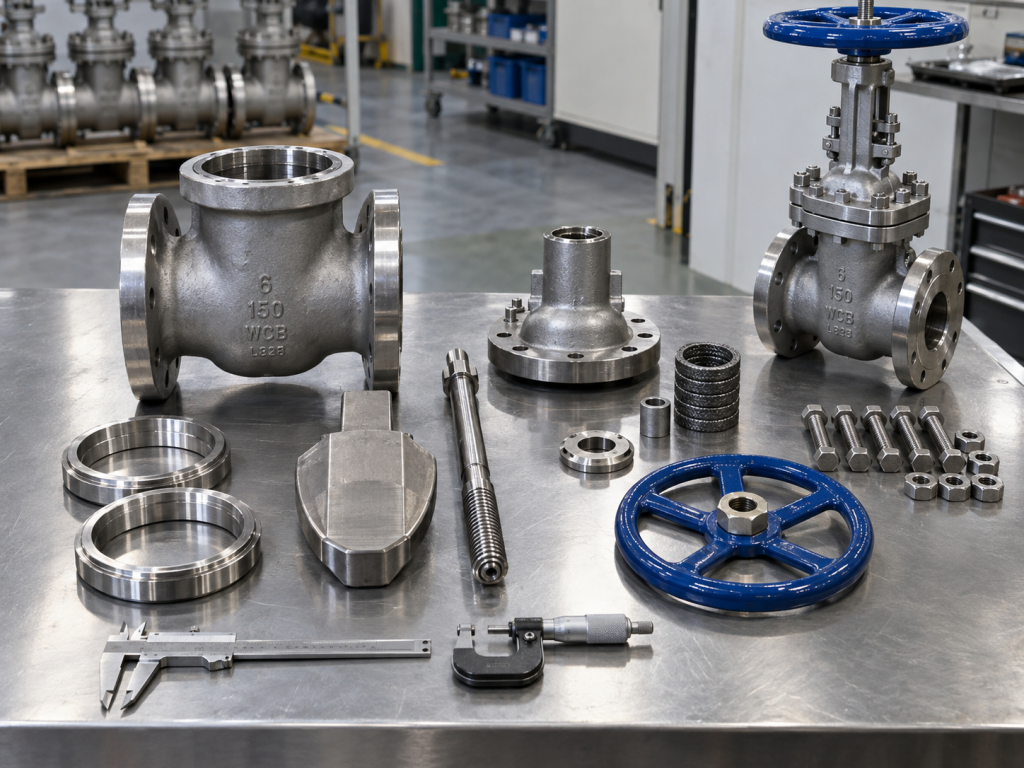
Final inspection and protected packing help preserve machined flange faces, seat components and actuator alignment during transportation.
Why Choose Vcore Valve
- Project-based double offset butterfly valve configuration instead of one generic specification for all services.
- Wafer, lug and double-flanged body styles according to piping and installation requirements.
- Carbon steel, stainless steel, ductile iron and project-specific material options where applicable.
- PTFE, RPTFE, energized and application-specific sealing options according to medium and temperature.
- Gearbox, pneumatic, electric and hydraulic actuator integration.
- Support for datasheet review, GA drawing confirmation, inspection planning and export documentation.
Information Required for Quotation
- Valve size: DN / NPS.
- Pressure rating: PN or ASME Class.
- Working medium: water, steam, gas, oil, chemical fluid, seawater or other service.
- Operating and design temperature: minimum and maximum values.
- Body style: wafer, lug or double flanged.
- Flange standard: ASME, EN or project piping class.
- Body, disc and shaft material: including corrosion or sour-service requirements.
- Seat material / sealing requirement: PTFE, RPTFE, energized seat, fire-safe option or other specified design.
- Leakage acceptance: specify the required test standard and acceptance level.
- Operation: gearbox, pneumatic, electric or hydraulic actuator.
- Control requirement: on/off, modulating, fail-open, fail-close, position feedback or accessories.
- Quantity and documentation: drawings, MTR, ITP, test reports, certificates and packing requirements.
Double Offset Butterfly Valve FAQ
What is a double offset butterfly valve?
A double offset butterfly valve uses two eccentric offsets between the shaft, disc and valve bore. The geometry creates a cam-like movement that allows the disc to move away from the seat quickly during opening, reducing friction and seat wear.
Is a double offset butterfly valve the same as a high-performance butterfly valve?
The terms are commonly used together in industrial valve markets. High-performance butterfly valves frequently use double offset disc and shaft geometry combined with an energized or pressure-assisted seat system. The exact seat design and performance rating still depend on the manufacturer and selected model.
What is the difference between double offset and triple offset butterfly valves?
A double offset valve uses two shaft and disc offsets to reduce seat rubbing. A triple offset valve adds an angular sealing offset that creates a conical sealing geometry, commonly used with metal-seated severe-service designs. The correct choice depends on temperature, pressure, shutoff requirement and service severity.
Can a double offset butterfly valve be used for steam?
Yes, selected double offset designs are used in steam service. The seat, packing, body material, pressure class and actuator must be rated for the actual steam pressure and temperature.
Which body styles are available?
Double offset butterfly valves are commonly available in wafer, lug and double-flanged configurations. The exact body style should be selected according to the flange standard, pipeline layout, size and maintenance requirements.
Can double offset butterfly valves be pneumatically or electrically actuated?
Yes. Gearbox, pneumatic, electric and hydraulic operation can be supplied depending on valve torque, control philosophy, power or air supply and fail-position requirements.
What information is needed for a quotation?
Provide valve size, pressure class, medium, temperature, body style, flange standard, materials, seat requirement, leakage acceptance, operation method, quantity and any applicable project specifications or drawings.
Need a Double Offset Butterfly Valve for Your Project?
Send Vcore Valve your valve size, pressure class, medium, temperature, body style, flange standard, materials, seat requirement, actuator and quantity. We can review the operating conditions and prepare a suitable double offset butterfly valve configuration for quotation.