Quick Overview
Choosing between a concentric butterfly valve and an eccentric butterfly valve directly affects sealing performance, service life, and operating cost. While both are widely used in industrial fluid control, their designs, working principles, and ideal applications differ significantly. This guide from Vcore Valve explains the differences clearly and helps engineers select the right butterfly valve with confidence.
Opening Scenario: A Common Engineering Dilemma
“Why does this butterfly valve start leaking after a year?”
This is a question we often hear from project engineers. In many cases, the issue is not the brand or workmanship, but choosing a concentric butterfly valve where an eccentric butterfly valve would have been more suitable. Understanding valve geometry is the first step to avoiding costly mistakes.
User Pain Points
Frequent seat wear
Concentric designs rely on continuous disc-seat contact, which accelerates wear in high-cycle or high-temperature applications.
Leakage under pressure
Improper valve selection can lead to poor sealing performance, especially in systems with high pressure or thermal expansion.
Confusing valve terminology
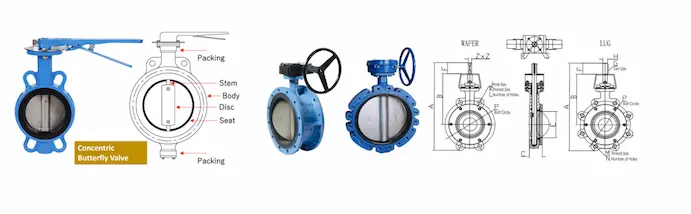
Terms like double offset, triple offset, concentric, and eccentric often confuse buyers, leading to incorrect specifications.
Solutions and Practical Recommendations
Match valve design to operating conditions
Low-pressure water systems work well with concentric designs, while high-pressure or high-temperature systems demand eccentric structures.
Prioritise sealing requirements
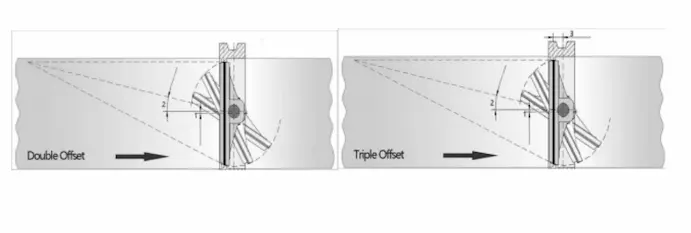
Metal-to-metal sealing in triple offset butterfly valves provides superior tightness compared to elastomer-lined concentric valves.
Consider lifecycle cost, not unit price
Although eccentric butterfly valves cost more upfront, their longer service life and reduced maintenance often result in lower total cost.
Case Analysis and Practical Examples
Case 1: Municipal water distribution
A DN600 rubber-lined concentric butterfly valve was used in a clean water pipeline. Low pressure, ambient temperature, and infrequent operation made it a cost-effective and reliable choice.
Case 2: Industrial steam pipeline
A chemical plant replaced failing concentric valves with triple offset eccentric butterfly valves. The result was zero leakage, extended service life, and reduced shutdowns.
Technical Data and Structural Comparison
Structural differences
| Feature | Concentric Butterfly Valve | Eccentric Butterfly Valve |
|---|---|---|
| Shaft position | Centreline of disc | Offset from disc centre |
| Seat contact | Continuous friction | Reduced or zero friction |
| Sealing type | Soft seat (rubber/PTFE) | Metal-to-metal or laminated |
| Pressure rating | Low to medium | Medium to high |
| Temperature range | Limited | Wide |
Working principle comparison
Our concentric butterfly valve seals by compressing the soft seat, while an eccentric butterfly valve uses cam-like movement to achieve tight sealing with minimal wear. This is why double offset butterfly valves and triple offset butterfly valves dominate demanding industrial services.
Market Trends and Industry Insights
Globally, industries are shifting from traditional concentric designs towards eccentric butterfly valves, especially in oil & gas, power generation, and chemical processing. Rising operating pressures and stricter leakage standards make advanced offset designs more attractive. At Vcore Valve, demand for triple offset designs has grown steadily year-on-year.
Style and Usage Recommendations
-
Choose concentric butterfly valves for water supply, HVAC, and low-pressure utility services
-
Use double offset butterfly valves for higher pressure pipelines
-
Select triple offset butterfly valves for steam, gas, and critical shut-off duties
-
Always verify temperature, pressure, and media compatibility before selection
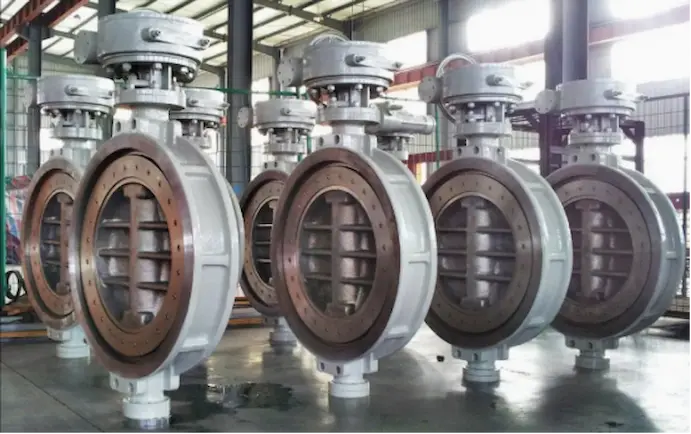
Vcore Valve engineers support customers from design stage to commissioning, ensuring the right butterfly valve is chosen every time.
Conclusion
There is no universal “best” butterfly valve—only the right one for your application. Concentric butterfly valves offer simplicity and cost efficiency, while eccentric butterfly valves deliver durability and superior sealing.
If you’re unsure which butterfly valve design fits your project, contact Vcore Valve. Our technical team is ready to help you optimise performance, safety, and long-term value.
FAQs
What is a concentric butterfly valve?
It is a butterfly valve where the shaft is centred in the disc, commonly using a soft seat for sealing.
What is an eccentric butterfly valve?
An eccentric butterfly valve has an offset shaft design to reduce seat wear and improve sealing.
Is a triple offset butterfly valve better than a concentric one?
For high temperature or high pressure applications, yes. For low-pressure systems, concentric valves are often sufficient.
Can concentric butterfly valves handle steam?
Generally no, as soft seats degrade under high temperature steam conditions.
Why are eccentric butterfly valves more expensive?
They involve more complex machining and sealing structures, but offer longer service life.
Which valve lasts longer?
In demanding conditions, eccentric butterfly valves typically last much longer than concentric designs.
Reference
-
API 609 Butterfly Valve Standard
-
ISO 5752 Face-to-Face Dimensions
-
MSS SP-68 High Performance Butterfly Valves
-
Valve Manufacturers Association Technical Guides