Quick Overview
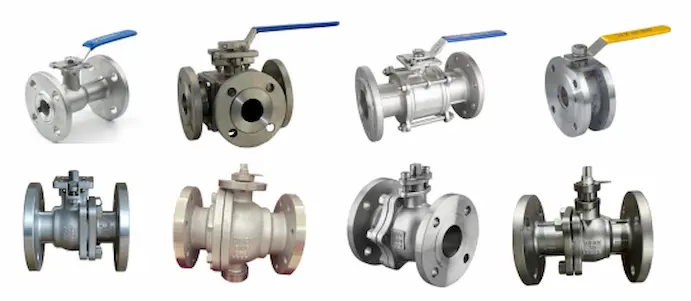
Ball valves are a staple in industrial systems, offering precision control and durability. The main distinction between long pattern and short pattern ball valves lies in their design, which directly impacts their performance, durability, and application suitability. This guide helps you understand both valve types and make the right choice for your needs.
Introduction: Understanding the Basics of Ball Valves
Ball valves are one of the most commonly used valve types across various industries. They are popular due to their straightforward design, durability, and efficient flow control. Long pattern and short pattern ball valves are two variants, and while they perform similar tasks, there are distinct differences that make them suitable for different applications.
Key Differences Between Long Pattern and Short Pattern Ball Valves
When choosing between a long pattern ball valve and a short pattern ball valve, it’s important to understand how their designs impact their function.
Long Pattern Ball Valves:
-
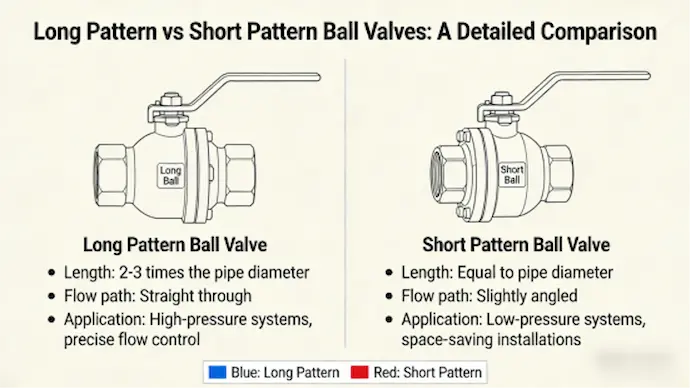
Extended Body Design: Offers a longer body length, providing better flow capacity and reduced pressure drop.
-
High Pressure Applications: More suitable for high-pressure environments due to their enhanced structural strength.
-
Applications: Typically used in industries where durability and flow capacity are critical, such as in oil and gas pipelines.
Short Pattern Ball Valves:
-
Compact Design: A shorter body, making it more compact and easier to install in tighter spaces.
-
Lower Pressure Applications: Best suited for lower pressure environments, where space efficiency is more important than flow capacity.
-
Applications: Commonly used in water treatment plants, HVAC systems, and other industries with less stringent pressure requirements.
For more details about ball valves and their applications, refer to our Ball Valve Product Range.
Common User Pain Points
-
Choosing the Right Valve Type: Many industrial engineers struggle with deciding between long pattern and short pattern ball valves, as the differences can be subtle but impactful in performance.
-
Pressure Loss: Incorrect valve selection can lead to unnecessary pressure drops, especially in systems requiring high-flow capacity.
-
Space Limitations: In cramped industrial spaces, the size of the valve body can be a significant factor in selecting the appropriate valve type.
Solutions and Recommendations
-
Understand Application Requirements: If your application involves high-pressure systems or requires better flow capacity, opt for a long pattern ball valve.
-
Space Efficiency: For systems where space is limited, the short pattern ball valve is a more compact solution that still offers reliable flow control.
-
Evaluate Pressure Ratings: Always check the valve’s pressure rating to ensure it meets your operational needs.
For more detailed recommendations, visit our page on High Temperature and High Pressure Valves.
Case Study: Choosing the Right Ball Valve for a High-Pressure Pipeline
A major oil pipeline operator needed to upgrade its flow control system. After thorough evaluation, they chose long pattern ball valves for their ability to withstand high pressure and provide optimal flow control. The installation significantly reduced downtime and maintenance costs while increasing operational efficiency.
Success Story
After installing the long pattern ball valves, the system operated smoothly, with significantly fewer flow-related disruptions. The valves’ ability to handle the higher pressure environment led to better performance and more reliable service.
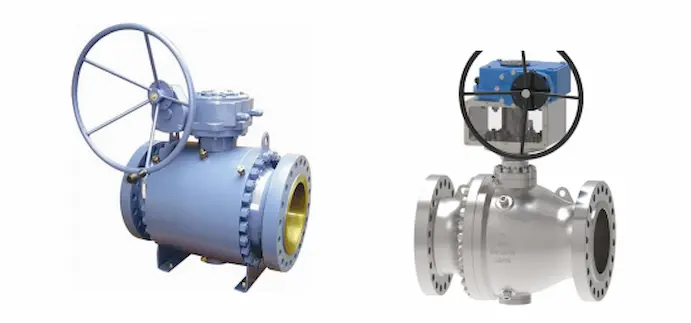
Data and Comparison
| Feature | Long Pattern Ball Valve | Short Pattern Ball Valve |
|---|---|---|
| Valve Body Length | Longer, more robust | Shorter, compact |
| Pressure Rating | Higher, up to 5000 PSI | Lower, up to 1500 PSI |
| Flow Capacity | Greater flow capacity | Reduced flow capacity |
| Best for | High-pressure applications | Low-pressure applications |
| Cost | Higher | Lower |
This table shows that long pattern ball valves are better suited for high-pressure applications, while short pattern ball valves are ideal for more space-sensitive, lower-pressure systems.
Market Insights
The demand for ball valves is growing globally, with increasing use in industries such as oil and gas, water treatment, and HVAC systems. As industries push for more efficient flow control, the development of more advanced and durable valve designs has led to greater reliance on long pattern ball valves in high-pressure environments.
Style and Usage Suggestions
When selecting a ball valve, consider the following:
-
Flow Needs: If your system requires higher flow capacity, choose a long pattern ball valve.
-
Space and Budget Constraints: For installations in tight spaces or lower pressure systems, a short pattern ball valve is the better option.
-
Long-Term Durability: Ensure your valve selection matches your system’s pressure requirements for optimal performance and longevity.
Conclusion
Choosing the right type of ball valve—whether long pattern or short pattern—depends heavily on your system’s specific needs. By considering factors like pressure, flow capacity, and space, you can ensure that your system runs smoothly and efficiently.
FAQs
1. What is the main difference between long pattern and short pattern ball valves?
Long pattern ball valves are designed for high-pressure applications and have a longer body for increased flow capacity. Short pattern ball valves are more compact and better suited for low-pressure environments.
2. When should I use a long pattern ball valve?
A long pattern ball valve is ideal for high-pressure systems that require higher flow capacities and durability.
3. Are short pattern ball valves less expensive than long pattern valves?
Yes, short pattern ball valves tend to be more affordable due to their simpler design and smaller body.
4. Can I use a short pattern ball valve in high-pressure applications?
It’s generally not recommended, as short pattern valves are designed for lower-pressure environments.
5. How do I choose between long and short pattern ball valves?
Consider the pressure rating, flow requirements, and available space in your system when selecting between the two valve types.
References
-
Understanding Flow Coefficients and Valve Sizing