Quick Overview
Floating vs trunnion ball valve selection is an important decision in industrial pipeline design. Although both valve types belong to the industrial ball valves family, their ball support structure, sealing principle, pressure capability, operating torque, size range, and typical applications are different. In this guide, Vcore Valve explains the real engineering differences, ideal applications, and practical selection tips to help buyers avoid overspending or under-specifying a valve system.
Opening Scenario: A Costly Oversight
“We selected a floating ball valve to save cost — then the actuator failed.”
After six months under high pressure, excessive valve torque damaged the actuator. The root cause was not the actuator alone. The valve structure was not suitable for the working condition. A trunnion-mounted design should have been considered from the beginning because the line pressure, valve size, and operation frequency created a torque demand that was too high for the selected floating ball valve.
This situation is common in industrial valve procurement. Floating ball valves and trunnion ball valves can look similar from the outside, but their internal load distribution and sealing mechanisms are very different. Choosing the wrong design may lead to high torque, actuator overload, seat wear, leakage, or unnecessary cost.
User Pain Points
Pain Point 1: Structural Confusion
Many buyers believe the difference between floating and trunnion ball valves is mainly about size. In reality, the key difference is how the ball is supported and how sealing force is generated.
Pain Point 2: Torque Underestimation
Improper valve selection can lead to high operating torque. This is especially important when the valve is automated with an electric or pneumatic actuator. If the actuator is selected without understanding valve torque, the system may fail during operation.
Pain Point 3: Over- or Under-Specification
Some projects overspend on trunnion ball valves where floating ball valves would be enough. Other projects use floating ball valves in high-pressure or large-size services where a trunnion-mounted design would be safer and more reliable.
Solutions & Recommendations
Solution 1: Match Valve Type to Pressure and Size
Floating ball valves are commonly used in low-to-medium pressure and small-to-medium size applications. Trunnion mounted ball valves are usually preferred for larger sizes, higher pressure classes, and applications where torque control is important.
Solution 2: Consider Long-Term Operation
Lower operating torque can improve actuator service life, reduce stem stress, and improve long-term reliability. In high-cycle or automated systems, trunnion mounted ball valves may provide stronger mechanical advantages.
Solution 3: Review the Complete Working Condition
Valve selection should be based on pressure, temperature, DN/NPS size, media, seat material, operation frequency, actuator requirement, and project documentation. At Vcore Valve, selection is based on actual working conditions rather than valve name alone.
For a broader overview of ball valve types, port designs, materials, seats, and applications, buyers can also read our main guide on industrial ball valves.
What Is a Floating Ball Valve?
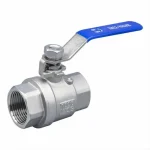
A floating ball valve features a ball that is not mechanically fixed by a lower trunnion support. The ball is held between the valve seats. Under line pressure, the ball moves slightly downstream and presses against the downstream seat to create a seal.
This design is simple, compact, and cost-effective. It is widely used in general industrial service where valve size, pressure, and operating torque remain within acceptable limits.
Key Characteristics
- Simple internal structure
- Compact body design
- Cost-effective for many small and medium sizes
- Pressure-assisted downstream seat sealing
- Operating torque increases as pressure and size increase
Typical Applications
- Water supply systems
- HVAC pipelines
- General industrial services
- Small to medium gas pipelines
- Compatible chemical transfer lines
- Utility and process isolation service
Floating ball valves are widely used for small to medium diameters and moderate pressure ratings. They are usually a practical choice when the application requires reliable shutoff, compact structure, and reasonable cost.
What Is a Trunnion Ball Valve?
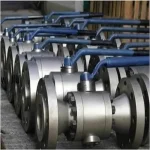
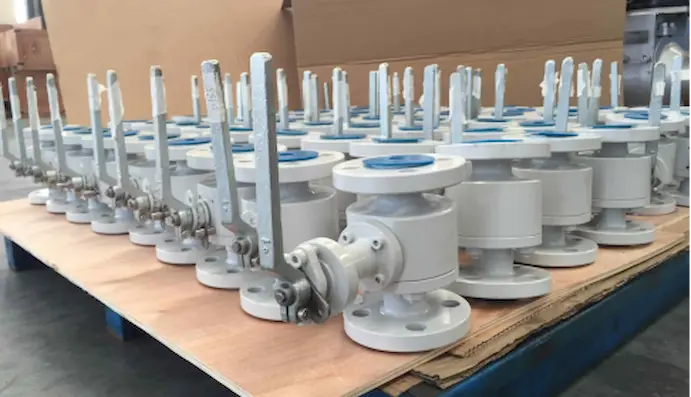
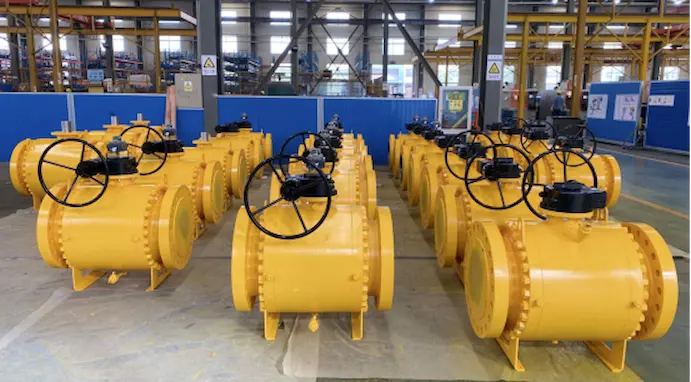
A trunnion ball valve has the ball mechanically anchored by trunnions at the top and bottom. Unlike a floating ball valve, the ball does not move downstream under pressure. Instead, the ball remains fixed, while the seats move toward the ball to create sealing force.
This structure helps reduce friction and operating torque, especially in large-size and high-pressure applications. Trunnion mounted ball valves are often used in oil and gas pipelines, petrochemical plants, high-pressure transmission systems, and critical isolation services.
Key Characteristics
- Fixed ball design with mechanical support
- Lower and more stable operating torque
- Suitable for high pressure and large diameters
- Often used with gearboxes, electric actuators, or pneumatic actuators
- More complex and usually more expensive than floating ball valves
Typical Applications
- Oil and gas pipelines
- Petrochemical plants
- High-pressure transmission lines
- Large-diameter pipeline isolation
- Critical shutoff applications
- Automated high-pressure valve systems
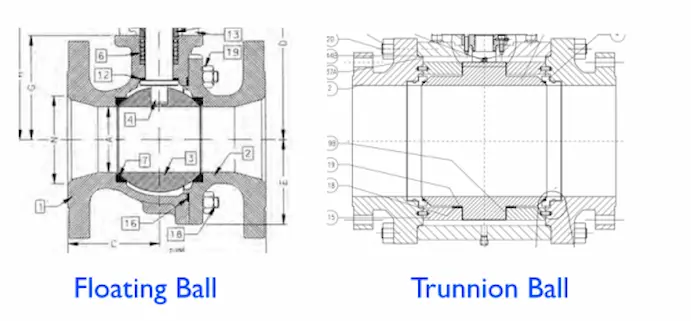
Floating vs Trunnion Ball Valve: Structural Comparison
| Feature | Floating Ball Valve | Trunnion Ball Valve |
|---|---|---|
| Ball Support | Ball is held by seats and can move slightly under pressure | Ball is fixed by upper and lower trunnion support |
| Sealing Principle | Line pressure pushes the ball against the downstream seat | Seats move toward the fixed ball to create sealing |
| Operating Torque | Higher under pressure, especially in larger sizes | Lower and more stable in high-pressure or large-size service |
| Pressure Capability | Commonly used for low to medium pressure | Suitable for medium to very high pressure |
| Valve Size Range | Common in small to medium DN/NPS sizes | Common in medium to large DN/NPS sizes |
| Seat Design | Seat carries both sealing and support load | Spring-loaded or pressure-assisted seats are common |
| Cost | Usually lower | Usually higher |
| Typical Use | General shutoff, utility service, water, gas, compatible chemicals | Oil and gas, high pressure, large pipelines, critical isolation |
How Floating Ball Valves Seal
In a floating ball valve, line pressure pushes the ball toward the downstream seat. The sealing force increases as pressure increases. This pressure-assisted sealing principle is effective in many general industrial applications.
However, higher pressure also increases the contact load between the ball and seat. This can raise operating torque and accelerate seat wear if the valve is too large, the pressure is too high, or the actuator is not sized properly.
This is why floating ball valves are often selected for small to medium sizes and moderate pressure service, while trunnion mounted ball valves are considered when pressure, size, and torque become more demanding.
How Trunnion Ball Valves Seal
In a trunnion ball valve, the ball is mechanically supported and does not move downstream under pressure. The seats move toward the ball to create sealing. This reduces the direct pressure load on the ball-seat interface and helps control operating torque.
Many trunnion mounted ball valves are designed with spring-loaded seats, pressure-assisted sealing, cavity pressure relief, anti-static design, fire-safe design, or double block and bleed functions depending on the application and project standard.
For high-pressure pipeline systems, trunnion ball valves are often preferred because the fixed ball structure supports stable operation, lower torque, and better suitability for automation.
Pressure and Size Comparison
Pressure and valve size are two major factors in floating vs trunnion ball valve selection. A floating ball valve may be practical for many small and medium valves, but as the valve size and pressure increase, torque and seat load become more difficult to manage.
When Floating Ball Valves Are Usually Suitable
- Small to medium valve sizes
- General industrial shutoff service
- Moderate pressure applications
- Water, gas, oil, and compatible chemical service
- Cost-sensitive projects where heavy-duty structure is not required
When Trunnion Ball Valves Are Usually Preferred
- Large-diameter pipelines
- High-pressure service
- Oil and gas transmission pipelines
- Critical isolation applications
- Applications requiring lower operating torque
- Automated valves where actuator torque must be controlled
For demanding pressure and corrosion conditions, buyers can also review this guide on stainless steel valves for high-pressure applications.
Operating Torque Comparison
Operating torque is one of the most important differences between floating and trunnion ball valves. Torque affects manual operation, gearbox selection, electric actuator sizing, pneumatic actuator sizing, and long-term maintenance reliability.
In a floating ball valve, the ball is pushed against the downstream seat by line pressure. As pressure and size increase, friction between the ball and seat increases. This raises operating torque and may require a larger actuator.
In a trunnion mounted ball valve, the ball is supported by trunnions. The seats move toward the fixed ball instead of the ball being forced heavily into the seat. This helps reduce operating torque, especially in large-size or high-pressure service.
For automated systems, actuator torque should be selected according to valve torque data, service pressure, seat material, operating frequency, and safety margin. Buyers selecting automated ball valves can also read our guide on electric ball valves.
Sealing Performance and Seat Life
Floating Ball Valve Seat Behavior
Floating ball valves can provide excellent shutoff when the pressure, valve size, seat material, and media are suitable. The downstream seat creates a tight seal because line pressure pushes the ball against it.
The limitation is that the seat carries significant load. If the application has high pressure, frequent operation, abrasive particles, or improper actuator sizing, the seat may wear faster.
Trunnion Ball Valve Seat Behavior
Trunnion mounted ball valves usually provide more controlled sealing behavior in demanding service. The supported ball structure reduces excessive ball movement, and the seat design can be optimized for high pressure, large diameter, or critical shutoff requirements.
For high-cycle service, trunnion designs may reduce seat wear and stem stress compared with an oversized or over-pressurized floating ball valve.
Material and Seat Selection
Both floating and trunnion ball valves require suitable body material, ball material, stem material, seat material, seal material, and packing. The correct material depends on the medium, pressure, temperature, corrosion risk, and operation frequency.
Common Body Materials
- Stainless steel for corrosion resistance and general industrial service
- Carbon steel for oil, gas, steam, and selected non-corrosive service
- Duplex or super duplex stainless steel for chloride-rich or severe service
- Titanium or nickel alloys for special corrosive environments
Common Seat Materials
- PTFE for broad chemical resistance and low friction
- Reinforced PTFE for improved mechanical strength
- PEEK for higher-performance service in selected applications
- Metal seats for high temperature, abrasive media, or severe-duty service
For chemical service, seat and seal compatibility should be reviewed carefully. A valve body may be suitable, but seat or seal failure can still cause leakage, high torque, or early replacement.
Case Studies & Practical Examples
Case 1: Municipal Water System
A DN80 floating ball valve provided reliable shutoff at low pressure with minimal cost. Because the application involved moderate pressure and simple isolation, a trunnion mounted valve would have increased cost without meaningful benefit.
Case 2: Natural Gas Pipeline
A DN400 trunnion ball valve reduced operating torque by more than 40%, extending actuator service life and improving operational reliability. In this case, the larger valve size and higher pressure made the trunnion structure a better choice.
Case 3: Automated Chemical Transfer Line
A buyer selected a floating ball valve for an automated chemical transfer line without confirming breakaway torque. After several months of operation, torque increased due to seat load and deposits. A revised design with a better seat material and more suitable actuator sizing improved reliability.
Engineering Data & Performance Analysis
Operating torque in large floating ball valves can increase rapidly as pressure rises because the ball is forced into the downstream seat. In contrast, trunnion ball valves maintain more stable torque levels because the ball is mechanically supported and the seats move toward the ball.
For high-cycle operations, trunnion designs can reduce seat wear and stem stress. This is especially important for automated valves, pipeline isolation, and systems where valve failure may cause shutdown or safety risk.
When torque calculation raises doubts, buyers should review whether a trunnion mounted ball valve is more suitable, especially for high pressure, large diameter, or frequent operation.
Market Trends & Industry Insights
- Growing demand for trunnion ball valves in LNG, hydrogen, and long-distance energy pipelines
- Increased use of metal-seated designs for high-temperature and severe service
- Higher emphasis on automation-friendly, low-torque valve structures
- More demand for project-specific documentation, testing, and material traceability
- Stronger focus on total cost of ownership rather than lowest initial purchase cost
Energy transition projects, high-pressure gas systems, and critical industrial infrastructure are accelerating the adoption of advanced ball valve technologies. For gas service selection, buyers may also read our article on ball valves for gases.
Style & Usage Recommendations
Choose a floating ball valve if:
- Pressure is moderate
- Valve size is small or medium
- Budget is limited
- The valve is used mainly for general shutoff
- Operating torque is within manual or actuator limits
Choose a trunnion ball valve if:
- Pressure is high
- DN/NPS size is large
- Automated operation is required
- Lower operating torque is important
- The application is critical pipeline isolation
- The system is oil and gas, petrochemical, LNG, hydrogen, or high-pressure transmission service
Rule of Thumb: If torque calculation, pressure class, or valve size creates uncertainty, review a trunnion mounted design before final selection.
Application Comparison Table
| Application | Recommended Direction | Reason |
|---|---|---|
| General water pipeline | Floating ball valve | Simple, reliable, and cost-effective for many sizes |
| Small or medium gas line | Floating ball valve | Suitable when pressure and torque are within design limits |
| Large-diameter pipeline | Trunnion ball valve | Better ball support and lower operating torque |
| High-pressure oil and gas service | Trunnion ball valve | Designed for higher pressure and heavy-duty isolation |
| Chemical transfer line | Depends on size, pressure, and material compatibility | Body, ball, seat, and seal materials must match the media |
| Automated shutoff valve | Depends on valve torque and operation frequency | Trunnion design may reduce actuator torque in larger valves |
| High-temperature or abrasive service | Special design review required | Seat material and valve structure are critical |
How to Choose Between Floating and Trunnion Ball Valves
The choice between a floating ball valve and a trunnion mounted ball valve should be based on size, pressure, operating torque, seat material, service condition, operation method, and project requirements.
| Selection Question | If Yes | Likely Direction |
|---|---|---|
| Is the valve small or medium size? | Pressure and torque are manageable. | Floating ball valve |
| Is the valve large diameter? | Ball load and torque are high. | Trunnion ball valve |
| Is the service high pressure? | Higher mechanical support is needed. | Often trunnion ball valve |
| Is low operating torque important? | Manual or actuator torque must be controlled. | Often trunnion ball valve |
| Is the application general shutoff? | No heavy-duty design requirement. | Often floating ball valve |
| Is the valve for critical pipeline isolation? | Reliability, pressure, and safety are priorities. | Often trunnion ball valve |
Common Selection Mistakes
Mistake 1: Choosing Floating Ball Valves Only Because They Are Cheaper
Floating ball valves are cost-effective, but they may not be suitable for large-size, high-pressure, or high-torque applications. Selecting by price alone can lead to operation problems or actuator oversizing.
Mistake 2: Over-Specifying Trunnion Ball Valves for Simple Service
Trunnion mounted ball valves are strong and reliable, but they may be unnecessary for simple low-pressure or small-size service. Over-specification increases cost without adding meaningful value.
Mistake 3: Ignoring Operating Torque
Torque affects manual operation, gearbox selection, and actuator sizing. Buyers should not select an electric or pneumatic actuator without confirming valve torque.
Mistake 4: Ignoring Seat Material
Seat material affects sealing, torque, temperature capability, chemical resistance, and service life. PTFE, reinforced PTFE, PEEK, metal seats, and other options should be selected according to the working condition.
Mistake 5: Treating All Ball Valves as the Same
Floating and trunnion ball valves may look similar from the outside, but their internal support and sealing structures are different. Buyers should confirm the structure before ordering.
Information Buyers Should Provide Before Quotation
To recommend the correct ball valve type, suppliers need accurate working condition data. Buyers should provide:
- Valve size and connection standard
- Medium name and composition
- Operating pressure and design pressure
- Operating temperature and maximum temperature
- Flow condition: liquid, gas, vapor, slurry, or mixed phase
- Required shutoff performance
- Body material requirement
- Ball and stem material requirement
- Seat and seal material requirement
- Manual, gearbox, electric, or pneumatic operation
- Operation frequency
- Applicable standards and documentation requirements
Final Recommendations for B2B Buyers
A floating ball valve is usually the practical choice for small to medium sizes, general industrial shutoff, and cost-sensitive applications where pressure and torque are within design limits. It is simple, compact, reliable, and widely used in water, gas, oil, chemical, and utility service.
A trunnion mounted ball valve is usually the better choice for large size, high pressure, oil and gas pipelines, critical isolation, and applications where lower operating torque and stronger ball support are required. It costs more, but it can provide better mechanical reliability in demanding service.
If you need help choosing between floating ball valves and trunnion mounted ball valves, Vcore Valve can review your valve size, pressure, temperature, medium, material requirement, operation method, and project documentation. Buyers can also compare options in our ball valve category.
For industrial sourcing, the key question is not only “floating or trunnion?” The better question is: “Which ball support and sealing structure can operate safely and reliably under this exact pressure, size, torque, and service condition?”
Conclusion
The difference between a floating and trunnion ball valve is not cosmetic. It directly affects operating torque, actuator sizing, sealing behavior, pressure capability, safety, cost, and long-term reliability. Selecting the right design ensures smoother operation and longer service life.
👉 Contact Vcore Valve for expert guidance on ball valve selection tailored to your project conditions.
FAQs
Q1: Is a trunnion ball valve always better?
No. It is better for high pressure, large sizes, and critical isolation, but it may be unnecessary for small or moderate-pressure systems.
Q2: Why does a floating ball valve have higher torque?
Because line pressure pushes the ball directly against the downstream seat. As pressure and valve size increase, seat load and friction increase.
Q3: Are trunnion ball valves more expensive?
Yes. Trunnion ball valves usually cost more because they have a more complex structure, additional support components, and heavier-duty seat design.
Q4: Can floating ball valves be automated?
Yes, but actuator sizing must consider actual valve torque, pressure, seat material, operation frequency, and safety margin.
Q5: Which valve lasts longer?
In high-pressure, large-size, or high-cycle applications, trunnion ball valves often provide longer seat and stem life. In general small or medium shutoff service, a properly selected floating ball valve can also provide reliable service life.
Q6: Does Vcore Valve manufacture both types?
Yes. Vcore Valve can supply ball valve solutions with customized materials, pressure classes, seat materials, connection types, and operation methods according to project requirements.
References
- API Specification 6D – Pipeline and Piping Valves
American Petroleum Institute.
Authoritative standard covering design, testing, and application of floating and trunnion ball valves. - ISO 17292:2017 – Metal Ball Valves for Petroleum, Petrochemical and Allied Industries
International Organization for Standardization.
Defines structural and performance requirements for industrial ball valves. - ASME B16.34 – Valves – Flanged, Threaded, and Welding End
American Society of Mechanical Engineers.
Widely used reference for pressure-temperature ratings and material selection. - Engineering Toolbox – Ball Valves
Comprehensive engineering reference for valve types, operating principles, and pressure behavior. - Valve World Magazine – Floating vs Trunnion Ball Valve Design Considerations
Industry-focused analysis on torque, sealing mechanisms, and lifecycle cost comparison. - Flowserve Technical Handbook – Ball Valve Engineering Fundamentals
Practical insights into ball valve design, torque calculation, and application scenarios. - Crane Co. Technical Paper – Valve Selection for High-Pressure Pipeline Systems
Explains why trunnion-mounted ball valves are preferred in large-diameter, high-pressure pipelines. - Vcore Valve Engineering Notes
Internal manufacturing and application experience based on real project data across oil & gas, water treatment, and industrial pipelines.