Quick Summary
Comparing ductile iron vs cast steel valve in terms of pressure rating—it directly impacts safety, service life, and total operating cost. Ductile iron and cast steel are two of the most widely used materials for industrial valve bodies, yet they serve very different purposes. At Vcore Valve, we help engineers and project managers make informed material choices that balance performance, cost, and compliance.
A Real-World Scenario
“You specified cast steel, but procurement wants ductile iron to save cost.”
This is a familiar conversation in many projects. The question is not which material is better, but which is more suitable. Understanding the real differences between ductile iron valves and cast steel valves avoids costly redesigns, premature failures, and audit issues later.
Common User Pain Points
Unclear pressure and temperature limits
Many buyers assume ductile iron and cast steel can be used interchangeably, leading to incorrect selections in high-pressure systems.
Cost-driven decisions without lifecycle thinking
Lower upfront cost often hides higher maintenance or replacement expenses over time.
Confusion about standards and approvals
Different materials comply with different international standards, which directly affects project acceptance.
Practical Solutions from Vcore Valve
Match material to operating conditions
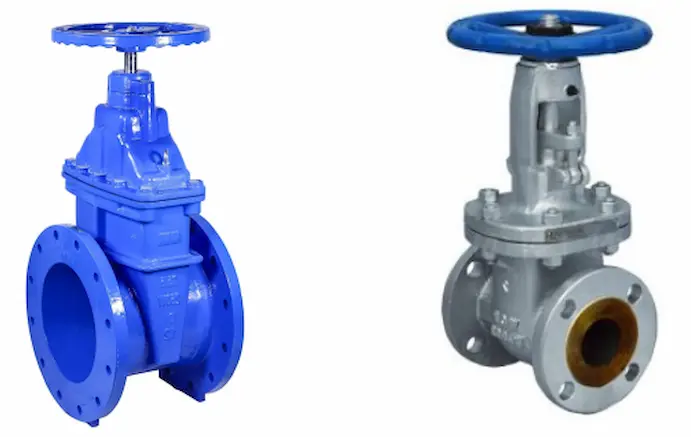
For moderate pressure and temperature, ductile iron valves offer excellent value. For high-pressure or high-temperature service, cast steel valves remain the safer option.
Follow international standards strictly
Ductile iron commonly follows EN-GJS or ASTM A536, while cast steel aligns with ASTM A216 or A352—standards matter for inspections and certifications.
Consider long-term system behaviour
Thermal expansion, vibration, and cyclic loading all favour cast steel valve bodies in demanding services.
Application Examples
Municipal water distribution
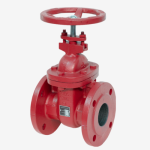
Ductile iron gate valves and butterfly valves are widely used due to corrosion resistance, strength-to-weight ratio, and cost efficiency.
Oil, gas, and petrochemical plants
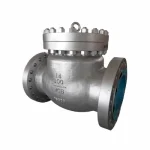
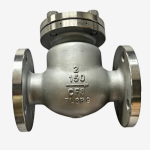
Cast steel ball valves, gate valves, and check valves are preferred for high-pressure pipelines and elevated temperatures.
At Vcore Valve, we supply both materials with full traceability and testing documentation.
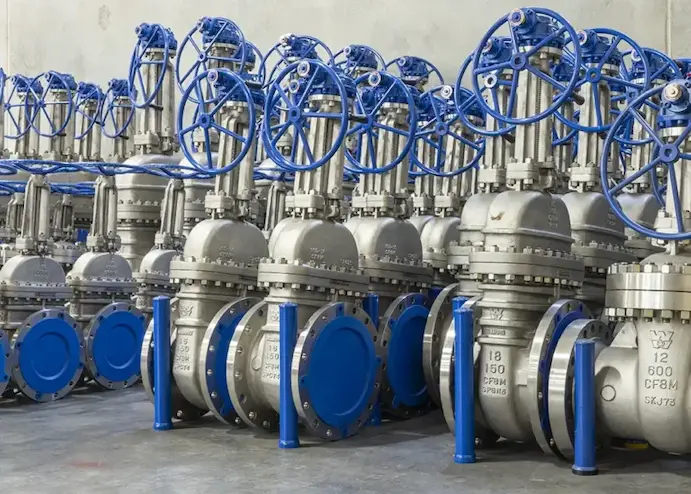
Technical Comparison: Ductile Iron vs Cast Steel
Mechanical properties
Ductile iron offers higher tensile strength and impact resistance than grey iron, but cast steel surpasses it under extreme loads.
Pressure and temperature range
Cast steel valves operate safely at significantly higher pressure classes and temperatures compared to ductile iron valves.
Corrosion behaviour
Ductile iron performs well in water systems, especially with epoxy coatings. Cast steel requires proper surface protection but excels in aggressive media.
Weight and handling
Ductile iron valves are lighter, reducing installation costs and structural load.
Market Trends and Industry Insights
The global valve market shows increasing use of ductile iron valves in water treatment and HVAC systems due to sustainability and cost considerations. Meanwhile, cast steel valves remain irreplaceable in energy, refining, and chemical sectors where safety margins are non-negotiable.
Hybrid projects increasingly specify both materials in different pipeline sections—a trend we actively support at Vcore Valve through mixed-material supply solutions.
Selection and Usage Recommendations
Choose ductile iron valves when:
-
Pressure class is PN16 / Class 150 or lower
-
Media is water or non-aggressive fluids
-
Cost efficiency and weight reduction are priorities
Choose cast steel valves when:
-
High pressure or high temperature is involved
-
Media includes steam, hydrocarbons, or chemicals
-
Long service life under stress is required
Conclusion
There is no universal “best” valve material—only the right material for the right application. Understanding the real differences between ductile iron vs cast steel valves helps you avoid overspecification, underperformance, and unnecessary costs.
At Vcore Valve, we don’t just sell valves—we help you select materials that work reliably for decades. Contact our engineering team for project-specific recommendations.
FAQs
What is the main difference between ductile iron and cast steel valves?
Ductile iron offers better cost efficiency and flexibility, while cast steel provides superior strength and high-temperature performance.
Can ductile iron valves be used for steam?
Generally no. Cast steel valves are recommended for steam service.
Are cast steel valves always more expensive?
Yes, but they often deliver better value over long service life in demanding conditions.
Which material is easier to install?
Ductile iron valves are lighter and easier to handle on site.
Does Vcore Valve manufacture both types?
Yes. Vcore Valve produces both ductile iron and cast steel valves to international standards.
Reference
-
ASTM A536 – Standard Specification for Ductile Iron Castings
-
ASTM A216 / A352 – Standard Specification for Cast Steel
-
EN 1092 & EN 558 Valve Standards
-
ISO 5208 Pressure Testing for Valves