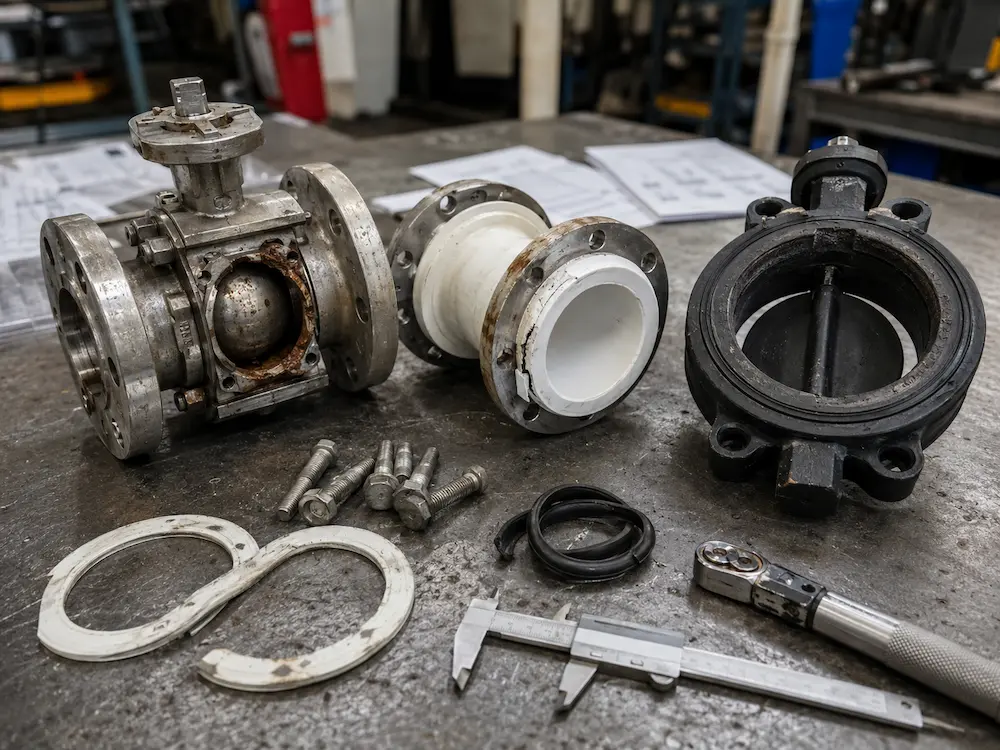
Common valve failures in chemical pipelines are rarely caused by one simple factor. In many chemical processing systems, valve problems come from a combination of corrosive media, wrong material selection, unsuitable lining, poor seal compatibility, abrasive solids, crystallization, temperature change, incorrect installation, and insufficient maintenance.
For industrial buyers, plant engineers, EPC contractors, distributors, and maintenance teams, valve failure is not only a repair problem. It can cause chemical leakage, production downtime, safety risk, environmental exposure, actuator damage, pipeline contamination, and unplanned replacement cost. A low-cost valve may become expensive if it fails early in a corrosive or abrasive chemical service.
This article explains the most common valve failures in chemical pipelines, how to identify their root causes, and how to prevent them during valve selection, installation, operation, and maintenance. For a broader overview of chemical valve selection, start with our main guide on industrial valves for chemical processing.
Why Chemical Pipeline Valves Fail More Easily Than Utility Valves
Chemical pipelines are more demanding than ordinary water, air, or general utility lines. A valve in chemical service may be exposed to acid, alkali, solvent, oxidizing media, slurry, wastewater chemicals, crystallizing fluids, high temperature, pressure fluctuation, or corrosive ambient atmosphere.
These conditions can attack different parts of the valve at the same time:
- The valve body may corrode or lose wall thickness.
- The ball, disc, plug, or trim may suffer chemical attack.
- The seat may deform, swell, wear, or lose sealing force.
- The stem packing may degrade and create external leakage.
- The lining may crack, blister, delaminate, or wear through.
- The actuator may fail if valve torque increases beyond its capacity.
- The flange gasket may leak if installation or material selection is poor.
Because chemical valve failures often involve both material compatibility and mechanical stress, prevention must begin before purchase. Correct valve type, material, lining, seal, actuator, installation, and inspection planning are all part of failure prevention.
Main Types of Valve Failures in Chemical Pipelines
| Failure Mode | Typical Symptom | Likely Root Cause | First Engineering Check |
|---|---|---|---|
| Corrosion | Rust, pitting, body thinning, rough internal surface or leakage | Wrong body/trim material, damaged lining or aggressive chemical exposure | Confirm medium, concentration, temperature and material compatibility |
| Internal leakage | Valve cannot fully shut off flow | Seat wear, particles on the sealing surface, corrosion, deformation or wrong valve type | Inspect seat condition, closure travel, media solids and sealing surface |
| External leakage | Leakage from stem, packing, body joint or flange area | Packing failure, gasket damage, uneven bolting or chemical attack | Check packing/gasket compatibility, stem surface and flange tightening |
| Lining damage | Blistering, cracking, peeling, exposed metal or abnormal corrosion | Wrong lining material, abrasion, vacuum, temperature or poor bonding | Verify lining limits against chemical, temperature, pressure, vacuum and solids |
| Seat / seal failure | Swelling, cracking, hardening, torque increase or leakage | Incompatible elastomer or soft sealing material | Confirm PTFE, EPDM, FKM, NBR or rubber compatibility with the full service |
| Erosion / abrasion | Worn seats, damaged lining, rough flow path or repeated leakage | Slurry, particles, high velocity or unsuitable valve cavity | Check particle size, solids content, velocity and wear-resistant design options |
| Blockage / crystallization | Reduced flow, incomplete operation, sticking or rising torque | Crystallizing media, deposits, dead zones or poor flushing | Review temperature change, drain/flush points, cavity design and operation frequency |
| High operating torque | Manual valve becomes hard to operate or actuator overloads | Corrosion, seat swelling, deposits, particles, crystallization or long idle periods | Compare actual torque demand with valve torque data and actuator margin |
| Actuator failure | Valve stops midway, cannot open/close or motor overloads | Undersized actuator, wrong power/control signal, water ingress, high valve torque or duty mismatch | Check torque sizing, power supply, fail action, enclosure, duty cycle and environment |
1. Corrosion Failure
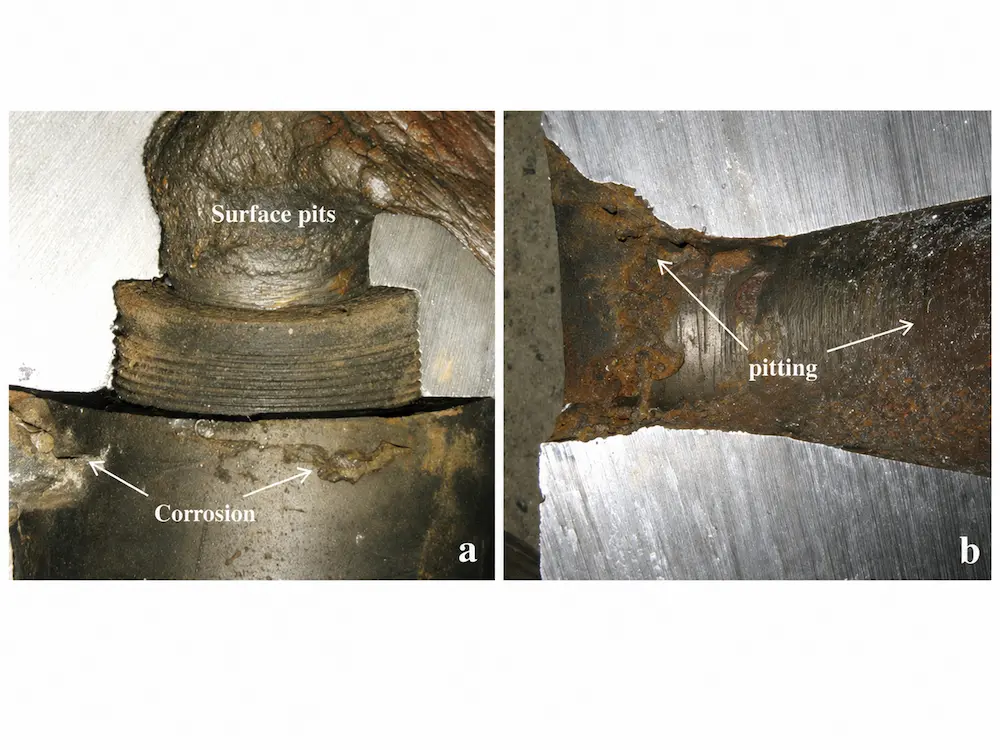
Corrosion is one of the most common and serious valve failures in chemical pipelines. It can affect the body, trim, stem, ball, disc, seat area, bolting, or flange surfaces. In some cases, corrosion is visible from the outside. In other cases, internal corrosion is only discovered after leakage, high torque, or pressure test failure.
Common Causes of Valve Corrosion
- Using carbon steel or standard stainless steel in incompatible media
- Selecting the wrong stainless steel grade for chloride-rich service
- Using a lining that is unsuitable for the chemical medium
- Damage to PTFE, rubber, or other protective lining
- High temperature accelerating chemical attack
- Poor drainage causing chemical accumulation in dead zones
- External corrosive atmosphere attacking exposed components
Buyers who need a deeper material selection framework can read our guide on anti-corrosion valve materials for chemical processing. For general prevention practices, this article on valve corrosion prevention also provides useful background.
How to Prevent Corrosion Failure
Corrosion prevention starts with accurate working condition data. Buyers should provide chemical name, concentration, temperature, pressure, flow condition, and cleaning process before selecting the valve material. Stainless steel, PTFE lining, rubber lining, titanium, duplex stainless steel, nickel alloys, or other materials may be suitable depending on the service.
For chloride-rich, seawater, oxidizing, or severe corrosive applications, specialty options such as a titanium ball valve may be evaluated when standard stainless steel is not sufficient.
2. Internal Leakage
Internal leakage means the valve cannot fully stop flow even when it is in the closed position. This is common in ball valves, butterfly valves, gate valves, globe valves, plug valves, and check valves when the sealing surface is damaged or contaminated.
Common Causes of Internal Leakage
- Seat damage from particles or abrasive media
- Soft seat swelling due to chemical incompatibility
- Corrosion on the ball, disc, plug, or seat surface
- Valve not fully closed because of high torque or actuator failure
- Thermal deformation under high temperature
- Incorrect valve type used for throttling or slurry
- Solid particles trapped on the sealing surface
In chemical plants, internal leakage can cause product mixing, backflow, dosing error, contamination, or safety problems. This is why the seat and seal material are as important as the valve body material.
How to Prevent Internal Leakage
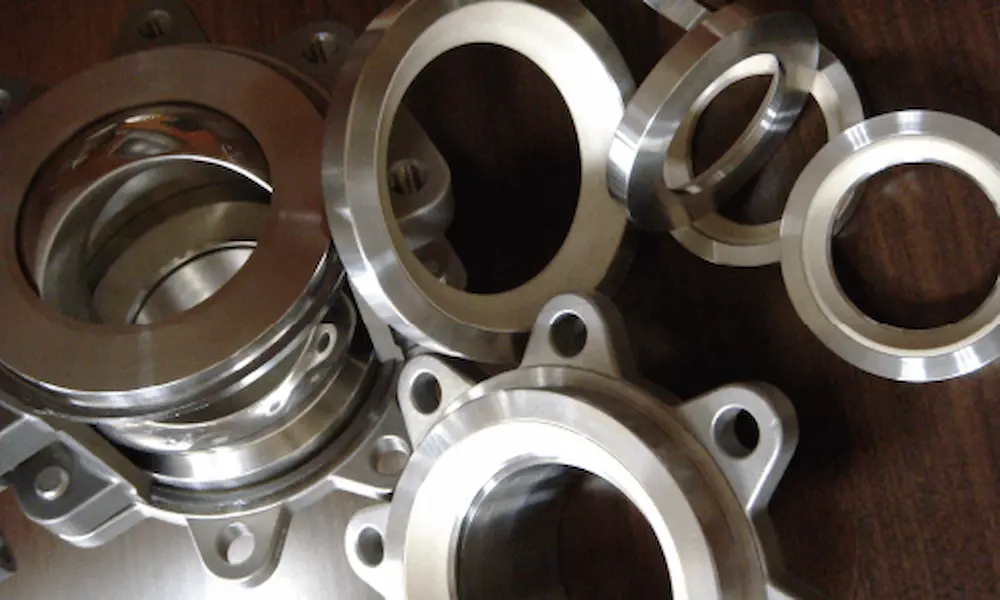
To reduce internal leakage, buyers should confirm shutoff requirements, seat material, valve type, media cleanliness, solids content, and operating temperature. PTFE seats may be suitable for many clean corrosive chemical services, while rubber or elastomer seats must be matched to the chemical and temperature. For abrasive slurry, a valve designed for wear resistance may be more suitable than a standard soft-seated ball valve.
3. External Leakage
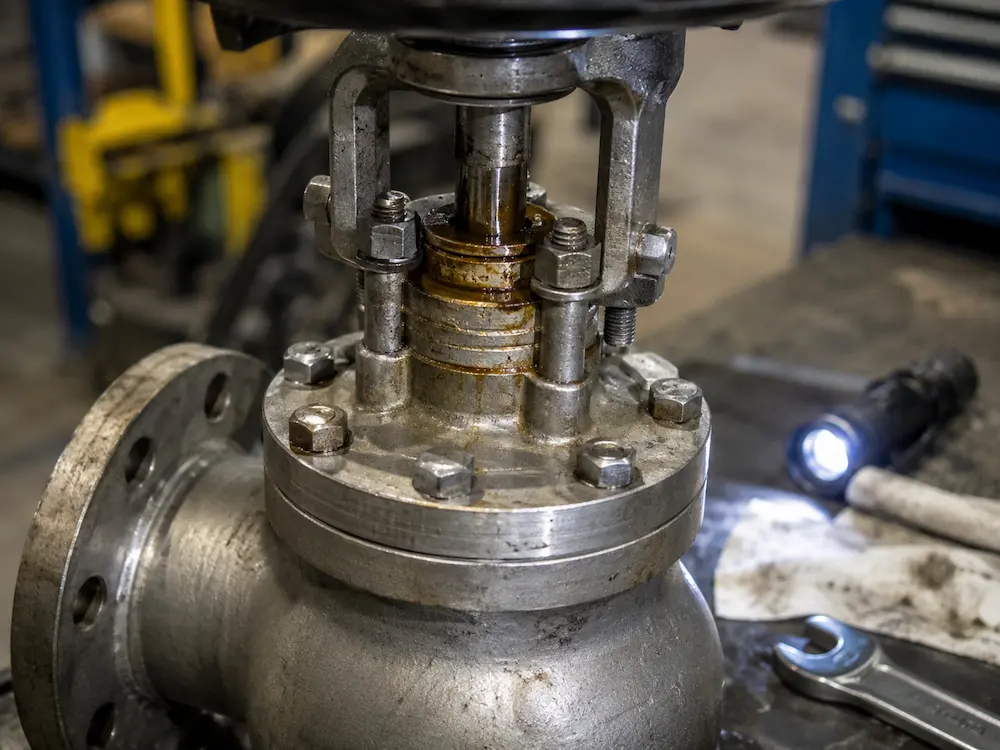
External leakage is one of the highest-risk failures in chemical pipelines because corrosive, toxic, flammable, or hazardous media can escape into the working environment. Leakage may occur at the stem, packing gland, body joint, flange gasket, drain plug, or actuator mounting interface.
Common External Leakage Points
- Stem packing area
- Body-to-cover joint
- Flange gasket connection
- Threaded connections
- Lined valve flange face
- Diaphragm clamping area
- Valve body casting or weld defects
Why Stem Leakage Happens
Stem leakage is often caused by packing degradation, wrong packing material, insufficient gland adjustment, stem corrosion, frequent operation, thermal cycling, or chemical attack. In corrosive service, even small leakage can become serious because the leaking medium may attack surrounding metal parts and worsen over time.
How to Prevent External Leakage
Buyers should confirm packing material, gasket material, bolting method, flange standard, installation torque, and chemical compatibility. For higher-risk chemical service, diaphragm valves or bellows-sealed designs may be considered where applicable. For lined valves, the flange face lining must be protected during installation to avoid damage that can lead to leakage.
4. Lining Damage in PTFE and Rubber Lined Valves
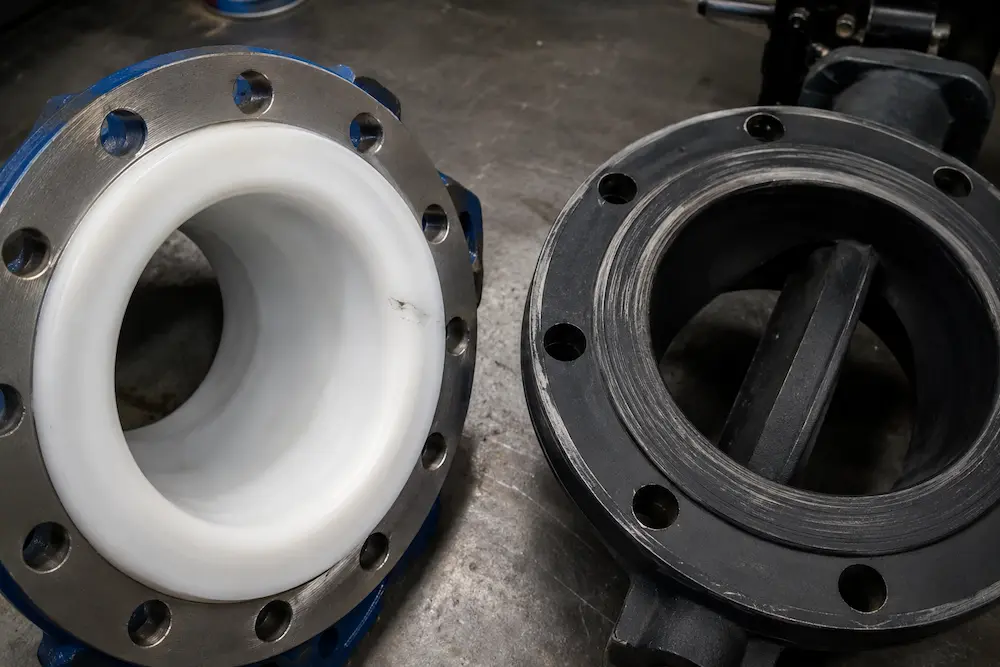
Lined valves are widely used in corrosive chemical pipelines because the lining protects the metal body from the process medium. However, lining failure can be serious because once the lining is damaged, the metal body may be exposed to chemical attack.
Common Lining Damage Types
- Cracking
- Blistering
- Delamination
- Pinhole damage
- Mechanical scratches
- Abrasion wear
- Flange face lining damage
- Vacuum-related deformation
PTFE lining and rubber lining fail in different ways. PTFE may be selected for broad chemical resistance, while rubber lining may be selected for slurry and abrasion. Buyers comparing these lining systems can review our guide on PTFE lined valve vs rubber lined valve.
PTFE Lining Failure Causes
PTFE lined valves may fail if the lining quality is poor, if the service exceeds temperature or pressure limits, if vacuum conditions are not considered, if the medium causes permeation risk, or if abrasive particles damage the lining surface. PTFE is chemically resistant in many services, but it is not immune to mechanical damage.
For ball valve applications requiring PTFE seating and chemical-resistant sealing, buyers may also evaluate a PTFE ball valve depending on the medium, pressure, temperature, and valve structure.
Rubber Lining Failure Causes
Rubber lined valves may fail if the rubber compound is incompatible with the medium, if the temperature is too high, if solvents attack the lining, or if abrasion exceeds the lining’s wear capability. Rubber can be excellent for selected slurry and abrasive applications, but it is not suitable for every chemical.
For slurry, abrasive chemicals, water treatment, and selected corrosive applications, buyers can compare rubber-lined valves when corrosion protection and wear resistance are both required.
5. Seat and Seal Failure
Many chemical valve failures begin with seats, seals, O-rings, diaphragms, or packing materials. These soft parts may be small compared with the valve body, but they often determine sealing performance and service life.
Common Signs of Seat and Seal Failure
- Internal leakage
- External leakage
- Increased operating torque
- Swollen or deformed seals
- Cracked or hardened elastomers
- Seat extrusion or deformation
- Reduced actuator reliability
Common Material Problems
EPDM, FKM, NBR, PTFE, graphite, and rubber materials all have different compatibility ranges. EPDM may work well in water, some acids, and some alkalis, but it is generally not suitable for many oils and hydrocarbons. FKM may be useful for many oils and selected chemicals, but it is not universal. PTFE provides broad chemical resistance in many services, but mechanical and temperature limits still matter.
Buyers using butterfly valves in chemical or water treatment systems may also review this article on EPDM butterfly valve liners to better understand EPDM sealing and liner behavior.
6. Erosion, Abrasion, and Slurry Wear
In slurry and abrasive chemical pipelines, valve failure may be caused more by mechanical wear than by chemical corrosion. Solid particles can damage seats, scratch balls or discs, erode lining, wear sealing surfaces, and create leakage paths.
High-Risk Applications
- Mining slurry
- Chemical wastewater with solids
- Desulfurization slurry
- Fertilizer and mineral processing
- Abrasive powder-liquid mixtures
- High-velocity chemical transfer lines
How to Prevent Abrasion Failure
Buyers should confirm solids content, particle size, flow velocity, valve opening position, and whether the valve will be used for throttling. Rubber lined valves, diaphragm valves, and certain slurry valve designs may be more suitable than standard valves in abrasive services.
A key mistake is using a standard valve designed for clean liquid in a slurry pipeline. Even if the material is chemically compatible, the valve may fail because it is not mechanically suitable.
7. Blockage, Scaling, and Crystallization
Chemical pipelines may handle media that crystallize, scale, settle, or form deposits. These deposits can block the flow path, prevent full closure, increase torque, and damage seats or linings during operation.
Common Causes
- Crystallizing chemicals
- Temperature drop inside the pipeline
- Dead zones inside valve cavities
- Slurry settling during shutdown
- Insufficient flushing
- Intermittent operation
- Incorrect valve orientation
How to Reduce Blockage Risk
Valve type and piping design should reduce dead zones where chemicals can accumulate. Flush connections, drain points, correct installation orientation, and regular operation can help reduce deposit-related failures. For services with known crystallization risk, buyers should tell the supplier before valve selection.
8. High Operating Torque
High operating torque is both a symptom and a failure risk. If torque increases, manual valves become difficult to operate, gearboxes may be damaged, and electric or pneumatic actuators may fail to move the valve.
Common Causes of High Torque
- Corrosion on moving parts
- Seat swelling or deformation
- Deposits and crystallization
- Particles trapped inside the valve
- Wrong seat material
- Long periods without operation
- Poor actuator sizing
How to Prevent High Torque Problems
Buyers should ask for valve torque data and choose actuators with a suitable safety margin. For automated quarter-turn valves, actuator sizing should consider break torque, running torque and final seating torque rather than relying only on nominal valve size. See our valve actuator torque sizing guide for the full sizing method. In chemical service, torque can increase over time because of deposits, corrosion, crystallization or seat changes, so sizing should be based on real operating conditions, not only catalogue size.
9. Electric or Pneumatic Actuator Failure
Actuator failure is common when the actuator is treated as an accessory rather than part of the valve system. In chemical pipelines, actuator reliability depends on valve torque, environment, control signal, duty cycle, corrosion exposure, and installation quality.
Common Causes of Actuator Failure
- Undersized actuator torque
- Wrong voltage or control signal
- Water ingress into electric actuator housing
- Corrosive vapor attacking actuator components
- Excessive cycling beyond duty rating
- Misalignment between actuator and valve stem
- Valve torque increase caused by deposits or corrosion
How to Prevent Actuator Failure
Buyers should confirm torque requirement, safety margin, power source, voltage, control signal, enclosure rating, duty cycle, manual override, feedback signal and fail-safe requirement. A practical valve actuator selection guide should compare the actuator with the valve, the process environment and the required fail action, rather than selecting only by valve size. For chemical plants, actuator protection against moisture, dust, washdown and corrosive ambient air should also be reviewed.
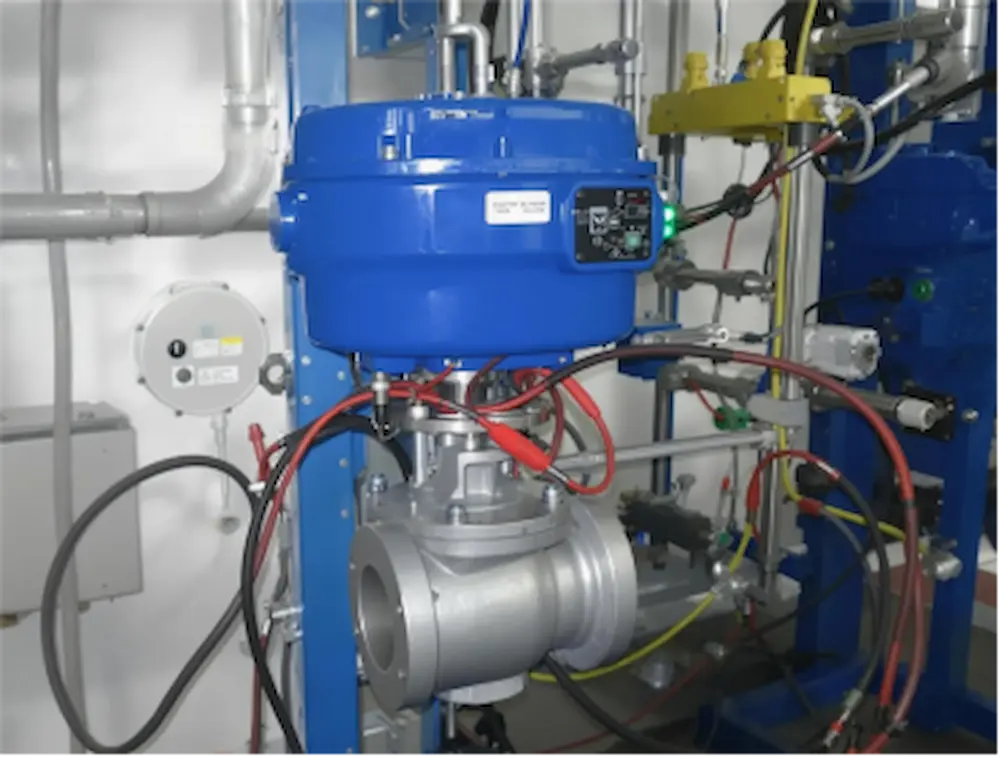
Failure Diagnosis by Symptom
| Observed Symptom | Possible Causes | What to Check First | Relevant Section |
|---|---|---|---|
| Valve leaks when closed | Seat damage, particles, corrosion, incomplete closure or actuator travel issue | Seat condition, media solids, closure travel and sealing surface | Internal Leakage |
| Leakage around stem | Packing failure, stem corrosion, gland issue or chemical incompatibility | Packing material, gland adjustment and stem surface | External Leakage |
| Valve becomes hard to operate | Deposits, crystallization, corrosion, seat swelling, particles or long idle periods | Torque data, seat condition, internal deposits and operation history | High Operating Torque |
| Lining cracks or peels | Wrong lining, temperature, vacuum, abrasion, flange face damage or poor bonding | Lining material, service limits and flange face condition | Lining Damage |
| Seat or soft seal swells, cracks or hardens | Chemical incompatibility, temperature limit, wear or incorrect elastomer selection | Seat/seal material, media concentration, temperature and cleaning chemicals | Seat and Seal Failure |
| Actuator stops midway | Torque overload, wrong control signal, voltage issue, water ingress or duty mismatch | Valve torque, actuator size, wiring, power supply and enclosure rating | Actuator Failure |
| Frequent flange leakage | Wrong gasket, damaged lining face, uneven bolting or flange misalignment | Gasket material, flange flatness and bolt tightening sequence | External Leakage |
How to Prevent Valve Failures Before Purchase
The best time to prevent valve failure is before the valve is ordered. Buyers should provide complete working conditions and avoid selecting only by valve size, pressure rating, or price.
Information Buyers Should Provide
- Chemical name and composition
- Concentration range
- Normal and maximum temperature
- Operating and design pressure
- Valve size and connection type
- Flow condition: clean liquid, slurry, gas, vapor, or mixed phase
- Solids content and particle size
- Required shutoff level
- Manual, electric, or pneumatic operation
- Operation frequency
- Cleaning and flushing process
- Indoor, outdoor, corrosive, or hazardous environment
- Required documents and test reports
For acid and alkali systems, buyers can also review our guide on corrosion-resistant valves for acid and alkali pipelines before choosing valve materials and linings.
How to Prevent Valve Failures During Installation
Even a correctly selected valve can fail early if installation is poor. Chemical valves require careful handling, especially lined valves, soft-seated valves, and actuated valves.
Installation Best Practices
- Protect flange lining and sealing surfaces before installation
- Use compatible gaskets and correct bolt tightening sequence
- Avoid pipe stress pulling the valve body out of alignment
- Confirm valve orientation and flow direction
- Check actuator wiring, voltage, signal, and travel limits
- Flush the pipeline before commissioning
- Avoid welding heat damage near soft seats or lined valves
- Verify that the valve can fully open and close after installation
For lined valves, flange face damage is a common installation-related failure. PTFE or rubber lining around the flange face must not be scratched, crushed, or unevenly compressed.
How to Prevent Valve Failures During Operation
Operational practices can extend or shorten valve life. Valves that are rarely operated may become stiff because of deposits or corrosion. Valves that cycle too often may wear seats, packing, or actuators. Valves used for throttling when they are designed only for isolation may fail early.
Operation and Maintenance Recommendations
- Operate standby valves periodically to prevent sticking
- Inspect stem packing and flange connections regularly
- Monitor actuator torque alarms or travel problems
- Flush pipelines where crystallization or deposits are likely
- Check lining condition during shutdown inspection
- Replace seals and seats before failure in critical systems
- Record failure symptoms and working conditions for root cause analysis
Quality Control and Documentation to Request
For B2B chemical pipeline projects, documentation helps reduce failure risk. Buyers should not rely only on product photos or short quotations. Useful documents include:
- Material certificate
- Pressure test report
- Seat leakage test report
- Lining inspection information
- Dimensional drawing
- Actuator datasheet and wiring diagram
- Valve torque data where applicable
- Installation and maintenance manual
- Packing and marking information
When suppliers can provide complete technical support, buyers are more likely to avoid mismatched materials, unsuitable valve structures, and poor actuator selection.
Final Recommendations for B2B Buyers
Most chemical pipeline valve failures are preventable. Corrosion, leakage, lining damage, seat failure, blockage, high torque, and actuator problems usually occur when the valve design does not match the real working condition.
The best prevention strategy is to treat the valve as a complete system. Buyers should review body material, trim material, lining, seat, seal, packing, actuator, installation method, operation frequency, cleaning process, and documentation together.
If your chemical pipeline is experiencing leakage, corrosion, lining damage, high torque, or premature valve failure, Vcore Valve can help review your working conditions and recommend a practical valve configuration. Buyers can also browse our industrial valve product range to compare ball valves, butterfly valves, check valves, lined valves, stainless steel valves, and automated valve solutions for chemical processing systems.
For industrial sourcing, the right question is not only “Which valve failed?” The better question is: “Why did this valve fail, and how can the next valve be selected to prevent the same problem?”
FAQs
1. What are the most common valve failures in chemical pipelines?
The most common valve failures in chemical pipelines include corrosion, internal leakage, external leakage, lining damage, seat and seal failure, erosion, abrasion, blockage, crystallization, high operating torque, and actuator failure.
2. Why do chemical valves leak?
Chemical valves may leak because of seat damage, seal incompatibility, stem packing failure, corrosion, damaged lining, flange gasket problems, particles on the sealing surface, or incomplete valve closure caused by high torque or actuator problems.
3. How can valve corrosion failure be prevented?
Valve corrosion failure can be prevented by selecting materials, linings, seats, seals, and packing that match the chemical medium, concentration, temperature, pressure, and flow condition. Buyers should also consider cleaning chemicals, external environment, and long-term maintenance risk.
4. Why do lined valves fail in chemical service?
Lined valves may fail because of wrong lining material, poor lining quality, abrasion, high temperature, vacuum conditions, permeation, flange face damage, or mechanical stress. PTFE lining and rubber lining should be selected according to chemical compatibility and mechanical service conditions.
5. How can actuator failure be avoided in chemical pipelines?
Actuator failure can be reduced by confirming valve torque, applying a suitable torque safety margin, matching power source, control signal, enclosure protection and duty cycle, and considering corrosion, deposits or seat swelling that may increase valve torque over time.
6. Why does valve operating torque increase in chemical service?
Valve operating torque can increase because of corrosion, crystallization, deposits, seat swelling, trapped particles, long idle periods or mechanical misalignment. Increased torque is a symptom that should be investigated first; it should not be solved only by installing a larger actuator.