Trunnion Ball Valve Seat Injection: Emergency Sealing vs Routine Lubrication
A specification that says “provide grease injection fittings” leaves several questions unanswered. Does it mean seat sealant injection, stem sealant injection or gearbox lubrication? Is the feature intended for contingency use or a scheduled maintenance program? Which materials are approved?
These distinctions matter when comparing quotations and writing maintenance plans. This guide focuses on the injection system itself. For the wider selection framework, including seat arrangements and cavity relief, see the trunnion ball valve design guide.
1. What Is Trunnion Ball Valve Seat Injection?
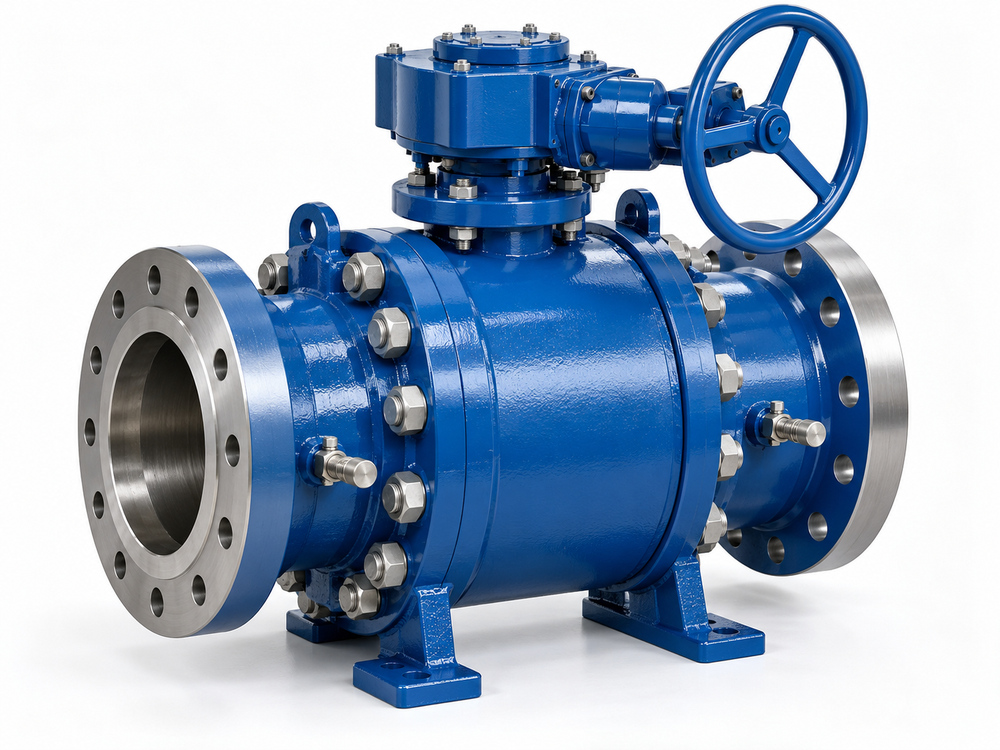
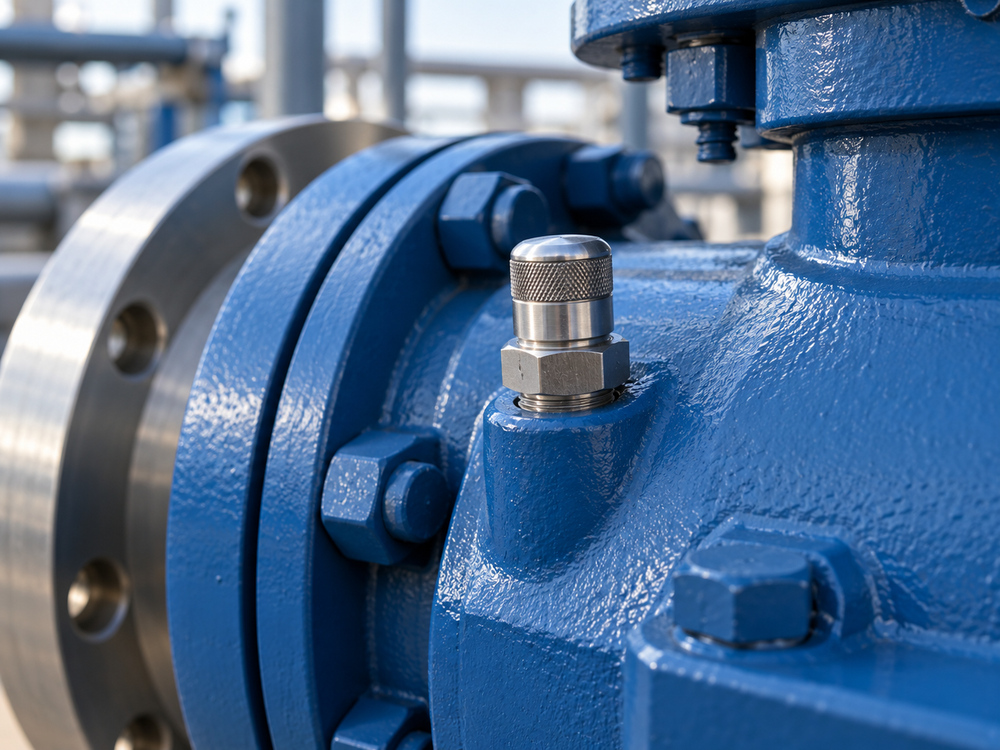
On a valve equipped for seat injection, external fittings connect to internal passages serving the seat sealing area. The exact routing and number of access points depend on the design. An exterior fitting alone cannot establish which seat it serves or whether it also has a lubrication function.
Emergency injection is a recognized option on some commercial designs. For example, SLB describes an emergency seat-seal injection feature on its Grove B5 trunnion-mounted ball valve. That example does not establish the arrangement or availability on another manufacturer’s valve.
For a purchase or maintenance review, request the drawing for the exact valve tag. It should identify the fittings, the passages they serve and the components that prevent process fluid from returning through the injection connection.
2. Emergency Sealing vs Routine Lubrication
| Question | Emergency seat sealing | Routine lubrication |
|---|---|---|
| Main purpose | Help control identified seat leakage under an approved intervention plan | Support the maintenance needs specified for that valve design |
| When considered | Following leak assessment and confirmation that injection is appropriate | At the interval or condition defined by the manufacturer and maintenance program |
| Material | A compatible, approved sealing compound | A compatible lubricant approved for that location and service |
| Evidence required | Leak condition before and after treatment, plus a follow-up disposition | Maintenance record and condition checks required by the procedure |
| What it does not prove | That damaged primary sealing parts have been repaired | That the valve’s seat leakage acceptance criteria are satisfied |
Product terminology can overlap: a compound may provide lubrication as well as a sealing function. Choose by documented application approval, not simply by whether the container says “grease.” Sealweld’s maintenance product catalogue, for example, distinguishes sealants, lubricants, cleaners and stem-packing products.
3. Identify the Port and the Leakage Path First
Before discussing injection, identify the observed problem. Leakage through a closed valve, leakage around a stem and leakage at a body joint involve different boundaries. A seat injection passage is not a general-purpose repair connection.
| Observation or connection | What to confirm | Why it matters |
|---|---|---|
| Suspected leakage across a closed seat | Test method, flow direction, valve position and affected seat | A seat intervention requires a reliable diagnosis |
| External leakage at the stem | Stem sealing arrangement and any separate approved injection provision | Seat and stem systems must not be treated as interchangeable |
| External leakage at a body joint | Pressure-boundary condition and the required repair response | Seat sealant does not establish body-joint integrity |
| Gearbox lubrication point | Gear operator manual and specified lubricant | Gear maintenance is separate from process-side seat injection |
| Vent or drain connection | Its function on the approved drawing | It must not be mistaken for an injection fitting |
4. When Can Emergency Seat Injection Be Considered?
It may be considered when seat leakage has been identified, the installed valve has the correct injection provision and the manufacturer supports the proposed intervention. The operating team also needs an acceptable method to assess the result and manage the remaining risk.
For planning purposes, ask three questions: Can this system reach the relevant sealing area? Is the proposed compound suitable for the valve and fluid? If leakage improves, what inspection or repair will still be required?
Do not treat a lower leakage reading as evidence that a damaged seat or ball surface has recovered. The maintenance disposition should state whether the intervention supports continued operation under defined conditions, a planned shutdown or another approved outcome.
Injection is also not a substitute for proving isolation before intrusive downstream work. Personnel protection must follow the site’s isolation and verification requirements.
5. Check Compatibility Before Selecting a Compound
A useful material approval request describes the complete service, rather than asking for “ball valve grease.” Include the following information:
- Process composition: the main fluid, contaminants and any restrictions on introducing foreign material.
- Temperature range: operating, startup, shutdown and ambient conditions relevant to the compound.
- Valve materials: seat inserts, elastomers and other components exposed to the injected material.
- Existing material: the identity of any previously injected lubricant, sealant or cleaner.
- System details: the fitting arrangement, internal passage design and any extension lines.
- Application limits: manufacturer approval, shelf life, storage requirements and the current product data sheet.
Where the previous compound is unknown, flag that uncertainty for technical review. Do not assume that two products can be mixed because they look similar. Cleaning products also require separate approval; compatibility with the metal body alone is insufficient.
6. Specify Access and Pressure Limits as Part of the System
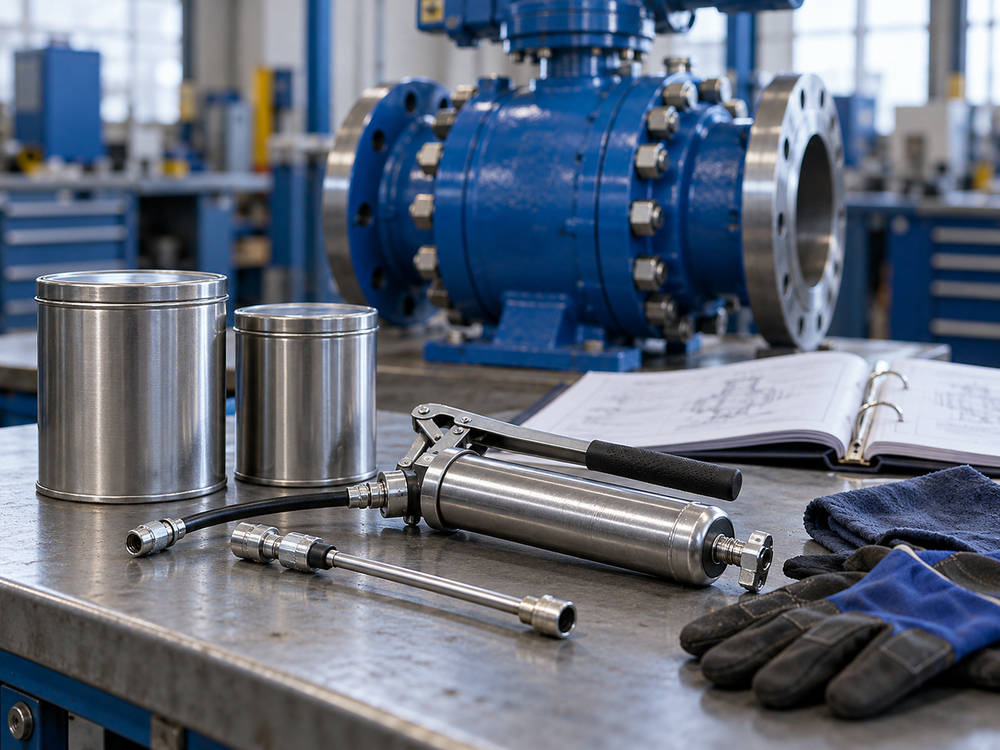
An accessible fitting on a workshop valve may become difficult to reach after installation, insulation or burial. Review the final arrangement, including working space, protective covers and the identification of remote connections.
Ask the supplier to document the ratings and limitations of fittings, check components, extension lines and associated equipment. The valve’s pressure class alone is not an injection-pressure instruction. Pump capability is also not the allowable pressure of the assembled system.
The handover package should include port identification, inspection requirements and the response to a blocked or leaking connection. Abnormal resistance is a reason to stop and assess the system, not to assume more pressure is acceptable.
7. Verify the Outcome and Keep a Useful Record
Before intervention, define what will count as an acceptable result. Record the initial leakage evidence, test conditions and valve configuration. Afterwards, use the approved verification method and record any limitations on comparing the results.
A useful maintenance record identifies the valve tag, treated connection, product and batch, quantity used, relevant process conditions, observations and responsible personnel. Include the required follow-up date or operating restriction.
Keep the distinction between an assisted seal and the condition of the original sealing components visible in the record. Repeated demand for intervention should trigger an engineering review instead of silently becoming a routine greasing schedule.
8. RFQ Checklist: Define More Than “Injection Fittings Included”
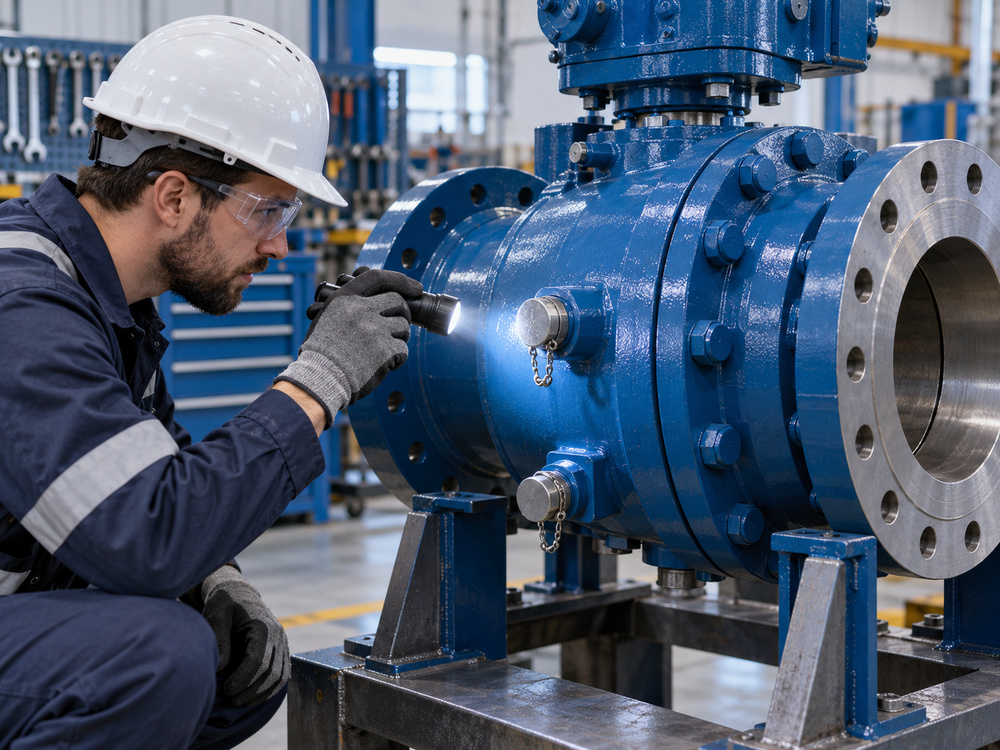
For a new valve package, separate the required function from the hardware list. This makes quotations easier to compare and reduces ambiguity at commissioning.
- State whether seat injection, stem injection or both are required.
- Identify whether the intended use is emergency sealing, approved routine maintenance or both.
- Request a drawing showing each connection and the seat or sealing area it serves.
- Specify the required fitting, check-component and protective-cap arrangement for supplier confirmation.
- Define access needs, including any remote lines for buried or obstructed installations.
- Request service-specific material recommendations and their approval basis.
- Require the applicable operating limits, maintenance procedure and training requirements.
- Agree on factory inspection, documentation, spares and field verification responsibilities.
For a high-pressure procurement package, combine these questions with the Class 900 trunnion ball valve procurement guide. An injection option should be evaluated alongside the required seat design and service conditions.
Sample Inquiry
Please quote a trunnion-mounted ball valve for the attached process datasheet. Confirm the availability of seat sealant injection and identify whether the proposed system permits emergency sealing, routine lubrication or both. Provide the injection arrangement drawing, component ratings, approved compound recommendations, operating limitations and maintenance documentation. List stem injection and remote extension lines separately, where applicable.
Send your valve datasheet and injection requirements to Vcore for configuration review.

9. Related Products and Selection Guides
- Trunnion ball valve product information — a starting point for discussing the valve configuration and optional features.
- High-pressure ball valve product information — for inquiries involving higher-pressure service.
- Seats, DBB, cavity relief and pipeline selection — the main design guide supporting this maintenance topic.
Confirm the injection arrangement for the quoted model and size. A product-family description does not guarantee that every configuration includes the same maintenance options.
10. Frequently Asked Questions
Do all trunnion ball valves have seat injection fittings?
No. Availability depends on the design and purchase specification. Verify the supplied valve against its drawing and documentation.
Does a seat injection fitting mean routine lubrication is required?
No. Some designs support planned lubrication or cleaning; others use injection primarily for emergency sealing. Follow the manual for the installed valve rather than assigning a generic maintenance interval.
Can ordinary grease replace an approved seat sealant?
Do not assume interchangeability. The required sealing function, process compatibility and suitability for the internal passages must be confirmed for the specific product.
Will seat injection repair a damaged ball or seat?
It may help control leakage in an approved application, but it does not demonstrate that damaged components have been restored. Inspection and a repair decision may still be necessary.
Can seat injection stop leakage around the stem?
Seat injection and stem sealing serve different locations. Confirm whether a separate stem injection system exists and whether its use is authorized for the observed condition.
What injection pressure and quantity should be used?
There is no universal value. Use the valve manufacturer’s approved procedure and the limits of the complete injection system for the actual service conditions.