Cryogenic Valve Drying After Hydrotesting: What LNG Buyers Should Specify
“Drain and dry before shipment” is easy to put in a purchase order, but difficult to verify. One supplier may interpret it as removing visible water; another may provide controlled gas drying and a documented moisture measurement. Those offers do not describe the same deliverable.
This guide focuses on the interval between wet testing and protected delivery. It complements the broader valve pressure testing guide, rather than replacing the approved pressure-test procedure or the plant commissioning plan.
1. Why a Passed Hydrotest Does Not Prove Dryness
A hydrostatic test checks the relevant pressure boundary or sealing performance under specified test conditions. It introduces water into the tested spaces. After depressurization, drainage may remove the bulk liquid while leaving droplets, films or water trapped in recesses.
Residual water can freeze during cooldown and interfere with sealing surfaces or moving parts. The practical question is therefore not just whether the valve passed its test, but how the manufacturer removed and verified moisture afterwards.
Keep three acceptance decisions separate: pressure-test acceptance, cleanliness acceptance and drying acceptance. A moisture reading does not establish freedom from oil or particles, and a clean inspection report does not establish dryness.
2. Define the Scope Before Choosing a Drying Method
Ask the supplier to identify every wetted space included in the drying procedure. Main-bore flow alone may not expose all internal cavities to the same drying conditions. Review the actual assembly drawing, including body pockets, bonnet spaces and auxiliary connections where applicable.
| Buyer question | Required clarification | Why it matters |
|---|---|---|
| Which parts underwent wet testing? | Components, assembled valve and auxiliary connections | Defines where water may remain |
| How are retained spaces addressed? | Approved orientation, access and valve-position sequence | A dry bore does not represent every pocket |
| Will later work introduce moisture? | Cleaning, retesting, immersion or exposure after drying | Final acceptance must reflect the final condition |
| Who owns site drying? | Manufacturer, packager and commissioning responsibilities | Factory release does not cover later site hydrotests |
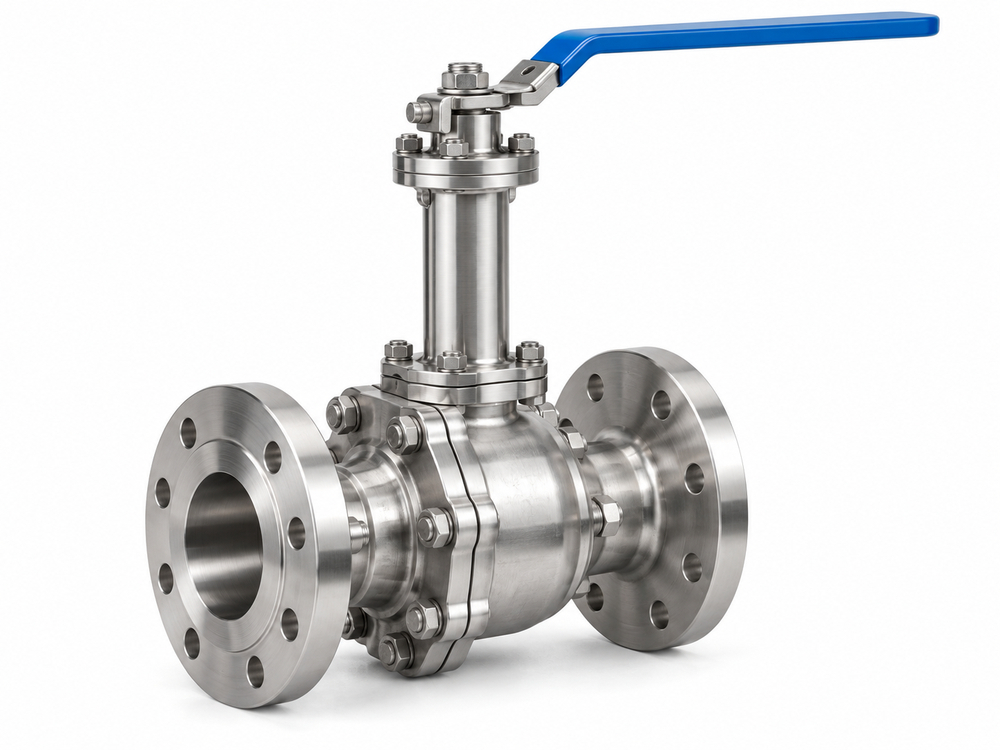
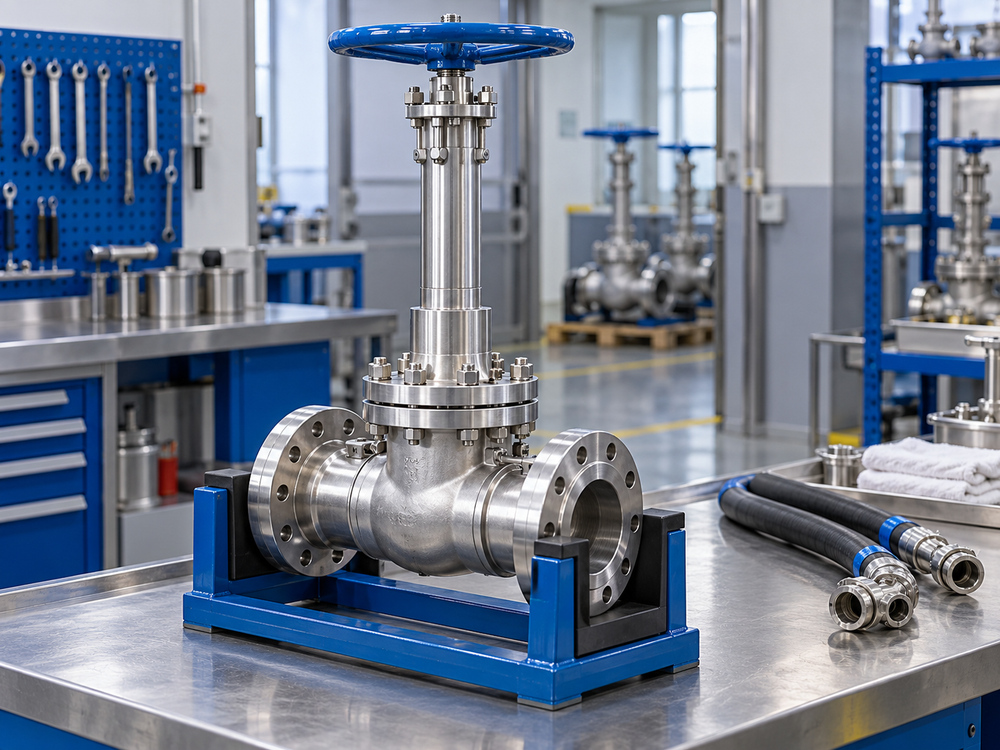
For isolation duties, discuss these details with the proposed cryogenic ball valve configuration. The supplier should explain the relevant cavity arrangement without assuming that one drying sequence suits every ball, globe or gate valve.
3. Specify a Controlled Process, Not Just a Purge Duration
A procurement specification should ask for a manufacturer-approved drying procedure. Depending on the design and project requirements, the proposed approach may use suitable dry gas, controlled heating, vacuum equipment or a combination. These are options for technical review, not interchangeable instructions.
Require the procedure to define gas quality, equipment cleanliness, pressure and temperature limits, drainage provisions and protection of seats, seals, packing and accessories. Heating and vacuum must be explicitly compatible with the complete assembly.
If nitrogen is proposed, specify moisture and contamination requirements in addition to gas identity. “Nitrogen purged” alone says little about the final moisture condition. If dry air is proposed, its use must be accepted for the service and cleanliness specification.
4. Make the Moisture Acceptance Criterion Measurable
The purchase order should define what “dry” means and how compliance will be demonstrated. Where gas moisture measurement is selected, the criterion needs more than a dew-point temperature.
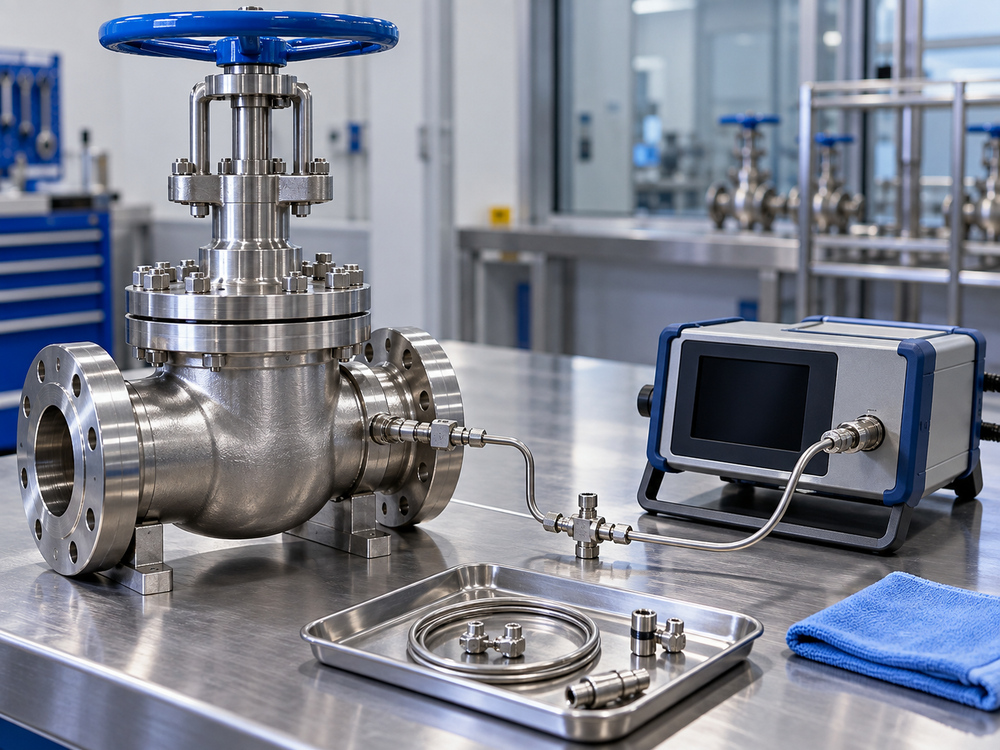
Dew point depends on pressure. Vaisala’s moisture sampling guidance also highlights the effect of the sampling arrangement on a representative reading. Record whether the result is measured at line pressure or after pressure reduction; values on different pressure bases should not be compared directly.
| Acceptance field | What the buyer should define |
|---|---|
| Moisture limit | Project-approved numerical limit and units; identify dew-point or frost-point reporting convention where relevant |
| Pressure basis | Actual measurement pressure and any reference-pressure conversion |
| Sampling location | Supply-gas check and representative outlet location or locations |
| Measurement conditions | Gas identity, sample flow, temperature and valve configuration |
| Stability requirement | Defined acceptance duration and permitted variation |
| Instrument suitability | Measurement range, accuracy, identification and calibration status |
| Cavity coverage | How the approved procedure addresses spaces outside the main flow path |
The project engineer should select the limit. Do not copy a dew-point number from a compressed-air utility specification or present it as a universal LNG valve requirement. Likewise, LNG operating temperature is not automatically the required drying-gas dew point.
5. Avoid a Misleading Dryness Result
A dry supply-gas certificate characterizes the gas entering the setup. It does not demonstrate the condition of the valve leaving the process. Ask for an outlet measurement plan that is representative of the approved drying path.
The supplier should also control the sample system. Ambient air ingress, damp tubing and insufficient stabilization can distort the result. Vaisala’s process sampling instructions provide useful background on obtaining a representative gas sample.
A satisfactory outlet reading still needs to be interpreted alongside cavity coverage and drainage evidence. For difficult geometries, ask the manufacturer how the procedure was validated. Any pause-and-recheck or alternative verification requirement should be agreed in advance rather than improvised at final inspection.
6. Agree on Inspection Records and Release Points
Put drying into the inspection and test plan, with the required review, witness or hold point identified before manufacture. An inspector should be able to connect the accepted condition to a specific valve tag or serial number.
- Approved procedure number and revision, valve identification and test sequence.
- Confirmation of drainage and the required accessible-surface inspection.
- Drying medium, relevant operating conditions and treated configuration.
- Supply and outlet moisture results where specified, with their measurement basis.
- Instrument identification, calibration status and time-stamped stability record.
- Nonconformities, corrective treatment, final acceptance and responsible sign-off.
- Time of preservation, closure method and storage instructions.
Agree whether the report covers every supplied valve or an approved alternative inspection scope. A generic certificate stating “dry nitrogen used” should not replace the records explicitly required by the order.

7. Preserve the Accepted Condition Through Delivery
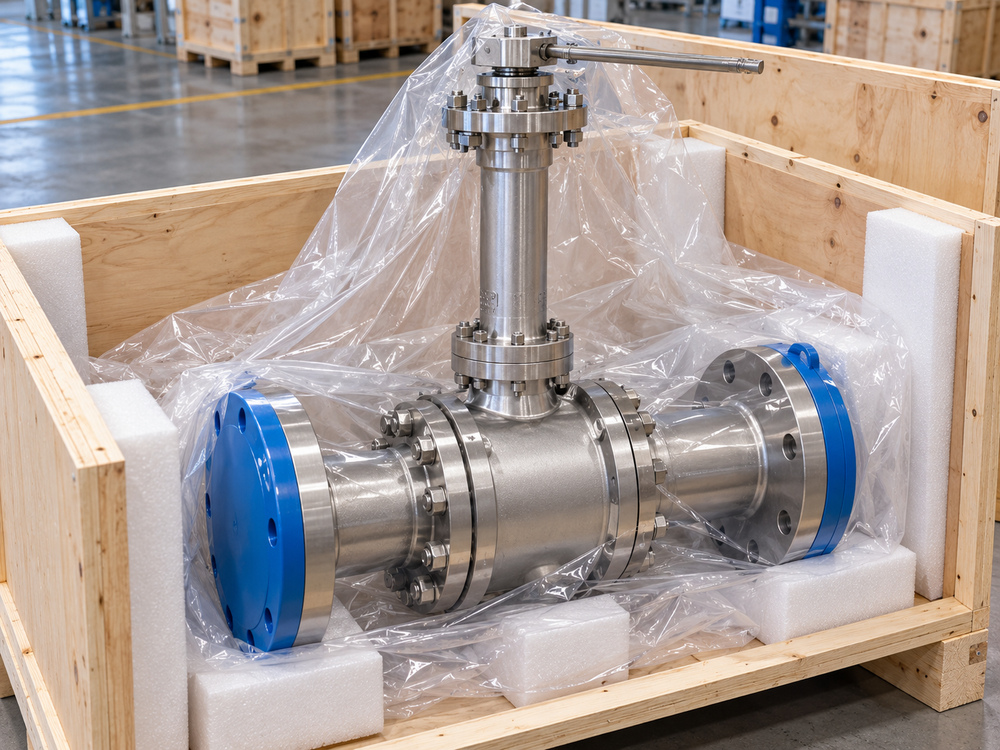
Drying is only useful if subsequent handling protects the result. Define when end protection and moisture-resistant packaging are applied, how long the accepted valve may remain exposed, and what happens if that period is exceeded.
Specify clean, compatible closure materials and protection for flange faces, weld ends and the extended bonnet. Where barrier packaging, desiccant or a humidity indicator is required, describe its location and acceptance criteria. Desiccant must not introduce particles into the flow path or be left unaccounted for inside the valve.
Do not assume a shipping cover is pressure-rated. Any preservation under positive gas pressure needs a separately engineered arrangement, suitable closures and handling instructions.
At receipt, inspect seals and packaging before removing them. Damaged covers, torn barriers, visible moisture or uncontrolled opening should trigger the agreed assessment and re-preservation process. A packaging humidity indicator alone does not certify the valve’s internal cavities.
8. RFQ Checklist and Suggested Purchase-Order Wording
Include the medium, minimum design temperature, pressure class, materials, valve type, quantity and applicable test specification. Then add the following drying deliverables:
- Approved post-hydrotest drainage and drying procedure covering the actual valve geometry.
- Agreed test-water quality and contamination controls, including material-specific restrictions.
- Drying-gas quality and permitted equipment, pressure and temperature limits.
- Moisture acceptance limit with pressure basis, sampling locations and stability requirement.
- Inspection scope, calibration evidence and traceable drying report.
- Final closure, packaging, storage period and reinspection requirements.
- Responsibilities after site testing, unpacking or other moisture exposure.
Suggested Specification Clause
Following hydrostatic testing and any subsequent operation that introduces moisture, the supplier shall drain and dry the valve using a purchaser-approved procedure suitable for the supplied design. The procedure shall address relevant wetted spaces and define equipment limits, drying-medium quality, verification method and preservation arrangements.
Where moisture measurement is required, the acceptance limit shall be [project value and units], reported on [defined pressure and dew/frost-point basis] at [approved sampling locations], with [specified stability criteria]. A traceable report and preservation record shall be included in the final data book. Deviations require purchaser disposition before release.
Send Vcore your LNG valve datasheet and drying specification for review with the proposed valve and inspection scope.
9. Related Cryogenic Products and Testing Guidance
- Cryogenic ball valve — on-off isolation configurations for project review.
- Cryogenic globe valve — shut-off and selected flow-control duties.
- Cryogenic gate valve — low-temperature pipeline isolation.
- Valve pressure testing methods — the wider framework for test conditions and inspection documents.
10. Frequently Asked Questions
Is draining water enough after hydrotesting an LNG valve?
Drainage removes bulk water, but may leave moisture in internal spaces. Require the approved drying and verification process specified for the valve and project.
Is there one dew-point limit for every cryogenic valve?
No universal value is proposed here. The purchaser must define the applicable acceptance criterion, reporting basis and measurement method with the project engineer and manufacturer.
Does nitrogen purging prove that the valve is dry?
No. Gas quality, flow path, cavity coverage and verification determine what the purge achieves. A nitrogen supply certificate alone is not a valve dryness report.
Can the supplier use heated air or vacuum drying?
Only if the method is approved for the complete valve assembly and service. Material limits, seal compatibility, cleanliness and equipment capability must be reviewed.
Does LNG drying qualify a valve for oxygen service?
No. Oxygen service has separate material and cleanliness requirements. Dryness does not demonstrate removal of oils, grease or other incompatible contamination.
Is factory drying still valid after a site hydrotest?
It documents the factory condition. If the valve is subsequently wetted, the site team must apply the relevant drying, verification and preservation requirements before service.