Quick Summary
Valve pressure testing verifies pressure boundary integrity, closure sealing performance, and compliance with specified requirements before a valve enters service. The main test types are shell test, seat test, and backseat test. Each verifies a different function. Shell test does not prove seat sealing; seat test does not prove body strength. Applicable standards include API 598, API 6D, ISO 5208, and EN 12266, but requirements depend on valve type, industry, and project specification. Buyers should specify test type, standard, acceptance criteria, and documentation requirements in the RFQ rather than asking only whether the valve was tested.
What Is Valve Pressure Testing?
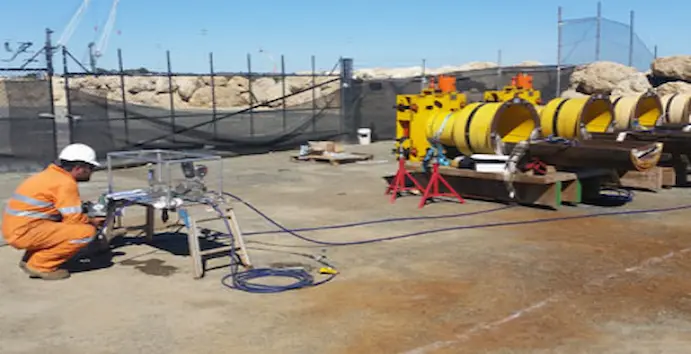
Valve pressure testing is a controlled verification process performed before delivery to confirm that the valve body, bonnet, seats, closure member, and stem sealing arrangement can withstand internal pressure without unacceptable leakage or deformation under the specified test conditions.
Pressure testing helps identify manufacturing defects, casting or forging issues, assembly problems, seat damage, and gasket or packing faults that may not be visible during visual inspection alone.
Pressure testing verifies two fundamentally different things:
- Pressure boundary integrity – the body, bonnet, body joints, and pressure-containing parts can hold the test pressure without leakage or permanent deformation.
- Closure sealing performance – the seat and closure member can block flow with leakage within the specified acceptance criteria.
These are separate functions. A valve can pass a shell test and still fail a seat test, and vice versa. Understanding this distinction is essential for specifying, reviewing, and accepting valve testing.
Why Valve Pressure Testing Matters Before Delivery
A finished valve can look visually correct and still have hidden problems that only pressure testing can reveal. Common issues that testing helps identify include:
- Casting or forging defects – porosity, shrinkage cavities, cracks, or inclusions in the body or bonnet that may not be visible on the machined surface.
- Assembly problems – incorrect bolt torque, misaligned components, damaged gaskets, or improperly installed packing.
- Seat damage – scratches, pitting, or deformation on seating surfaces caused during machining, handling, or assembly.
- Gasket and packing faults – wrong material, incorrect installation, or insufficient compression that can cause leakage under pressure.
- Documentation verification – test results provide traceable evidence that the valve met specified acceptance criteria before shipment.
Testing does not guarantee that a valve will never leak in service. Service conditions, cycling history, media compatibility, temperature, and maintenance all affect long-term performance. Pressure testing verifies the valve at the specified test conditions, not under all possible future operating conditions.
Main Valve Pressure Test Methods
Hydrostatic Pressure Testing
Hydrostatic testing uses a liquid – typically water, or water with corrosion inhibitor – as the test medium. The liquid is pressurized inside the valve body and held at the specified test pressure for the duration required by the applicable standard or project specification.
Hydrostatic testing is widely used for shell tests and seat tests because liquid is largely incompressible, which means that if the pressure boundary fails, the stored energy is low compared with compressed gas. This provides a safety advantage during testing. Liquid testing also provides clear visual leak detection at joints, seams, and seating surfaces.
Test pressure depends on the applicable standard, valve design, pressure rating, and project requirements. It should not be assumed from a universal multiplier. After hydrostatic testing, valves may require drying or draining, particularly if the service medium is sensitive to moisture or if the valve will be stored before installation.
Pneumatic Pressure Testing
Pneumatic testing uses compressed gas – typically air or nitrogen – as the test medium. Gas testing may be specified for valves in clean, dry, or gas service where liquid residue is unacceptable, or where the applicable standard or project specification requires gas testing.
Pneumatic testing requires strict safety controls. Compressed gas stores significant energy; if the pressure boundary fails, the release can be violent. Test procedures must include pressure relief devices, remote operation where practicable, blast shielding, and clear exclusion zones. Pneumatic testing does not replace hydrostatic testing in all cases. The applicable standard and project specification determine which test media and conditions are required.
Shell Test vs Seat Test vs Backseat Test
Understanding the difference between these three tests is one of the most important fundamentals for buyers, engineers, and QA/QC personnel. Each test verifies a different function, and passing one does not prove the others.
| Test | Purpose | What It Verifies |
|---|---|---|
| Shell Test (Body Test) | Verify pressure boundary integrity of the body, bonnet, and body joints | Body, bonnet, body-to-bonnet joint, and pressure-containing parts can hold test pressure without visible leakage or permanent deformation |
| Seat Test (Closure Test) | Verify closure sealing performance between the closure member and the seat | Seat and closure member can block flow with leakage within the specified acceptance criteria |
| Backseat Test | Verify the backseat sealing arrangement where applicable | Backseat provides acceptable sealing when the valve is in the fully open position with the packing gland loosened or removed |
Key distinctions:
- The shell test does not prove seat sealing. A valve can pass the shell test and still fail the seat test.
- The seat test does not prove body strength. A valve can pass the seat test and still have a body defect.
- The backseat test applies only where the valve design includes a backseat arrangement. Not all valve types have or require a backseat test.
- Test pressures, durations, and acceptance criteria for each test are defined by the applicable standard and the valve design – not by universal assumptions.
Valve Pressure Testing Standards
Several standards define valve pressure testing requirements. No single standard applies to every valve. The applicable standard depends on the valve type, industry, project specification, and customer requirements.
API 598
API 598, Valve Inspection and Testing, is widely used for industrial steel valves. It specifies inspection requirements, pressure test types (shell, seat, backseat where applicable), test durations, test media, and acceptance criteria. API 598 is commonly referenced for gate, globe, and check valves in oil and gas, petrochemical, and power applications. For a broader overview of how API standards fit into the valve industry, see the industrial valve standards guide.
API 6D
API 6D applies to pipeline and piping valves, including ball, plug, and gate valves used in pipeline transportation. It specifies pressure testing requirements appropriate for pipeline service, including shell, seat, and cavity pressure testing where applicable. Pipeline valves may have additional requirements related to double block-and-bleed, cavity relief, and isolation verification that differ from general industrial valve testing.
ISO 5208
ISO 5208, Industrial Valves – Pressure Testing, defines pressure test requirements and a leakage classification approach. It is used internationally and may be specified by purchasers as an alternative or supplement to API standards. ISO 5208 defines leakage rates and acceptance criteria for seat tests, but the specific acceptance class must be specified by the purchaser or project specification.
EN 12266
EN 12266 is the European standard for testing metallic valves. It defines pressure test requirements, test procedures, and acceptance criteria. EN 12266 may be specified for valves supplied to European projects or where the purchaser requires European standards. It may be used alongside or instead of API or ISO standards depending on the project.
Requirements depend on the valve type, industry, project specification, and customer requirements. Buyers should specify the applicable standard in the RFQ rather than assuming that one standard applies universally.
Valve Pressure Testing by Valve Type
Different valve types have different testing considerations. The applicable standard, valve design, and service application determine what tests are required.
Ball Valve Testing
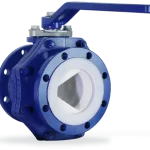
Ball valves are typically tested for shell integrity and seat sealing. For floating ball valves, upstream pressure pushes the ball against the downstream seat, so test direction and seat design matter. For trunnion-mounted ball valves, both seats may be tested. Cavity pressure considerations apply where the valve body cavity can trap pressure between the seats. See the industrial ball valve guide for more on ball valve types.
Gate Valve Testing
Gate valves are tested for shell integrity, seat sealing, and backseat performance where the design includes a backseat. The seat test direction for gate valves depends on the design – wedge gate valves may be uni-directional or bi-directional depending on seat configuration. The backseat test, where applicable, verifies that the stem can be repositioned to the backseat position with the valve fully open while maintaining an acceptable stem seal.
Globe Valve Testing
Globe valves are tested for shell integrity and closure sealing. The seat test direction depends on the globe valve design – the closure member typically seals against the seat in one direction. Globe valves may or may not have a backseat test depending on the design. Testing requirements should be confirmed against the applicable standard and the valve datasheet.
Butterfly Valve Testing
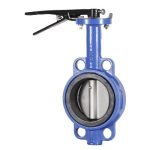
Butterfly valves are tested for body integrity and disc-seat sealing. The disc and seat interaction in butterfly valves is design-specific – concentric, double-offset, and triple-offset designs have different sealing geometries and test considerations. Leakage acceptance depends on the design, seat material, and applicable standard.
Check Valve Testing
Check valves are tested for reverse leakage and closure behavior. Check valve sealing depends on reverse differential pressure, closure dynamics, valve orientation where applicable, and the specific closure design. Insufficient reverse differential pressure may result in limited seating force in some designs. Test acceptance criteria should be confirmed against the applicable standard and the valve design.
Test Media and Inspection Conditions
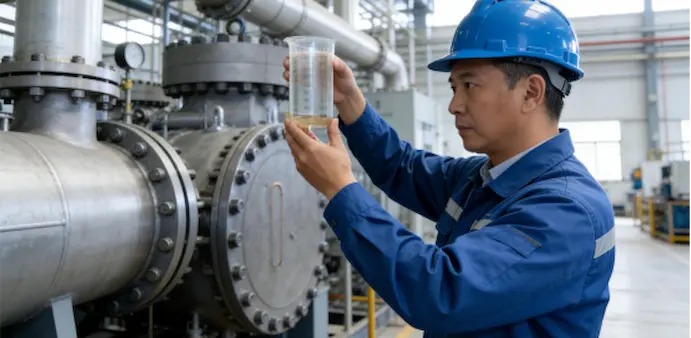
The test medium and inspection conditions are determined by the applicable standard, valve type, service requirements, and project specification.
Possible test media include:
- Water – the most common hydrostatic test medium. May include corrosion inhibitor depending on valve material and service.
- Air or nitrogen – used for pneumatic testing where liquid residue is unacceptable or where gas testing is specified.
- Other specified media – certain services or standards may require specific test media.
Actual test conditions depend on the standard, valve type, service requirements, and project specification. Buyers should not assume that all valves are tested under the same conditions or with the same media. The test procedure, test pressure, duration, and acceptance criteria should be specified or confirmed before ordering.
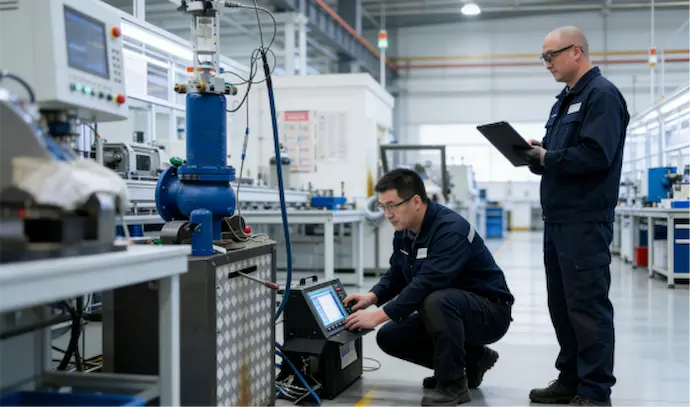
For critical applications, pressure testing may form part of a broader valve Factory Acceptance Test (FAT) that also covers document review, identification, dimensional inspection, operation verification, and shipment release. Pressure testing may also be coordinated with valve NDT inspection and the project Inspection and Test Plan (ITP).
Valve Pressure Test Documentation and Reports
Test documentation provides traceable evidence that the valve was tested and met the specified acceptance criteria. Typical test documentation includes:
- Valve identification (serial number, tag number, or manufacturer reference).
- Size and pressure rating.
- Test standard or specification referenced.
- Test medium used.
- Test pressure and hold duration.
- Acceptance criteria applied.
- Test result (pass or fail, with measured leakage where applicable).
- Inspector or witness identification and signature.
- Date of testing.
- Traceability information (purchase order, heat number, or material certificate reference where applicable).
Buyers should request and retain test certificates with full traceability. For guidance on what quality documents to check before ordering, see the valve certificates and quality documents guide. For fugitive emission testing requirements, which may be specified separately from pressure testing, see the fugitive emission testing guide.
Common Buyer Mistakes When Specifying Valve Testing
Mistake 1: Only Asking “Was the Valve Tested?”
Asking only whether a valve was tested does not define what was verified. Buyers should specify:
- The required test types (shell, seat, backseat where applicable).
- The applicable standard (API 598, API 6D, ISO 5208, EN 12266, or project specification).
- The acceptance criteria, including leakage class for seat tests.
- The required documentation and whether third-party witnessing is required.
Mistake 2: Confusing Shell Test and Seat Test
The shell test verifies pressure boundary integrity. The seat test verifies closure sealing performance. They are separate tests with separate purposes and acceptance criteria. A valve that passes the shell test may still fail the seat test, and the reverse is also true. Buyers who do not distinguish between these tests may accept a valve that has not had its closure sealing verified.
Mistake 3: Ignoring Service Conditions
Pressure test results at ambient temperature with water do not necessarily predict service performance with a different medium at a different temperature and pressure. Buyers should specify the service medium, temperature, and pressure so that the manufacturer can confirm material compatibility, seat selection, and any testing or qualification requirements specific to the service.
For more on how service conditions affect sealing, see the valve sealing performance guide. For material compatibility, see the valve material selection guide.
Valve Pressure Testing RFQ Checklist
Use this checklist when specifying valve pressure testing in an RFQ:
| Item | What to Specify |
|---|---|
| Valve type | Ball, gate, globe, butterfly, check, or other |
| Size | Nominal size and pressure class |
| Service medium | What the valve will handle in service |
| Temperature | Operating temperature range |
| Applicable standard | API 598, API 6D, ISO 5208, EN 12266, or project specification |
| Required test types | Shell, seat, backseat where applicable |
| Leakage acceptance criteria | Leakage class or specified maximum for seat tests |
| Test medium | Water, air, nitrogen, or other specified medium |
| Inspection requirements | Whether third-party witnessing is required |
| Documentation requirements | Test certificates, traceability, data reports |
| Special requirements | Fugitive emission, fire-safe, NACE MR0175 / ISO 15156, or other |
FAQs
What is the difference between shell test and seat test?
The shell test verifies pressure boundary integrity of the valve body, bonnet, and body joints. The seat test verifies closure sealing performance between the closure member and the seat. They are separate tests with separate purposes. Passing the shell test does not prove seat sealing, and passing the seat test does not prove body strength.
What standards are commonly used for valve pressure testing?
Commonly referenced standards include API 598 for industrial valves, API 6D for pipeline valves, ISO 5208 for industrial valve pressure testing, and EN 12266 for European valve testing requirements. The applicable standard depends on the valve type, industry, project specification, and customer requirements. No single standard applies to every valve.
Is hydrostatic testing required for all industrial valves?
Hydrostatic testing is widely used, but whether it is required depends on the applicable standard, valve type, and project specification. Some services or standards may require or permit pneumatic testing. Buyers should specify the required test type and medium in the RFQ rather than assuming that hydrostatic testing is always mandatory.
Does passing a pressure test guarantee no future leakage?
No. Pressure testing verifies the valve at the specified test conditions. Service conditions, cycling history, media compatibility, temperature, contamination, and maintenance all affect long-term sealing performance. A valve that passes pressure testing may still develop leakage in service if the operating conditions differ from the test conditions or if wear, erosion, or material degradation occurs over time.
What documents should be provided after valve testing?
Typical documentation includes valve identification, size and pressure rating, test standard, test medium, test pressure and duration, acceptance criteria, test result, inspector identification, date, and traceability information. Buyers should request and retain these records. For critical applications, third-party witnessing and certified test certificates may be required.
What is the difference between hydrostatic and pneumatic testing?
Hydrostatic testing uses liquid (typically water) as the test medium. Pneumatic testing uses compressed gas (typically air or nitrogen). Hydrostatic testing is generally safer because liquid is largely incompressible and stores less energy. Pneumatic testing may be required for clean, dry, or gas service where liquid residue is unacceptable, but it requires strict safety controls due to the energy stored in compressed gas. The applicable standard and project specification determine which is required.