 Product Introduction
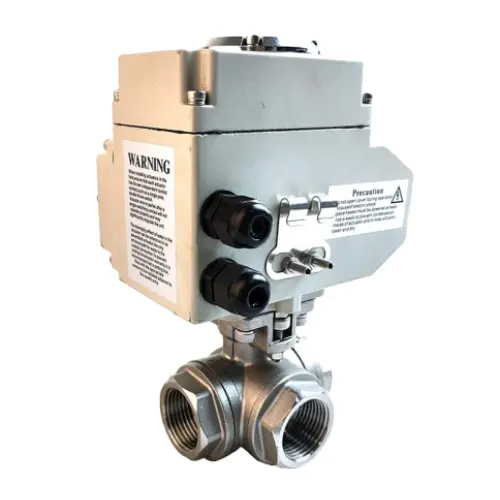
The Electric Three Way Ball Valve is designed for automated pipeline systems where fluid flow must be diverted, mixed, or redirected between different pipelines.
Unlike traditional two-way valves that simply open or close a pipeline, a three-way ball valve integrates multiple flow paths within a single valve body. When the electric actuator rotates the internal ball, the connection between the three ports changes, allowing the system to switch or combine fluid flow automatically.
In many industrial installations this design replaces multiple manual valves and simplifies the overall pipeline layout. Electric three way ball valves are therefore widely used in automated systems such as water treatment plants, HVAC systems, chemical processing facilities, and industrial fluid control networks.
At Vcore Valve, these valves are manufactured with precision machining and strict testing procedures to ensure reliable performance in continuous industrial operation.
Key Features
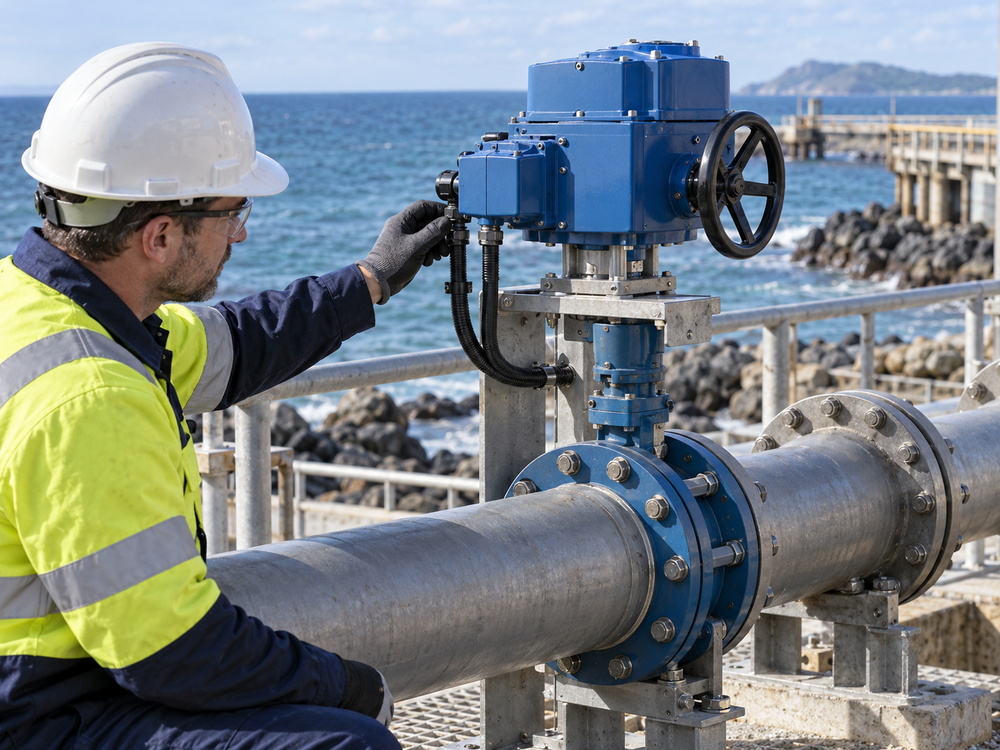
Electric actuator for automated flow control
Available in L-port and T-port flow configurations
Compact structure that reduces pipeline complexity
Reliable ball sealing for long service life
Compatible with PLC and industrial automation systems
Suitable for both flow mixing and flow diversion
Valve Structure
An electric three way ball valve is composed of three main parts.
Valve body
Ball core with internal flow passage
Electric actuator
The actuator drives the ball to rotate typically 90 degrees, which changes the flow connection between the ports.
Depending on the internal design of the ball passage, the valve can operate as either a switching valve or a mixing valve.
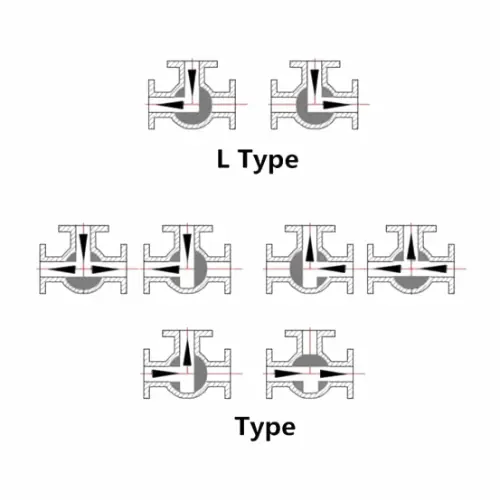
L-port ball structure is commonly used when the system needs to switch flow between two outlets.
T-port ball structure is used when the process requires mixing two streams or distributing one stream to multiple pipelines.
Flow Control Configurations
Typical flow configurations include
A to B
A to C
A to B and C
A and B to C
These configurations allow engineers to design flexible pipeline systems without installing multiple separate valves.
Application Industries
Water treatment systems
HVAC heating and cooling systems
Chemical processing plants
Oil and gas facilities
Food and beverage processing lines
Industrial automation pipelines
In these industries, electric three way ball valves are often used where fluid routing must be controlled automatically.
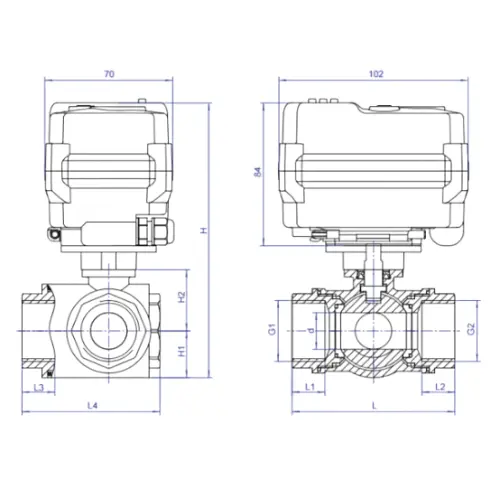
Typical Engineering Specifications
| Parameter | Specification |
|---|---|
| Valve Type | Electric Three Way Ball Valve |
| Size Range | DN15 – DN200 |
| Pressure Rating | PN16 – PN40 |
| Body Material | Carbon Steel / Stainless Steel |
| Ball Material | Stainless Steel |
| Seat Material | PTFE / RPTFE |
| Connection Type | Flanged / Threaded |
| Actuator Type | Electric Actuator |
| Power Supply | 24V / 110V / 220V |
| Temperature Range | −20°C to 200°C |
Installation Considerations
Before installing the valve, confirm that the flow direction and piping configuration match the required flow pattern of the valve.
Ensure that the electric actuator power supply is compatible with the control system.
Pipeline alignment should be checked to avoid mechanical stress on the valve body.
Sufficient clearance above the actuator should be reserved for future maintenance.
Correct installation helps maintain sealing performance and actuator reliability during long-term operation.
Why Choose Vcore Valve
Vcore Valve focuses on manufacturing industrial valves for global engineering projects and industrial pipeline systems.
Our electric three way ball valves are produced with precision machining and strict quality inspection procedures.
Key advantages include
High accuracy CNC machining of ball components
Stable actuator performance for automated control
Full pressure and leakage testing before shipment
Customization support for materials, pressure ratings, and control requirements
These valves are widely supplied to EPC contractors, industrial equipment manufacturers, and pipeline system integrators.
FAQs
What is the function of a three way ball valve
A three way ball valve allows fluid to be diverted or mixed between three pipeline ports.
What is the difference between L-port and T-port ball valves
L-port valves redirect flow between two outlets while T-port valves allow mixing or distributing flow between multiple pipelines.
Can electric three way ball valves be used in automated systems
Yes. Electric actuators allow the valve to be controlled by PLC systems or remote automation platforms.
What industries commonly use electric three way ball valves
Water treatment, HVAC systems, chemical processing plants, and oil and gas facilities frequently use these valves.
What materials are available for the valve body
Carbon steel and stainless steel are the most common materials depending on pressure, temperature, and medium requirements.