Duplex stainless steel valves are used in industrial services where corrosion resistance and mechanical strength are both important. They are commonly considered for seawater, offshore platforms, desalination systems, marine pipelines, chloride-containing process water, chemical processing, and other corrosive industrial applications.
Many buyers first compare 304 and 316 stainless steel valves when selecting corrosion-resistant valves. However, in high-chloride or more demanding environments, 316 stainless steel may still be insufficient. In these cases, duplex stainless steel or super duplex stainless steel may be reviewed as a stronger material option.
This guide explains when to choose duplex stainless steel valves, how they compare with 304 and 316 stainless steel valves, where super duplex may be required, and what buyers should check before ordering. For a broader overview of valve body, trim, seat, seal, gasket, and bolting materials, read our valve material selection guide.
What Is Duplex Stainless Steel?
Duplex stainless steel is a stainless steel family with a mixed austenitic and ferritic microstructure. This structure gives duplex stainless steel a combination of high strength and strong corrosion resistance in many chloride-containing environments.
For valve applications, duplex stainless steel is usually selected when common stainless steel materials such as 304, 316, CF8, or CF8M may not provide enough resistance to chloride corrosion, pitting, crevice corrosion, or chloride stress corrosion cracking.
Common duplex valve material references include:
- Duplex stainless steel
- Super duplex stainless steel
- Duplex 2205
- UNS S31803
- UNS S32205
- Super duplex 2507
- UNS S32750
- UNS S32760
Buyers should always confirm the exact required material grade in the purchase order, datasheet, drawing, and material certificate.
Why Duplex Stainless Steel Is Used for Valves
Duplex stainless steel is used because it provides better corrosion resistance than many standard stainless steels in chloride-containing environments. It also has higher mechanical strength than common austenitic stainless steels, which can be useful in pressure-containing valve components.
Main advantages include:
- Better chloride corrosion resistance than many 304 and 316 stainless steel applications
- Improved resistance to pitting and crevice corrosion in many services
- Better resistance to chloride stress corrosion cracking than many austenitic stainless steels
- Higher mechanical strength
- Useful for seawater, marine, offshore, desalination, and chloride-containing process systems
- Good option when 316 stainless steel is not enough but high nickel alloys are too costly
Duplex Stainless Steel vs 316 Stainless Steel Valves
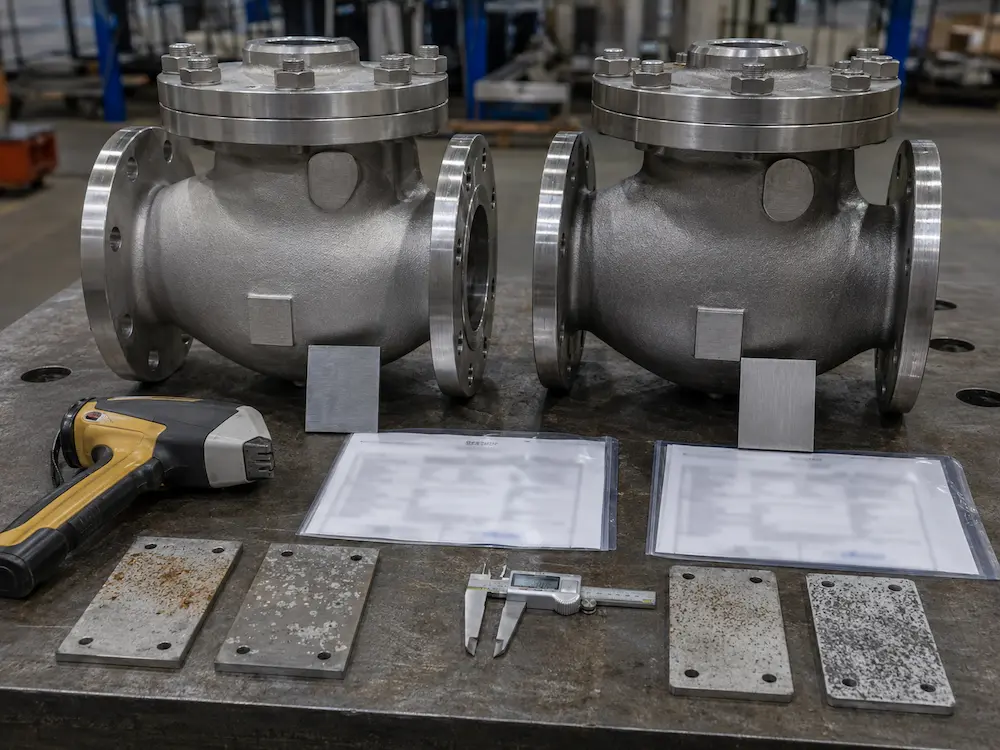
316 stainless steel valves are widely used in corrosive service, but 316 is not always suitable for severe chloride environments. Duplex stainless steel valves are selected when buyers need stronger corrosion resistance and higher strength than standard 316 stainless steel can provide.
| Item | 316 / CF8M Stainless Steel Valve | Duplex Stainless Steel Valve |
|---|---|---|
| Typical Use | Chemical, wastewater, moderate chloride service | Seawater, offshore, desalination, higher chloride service |
| Chloride Resistance | Better than 304 in many services | Generally stronger than 316 in many chloride environments |
| Strength | Good general stainless steel strength | Higher strength |
| Cost | Usually lower | Usually higher |
| Best Selection Logic | Use when 316 is enough for the medium | Use when 316 may not be enough for chloride or corrosive service |
| Main Risk | May suffer pitting or crevice corrosion in severe chloride service | Higher cost and stricter material verification requirements |
For a detailed stainless steel comparison, read our guide on 304 vs 316 stainless steel valves.
Duplex vs Super Duplex Stainless Steel Valves
Duplex and super duplex stainless steels are not the same. Super duplex stainless steel is selected for more severe corrosion conditions where standard duplex stainless steel may not provide enough resistance.
| Material Type | Typical Use | Buyer Notes |
|---|---|---|
| Duplex Stainless Steel | Seawater, offshore, desalination, chloride process water, chemical service | Often reviewed when 316 stainless steel is not enough |
| Super Duplex Stainless Steel | More severe seawater, offshore, high chloride, aggressive corrosive service | Higher corrosion resistance and higher cost; project specification should be checked carefully |
Super duplex should not be selected only because it sounds stronger. It should be chosen when the medium, chloride level, temperature, pressure, and project specification justify the material cost and documentation requirements.
When Should You Choose Duplex Stainless Steel Valves?
Duplex stainless steel valves should be reviewed when standard stainless steel materials may not provide enough corrosion resistance or mechanical strength.
Choose duplex stainless steel valves when:
- The system contains seawater or chloride-containing water
- 316 stainless steel has corrosion risk in the application
- The project is related to offshore, marine, desalination, or coastal service
- Pitting corrosion or crevice corrosion risk is important
- Chloride stress corrosion cracking is a concern
- Higher mechanical strength is needed
- The project specification requires duplex or super duplex material
- The buyer needs stronger corrosion resistance but does not want to move directly to high nickel alloys
Common Applications of Duplex Stainless Steel Valves
Seawater Systems
Seawater contains chloride and can be highly corrosive to many standard stainless steels. Duplex stainless steel valves are commonly reviewed for seawater intake, seawater cooling, seawater discharge, marine utility systems, and coastal pipeline systems.
Offshore Oil and Gas
Offshore systems often involve seawater exposure, chloride-containing environments, high humidity, and demanding project documentation. Duplex or super duplex stainless steel valves may be required for selected offshore applications depending on the service and specification.
Desalination Plants
Desalination systems may involve seawater intake, brine discharge, high chloride concentration, and corrosion-sensitive process areas. Duplex stainless steel valves may be used where standard stainless steel or coated carbon steel is not suitable.
Chemical Processing
Some chemical processing systems require stronger corrosion resistance than standard 304 or 316 stainless steel. Duplex stainless steel may be considered depending on chemical type, concentration, temperature, pressure, chloride content, and flow conditions.
For chemical valve selection, buyers can also read our guide on industrial valves for chemical processing.
Wastewater and Industrial Water
Wastewater and industrial water may contain chlorides, chemicals, suspended solids, and variable pH. Duplex stainless steel may be reviewed for critical parts of these systems where corrosion failure would cause high maintenance cost or downtime.
Mining and Slurry Service
Mining and slurry systems may require corrosion resistance and abrasion resistance at the same time. Duplex stainless steel may help in selected corrosive slurry services, but abrasion, particle size, velocity, and seat material should still be reviewed carefully.
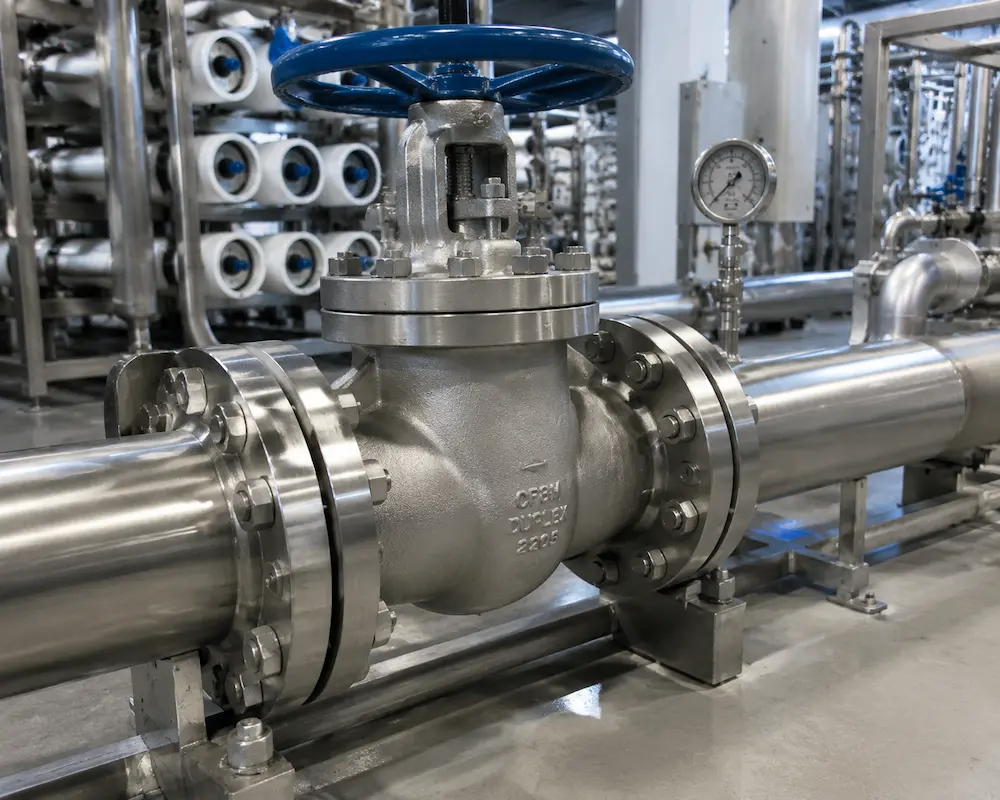
Duplex Stainless Steel Valves by Valve Type
Duplex Ball Valves
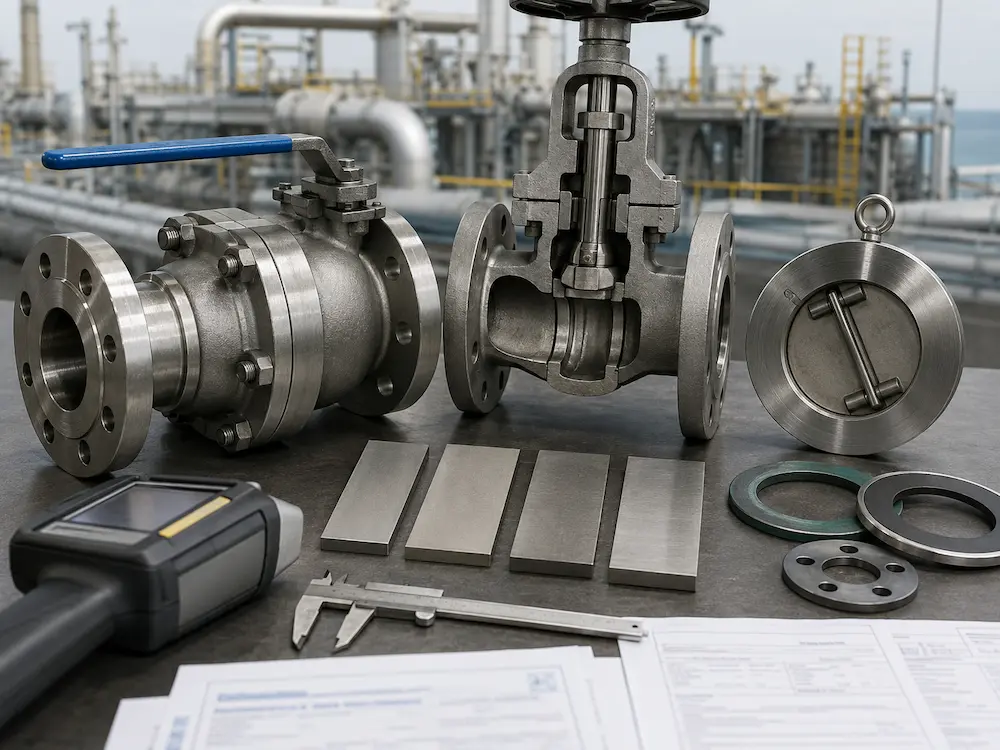
Duplex stainless steel ball valves may be used for seawater, chemical, offshore, and corrosive process applications. Buyers should review body material, ball material, stem material, seat material, gasket, packing, and anti-static or fire-safe requirements if applicable.
Duplex Gate Valves
Duplex gate valves are used for corrosion-resistant isolation service in seawater, desalination, offshore, and chemical pipelines. Seat material, wedge material, stem material, and bolting should be checked carefully.
Duplex Globe Valves
Duplex globe valves may be selected for corrosive flow regulation or shutoff. Because globe valves can experience higher local velocity and throttling conditions, trim material and erosion resistance are important.
Duplex Check Valves
Duplex check valves are used for corrosive backflow prevention in seawater, chemical, and industrial water systems. Spring, hinge pin, disc, plate, seat, and gasket materials must also match the service environment.
Duplex Butterfly Valves
Duplex stainless steel may be used for butterfly valve discs, shafts, or bodies depending on corrosion risk. In seawater or chloride service, the seat material, disc material, shaft material, body coating, and bolting should all be reviewed.
Duplex Control Valves
Duplex control valves may be used in corrosive process control applications. The body material alone is not enough; trim, plug, seat, stem, packing, and actuator protection must also be selected according to the process condition.
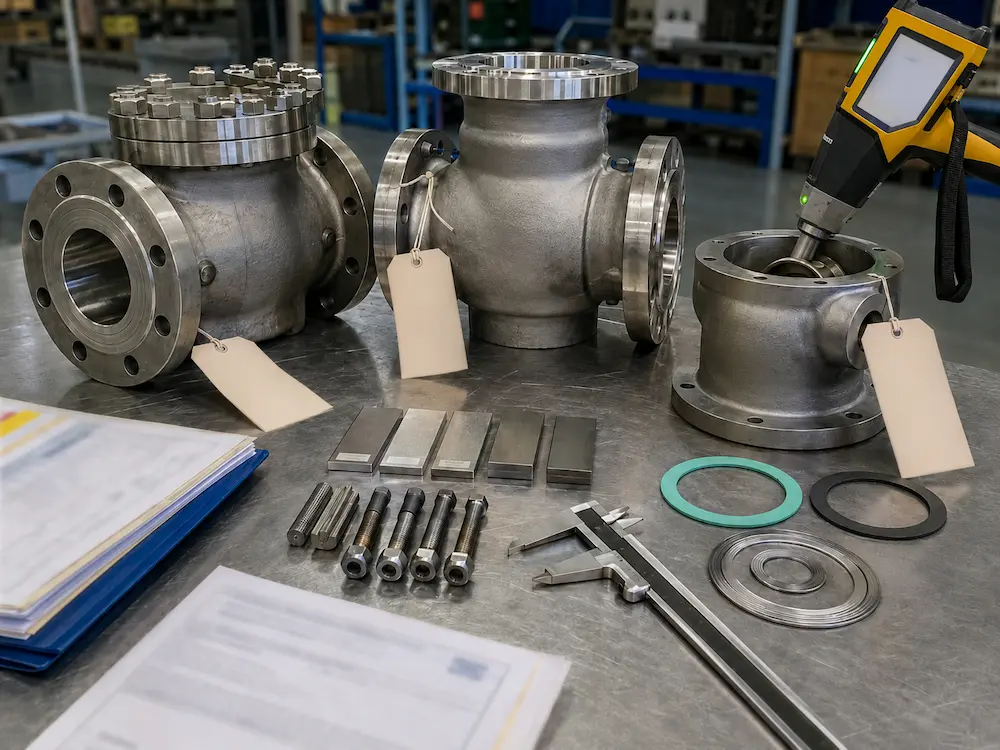
Seat, Seal, Gasket and Bolting Materials Still Matter
Choosing duplex stainless steel for the valve body does not mean the complete valve is automatically suitable for seawater or chemical service. The full wetted material system must be reviewed.
Buyers should check:
- Body and bonnet material
- Ball, disc, plug, gate, or plate material
- Stem material
- Seat material
- O-rings and seals
- Gasket material
- Packing material
- Spring material in check valves
- Bolting material
- Coating or lining where applicable
For seat and seal compatibility, read our valve seat materials selection guide.
Common Seat Materials Used with Duplex Valves
| Seat / Seal Material | Common Use with Duplex Valves | Buyer Notes |
|---|---|---|
| PTFE | Chemical and low-friction sealing service | Check pressure, temperature, and deformation risk |
| RPTFE | Higher mechanical strength than standard PTFE | Reinforcement material may affect chemical compatibility |
| PEEK | Higher-pressure or more demanding process service | Higher cost; review actual temperature and pressure |
| EPDM | Water-based service | Not suitable for many oils and hydrocarbons |
| FKM | Selected chemical, oil, and higher-performance elastomer service | Compatibility must be checked case by case |
| Metal Seat | High temperature, abrasive, or severe service | Leakage class and sealing surface quality must be confirmed |
Duplex Stainless Steel Valve Material Certificate
For duplex stainless steel valve orders, material certificates are very important. Buyers should confirm the exact material grade, heat number, chemical composition, mechanical properties, heat treatment condition, and project specification consistency.
Buyers should check:
- Exact duplex or super duplex material grade
- Applicable ASTM, EN, UNS, or project material standard
- Heat number traceability
- Chemical composition
- Mechanical properties
- Heat treatment condition if required
- PMI requirement
- Whether wetted parts match the required material
- Whether certificate records match the valve datasheet and purchase order
For documentation details, read our guide on valve certificates and quality documents.
Common Mistakes When Selecting Duplex Stainless Steel Valves
Mistake 1: Assuming 316 Stainless Steel Is Always Enough
316 stainless steel is widely used, but it may not be enough for severe chloride, seawater, offshore, or high-temperature chloride environments.
Mistake 2: Selecting Duplex Only by Name
Duplex stainless steel includes different grades. Buyers should specify the exact material grade, not only “duplex valve.”
Mistake 3: Ignoring Seat and Seal Compatibility
A duplex body may still fail if the seat, gasket, packing, or O-ring material is not suitable for the medium.
Mistake 4: Ignoring Spring and Bolting Materials
In check valves and actuated assemblies, springs, bolting, and accessories may fail if they are not selected for the same corrosive environment.
Mistake 5: Using Duplex Where a Lined Valve Is More Suitable
For some strong acids, alkalis, or aggressive chemicals, PTFE lined or special alloy valves may be more suitable than duplex stainless steel.
Mistake 6: Not Checking MTC or PMI Requirements
Duplex valve orders often require stronger material verification. Buyers should confirm MTC, PMI, and traceability requirements before production.
Duplex Stainless Steel vs Lined Valves
Duplex stainless steel valves and lined valves solve corrosion problems in different ways. Duplex uses corrosion-resistant metal as the pressure-containing or wetted material. Lined valves use a base metal body protected by PTFE, PFA, rubber, or other lining materials.
| Option | Best Use | Main Caution |
|---|---|---|
| Duplex Stainless Steel Valve | Seawater, chloride water, offshore, desalination, selected chemical service | Higher cost; still needs compatibility review |
| PTFE Lined Valve | Acids, alkalis, many corrosive chemical services | Temperature, pressure, vacuum, and mechanical limits must be checked |
| Rubber Lined Valve | Slurry, wastewater, seawater, selected abrasive-corrosive service | Rubber compatibility, abrasion, temperature, and pressure limits matter |
For corrosive and abrasive applications, buyers can also review Vcore Valve’s rubber lined valve range.
Information Buyers Should Provide Before Quotation
- Valve type: ball, gate, globe, check, butterfly, plug, or control valve
- Valve size and pressure class
- Required material grade: duplex, super duplex, UNS S31803, S32205, S32750, or project grade
- Medium name and chemical composition
- Chloride content if known
- Operating pressure and design pressure
- Operating temperature and maximum temperature
- Flow rate and whether solids are present
- Required seat, seal, gasket, packing, and bolting materials
- Whether PMI is required
- Required material certificate or MTC
- Third-party inspection requirement if any
- Project specification or datasheet if available
Related Valve Material Guides
- Valve Material Selection Guide — main guide for valve body, trim, seat, seal, gasket, and bolting materials.
- 304 vs 316 Stainless Steel Valves — explains CF8, CF8M, and stainless steel valve material selection.
- Valve Seat Materials Guide — explains EPDM, NBR, FKM, PTFE, PEEK, graphite, and metal seat selection.
- Anti-Corrosion Valve Materials for Chemical Processing — explains stainless steel, PTFE, rubber lining, duplex, titanium, and high-alloy options.
- Valve Certificates and Quality Documents — explains material certificates, test reports, inspection documents, and project documentation.
Final Recommendations for Industrial Buyers
Duplex stainless steel valves are valuable when standard stainless steel valves may not provide enough corrosion resistance or strength. They are especially useful in seawater, chloride-containing water, offshore, desalination, marine, and selected chemical services.
For moderate corrosion service, 316 or CF8M may be enough. For high-chloride, seawater, or offshore service, duplex or super duplex should be reviewed. For strong acids, severe chemicals, or abrasive-corrosive media, PTFE lined, rubber lined, titanium, nickel alloy, or other special material solutions may be more suitable.
If you need help selecting duplex stainless steel valves, super duplex valves, 316 stainless steel valves, PTFE lined valves, rubber lined valves, or other corrosion-resistant valve materials, Vcore Valve can review your medium, chloride level, pressure, temperature, valve type, and documentation requirements.
For industrial sourcing, the key question is not only “Is this valve stainless steel?” The better question is: “Does the valve material, seat material, bolting, gasket, and certificate package match the exact seawater, chloride, chemical, or offshore service condition?”
FAQ
1. What are duplex stainless steel valves used for?
Duplex stainless steel valves are used for seawater, offshore, desalination, marine, chloride-containing water, chemical processing, and corrosive industrial services where 304 or 316 stainless steel may not be enough.
2. Is duplex stainless steel better than 316 for valves?
Duplex stainless steel generally provides stronger resistance than 316 stainless steel in many chloride-containing environments, but it is not always necessary. The correct choice depends on medium, chloride level, temperature, pressure, and project specification.
3. What is the difference between duplex and super duplex valves?
Super duplex stainless steel valves are selected for more severe chloride and corrosive service than standard duplex stainless steel valves. They usually offer stronger corrosion resistance and higher cost.
4. Can duplex stainless steel valves be used in seawater?
Duplex stainless steel valves are commonly reviewed for seawater and marine systems. However, exact material grade, temperature, chloride level, flow condition, and seat material should still be checked.
5. Do duplex stainless steel valves need material certificates?
Yes. Duplex stainless steel valve orders usually require material certificates, heat number traceability, chemical composition records, mechanical properties, and often PMI verification depending on project requirements.